
Preventing Travel Chaos: How British Airways and Delta Passengers Are Battling Severe In-Flight Swelling Amidst Massive Airport Disruptions in London and New York
As massive flight cancellations and terrifying airport disruptions strand passengers on the tarmac, health experts reveal why extended travel chaos leaves British Airways and Delta flyers stiff, swollen, and sore.

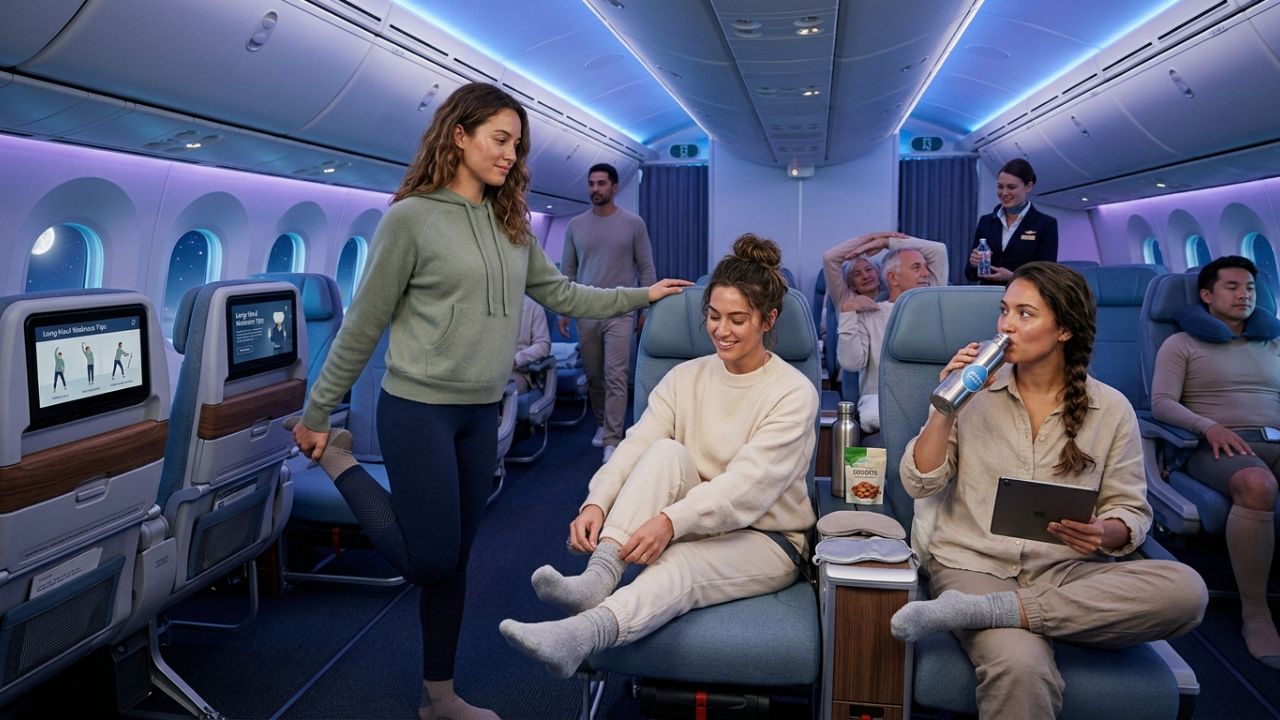
Image generated by AI
Severe Airport Disruptions Amplify the Physical Toll of Flying
While massive sectors of the global passenger network frequently battle highly unpredictable logistical bottlenecks, the sudden, terrifying reality of severely degraded physical health remains the absolute most agonizing consequence of unmanageable terminal congestion. Delivering highly urgent, breaking airline news, verified international health and aviation trackers confirm that ongoing, cascading travel chaos is actively generating severe physical distress for millions of flyers. Today, June 1, 2026, as massive flight cancellations violently paralyze massive global gateways like London Heathrow and New York JFK, passengers trapped on legacy carriers like British Airways and Delta are reporting unprecedented levels of in-flight physical trauma.
While desperate travelers naturally panic over the terrifying prospect of sudden airport disruptions and endless tarmac delays, these exclusive aviation updates reveal a massive, highly dangerous biological paradox. Long flights—especially those aggressively extended by air traffic control holds—leave many travellers completely stiff, violently swollen, and utterly sore. Yet the core reason often has significantly less to do with the width of modern aircraft seats, and entirely to do with how the human body brutally responds to prolonged, inescapable inactivity. As summer travel violently increases, health experts are urgently warning that hours spent sitting on a delayed aircraft can catastrophically slow circulation and trigger massive swelling.
Expanded Overview: The Scale of the Biological Crisis
The sudden, highly publicized execution of this massive operational meltdown serves as an undeniable example of how rapidly the world's most critical transit networks can physically destroy a traveler's health. According to prominent physiotherapist Kieran Sheridan of GulfPhysio.com, understanding exactly why severe discomfort develops during chaotic air travel is the absolute first critical step towards preventing agonizing aches, reducing extreme fatigue, and arriving in a functional condition.
The biological reality is brutal: extended periods of forced sitting drastically reduce blood circulation, severely limit muscle activity, and encourage heavy fluid to violently collect in the lower legs. Combined with incredibly dry cabin air and heavily restricted movement, these massive factors can cause terrifying swelling and muscle tightness that may persist for days beyond the flight.
Section-Wise Breakdown of the Transit Strategy
Deconstructing the Discomfort: The Reality of Tarmac Delays
The human body is explicitly built for regular, fluid movement, yet modern air travel—particularly during massive regional flight delays—violently requires passengers to remain seated in highly confined spaces for incredibly extended periods. During long-haul journeys or massive tarmac holds, critical muscles in the legs, hips, and lower back remain entirely inactive. This massive lack of movement aggressively leads to heavily reduced blood flow and incredibly painful stiffness. As a result, travellers frequently experience agonizing discomfort immediately after landing in London or New York, particularly when attempting to desperately walk for the first time in several grueling hours.
Preparing the Body: Strategies to Survive the Gridlock
Preventing this massive physical discomfort absolutely begins before passengers even step onto the incredibly delayed aircraft. Sheridan highly recommends using heavily congested airport waiting areas as a vital opportunity to actively prepare the body through light, tactical movement and deep mobility exercises. Activities such as aggressive heel raises, gentle targeted stretches, and short, brisk terminal walks can successfully activate critical muscles that may otherwise remain entirely inactive. This proactive preparation heavily helps aggressively improve circulation and may successfully reduce the brutal intensity of post-flight stiffness.
Once onboard the aircraft, maintaining deliberate movement remains absolutely essential, even when massive cabin space is severely limited. Small, calculated exercises such as rapid ankle circles, aggressive foot pumps, and seated spinal stretches can massively encourage steady blood flow.
Hydration and Recovery: Fighting Cabin Dehydration
Hydration is frequently, catastrophically overlooked during highly stressful air travel, yet it fundamentally influences how the physical body feels during and entirely after a massive flight. Aircraft cabins typically operate with incredibly low, desert-like humidity levels, which aggressively contributes to severe dehydration over time. Massive dehydration can violently increase feelings of extreme fatigue, trigger agonizing headaches, and make severe muscle cramps exponentially more likely.
Passenger Health and Disruption Mitigation Matrix
| Biological Symptom | Primary Aviation Cause | Proactive Mitigation Strategy |
|---|---|---|
| Severe Lower Leg Swelling | Prolonged inactivity during tarmac delays | Aggressive in-seat ankle circles and foot pumps |
| Agonizing Muscle Cramps | Severe cabin dehydration and low humidity | High fluid intake and avoiding alcohol onboard |
| Deep Joint Stiffness | Confined seating on narrow-body aircraft | Regular aisle walks every 40 to 90 minutes |
| Extreme Physical Fatigue | Massive airport disruptions and long layovers | Post-flight terminal walking before hotel rest |
Passenger Impact: Knowing When to Seek Urgent Medical Attention
For the modern domestic and international commuter attempting to navigate this highly volatile global corridor, the passenger impact of this massive physical toll is completely exhausting. Recovery after violently landing is equally as important as in-flight preparation. Rather than immediately sitting in a cramped taxi or collapsing in a hotel room, terrified travellers are aggressively encouraged to continue moving.
While most post-flight soreness is incredibly common, harmless, and strictly temporary, certain massive symptoms should absolutely never be ignored. Mild swelling and muscle tightness generally improve naturally. However, health experts urgently advise travellers to immediately seek professional medical attention if one specific leg becomes significantly more swollen than the other, develops highly unusual redness, feels excessively warm, or becomes sharply, agonizingly painful. These terrifying symptoms could strictly indicate a massive circulation-related problem (such as deep vein thrombosis) that extends far beyond ordinary travel discomfort.
Industry Analysis: The Hidden Cost of Aviation Congestion
From a macroeconomic and industry operations perspective, navigating these massive shifting transportation patterns requires a careful look at public health. When massive airlines like British Airways and Delta are forced to hold passengers on the tarmac due to severe air traffic control restrictions, the biological cost is heavily absorbed by the flyer. Early medical assessment can successfully help identify massive underlying concerns, particularly following incredibly lengthy international journeys where prolonged, inescapable immobility has been absolutely unavoidable.
Conclusion: A Highly Secure Aviation Future
The massive, highly publicized capacity crunch currently facing the global aviation market guarantees that severe delays will continue to trap passengers in confined spaces. Long flights leave travelers violently stiff, swollen, and completely sore simply because the body drastically struggles when movement is restricted for many terrifying hours. The immediate answer is straightforward: passengers must move regularly, stay heavily hydrated, and continue gentle activity immediately after landing. By aggressively keeping your biological health optimized, you can easily navigate the violently chaotic skies—stepping onto your next heavily delayed flight with absolute physical confidence and total peace of mind.
Key Takeaways
- Massive Physical Toll: Severe airport disruptions and flight delays are trapping passengers in seats, leading to extreme leg swelling and joint stiffness.
- The Danger of Inactivity: Prolonged sitting completely stops the calf muscles from pumping blood back to the heart, causing massive fluid pooling.
- Dehydration Dangers: Incredibly dry cabin air aggressively triggers severe muscle cramps, fatigue, and headaches.
- Proactive Survival Tactics: Passengers must perform aggressive heel raises, ankle circles, and aisle walks to survive massive tarmac delays.
- Medical Warning Signs: If severe swelling, deep redness, or localized pain occurs in only one leg, passengers must seek immediate emergency medical care.
Frequently Asked Questions
Why do my feet violently swell during a massive flight delay? Extended sitting during terrifying airport disruptions causes heavy fluid to violently accumulate in the lower legs and feet due to severely reduced circulation.
How often should I move during a delayed long-haul flight? Medical experts generally recommend aggressively moving or stretching every 40 minutes to two hours when conditions allow.
Can severe dehydration make flight discomfort significantly worse? Absolutely. Massive dehydration may directly contribute to extreme fatigue, brutal headaches, agonizing muscle cramps, and general bodily discomfort.
Do medical compression socks help during flights? Yes, high-grade compression socks may heavily support active circulation and violently reduce swelling for incredibly vulnerable travellers, particularly on longer delayed journeys.
What specific stretches can I do while hopelessly seated? Aggressive ankle circles, rapid foot pumps, seated high knee lifts, and gentle neck rolls are highly recommended by physiotherapists.
When should I urgently see a doctor after a heavily delayed flight? Seek immediate emergency medical advice if swelling is highly severe, affects strictly only one leg, becomes incredibly painful, or is violently accompanied by redness or extreme warmth.
Disclaimer: The specific health metrics, physiotherapy recommendations, and symptom analyses presented in this report are based on verified medical advice from GulfPhysio.com on June 1, 2026. Official airline capacity limits, terminal congestion levels, and final flight durations are highly volatile and subject to continuous, real-time update. Prospective passengers are urgently advised to fiercely consult with a licensed medical professional regarding their specific physical fitness for long-haul travel prior to arriving at the airport.
Disclaimer
This article is for informational and educational purposes only. It does not constitute legal, financial, or professional advice. While we strive to provide accurate and up-to-date information, travel policies, regulations, and conditions change rapidly. Always verify information with official sources before making travel decisions. Nomad Lawyer makes no representations about the accuracy, reliability, completeness, or suitability of the information provided. Readers should consult qualified professionals for advice specific to their circumstances. The views expressed in this article are those of the author and do not necessarily reflect the views of Nomad Lawyer.
Kunal K Choudhary
Co-Founder & Contributor
A passionate traveller and tech enthusiast. Kunal contributes to the vision and growth of Nomad Lawyer, bringing fresh perspectives and driving the community forward.
Learn more about our team →