
Lolland, Denmark Completes Dodekalitten in 2026 With Monumental Stone and Sound Art
Lolland, Denmark Completes Dodekalitten in 2026 With Monumental Stone and Sound Art

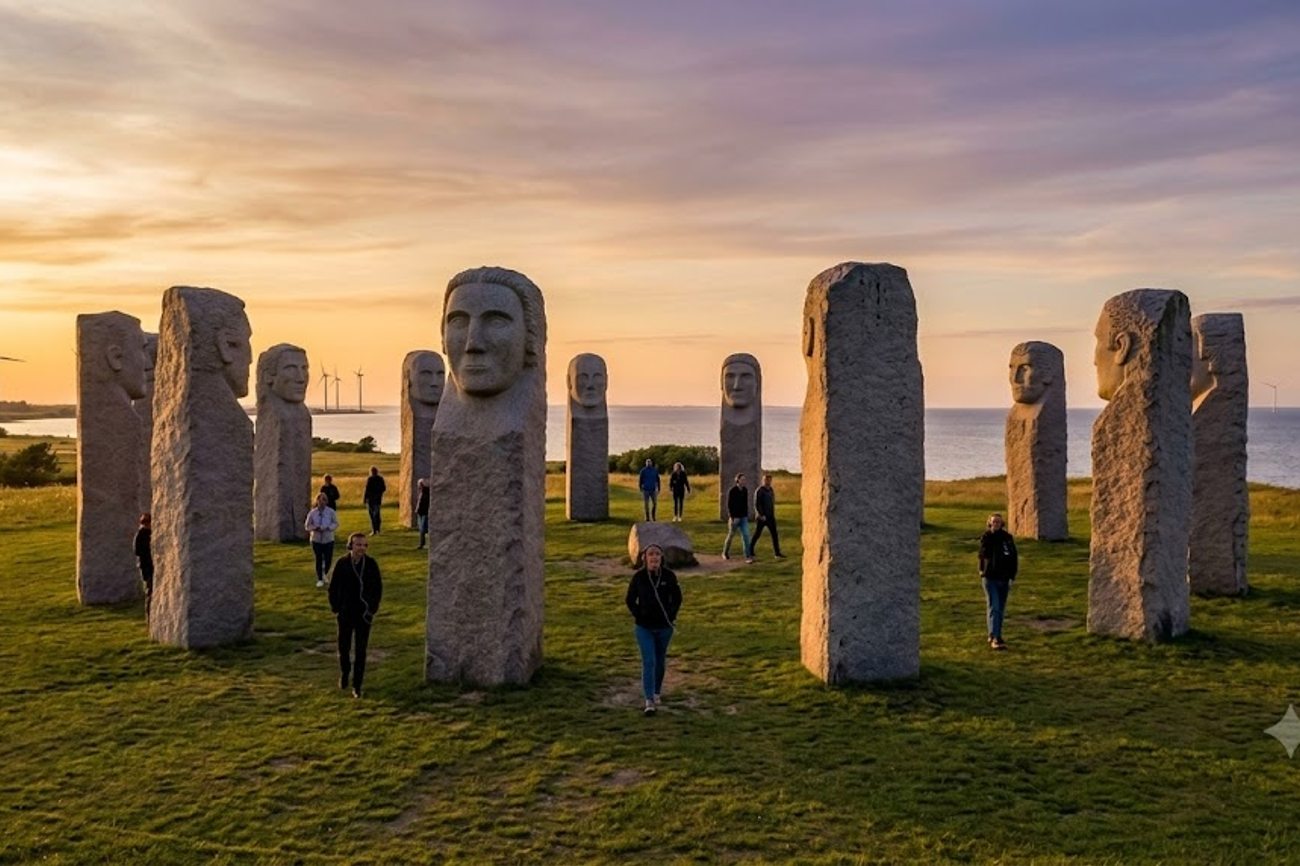
Image generated by AI
title: Dodekalitten: The Sonic Stone Circle of Lolland description: An insider's guide to Denmark's most ambitious outdoor art installation, Dodekalitten, combining monumental sculpture and spatial sound on the island of Lolland. date: 2026-09-15 tags: [Lolland-Denmark-2026, Dodekalitten, Kragenæs, Zealand-Region-Travel, Danish-Land-Art]
It took exactly two decades to complete the circle, with the final stone only arriving on June 16, 2026. For twenty years, visitors to the southern coast of Lolland watched a slow-motion assembly of giants, as a project launched in 2006 gradually materialized into what is now one of Denmark's most provocative intersections of art and acoustics.
The Completion of the Twelve-Figure Circle
For the first time since its inception, the Dodekalitten installation is whole. This is not a traditional monument but a spatial experience consisting of 12 colossal stone figures arranged in a precise circular formation. Each of these monoliths, crafted by Danish sculptor Thomas Kadziola, stands between seven and nine metres tall. The sheer scale is humbling; these figures weigh between 25 and 45 tonnes each, their upper sections carved into abstracted, human-like heads that all stare inward toward the center of the 40-metre-diameter circle.
Standing within the ring, you feel a strange tension between the permanence of the stone and the openness of the surrounding Småland waters. The project's twenty-year evolution has become part of its own narrative, transforming the site from a construction zone into a finished sanctuary of contemporary art. Now that the twelfth figure is in place, the intended geometric and auditory symmetry of the site is finally fully realized.
What Makes Lolland's Sonic Circle Different
While many visit Denmark for the curated galleries of Copenhagen or the historic ruins of Jutland, Dodekalitten offers something entirely different: a multisensory dialogue with the elements. The physical stones are only half of the experience. Beneath the circle lies a sophisticated 12-channel sound system designed by American composer Wayne Siegel.
This spatial electronic music is not a background track; it is an architectural component. The sound is distributed across the circular space, shifting as you move between the monoliths. Because the music plays daily from sunrise to sunset throughout the entire year, the experience changes based on the time of day and the weather. On a clear summer evening, the music feels ethereal; during a grey autumn gale, the electronic tones clash with the wind coming off the coast, creating a haunting, atmospheric tension that you won't find in a climate-controlled museum.
The site’s placement is intentional. By positioning the artwork overlooking the waters of the Småland region, the creators have ensured that the horizon is part of the piece. It forces the visitor to look both inward—at the staring stone faces—and outward—at the vast, flat Danish coastline.
Visitor Insider Tips
To experience Dodekalitten without the crowds, avoid the peak July window. While Denmark saw a record 13 million overnight stays in July 2026—a 6 per cent increase over 2025—the island of Lolland remains far less congested than the mainland.
Timing and Access The best time to visit is during the "golden hour" just before sunset. The low light hits the abstracted faces of the stones, creating deep shadows that emphasize their human-like features. Since the sound system operates from sunrise to sunset, arriving early in the morning allows you to experience the spatial audio in near-total silence, save for the music and the birds.
Logistics and Transport Base yourself in the Lolland-Falster region and use the Kragenæs Harbour as your primary jumping-off point. Parking is available at the harbour, from where you can access the monument. I highly recommend renting a bicycle; the landscape of Lolland is famously flat, making it ideal for cycling between the harbour and the rural coastal trails.
Regional Pairings Do not make Dodekalitten a standalone trip. Combine it with a tour of the Kragenæs area. The contrast between the ultra-modern electronic soundscapes of the monument and the traditional fishing culture of the harbour provides a complete picture of modern Danish life.
What to Pack The weather on the southern coast is unpredictable. Even in late summer, the wind off the Småland waters can be biting. Bring a windproof shell and sturdy walking shoes, as the path to the stones involves traversing natural coastal terrain.
Cultural and Environmental Context
Dodekalitten is a cornerstone of a larger cultural strategy spearheaded by VisitLolland-Falster and supported by Region Zealand. For years, Lolland was viewed primarily as an agricultural hub or a transit point. The introduction of high-concept land art is a deliberate move to shift the region's identity toward cultural tourism.
By placing a world-class installation in a rural setting, the region is challenging the "urban bias" of tourism. Instead of funneling visitors into city centers, the project encourages "slow travel," where the journey through the countryside is as important as the destination. This approach helps distribute tourism revenue more evenly across the Zealand region, supporting local guesthouses and cafes in areas that typically see little foot traffic.
However, the interaction between the monument and the environment is a delicate balance. The installation is open-air and exposed, meaning it must withstand the harsh salt air and winter storms of the Baltic region. The commitment to keeping the site open year-round, regardless of weather, reflects a very Danish philosophy: that nature and art should be experienced in their rawest forms, not shielded from the elements.
The broader tourism trends in Denmark support this growth. In the first half of 2026, the country recorded 26 million overnight stays, an increase of 565,000 over the previous year. With foreign tourist stays increasing by 505,000, there is a growing appetite for the "authentic" and "remote" experiences that Lolland provides.
FAQ: Visiting Lolland 2026
What is the best time to visit Dodekalitten? Autumn is an excellent choice for those seeking solitude and atmospheric weather. However, for the best light and accessibility, late spring and early autumn are ideal. The sound installation runs daily from sunrise to sunset year-round.
How do I get to the monument? The most practical way is to drive or cycle to Kragenæs Harbour on the island of Lolland. From the harbour, the site is easily accessible. You can find regional transport options via VisitDenmark.
Is the site accessible for all visitors? The installation is in an open-air, rural setting. While the circle itself is a walkable area, the approach from the harbour involves natural terrain. Visitors with mobility issues should check current path conditions with local authorities.
Do I need a ticket to enter? Dodekalitten is an outdoor installation designed for public exploration. For more information on regional cultural events and potential concerts at the site, check the UNESCO World Heritage guidelines for nearby protected sites or the official Region Zealand portals.
Walk among the giants, listen to the wind, and let the stones stare back.
Related Travel Guides
- Soomaa and Kõrvemaa, Estonia Expands Big Tourism With Bog-Shoe Treks and Foraging
- China’s Shanwei Tourism Boom Accelerates As Guangdong’s 467km Coastline Becomes A New Seaside Leisure Escape
- Spain’s Cala Benirràs Becomes A Must-Visit Travel Marvel With Warm Autumn Weather And Ibiza’s Most Beautiful Coastal Views
Disclaimer
This article is for informational and educational purposes only. It does not constitute legal, financial, or professional advice. While we strive to provide accurate and up-to-date information, travel policies, regulations, and conditions change rapidly. Always verify information with official sources before making travel decisions. Nomad Lawyer makes no representations about the accuracy, reliability, completeness, or suitability of the information provided. Readers should consult qualified professionals for advice specific to their circumstances. The views expressed in this article are those of the author and do not necessarily reflect the views of Nomad Lawyer.
Raushan Kumar
Founder & Lead Developer
Full-stack developer with 11+ years of experience and a passionate traveller. Raushan built Nomad Lawyer from the ground up with a vision to create the best travel and law experience on the web.
Learn more about our team →