Portugal Transforms Cruise Tourism with Shore Power, Urban Dispersion, and Regional Growth by 2027

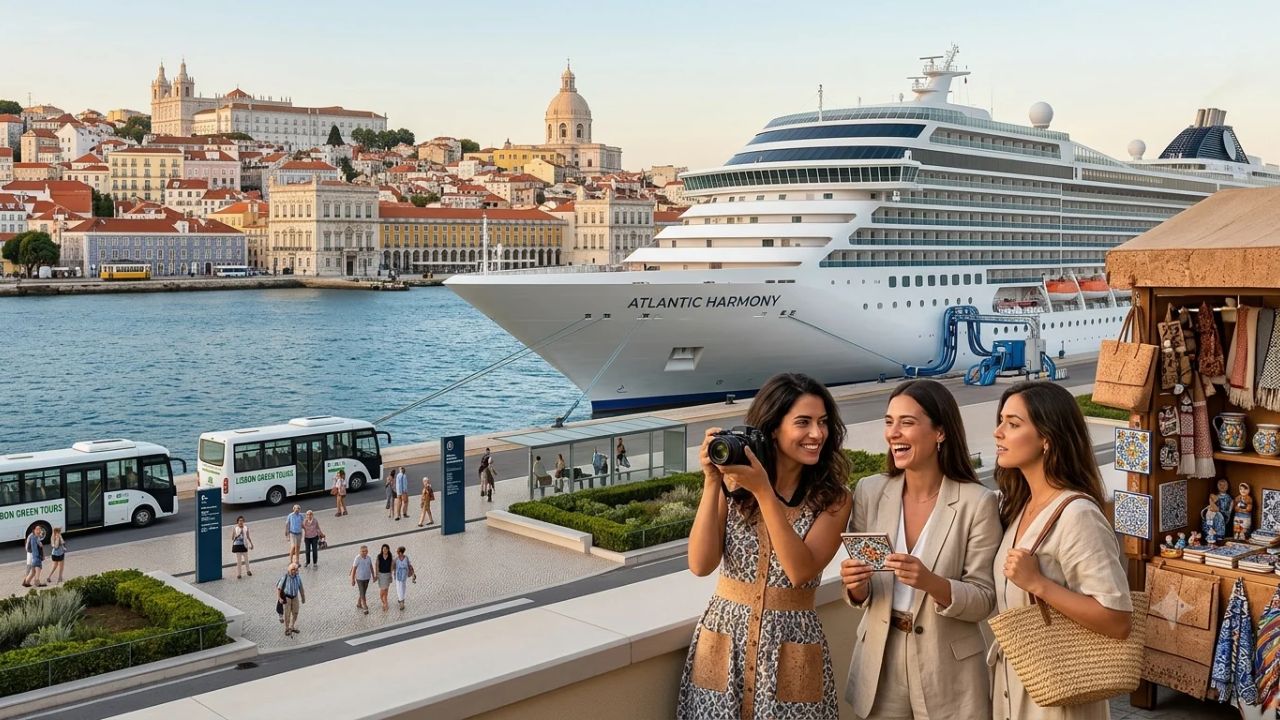
LISBON — Portugal is undertaking an extensive structural overhaul of its maritime cruise infrastructure, enacting national environmental mandates, shore-side electrical connectivity, and municipal dispersion policies to reshape passenger flows by 2027. Coordinated under the national Tourism Strategy 2027 (Estratégia Turismo 2027, or ET2027) led by Turismo de Portugal alongside municipal port administrations in Lisbon, Matosinhos, and the regional development commissions of the North and Centro regions, this multi-year initiative pivots the country away from unmanaged passenger volume toward long-term value retention and ecological decarbonization. By intertwining engineering investments at waterfront berths with digital visitor distribution algorithms and mandatory regional sourcing rules, Portugal aims to transform historic maritime gateways into models of sustainable coastal tourism.
The strategic repositioning responds to intense civic, urban, and environmental debates surrounding the scale of cruise operations in Southern Europe. For decades, deep-water ocean liners discharging thousands of excursionists directly into compact, historic urban quarters generated friction between traveling populations and permanent residents. In Lisbon and Porto, historic neighborhoods such as Alfama, Baixa, and Ribeira experienced acute pedestrian congestion, air quality degradation from idling shipboard marine auxiliary engines, and municipal infrastructure strain. Under the refreshed ET2027 framework, Portugal’s maritime policy shifts from passive berthing accommodation to active operational regulation, ensuring ocean cruise activity generates measurable economic yields for regional small and medium enterprises while drastically curtailing carbon emissions and neighborhood displacement.
       PORTUGAL SUSTAINABLE CRUISE ECOSYSTEM ARCHITECTURE (2026–2027)

 [ MARITIME INFRASTRUCTURE ]       [ URBAN MOBILITY & ACCESS ]       [ REGIONAL DISPERSION ]
            |                                   |                                |
  +---------v---------+               +---------v---------+            +---------v---------+
  | Cold-Ironing OPS  |               | AI Density Tracking|            | Douro River Basin |
  | Shore-side Power  |               | Digital Port Passes|            | 1M+ Annual Trips  |
  | (Santa Apolonia / |               | Time-Slotted Access|            | Wine Estate Excurs|
  | Rocha Conde Obidos|               | Peak Queue Drop 25%|            +---------+---------+
  +---------+---------+               +---------+---------+                      |
            |                                   |                                |
            | 80% Idle Emission Cut             | Directs Flow to New Districts  | Extends Stays
            v                                   v                                v
  +----------------------------------------------------------------------------------------+
  |              ESTRATEGIA TURISMO 2027: INTEGRATED ECONOMIC VALUE RETENTION              |
  |   * 65% Farm-to-Cruise Local Sourcing (100km Radius: Douro, Minho, Alentejo Goods)     |
  |   * 40% Shore Excursion Coach Decarbonization (Electric / Hydrogen Heavy Shuttles)     |
  |   * Inland Excursion Anchors: Coimbra University (UNESCO) & Braga Heritage Corridors   |
  +----------------------------------------------------------------------------------------+
Electrifying the Waterfront Through Shore-Side Cold Ironing
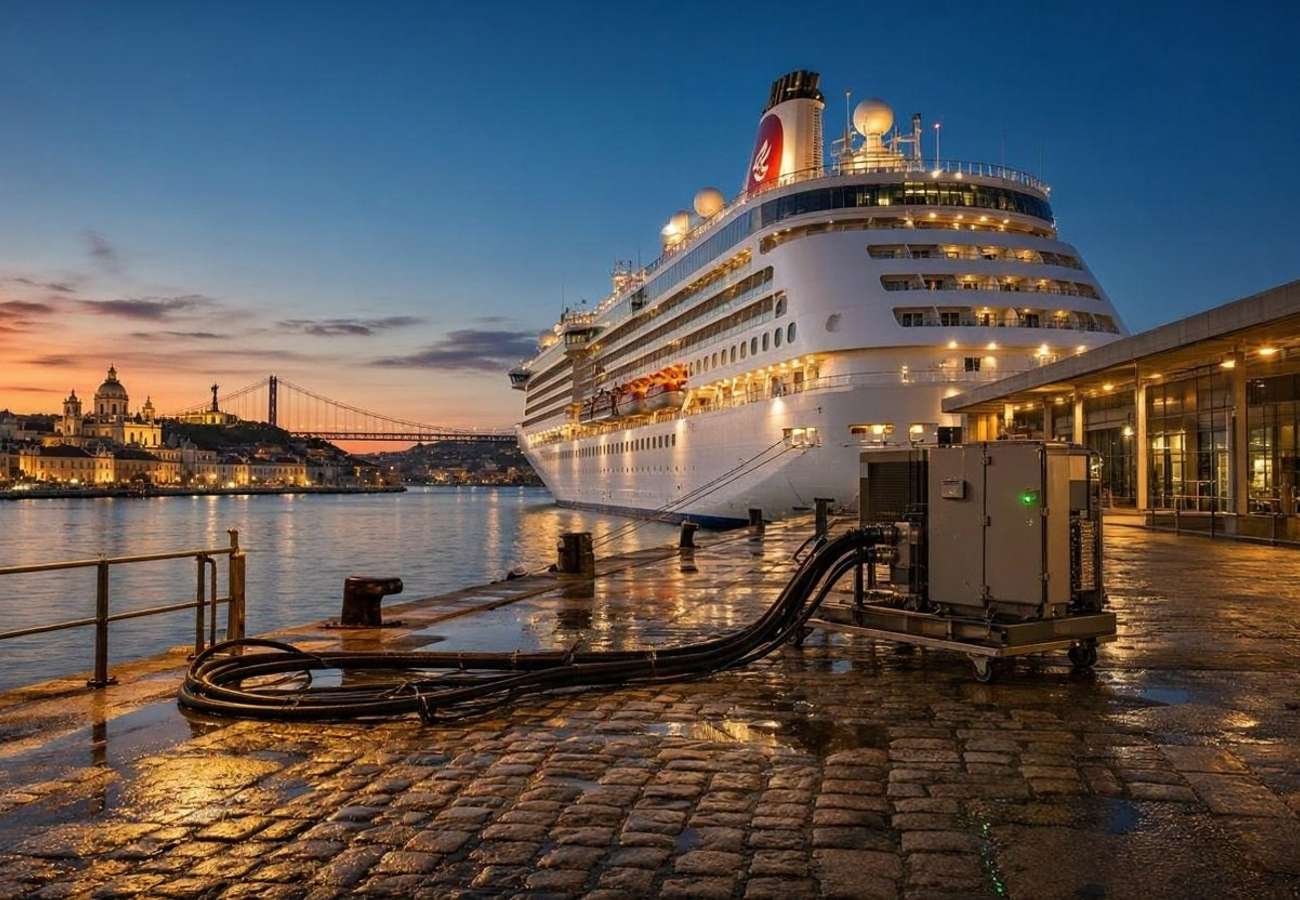
At the core of Portugal’s decarbonization drive is the technical implementation of cold-ironing infrastructure, formally designated as Onshore Power Supply (OPS), across the Tagus River estuary in Lisbon and the Atlantic deep-water docks of the Port of Leixões. When large modern cruise vessels dock at passenger terminals, their primary propulsion systems shut down, but massive diesel-electric auxiliary generators traditionally remain operational around the clock to supply hotel loads, air conditioning, galley power, water desalination, and navigation systems. Operating continuously within urban riverfronts, these auxiliary engines generate substantial local emissions of sulfur dioxide, nitrogen oxides, fine particulate matter, and acoustic vibration.
To address this environmental hazard, the Port Authority of Lisbon (APL), in conjunction with national grid operator REN and municipal authorities, has installed high-voltage shore connection substations at the Santa Apolónia Cruise Terminal and the Rocha Conde de Óbidos passenger quay. These specialized facilities step down electrical power from the domestic transmission network, converting alternating current between 50 Hz and 60 Hz frequencies and elevating distribution to either 6.6 kV or 11 kV standards required by international maritime specifications. By connecting berthed vessels to shore-side electrical conduits, auxiliary generator operation is silenced entirely, slashing berthed greenhouse gas emissions by up to 80% across standard port turnarounds.
The environmental benefits of OPS expand significantly due to Portugal’s domestic energy profile. Because the Portuguese electrical grid frequently draws between 70% and 90% of its generation from renewable energy sources—including Atlantic offshore wind arrays, hydroelectric reservoirs across the northern river systems, and extensive solar farms across the Alentejo—docked cruise ships connected to shore power run almost entirely on clean, domestic green electrons. At the Port of Leixões in Matosinhos, complementary engineering works are progressing to bring container and cruise docks onto equivalent electrical architectures, establishing a green maritime corridor along Portugal’s western Atlantic seaboard before the end of 2027.
       COLD-IRONING (OPS) SHORE-SIDE ELECTRICAL POWER SCHEMATIC

   National Renewable Grid (Wind / Hydro / Solar)
                     |
                     v
   [ 60kV / 15kV Substation Transformation ]
                     |
                     v
   [ Frequency Conversion System: 50 Hz Grid -> 60 Hz Ship Standard ]
                     |
                     v
   [ High-Voltage Shore Connection Vault (6.6 kV / 11 kV) ]
                     |
                     +==================+ (Flexible Armored Cable Rig)
                                        |
                                        v
                    [ Berthed Cruise Vessel Auxiliary Bus ]
                    * Shipboard Diesel Generators Silenced
                    * Local Particulate & NOx Emissions Eliminated
                    * 80% Net Reduction in Port-Area GHG Output
Complementing shore-power engineering, port authorities have implemented strict environmental verification protocols governing fuel usage, bilge water processing, and solid waste disposal. Ships without cold-ironing compatibility that berth during peak summer seasons face mandatory emissions testing and differential port tariff structures designed to penalize heavy fuel oil consumption while incentivizing vessels equipped with selective catalytic reduction systems, dual-fuel liquefied natural gas capability, or battery-hybrid storage modules.
AI Density Tracking and Urban Passenger Flow Management
Beyond emissions mitigation, managing physical pedestrian volume within sensitive medieval streetscapes represents the central operational priority of Lisbon’s cruise modernization program. The historic cores of Lisbon—characterized by narrow cobblestone alleys, steep stairways, and heritage tram networks—were never engineered to absorb simultaneous disembarkations of ten thousand passengers over a three-hour morning transit window. When multiple mega-ships berth concurrently, concentrated footfall strains public transit lines, crowds out residential retail establishments, and degrades the visitor experience.
To solve this spatial concentration, municipal authorities, the Lisbon Port Authority, and the Lisbon Tourism Observatory have rolled out an integrated digital ecosystem centered on Artificial Intelligence passenger density monitoring and Digital Port Passes. Operating via optical spatial sensors placed across major transit arteries, terminal exit gates, and key historic monuments, the system analyzes anonymous pedestrian densities in real time, projecting pedestrian flow bottlenecks before they reach critical thresholds.
Through API integration with cruise ship shore-excursion desks, independent tour operators, and mobile traveler concierges, the municipal platform issues real-time itinerary recommendations and dynamic time-slotted access reservations for major heritage landmarks, including the Jerónimos Monastery, the Belém Tower, and the São Jorge Castle. During peak arrival periods, tour operators receive automated route adjustments directing excursion coaches and guided walking groups away from congested central plazas toward designated heritage secondary corridors. Preliminary operational trials recorded a 25% reduction in peak-hour queue durations at high-density monuments, distributing visitors across broader operational hours.
A major focus of this flow engineering involves steering visitors eastward and northward into emerging creative districts. Rather than channeling every departing passenger directly west toward the Baixa Pombalina or uphill into Alfama, port guides and municipal signage encourage walking itineraries toward Marvila, Beato, and the broader eastern riverfront. Once industrial dockside warehouse zones, Marvila and Beato have transformed into thriving creative arts clusters, hosting contemporary art galleries, microbreweries, artisanal ceramic workshops, and technology incubators housed inside repurposed factory architecture. By establishing pedestrian-friendly waterfront promenades connecting Santa Apolónia directly with Marvila, the city converts cruise footfall into economic activity for localized, contemporary creative enterprises while easing congestion within traditional heritage districts.
                  LISBON PASSENGER FLOW DECENTRALIZATION MAP

     [ OLD CHOKEPOINT CORRIDOR ]                  [ REBALANCED 2027 CORRIDOR ]
  +-------------------------------+             +-------------------------------+
  |  Santa Apolonia / Rocha Docks |             |  Santa Apolonia / Rocha Docks |
  |              |                |             |         /           \         |
  |              v                |             |        v             v        |
  |  Historic Alfama & Baixa Core |             | Historic Core   Marvila/Beato |
  |  - Extreme pedestrian crush   |             | (Time-slotted)  Creative Hubs |
  |  - Public transit gridlock    |             |  - 25% Queue    - Art Studios |
  |  - Resident friction          |             |    Reduction    - Local Cafes |
  +-------------------------------+             +-------------------------------+
Transforming Cruise Terminals into Civic Laboratories and Accessible Hubs
Physical design and social inclusion represent another dimension of Portugal's cruise reform. Rather than treating cruise terminals as sealed, sterile security facilities isolated behind perimeter fencing, Lisbon Cruise Port has pioneered a civic laboratory model that actively connects terminal infrastructure with local civic life. Designed by renowned Portuguese architect João Luís Carrilho da Graça, the terminal building itself—constructed with structural cork-infused white concrete—serves as an open public space featuring elevated public viewing terraces, landscaped waterfront parks, and open-air event spaces accessible to neighborhood residents regardless of ship arrival schedules.
Social accessibility standards have expanded terminal functionality. The facility has integrated the globally recognized Hidden Disabilities Sunflower program, training port staff, security personnel, and customs officers to identify and discreetly assist travelers with non-visible disabilities, including autism, chronic anxiety, sensory processing sensitivities, and mobility challenges. Dedicated quiet decompression lounges, tactile orientation pathways for visually impaired visitors, and barrier-free embarkation gangways have established Lisbon as an international benchmark for accessible maritime transport.
       CIVIC LABORATORY AND ACCESSIBILITY FRAMEWORK AT LISBON TERMINAL

   +-------------------------------------------------------------------------+
   |                     LISBON CRUISE TERMINAL COMPLEX                      |
   +-------------------------------------------------------------------------+
          |                               |                           |
          v                               v                           v
   [ CIVIC INTEGRATION ]        [ ACCESSIBLE TRAVEL ]       [ COMMUNITY ENGAGEMENT ]
   * Open Public Rooftop Park   * Hidden Disabilities       * Maritime Education
   * Cork-Infused Concrete        Sunflower Protocol          Outreach Programs
   * Waterfront Pedestrian Way  * Tactile Ground Guidance   * Local Primary School
   * Unrestricted Civic Access  * Sensory Quiet Lounges       Harbor Field Trips
In parallel, port administrators conduct structured educational programs, inviting primary school classes, university urban planning departments, and technical maritime apprentices to inspect harbor operations, observe wildlife preservation programs in the Tagus estuary, and learn about maritime career opportunities. This educational outreach reframes the port’s identity, demonstrating that maritime logistics and community enrichment can coexist when terminals are deliberately integrated into the social fabric of surrounding neighborhoods.
Port of Leixões and the Douro River Navigation Network
In Northern Portugal, the cruise tourism dynamic operates through an interconnected dual system comprising ocean liner operations at the Port of Leixões and an extensive river cruise ecosystem navigating the Douro River basin. Situated in Matosinhos just north of Porto, the Port of Leixões serves as the primary maritime gateway for large passenger ships visiting the northern region. Equipped with an iconic curved passenger terminal designed by architect Luís Pedro Silva, Leixões accommodates deep-water ocean liners while functioning as a multimodal springboard for regional discovery.
         NORTHERN PORTUGAL CRUISE & REGIONAL DISTRIBUTION CORRIDOR

   +------------------------------------+
   |   Port of Leixoes (Matosinhos)     | <--- Deep-water Ocean Liner Arrivals
   +-----------------+------------------+
                     |
                     | Electric Rail & Zero-Emission Coach Shuttles
                     v
   +------------------------------------+
   |      Porto & Vila Nova de Gaia     |
   | - UNESCO Ribeira Waterfront        |
   | - Historic Port Wine Lodges        |
   | - Douro River Embarkation Quays    |
   +-----------------+------------------+
                     |
                     | Hotel Barge & River Vessel Navigation
                     v
   +------------------------------------+
   |         Douro River Valley         |
   | - 1M+ Annual Boat Passenger Trips  |
   | - UNESCO Terraced Wine Landscape   |
   | - Direct Spend in Rural Quintas    |
   +------------------------------------+
The scale of northern maritime tourism is amplified by river traffic along the Douro waterway. Operating through five massive navigation locks between Porto and the Spanish border at Barca d'Alva, river hotel ships and day-trip excursion craft move over one million passengers annually through the world’s oldest demarcated wine region. The Alto Douro Wine Region, recognized as a UNESCO World Heritage cultural landscape, features steep terraced vineyards carved into slate and schist mountainsides over centuries of viticulture.
Historically, river cruise operations generated logistical bottlenecks along the historic Ribeira quayside in Porto and the riverside cellars of Vila Nova de Gaia. Under updated regional coordination guidelines, river cruise operators, port authorities, and the Portuguese Waterway Administration (APDL) have harmonized turnaround scheduling. Staggered disembarkations, dedicated zero-emission electric shuttle coaches, and prioritized passenger transfers to suburban commuter rail lines ensure smooth passenger movement between ocean liner berths at Leixões, river quays on the Douro, and the historic urban core.
This logistical alignment provides substantial economic benefits for northern rural communities. Rather than restricting passenger spending to waterfront wine lodges in Gaia, river itineraries coordinate shore excursions with family-owned vineyards (quintas), traditional olive oil presses, and village craft workshops in Peso da Régua, Pinhão, Lamego, and Foz Côa. Cruise lines operating along the Douro are required to integrate local guides and purchase certified regional foodstuffs, channeling tourism spending directly into interior agricultural communities vulnerable to rural depopulation.
Inland Excursion Anchors: Expanding Routes to Coimbra and Braga
A central pillar of Portugal's ET2027 strategy is geographic decentralization: converting single-day coastal cruise calls into comprehensive regional explorations that stretch deep into the Portuguese interior. Two historic cities—Coimbra in the Centro region and Braga in the northern Minho province—serve as primary anchor destinations for overland excursion corridors designed to relieve coastal urban saturation.
Coimbra, situated along the Mondego River between Lisbon and Porto, is celebrated for its historic academic institutions. The University of Coimbra, founded in 1290 and designated a UNESCO World Heritage site, houses the baroque Biblioteca Joanina—one of the world's most opulent libraries, known for its gilded wood carvings, frescoed ceilings, and resident colony of insect-eating pipistrelle bats that preserve rare manuscripts. Through dedicated rail packages connecting cruise terminals in Lisbon and Leixões directly to Coimbra-B station via high-speed Alfa Pendular train links, visitors reach the cultural capital of central Portugal in under two hours without adding tour coach traffic to coastal highways.
               STRATEGIC INLAND EXCURSION RAIL & ROAD ARTERIES

 [ Port of Leixoes / Porto ]                 [ Lisbon Cruise Port ]
              \                                       /
               \                                     /
                \                                   /
                 v                                 v
   +-------------------------------------------------------------+
   |          COIMBRA HERITAGE CORRIDOR (CENTRO REGION)          |
   |  * University of Coimbra & Baroque Biblioteca Joanina       |
   |  * Monastery of Santa Clara-a-Velha & Machado de Castro     |
   |  * High-Yield Cultural Tourism Displacing Day-Trip Crush    |
   +-------------------------------------------------------------+
                                 ^
                                 | High-Speed Alfa Pendular Rail Links
                                 |
   +-------------------------------------------------------------+
   |           BRAGA & MINHO CORRIDOR (NORTHERN REGION)          |
   |  * Ancient Roman Bracara Augusta Archaeological Sites       |
   |  * Bom Jesus do Monte Sanctuary & Hydraulic Funicular       |
   |  * Minho Gastronomy & Year-Round Non-Seasonal Scheduling    |
   +-------------------------------------------------------------+
Excursion frameworks in Coimbra extend beyond quick visits to the university courtyard. Curated itineraries incorporate the medieval Monastery of Santa Cruz, the Gothic ruins of Santa Clara-a-Velha, and the National Museum Machado de Castro, with its preserved Roman cryptoporticus. By extending shore-excursion dwell times and partnering with traditional Fado de Coimbra music societies and regional riverside restaurants, the municipality secures sustained economic benefit from cultural travelers who appreciate Central Portugal's literary and architectural heritage.
To the north, the ancient city of Braga anchors excursions originating from the Port of Leixões. Known historically as Bracara Augusta during the Roman Empire and later revered as the ecclesiastical capital of Portugal, Braga combines profound religious architecture with modern cultural initiatives. Shore excursions transport cruise guests to the Sanctuary of Bom Jesus do Monte, a UNESCO World Heritage pilgrimage site famed for its neoclassical granite staircase climbing 116 meters through sacred woodlands, served by the world’s oldest continuously operating water-balance hydraulic funicular.
Beyond its baroque sanctuaries, Braga offers deep archaeological collections at the D. Diogo de Sousa Museum, pedestrianized historic avenues lined with Renaissance fountains, and a distinguished culinary heritage highlighting roast kid goat (cabrito), Vinho Verde, and conventual sweets like Pudim Abade de Priscos. By structuring cruise excursions to Braga as year-round cultural journeys, regional tourism boards mitigate traditional winter seasonality, maintaining steady employment for local guides, transport operators, and family restaurateurs throughout the calendar year.
Infrastructure and Policy Targets Across Portuguese Ports
To deliver on the environmental and economic goals of ET2027, port authorities and government ministries have codified specific operational targets. The following framework outlines the mandatory operational standards governing cruise calls across major Portuguese maritime gateways through 2027:
| Port Gateway | Target Infrastructure & Technology | Environmental Objective | Regional Economic Corridor | Target Execution Year |
|---|---|---|---|---|
| Lisbon (Santa Apolónia / Rocha) | Cold-Ironing (OPS) High-Voltage Berths; AI Density Tracking; Digital Port Passes | 80% reduction in berthed GHG emissions; 25% decrease in historic center monument queues | Marvila/Beato creative clusters, Sintra, Cascais, and Mafra heritage routes | Complete OPS deployment by late 2026; expanded city integration by 2027 |
| Port of Leixões (Matosinhos) | Multi-berth shore connection; automated passenger transit to commuter rail | Complete elimination of auxiliary diesel operation during docking; lower noise pollution | Historic Porto, Vila Nova de Gaia wine lodges, Guimarães medieval center | Engineering commissioning mid-2026; full commercial link by 2027 |
| Douro River Waterway | Hybrid-electric river hotel vessels; synchronized navigation lock scheduling | 45% reduction in river transport carbon intensity; bank erosion control protocols | Peso da Régua, Pinhão, Lamego, and Foz Côa rural quintas and artisan producers | Phased rollout across fleet renewals through 2027 |
| Coimbra Regional Anchor | Direct multimodal rail excursions via Alfa Pendular; electronic ticketing coordination | Elimination of long-distance tour coach highway congestion; distributed urban dwell times | UNESCO University, Biblioteca Joanina, Mondego riverfront, Montemor-o-Velho | Fully operational coordinated rail schedules active late 2026 |
| Braga / Minho Hub | Zero-emission electric coach excursion fleets; year-round cultural programming | Zero tailpipe emissions on inland routes; mitigation of off-season tourism drop-offs | Bom Jesus do Monte, Roman archaeological network, Peneda-Gerês buffer towns | Fleet transition benchmark of 40% clean vehicles by 2027 |
Farm-to-Cruise Local Sourcing Mandates and SME Supply Chains
A persistent critique of global cruise tourism has centered on economic leakages: scenarios where international cruise conglomerates collect high ticket fares while provisioning ships through foreign corporate distributors, leaving host port communities with municipal cleanup costs and minimal direct revenue. Portugal has confronted this imbalance by establishing comprehensive Farm-to-Cruise local procurement standards tied to port operating agreements.
Under guidelines formulated by the Ministry of Economy and Maritime Affairs, cruise operators securing priority berthing slots in Portuguese ports must demonstrate verified supply chain commitments with domestic agricultural cooperatives and small-to-medium food enterprises. The program mandates that at least 65% of fresh provisioning procured during Portuguese port turnarounds—including seasonal fruits, vegetables, artisanal cheeses, fresh Atlantic seafood, poultry, and regional wines—must originate within a 100-kilometer radius of the servicing harbor.
       FARM-TO-CRUISE DIGITAL PROVENANCE AND LOCAL SOURCING LOOP

   [ Regional Farming Cooperatives & Local Fisheries ]
   (Douro Viticulture, Minho Greens, Setubal Fish, Alentejo Oils)
                           |
                           v
   [ Digital Blockchain Provenance & Quality Certification Hub ]
                           |
                           v
   [ Dedicated Cold-Chain Harbor Delivery to Berthed Ships ]
   * Minimum 65% Fresh Provisioning Sourced Within 100km Radius
   * Foreign Conglomerate Supply Chain Leakage Prevented
   * Direct Capital Inflow to Family Farms and Regional SMEs
                           |
                           v
   [ Passenger Gastronomic Engagement & Certified Onboard Dining ]
To support this local supply chain, modern cold-chain handling facilities have been constructed at Lisbon and Leixões, equipped with digital tracking platforms that log food provenance, production dates, and organic certifications. This supply pipeline integrates renowned regional products:
- Douro and Port Wines: DOC table wines from the Douro Valley, aged tawny ports from Gaia cellars, and light Vinho Verde varieties from Minho vineyards.
- Atlantic Seafood: Sustainably caught sea bass, sardines, octopus, and gilt-head bream sourced through municipal fish auctions in Matosinhos, Peniche, and Setúbal.
- Olive Oils and Dairy: Extra virgin olive oils from Trás-os-Montes and the Alentejo, paired with artisanal Serra da Estrela, Azeitão, and São Jorge cheeses.
- Orchard Produce: Pera Rocha from the Oeste agricultural corridor, citrus fruits from the Algarve, and seasonal berries from coastal agricultural collectives.
Inside terminal concourses, retail spaces have been redesigned to exclude generic international duty-free franchises in favor of curated artisan pop-up cooperatives. Disembarking and transit passengers browse authentic Portuguese craft goods—including handmade Bordallo Pinheiro ceramics, certified Portuguese filigree jewelry, natural cork leather goods, and locally distilled botanical gins—ensuring passenger expenditures flow directly to independent Portuguese artists, craftspeople, and family workshops.
Circular Economy and Waste Management Operations
Decarbonizing maritime operations requires equal rigor in processing the substantial waste volumes produced aboard modern passenger vessels. In alignment with the European Union’s Port Reception Facilities Directive, Portuguese ports have upgraded shoreside waste collection, separation, and valorization systems, turning port reception facilities into hubs of circular economic innovation.
Cruise ships calling at Lisbon and Leixões are prohibited from incinerating solid waste within territorial waters and face strict bans on discharging untreated greywater or treated blackwater inside harbor basins or estuary limits. Upon docking, ships connect to specialized quayside reception collectors that intake pre-sorted waste streams, including food organics, glass, metals, paper, and clean plastics. Port reception capacity was expanded by 50% between 2025 and 2026, diverting massive waste volumes from municipal landfills toward industrial recycling networks.
          CIRCULAR HARBOR WASTE RECEPTION AND CONVERSION CYCLE

 [ Shipboard Sorting ] ---> [ High-Efficiency Quayside Intake ]
                                      |
         +----------------------------+----------------------------+
         |                                                         |
         v                                                         v
   [ Organic Waste Stream ]                                  [ Recyclable Stream ]
   * Anaerobic Biomethanation                                * Clean Glass, Paper,
   * Municipal Biogas Grid Injection                           Metals & High-Density Polymers
   * Nutrient-Rich Agricultural Compost                      * Industrial Remanufacturing
Organic waste offloaded from vessels undergoes anaerobic digestion at regional bio-refining plants, producing biomethane gas injected into the national energy grid and nutrient-rich organic compost distributed to agricultural orchards across the Oeste and Ribatejo farming districts. Non-recyclable residual plastics are processed through specialized facilities converting polymers into energy, while rigid plastics are reclaimed for regional manufacturing. Through transparent public reporting, port authorities audit and publish monthly diversion rates, ensuring shipping lines comply with zero-waste-to-landfill benchmarks as a condition of future berth allocations.
Strategic Guide for Cruise Travelers Visiting Portugal
Navigating Portugal’s modernized cruise landscape allows independent travelers to enjoy rewarding, low-impact cultural journeys while avoiding crowded tourist bottlenecks. The following strategic advice assists visitors in maximizing their time across Portuguese ports:
                  PRACTICAL PASSENGER DECISION WORKFLOW

 [ STEP 1: VERIFY TERMINAL DOCK & TRANSPORT LINKS ]
 * Santa Apolonia: 5-min walk to Blue Line Metro & suburban rail
 * Rocha Conde de Obidos: Tram 15E / Bus 714 direct to Cais do Sodre
 * Leixoes: 8-min walk to Matosinhos Sul Metro Line A direct to Porto core
                          |
                          v
 [ STEP 2: DOWNLOAD DIGITAL PORT PASS & SECURE MONUMENT TIME-SLOTS ]
 * Reserve morning access for Jeronimos Monastery / Beato Creative Hub
 * Avoid unreserved mid-day queues at Torre de Belem and Castelo de Sao Jorge
                          |
                          v
 [ STEP 3: SELECT LOW-IMPACT REGIONAL INLAND EXCURSIONS ]
 * Book high-speed Alfa Pendular rail departures to UNESCO Coimbra
 * Reserve zero-emission coach transfers to Bom Jesus do Monte in Braga
 * Choose certified Douro Valley quintas prioritizing family viticulture
                          |
                          v
 [ STEP 4: DIRECT SPENDING TO CERTIFIED LOCAL SMES ]
 * Purchase certified Bordallo Pinheiro ceramics & cork craft from terminal artisans
 * Dine at independent tascas serving regional Atlantic seafood and DOC wines
- Verify Specific Terminal Docking Locations: In Lisbon, check whether your ship is berthing at the Santa Apolónia Cruise Terminal or the Rocha Conde de Óbidos dock. Santa Apolónia sits adjacent to the Santa Apolónia railway and metro station (Blue Line), offering direct subway access to Baixa-Chiado in under seven minutes and commuter trains along the northern Tagus banks. Rocha Conde de Óbidos is located further west in Alcântara, where travelers can connect to tram line 15E or local rail links at Alcântara-Mar station to reach the historic Belém district or Cais do Sodré. In Porto, ships berth at the Port of Leixões in Matosinhos; passengers can walk eight minutes to the Matosinhos Sul station on Metro Line A, providing a direct light-rail journey to Porto’s Trindade hub in thirty minutes.
- Utilize Digital Port Passes and Pre-Book Heritage Entries: To avoid lengthy ticketing queues at Lisbon’s premier monuments, obtain your Digital Port Pass through your cruise app or terminal welcome kiosks. Pre-reserve designated entry windows for the Jerónimos Monastery, the National Tile Museum (Museu Nacional do Azulejo), and the Belém Tower. Schedule visits to high-demand historical sites for early morning or late afternoon, spending the peak midday hours exploring spacious, contemporary cultural centers such as the MAAT (Museum of Art, Architecture and Technology), the CCB (Centro Cultural de Belém), or the creative warehouses of Marvila.
- Choose Certified Sustainable Shore Excursions: When booking organized tours through your ship or independent excursion providers, select itineraries with formal sustainability certifications that utilize zero-emission electric buses or public passenger rail. Prioritize overland excursions that travel inland to Coimbra or Braga, which relieve coastal crowding while offering rich encounters with Portugal's historic universities, Roman settlements, and sacred architectural landmarks.
- Direct Expenditures to Local Independent Businesses: When dining ashore or shopping for souvenirs, avoid imported mass-market trinkets sold around major transit squares. Seek out independent neighborhood tascas and seafood restaurants displaying the "Comércio com História" seal, which certifies historic commercial establishments. Purchase wines bearing official DOC seals (Douro, Dão, Alentejo, or Vinho Verde), authentic handmade azulejos from working ceramic studios, and genuine cork items from local cooperatives, ensuring your visit directly strengthens Portuguese families, craft heritage, and regional communities.
Related Travel Guides
- Calgary International Airport Transforms Domestic Travel with Nine Security Lanes and CT Technology
- Auckland Advances New Zealand's Long-Haul Travel with Economy Skynest Sleep Cabins
- Brunei Unveils Centralized Tourism Booking Platform Ahead of Visit Brunei Year 2027
- Lufthansa Negotiates Larger Boeing 787-9 Business Class Cabins for Long-Haul Routes
- Indonesia Shields Holiday Flyers as Asia Faces Sharp Aviation Fuel Squeeze
This article is for informational purposes. Flight routes, passenger regulations, visa rules, and transit advisories are subject to change by airlines and aviation authorities. Readers are advised to verify schedules and travel documentation with relevant carriers and border agencies before departure.
Related Stories
Lisbon and Porto Lead Portugal Cruise Revolution With Green Ports and Local Growth by 2027
European Waterways Expands 2027 Luxury Barge Cruises Across Europe: New Brittany Route, Castle Falconry, and 10% Early Booking Savings