
Lima's Jorge Chávez Airport Surges with Eight Consecutive Months of Chilean Tourist Growth: 2026 Travel Guide
Handling 65.5% of all international arrivals into Peru during H1 2026, Lima's modernized mega-hub outpaces regional competitors with a sustained Chilean travel boom.

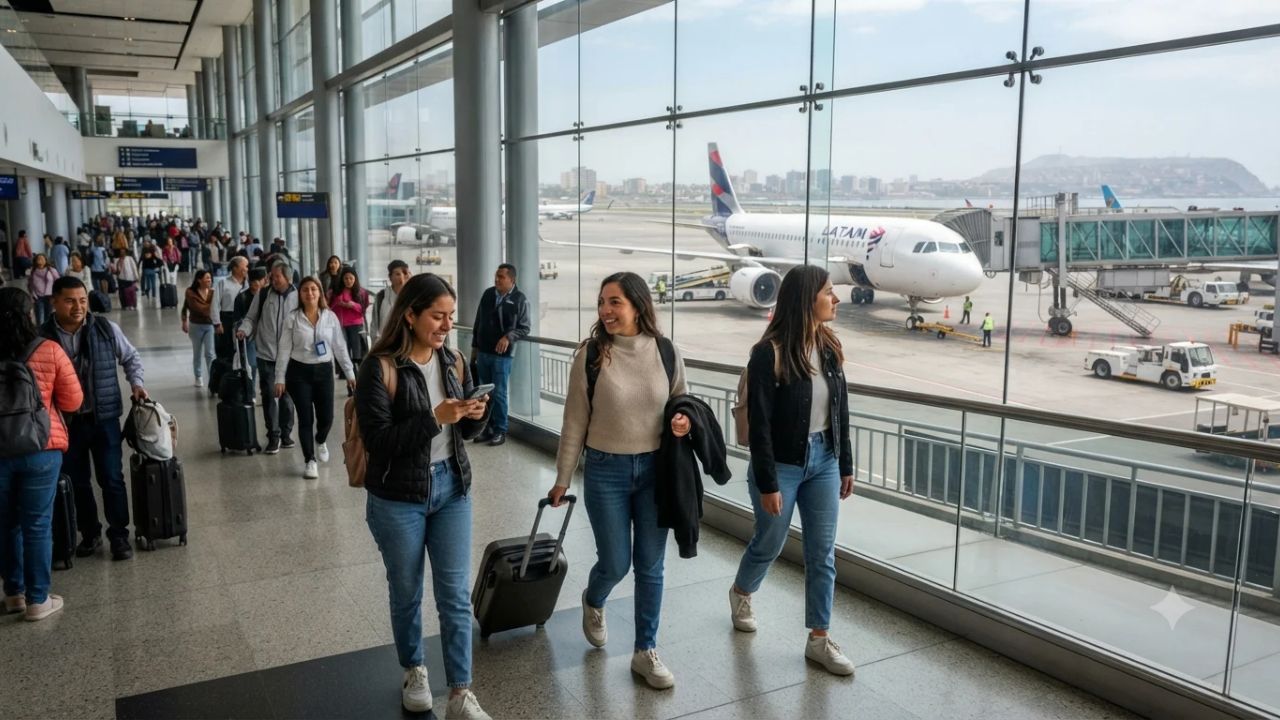
Image generated by AI
For decades, the arid border crossing between Tacna and Arica funneled the vast majority of Chilean travelers into Peru via buses and shared taxis, but in 2026 that historic dynamic has permanently inverted. In an unprecedented trans-Andean shift, Jorge Chávez International Airport in Lima has achieved an unbroken streak of eight consecutive months of growth in tourist arrivals from Chile. Rather than braving the grueling overland journey up the Pan-American Highway, travelers from Santiago are boarding low-cost flights straight into the Peruvian capital, transforming weekend city breaks into a powerhouse of regional tourism.
Official arrival statistics released by the Ministry of Foreign Trade and Tourism, known across Peru as MINCETUR, confirm that the nation welcomed over 1.62 million international tourists during the first half of 2026. Demonstrating remarkable gateway dominance, Jorge Chávez International Airport processed more than one million of those international visitors—accounting for a commanding 65.5% of all international entries into the country. By contrast, the Santa Rosa Border Control Post in Tacna handled 259,000 visitors, representing 15.9%. This structural migration toward air travel establishes Lima as the undisputed Pacific gateway of South America.
The Trans-Andean Flight Corridor: How Aviation Reshuffled Regional Travel
The sustained passenger surge between Santiago's Arturo Merino Benítez International Airport and Lima reflects profound changes across the South American aviation sector. Regional travel blocs have become the bedrock of the continent's tourism economy, with visitors residing in South American nations accounting for nearly 49.2% of Peru's total international influx in the first half of 2026. Within this regional demographic, Chile stands as the undisputed number-one international source market, generating far more arrivals than the United States, Ecuador, Colombia, or Brazil.
When measured against the historic pre-pandemic benchmark of 2019, when Peru registered approximately 4.4 million international visitors, current 2026 numbers represent a steady recovery toward 75% to 80% of peak historical volume. However, the internal distribution has concentrated heavily within Lima. While total land entries have moderated, the air corridor linking Santiago with Lima has emerged as one of the most profitable, high-density flight sectors in the Southern Hemisphere.
This momentum has been unlocked by aggressive capacity expansions from low-cost carriers like SKY Airline and JetSMART, alongside heavy seat deployments by legacy operator LATAM Airlines. Fierce competition has driven down round-trip airfares in real terms, enabling young professionals, culinary tourists, and corporate delegations from Chile to treat Lima not as a once-in-a-decade expedition, but as an accessible weekend getaway.
Simultaneously, the completion of the Jorge Chávez Airport megaproject overseen by Lima Airport Partners—featuring a second operational runway and a sprawling passenger terminal designed to handle between 30 and 40 million passengers annually—has provided airlines with the vital slot availability required to scale daily flight frequencies.
What Sets the Modern Lima Experience Apart
Historically treated as a brief layover city en route to the Incan citadels of the Sacred Valley, Lima has emerged as a premier cultural and gastronomic capital in its own right. Protected in part by the UNESCO World Heritage Centre for its sixteenth-century colonial historic center, the metropolis pairs historic grandeur with an unparalleled contemporary culinary scene.
Chilean travelers arriving on morning flights step into an epicurean playground that boasts multiple Michelin-caliber establishments and neighborhood cevicherías. In upscale districts like Miraflores, San Isidro, and the bohemian arts enclave of Barranco, dining is an art form rooted in native biodiversity. Visitors savor pristine sea bass ceviche cured in tangy leche de tigre, slow-cooked beef lomo saltado tossed over flaming woks, and velvety ají de gallina, accompanied by frothy pisco sours infused with native citrus.
In addition, the passenger journey through Lima has been transformed by technology. Arriving travelers from Mercosur associate states and the Andean Community now pass through automated biometric e-gates in seconds, eliminating the exhausting customs lines that once delayed arrivals. This seamless airport transit allows visitors to disembark their aircraft and arrive at oceanfront hotels overlooking the Pacific cliffs of the Malecón in under an hour.
Visitor Insider Tips
Maximizing a city escape or regional connection through Lima requires insider timing, neighborhood awareness, and smart transit strategies.
- Eat Ceviche Exclusively at Lunch: Traditional Limeño food culture dictates that ceviche should only be consumed during midday hours when morning boat catches arrive fresh from the Pacific harbors of Callao and Chorrillos. Revering this freshness standard, elite cevicherías close by 4:30 PM; save evening meals for wood-fired criollo dishes, Nikkei fusion, or Amazonian tasting menus.
- Base Yourself in Walkable Barranco or Miraflores: Avoid the dense automotive gridlock of downtown Lima by booking accommodations in Barranco or Miraflores. Barranco offers pedestrian-friendly streets lined with turn-of-the-century republican mansions, independent art galleries, and craft cocktail bars, while Miraflores provides safe, scenic cliffside cycling along the Malecón.
- Utilize Authorized Airport Taxis or Official Express Buses: Never hail unmetered street taxis outside the airport perimeter. Book verified taxi counters like Green Taxi inside the arrivals hall, or take the Airport Express Lima bus, which provides reliable, air-conditioned transport directly to central hotels in Miraflores.
- Bypass Peak Traffic with the Metropolitano Bus Rapid Transit: When venturing from Miraflores into the historic Plaza Mayor, ride the dedicated Metropolitano bus line from Benavides Station. The buses run in dedicated highway lanes, bypassing notorious traffic jams along the Vía Expresa and reaching central colonial monuments in twenty minutes.
- Plan Ahead for High-End Gastronomy Bookings: Culinary flagships like Central, Maido, and Astrid y Gastón fill their reservation calendars up to three months in advance. Secure dining reservations well ahead of booking your flights.
Cultural and Environmental Context
The influx of high-spending air travelers from Chile delivers substantial economic stimulus across Peru's service economy. Unlike short-term border crossers who historically focused on quick retail shopping in Tacna, travelers arriving through Jorge Chávez Airport spend significantly more per day on boutique lodging, guided historical tours, and independent artisanal markets. Targeted digital promotional initiatives by PromPerú have successfully channeled this tourist spending into local neighborhood economies, supporting thousands of culinary apprentices, museum docents, and small-batch agricultural producers.
From an environmental standpoint, managing rapid passenger growth at Jorge Chávez Airport requires rigorous ecological oversight. The newly expanded terminal integrates advanced energy-efficient LED illumination, automated greywater recycling systems, and strict tarmac management protocols that minimize aircraft taxiing and ground engine idling. Simultaneously, airlines operating the trans-Andean route are increasingly deploying fuel-efficient Airbus A320neo and A321neo aircraft, reducing emissions and acoustic noise over coastal wetlands like the Pantanos de Villa wildlife refuge. Responsible travelers help safeguard Lima's coastal ecology by patronizing restaurants committed to sustainable seafood sourcing and respecting seasonal fishing bans on overexploited marine species.
FAQ: Visiting Lima in 2026
Why are flights from Chile to Lima growing so rapidly? Competitive fares from low-cost carriers, streamlined biometric e-gates at Jorge Chávez Airport, and Lima's world-renowned culinary reputation have turned the city into a top weekend getaway for Chilean travelers.
How far is Jorge Chávez Airport from Miraflores? The airport is located in Callao, approximately 16 kilometers (10 miles) from Miraflores. Travel times vary from 40 minutes during off-peak hours to 90 minutes during evening rush hour.
Do tourists need a visa to enter Peru? Citizens of South American nations, the United States, Canada, the European Union, the United Kingdom, and Australia do not require a tourist visa for short-term visits of up to 90 days.
What is the best time of year to visit Lima? The sunny summer months from December through April offer clear coastal skies, warm ocean breezes, and vibrant terrace dining, avoiding the cool coastal sea mist (garúa) of winter.
Where desert cliffs meet the endless Pacific, Lima's reborn airport welcomes the world to a table set with centuries of culinary passion.
Related Travel Guides
Disclaimer
This article is for informational and educational purposes only. It does not constitute legal, financial, or professional advice. While we strive to provide accurate and up-to-date information, travel policies, regulations, and conditions change rapidly. Always verify information with official sources before making travel decisions. Nomad Lawyer makes no representations about the accuracy, reliability, completeness, or suitability of the information provided. Readers should consult qualified professionals for advice specific to their circumstances. The views expressed in this article are those of the author and do not necessarily reflect the views of Nomad Lawyer.
Preeti Gunjan
Contributor & Community Manager
A passionate traveller and community builder. Preeti helps grow the Nomad Lawyer community, fostering engagement and bringing the reader experience to life.
Learn more about our team →