
Latin American Corporate Tourism Surges as MICE Sector and Connectivity Drive 2026 Growth
Latin America's corporate tourism is rebounding, with Travel & Tourism GDP forecast to grow 4.1% in 2026. Explore MICE trends and key business hubs.

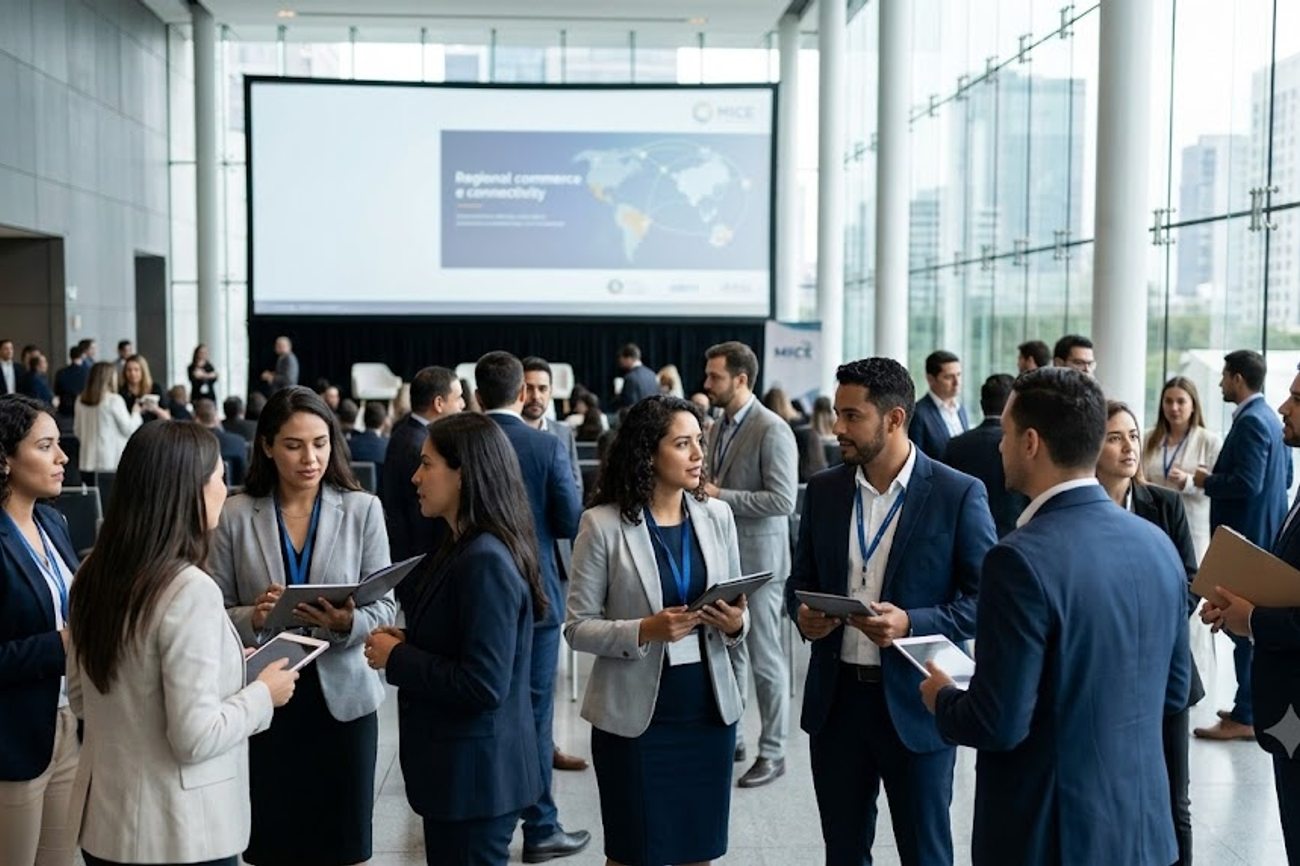
Image generated by AI
[Mexico City, September 10, 2026] — The corporate travel landscape across Latin America is undergoing a fundamental transformation, moving beyond traditional business trips toward a sophisticated ecosystem of connectivity, experiential travel, and sustainable development. Industry data indicates a renewed appetite for face-to-face professional engagement, driving a significant uptick in Meetings, Incentives, Conferences, and Exhibitions (MICE) across the region's primary economic corridors.
The shift is underpinned by a broader economic recovery. According to data from the World Travel & Tourism Council (WTTC), the Travel & Tourism GDP for Central and South America is expected to expand by 4.1% throughout 2026. This growth is further bolstered by a projected 7.8% increase in spending by international visitors, signaling a robust return of confidence from global investors and corporate entities.
Strategic Shift Toward High-Value Professional Engagement
The resurgence of corporate tourism is not merely a return to pre-pandemic habits but a reimagining of how business is conducted. After a prolonged period of reliance on virtual communication, organizations are rediscovering the necessity of physical presence to secure complex deals, forge strategic partnerships, and enhance internal corporate culture.
Latin America has become a primary beneficiary of this trend due to its unique geographic positioning between Europe and North America, coupled with a highly competitive hospitality sector. The region is no longer viewed simply as a leisure destination but as a strategic hub for industries ranging from fintech and green energy to advanced manufacturing and healthcare.
Major metropolitan centers—specifically São Paulo, Mexico City, Bogotá, Buenos Aires, Santiago, and Panama City—are aggressively upgrading their infrastructure. This includes the expansion of state-of-the-art convention centers and the modernization of airport facilities to handle increased international corporate traffic.
| Country | Key Corporate Tourism Hub | Main Business Travel Strength |
|---|---|---|
| Mexico | Mexico City, Monterrey, Cancún | Conferences, manufacturing, finance, incentives |
| Brazil | São Paulo, Rio de Janeiro, Brasília | Corporate meetings, trade events, technology |
| Argentina | Buenos Aires | Finance, culture, international conferences |
| Colombia | Bogotá, Medellín, Cartagena | Innovation, business events, incentives |
| Panama | Panama City | Regional headquarters, connectivity |
| Chile | Santiago | Mining, technology, investment meetings |
| Peru | Lima, Cusco | Business events combined with heritage tourism |
| Costa Rica | San José | Sustainability, technology, corporate retreats |
Urban Transformation and the Rise of Corporate Powerhouses
Latin American cities are pivoting their tourism strategies to prioritize "value over volume." Rather than focusing on the total number of arrivals, municipal governments and tourism boards are targeting high-net-worth corporate travelers who contribute more significantly to the local economy through longer stays and higher per-diem spending.
Mexico's Integration of Industry and Incentives
Mexico continues to leverage its proximity to the U.S. market and an expansive aviation network to maintain its status as a regional leader. Mexico City serves as a critical node for international financial institutions and global organizations, blending high-capacity business facilities with deep cultural assets.
Simultaneously, traditional vacation spots like the Riviera Maya and Cancún are diversifying. These areas are now developing specialized executive retreat packages and high-end incentive travel programs, successfully bridging the gap between corporate productivity and luxury leisure.
Brazil's Economic Scale and the "Bleisure" Trend
As one of the world's largest economies, Brazil remains a cornerstone of corporate mobility. São Paulo, in particular, functions as the financial heart of the region, hosting a vast array of multinational headquarters and large-scale trade exhibitions. The city's extensive hotel inventory allows it to absorb massive corporate events that smaller hubs cannot.
In Rio de Janeiro, a distinct trend toward "bleisure"—the blending of business and leisure—is taking hold. Professionals are increasingly extending their business trips to experience the city's cultural offerings, a trend that the WTTC suggests will continue to drive international visitor spending upward.
MICE Sector as an Economic Catalyst
The MICE segment is currently the most potent engine for growth within the corporate tourism sector. Because business delegates typically outspend leisure tourists on high-end accommodation, gourmet dining, and specialized technology services, the economic multiplier effect is substantial.
Governments are recognizing that a single international conference can act as a massive marketing campaign for a city, attracting future foreign direct investment and recurring business visitors.
| Destination | MICE Advantage |
|---|---|
| Mexico City | Large convention capacity and international business links |
| São Paulo | Corporate headquarters and trade exhibitions |
| Buenos Aires | Cultural appeal combined with conference facilities |
| Cartagena | Luxury incentive travel and historic venues |
| Panama City | Regional aviation connectivity |
| Santiago | Corporate investment and technology events |
Integration of Sustainability and Digital Innovation
The modern corporate traveler is increasingly driven by ESG (Environmental, Social, and Governance) criteria. Consequently, Latin American destinations are integrating sustainability into their core offerings to attract environmentally conscious firms. This includes the implementation of carbon-reduction programs in hotels and the adoption of energy-efficient systems in convention centers.
Technology is also streamlining the corporate journey. The region is seeing a rapid rollout of:
- Smart Airport Infrastructure: Reducing friction in customs and boarding for frequent business flyers.
- Digital Event Ecosystems: Utilizing AI-driven registration and networking tools to maximize the ROI of professional gatherings.
- Sustainable Logistics: A shift toward electric transport for corporate delegations within city centers.
Why This Matters (Information Gain & Experience)
For the corporate traveler and the event planner, this shift signals a move away from "cookie-cutter" business trips. The integration of cultural experiences into professional itineraries means that the value of a trip is now measured by both the deal closed and the cultural capital gained.
From a logistical standpoint, the growth in MICE infrastructure means fewer bottlenecks in major hubs like São Paulo and Mexico City, but it also requires travelers to book high-end venues much further in advance than in previous years. For the business owner, the 4.1% GDP growth in the sector suggests that Latin America is no longer a "secondary" market but a primary destination for global expansion and networking. The rise of "bleisure" specifically allows companies to improve employee retention by offering travel that serves as both a professional duty and a personal reward.
Related Travel Guides
Disclaimer
This article is for informational and educational purposes only. It does not constitute legal, financial, or professional advice. While we strive to provide accurate and up-to-date information, travel policies, regulations, and conditions change rapidly. Always verify information with official sources before making travel decisions. Nomad Lawyer makes no representations about the accuracy, reliability, completeness, or suitability of the information provided. Readers should consult qualified professionals for advice specific to their circumstances. The views expressed in this article are those of the author and do not necessarily reflect the views of Nomad Lawyer.
Kunal K Choudhary
Co-Founder & Contributor
A passionate traveller and tech enthusiast. Kunal contributes to the vision and growth of Nomad Lawyer, bringing fresh perspectives and driving the community forward.
Learn more about our team →