
Laos-China Railway Transforms Vientiane to Luang Prabang Route into UXO Education Corridor 2026
The Laos-China Railway has slashed travel times between Vientiane and Luang Prabang, enabling a surge in visitors to UXO education centers to learn about the country's war legacy.
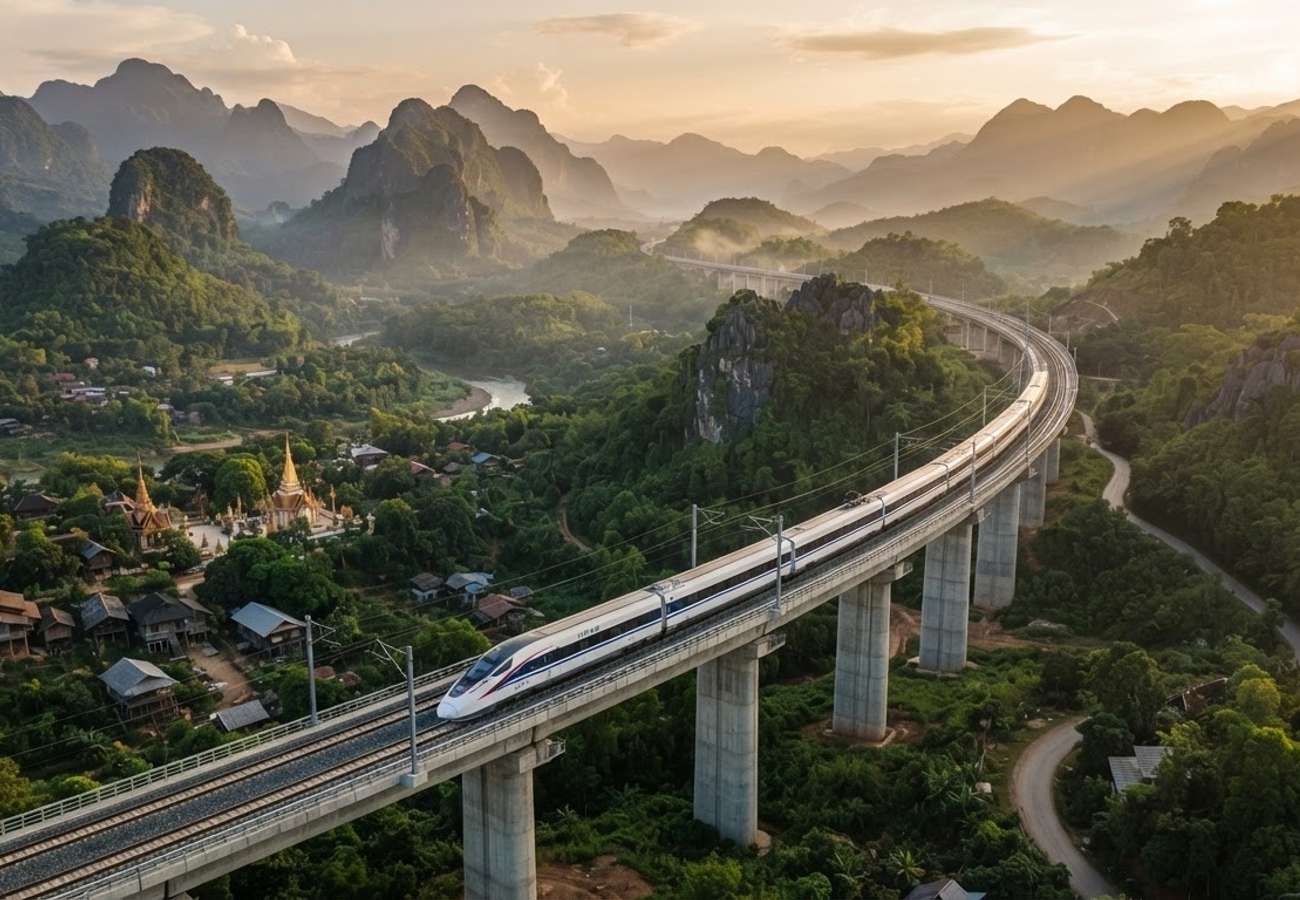
Image generated by AI
The Laos-China Railway has fundamentally altered the logistics of northern Laos, reducing a grueling multi-hour road journey to a streamlined rail trip that now facilitates critical education on the nation's unexploded ordnance (UXO) legacy.
The Boten–Vientiane section of the Laos–China Railway, operational since December 2021, has shifted the movement of visitors between the capital and the UNESCO-listed city of Luang Prabang. By providing a continuous standard-gauge link from Vientiane through Luang Prabang to the Chinese border at Boten and onward to Kunming, the line has replaced arduous overland travel with high-speed efficiency.
Rapid Transit and the "Golden Route"
The impact on travel duration is significant. Previously, the road journey between Vientiane and Luang Prabang took between six and eight hours, often complicated by winding mountain highways and rainy season delays. Current intercity electric multiple unit trains have reduced this window to approximately two to two and a half hours.
Market data indicates the scale of this shift:
- Passenger Volume: Over 70 million passenger trips were recorded across the wider China–Laos Railway by early 2026.
- Economic Recovery: The rail link is credited with accelerating the recovery of the visitor economy following the 2022 border reopenings.
- Itinerary Compression: Round-trip travel times between Vientiane and Luang Prabang have dropped from up to five days by road to as little as two days via rail.
Integrating UXO Education into Modern Itineraries
The increased accessibility has directly benefited the UXO Lao Visitor Center in Luang Prabang. Operated by the Lao National Unexploded Ordnance Programme and opened in 2009, the center serves as a primary hub for understanding the impact of decades of aerial bombardment.
Located near the Souphanouvong Monument in central Luang Prabang, the center provides evidence of cluster munitions and survivor testimonies. The rail connection allows travelers to arrive from Vientiane in the morning and complete a comprehensive visit to the center on the same day, a feat previously impossible for most short-term visitors.
From Landlocked to "Land-Linked"
The railway represents a strategic shift in Laos's geographic identity. Long viewed as landlocked, the country is transitioning into a "land-linked" tourism and trade corridor. World Bank analysis suggests that these long-distance rail connections are primary drivers of growth, particularly for the Chinese market.
Current tourism marketing now promotes a continuous corridor:
- Vientiane: Urban culture and administrative hub.
- Vang Vieng: Outdoor adventure and nature.
- Luang Prabang: Heritage, gastronomy, and UXO education.
Infrastructure vs. War Legacy
The intersection of modern engineering and historical trauma is evident in the railway's own construction. Public reports confirm that UXO clearance was required along several sections of the route in northern Laos before tracks could be laid. This creates a stark contrast for the traveler: riding a sleek, high-speed train through terrain that required extensive decontamination.
Logistics and Access
For travelers utilizing this route, the operational flow is as follows:
| Segment | Detail |
|---|---|
| Vientiane Station | Located outside the city center; requires taxi/bus transfer. |
| Luang Prabang Station | Located several kilometers from the historic core. |
| Local Transport | Tuk-tuks, taxis, and minivans available for city transfers. |
| Transit Time | Approximately 2 hours for direct services. |
| Ticket Options | Standard and First-class seating available. |
Why This Matters
From a logistical perspective, the Laos-China Railway does more than just move people; it changes the type of tourism occurring in the region. When a journey takes eight hours, travelers prioritize "sightseeing" and leisure. When it takes two hours, "reflective travel"—such as visiting UXO centers—becomes a viable addition to a standard itinerary.
Our analysis of the route map suggests that by lowering the barrier to entry for northern provinces, Laos is successfully diversifying its tourism product. Instead of Luang Prabang being a secluded destination, it is now a high-frequency stop. For the UXO community, this is a critical win; increased visibility leads to sustained funding and awareness for the ongoing clearance of contaminated land.
Industry Outlook
We expect a further compression of stay durations in Luang Prabang as the rail link makes weekend trips from Vientiane more common. This will likely force local operators to shift from "long-stay" packages to "high-impact" short-stay experiences. Additionally, as cross-border services toward China expand, the UXO Lao Visitor Center will likely see an increase in regional students and academic groups, further cementing the rail link as an educational corridor rather than just a transport artery.
The transition from landlocked to land-linked is turning a journey of convenience into a journey of conscience.
Related Travel Guides
Disclaimer
This article is for informational and educational purposes only. It does not constitute legal, financial, or professional advice. While we strive to provide accurate and up-to-date information, travel policies, regulations, and conditions change rapidly. Always verify information with official sources before making travel decisions. Nomad Lawyer makes no representations about the accuracy, reliability, completeness, or suitability of the information provided. Readers should consult qualified professionals for advice specific to their circumstances. The views expressed in this article are those of the author and do not necessarily reflect the views of Nomad Lawyer.