
LaGuardia Meltdown Disrupts Hundreds of Flights Nationwide This Easter
LaGuardia Airport's operational collapse during Easter weekend 2026 triggered hundreds of cascading delays across U.S. and Canadian networks. Learn how capacity limits and weather compounded disruptions affecting major carriers and passenger travel plans.

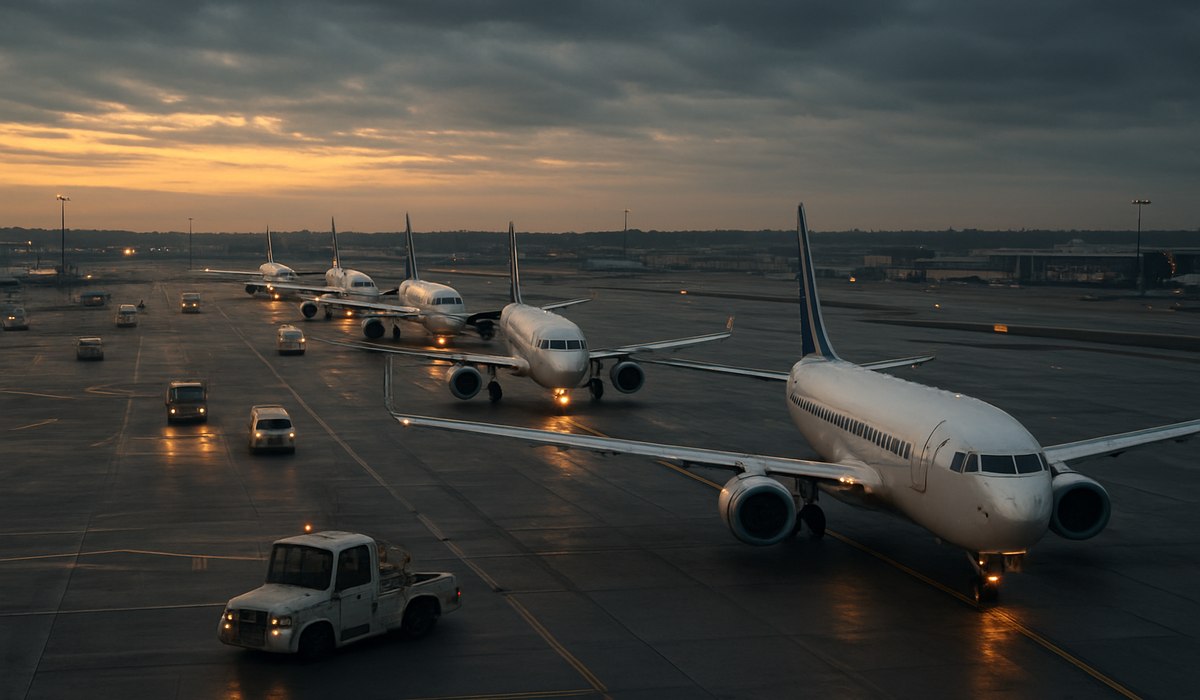
Image generated by AI
LaGuardia's Easter Weekend Collapse Exposes Network Fragility
LaGuardia Airport experienced a cascading operational failure during the Easter travel weekend of April 3–6, 2026, triggering hundreds of flight disruptions across North American networks. Rolling ground stops, low-visibility weather events, and the airport's inherent capacity constraints combined to create a perfect storm that rippled from New York to Boston, Miami, Chicago, and Canadian hubs. The incident underscores how little redundancy exists in America's air transportation system when demand peaks at seasonal highs.
Ground Stops and Ripple Effects Across Key Hubs
On April 5, early-morning fog and thunderstorms prompted LaGuardia's air traffic control tower to implement a ground stop that extended through the morning departure push. The Federal Aviation Administration implemented arrival rate restrictions and flow-control measures to manage the bottleneck, but the damage was already cascading downstream.
LaGuardia's compact footprint and slot-controlled gate operations mean that even minor disruptions amplify rapidly. When arrival capacity tightens, departing aircraft queue on taxiways. Gates become gridlocked. Inbound flights from Boston, Miami, Atlanta, and Dallas found no parking spaces, forcing crews to hold aircraft in the air or divert to nearby alternatives like Newark or Kennedy.
By mid-afternoon on April 5, knock-on delays extended through the entire Northeast Corridor and beyond. Travelers booked on evening connections from LaGuardia discovered their morning flights from originating cities were now delayed by hours. The effect cascaded through affiliated regional carriers including Endeavor, Republic, and Jazz, which operate the majority of short-haul service from LaGuardia.
Track real-time disruptions using FlightAware's real-time tracking system to monitor specific flights and airport conditions during travel.
How LaGuardia's Layout Creates Network-Wide Gridlock
LaGuardia Airport operates under space constraints unknown to many travelers. With limited gate inventory, narrow taxiway designs, and runway configurations that cannot easily absorb simultaneous departures and arrivals, the airport functions as a chokepoint rather than a hub.
Industry capacity analysis shows that LaGuardia's slot-restricted operations leave almost no margin for weather, mechanical delays, or staffing shortages. When visibility drops or runways require temporary closures, the entire system seizes. Aircraft destined for LaGuardia cannot depart from their origin cities until landing slots open—a ripple effect that travels backward through the network hour by hour.
This structural vulnerability became acutely visible during the Easter weekend meltdown. While larger airports like Atlanta, Dallas, and Chicago can absorb minor disruptions through buffer capacity and multiple runway pairs, LaGuardia cannot. Carriers responded by proactively rerouting passengers to Newark Liberty, John F. Kennedy, and regional alternatives in Connecticut and Westchester County when seats became available.
Airlines Juggle Resources as Demand Reaches Record Levels
Operating data from the first week of April 2026 reveals the scale of disruption: a single day recorded approximately 80 cancellations and 600 delayed flights at LaGuardia alone, affecting major carriers Delta Air Lines, American Airlines, and JetBlue Airways, plus regional partners.
Nationwide disruption metrics show roughly 460 cancellations and 5,500 total delays across U.S. airports on representative days during this period. LaGuardia consistently ranked among the hardest-hit facilities, despite processing fewer flights than comparable major hubs—a reflection of its operational fragility.
Airlines responded with flexible rebooking policies and travel waivers extending through mid-April. Carriers actively encouraged passengers with LaGuardia bookings to rebook on flights from Newark (EWR) or Kennedy (JFK) when available. However, with Easter weekend attracting near-record passenger volumes to all Northeast terminals, rerouting options filled rapidly.
Crew scheduling became a secondary crisis point. Aircraft and flight crews positioned for evening departures became stranded at gates, creating cascading schedule disruptions through midnight and into the following day. The compounding effect of tight crew duty limits meant that some flights ultimately could not operate without expensive repositioning moves.
The March 22 Runway Incident's Lingering Impact
The current meltdown unfolded against a troubling backdrop. On March 22, 2026, an Air Canada Express regional jet collided with an emergency response vehicle during landing, resulting in multiple fatalities. That accident prompted a temporary runway closure and heightened scrutiny of ground movement procedures.
In the incident's aftermath, one runway remained under operational review, and air traffic controllers implemented more conservative spacing protocols. When April's weather disruptions materialized, LaGuardia's already-reduced runway capacity could not absorb additional strain.
Airlines extended March travel waivers into early April to accommodate passengers originally booked during the recovery period following the March 22 accident. The combined effect—recent safety-related operational constraints plus seasonal demand at historical highs—created the conditions for the Easter weekend meltdown.
Traveler Action Checklist
-
Check flight status in real time using your airline's mobile app or FlightAware 24 hours before departure.
-
Enable push notifications for your specific flights so delays and gate changes reach you immediately.
-
Arrive 3 hours early for all domestic flights departing from or connecting through LaGuardia during this period.
-
Consider rerouting to Newark (EWR) or Kennedy (JFK) if you have flexibility, as LaGuardia remains severely capacity-constrained.
-
Verify rebooking options with your airline in writing; verbal waivers may not apply to all passengers.
-
Document delays exceeding 3 hours with confirmation numbers for potential compensation claims under DOT rules.
-
Book return flights with maximum layover buffers (minimum 3 hours) to avoid missed connections if inbound flights slip.
Disruption Impact Summary
| Metric | Details |
|---|---|
| Primary Airport | LaGuardia (LGA), New York |
| Disruption Period | April 3–6, 2026 |
| Cancellations (Single Day Peak) | ~80 flights at LaGuardia |
| Delayed Flights (Single Day Peak) | ~600 at LaGuardia; 5,500 nationwide |
| Affected Airlines | Delta, American, JetBlue, Endeavor, Republic, Jazz, Air Canada |
| Secondary Hubs | Boston, Miami, Atlanta, Dallas, Chicago, Newark, Kennedy |
| Primary Cause | Low visibility, thunderstorms, structural capacity limits |
| Secondary Factor | Post-accident runway constraints from March 22 incident |
| Estimated Passengers Affected | 100,000+ across North American network |
| Government Oversight | FAA flow-control, DOT consumer protection oversight |
What This Means for Future Travel Planning
The LaGuardia meltdown of Easter 2026 reveals a systemic vulnerability in North American aviation infrastructure. U.S. airports operate at near-maximum capacity during peak travel periods, leaving virtually no margin to absorb weather, equipment failures, or staffing shortages without visible passenger impact.
For travelers, this reality demands tactical flexibility. Routes into New York should include rerouting contingencies. Passengers should assume that seasonal peaks (Easter, Thanksgiving, December holidays, summer) will produce delays and cancellations with greater frequency than low-demand periods.
Airlines face pressure to either expand capacity or implement dynamic pricing that dampens demand during peaks. Neither solution addresses the fundamental constraint: U.S. aviation infrastructure has not grown commensurate with demand growth since 2019.
**Frequent travelers should monitor the
Disclaimer
This article is for informational and educational purposes only. It does not constitute legal, financial, or professional advice. While we strive to provide accurate and up-to-date information, travel policies, regulations, and conditions change rapidly. Always verify information with official sources before making travel decisions. Nomad Lawyer makes no representations about the accuracy, reliability, completeness, or suitability of the information provided. Readers should consult qualified professionals for advice specific to their circumstances. The views expressed in this article are those of the author and do not necessarily reflect the views of Nomad Lawyer.
Raushan Kumar
Founder & Lead Developer
Full-stack developer with 11+ years of experience and a passionate traveller. Raushan built Nomad Lawyer from the ground up with a vision to create the best travel and law experience on the web.
Learn more about our team →