
LaGuardia Airport Delays: FAA Ground Program & Airshow Trigger Congestion
LaGuardia International Airport faces travel chaos as FAA Ground Program triggers 117 delays and 9 cancellations across US-Canada routes.

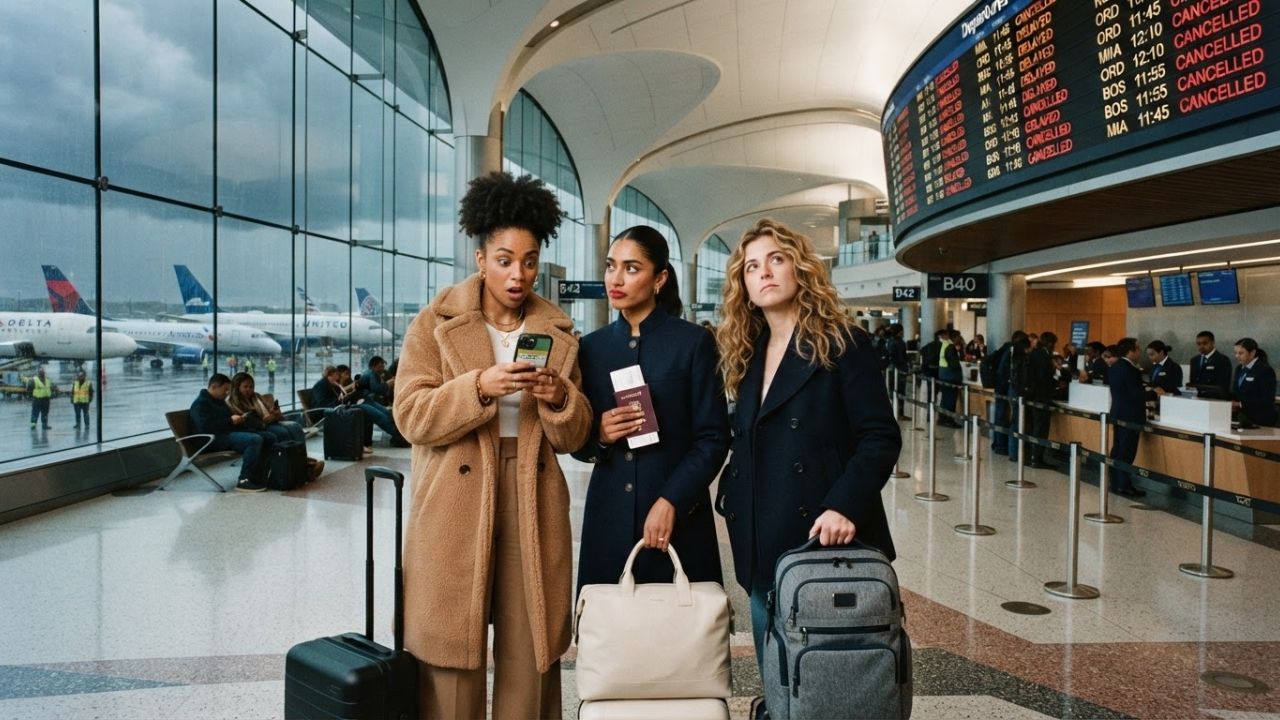
Image generated by AI
New York's busy domestic gateway experienced severe congestion today as air traffic control restrictions squeezed terminal capacities. Flight tracking data on July 3, 2026 confirmed that airlines delayed 117 flights and cancelled nine others at LaGuardia International Airport (LGA).
According to reports, an FAA-mandated Ground Program combined with wind shifts and localized airspace restrictions from an active airshow created significant scheduling delays. Average arrival delays peaked at 62 minutes, with maximum wait times reaching 141 minutes on the tarmac.
Airlines are working to clear the scheduling backlog. Affected passengers are advised to check their flight status through carrier mobile apps before traveling to the airport.
Federal Aviation Administration Ground Program Triggers Airspace Restrictions in New York
According to air traffic control logs, the combination of high wind velocities and localized airspace holds for a nearby airshow forced traffic management initiatives across the New York metro area. The FAA Ground Program was implemented to handle reduced runway capacity, causing cascading backlogs at neighboring facilities. Inbound arrivals faced maximum wait times of up to 141 minutes on the tarmac as dispatchers spaced incoming flights.
Industry observers note that LaGuardia's geographic layout makes it highly sensitive to wind shifts and airspace holds. Because the airport operates with intersecting runways and sits near dense regional airspace, any restriction quickly ripples across the Northeast corridor. Today's restrictions forced airlines to adjust schedules, reposition crew members, and consolidate flights where possible.
The schedule instability was particularly severe for short-haul regional flights. Mainline carriers worked to protect long-haul schedules by prioritizing larger airframes, leaving regional feeder services to absorb the highest cancellation percentages. Displaced passengers faced long queues at customer service desks and gate areas throughout the afternoon.
Toronto Corridor and Canadian Routes Suffer Highest Disruption Rates
The flight corridor connecting New York City to Toronto, Canada, emerged as the most severely impacted international destination. Inbound flights from Toronto Pearson International (YYZ) saw two cancellations (representing eight percent of route volume) and one delay (four percent). Similarly, inbound routes from Toronto City Centre (YTZ) recorded one cancellation (25 percent) and three delays (75 percent).
Outbound schedules from LaGuardia to Canada reflected an identical capacity squeeze. Flights departing LGA for Toronto Pearson suffered three cancellations (12 percent) and two delays (eight percent). Outbound flights to Toronto City Centre logged one cancellation (25 percent) and one delay (25 percent).
Other Canadian destinations were also pulled into the disruption. Halifax International (YHZ) registered a 25 percent delay rate on its inbound leg to LaGuardia. Mainline departures bound for Montreal-Trudeau (YUL) recorded a 10 percent delay rate, reinforcing Canada's position as the hardest-hit international corridor.
Regional Commuter Carriers Absorb the Bulk of LGA Groundings
Due to the concentration of delays on short-haul routes, regional carriers operating on behalf of mainline giants bore the brunt of the scheduling collapse. Jazz Aviation, operating regional feeder services under the Air Canada Express brand, recorded four cancellations (16 percent) and five delays (20 percent). Mainline partner Air Canada logged three cancellations (18 percent) but managed to avoid delays entirely.
Within the domestic US network, Endeavor Air—flying under the Delta Connection banner—was the most heavily impacted carrier by volume. The regional operator registered 48 delays (representing 22 percent of its scheduled flights) alongside a single cancellation. Republic Airways also faced significant operational challenges, reporting 17 delays (four percent) and one cancellation.
In contrast, major mainline domestic carriers kept their cancellation rates at zero percent, though they struggled with rolling delays. Delta Air Lines reported 11 delays (six percent), while American Airlines logged 16 delays (15 percent). Southwest Airlines recorded 15 delays (22 percent), United Airlines registered three delays (five percent), and JetBlue reported two delays (seven percent).
Florida Gateways and US Regional Airports Face High Delay Percentages
On the domestic front, Florida travel corridors experienced severe congestion. Miami International (MIA) reported five inbound delays (31 percent) and five outbound delays (33 percent). Orlando International (MCO) registered one inbound delay and three outbound delays (25 percent), while Fort Lauderdale International (FLL) reported two inbound delays.
Additionally, John Glenn Columbus International (CMH) became a significant bottleneck for domestic travelers. Outbound flights from LaGuardia to Columbus recorded one cancellation (10 percent) and one delay (10 percent), while inbound flights experienced two delays (22 percent). Minneapolis/St Paul International (MSP) also reported a 14 percent cancellation rate on its inbound services to New York.
Smaller US regional airports recorded some of the highest statistical delay rates today:
- Savannah/Hilton Head International (SAV): Two inbound (66 percent) and two outbound delays (66 percent).
- Patrick Leahy Burlington International (BTV): One inbound (50 percent) and one outbound delay (50 percent).
- Bangor International (BGR): Two inbound (40 percent) and one outbound delay (20 percent).
- Charlottesville-Albemarle (CHO): One inbound (25 percent) and two outbound delays (50 percent).
- Columbia Metro (CAE): One inbound (25 percent) and one outbound delay (25 percent).
- Richmond International (RIC): Two inbound (25 percent) and two outbound delays (25 percent).
A selection of regional airports avoided inbound delays but were hit on outbound flights from New York. Chattanooga (CHA) and Little Rock (LIT) both logged a 50 percent delay rate, while Asheville (AVL), Madison (MSN), Omaha (OMA), Syracuse (SYR), and Knoxville (TYS) each reported a 33 percent delay rate. New Orleans (MSY) and Grand Rapids (GRR) rounded out the regional impacts with a 25 percent delay rate.
Carrier Disruption Summary at LaGuardia Airport (LGA)
| Airline | Cancelled Flights | Delayed Flights | Share of Schedule Impacted |
|---|---|---|---|
| Endeavor Air (Delta Connection) | 1 | 48 | 22% Delays |
| Republic Airways | 1 | 17 | 4% Delays |
| Jazz Aviation (Air Canada Express) | 4 | 5 | 16% Cancellations / 20% Delays |
| Air Canada | 3 | 0 | 18% Cancellations |
| American Airlines | 0 | 16 | 15% Delays |
| Southwest Airlines | 0 | 15 | 22% Delays |
| Delta Air Lines | 0 | 11 | 6% Delays |
| United Airlines | 0 | 3 | 5% Delays |
| JetBlue | 0 | 2 | 7% Delays |
Toronto Corridor Disruption Details
| Route / Terminal | Flight Direction | Cancellations | Delays | Percentage of Route Volume |
|---|---|---|---|---|
| Toronto Pearson (YYZ) | Inbound to LGA | 2 | 1 | 8% Cancellations / 4% Delays |
| Toronto Pearson (YYZ) | Outbound from LGA | 3 | 2 | 12% Cancellations / 8% Delays |
| Toronto City Centre (YTZ) | Inbound to LGA | 1 | 3 | 25% Cancellations / 75% Delays |
| Toronto City Centre (YTZ) | Outbound from LGA | 1 | 1 | 25% Cancellations / 25% Delays |
Why This Matters
The operational friction at LaGuardia highlights the extreme sensitivity of the New York metro airspace system. Because LGA shares arrival corridors with John F. Kennedy International and Newark Liberty, localized constraints like an airshow hold or runway wind shear force immediate spacing adjustments that delay flights hundreds of miles away. This interdependency means that minor localized restrictions quickly turn into regional scheduling backlogs.
The carrier-specific data shows how mainline airlines prioritize their larger fleets during capacity restrictions. Mainline carriers like Delta and Air Canada kept their cancellation slates clean or low, while their regional subsidiaries, Endeavor and Jazz, bore the brunt of the flight groundings. This is a deliberate commercial choice; airlines prioritize slot allocations for larger, high-revenue aircraft, leaving regional passengers to absorb the majority of the cancellations.
For passengers, these disruptions demonstrate the higher scheduling risk associated with regional commuter flights. Commuter routes have lower priority during air traffic control restrictions, making them the first to be cancelled to free up airport capacity. Travelers on these routes must account for this priority system, particularly during peak holiday travel or storm seasons.
Key Takeaways
- Weather and Airspace Constraints: High winds and airshow restrictions triggered an FAA Ground Program, causing average arrival delays of 62 minutes and peak wait times of 141 minutes at LaGuardia.
- US-Canada Corridor Hit Hardest: The New York-Toronto flight corridor experienced severe disruptions, with Toronto Pearson and Toronto City Centre suffering multiple cancellations and high delay rates.
- Regional Carriers Absorbed Cancellations: Jazz Aviation and Endeavor Air bore the brunt of flight groundings, while mainline carriers kept their cancellation slates clean.
- Florida Routes Congested: High traffic volumes on Miami and Orlando routes led to significant delay rates, with Miami experiencing up to a 33 percent delay rate.
Actionable Advice for Affected Passengers at LaGuardia
- Leverage Carrier Mobile Apps: Do not wait in terminal customer service lines. Rebook your tickets or request refunds directly through your airline's mobile application.
- Understand Refund Rights: If your flight is cancelled and you choose not to travel, federal regulations guarantee you a full refund to your original payment method, not just airline credits.
- Inquire About Interline Transfers: Mainline carriers like Delta and American had zero cancellations. If your regional flight is grounded, ask if you can be transferred to a mainline flight.
- Track Inbound Aircraft Locations: Use flight tracking apps to check the status of your incoming aircraft. If it is delayed at another airport, prepare for a departure delay at LaGuardia.
- Review Alternative Regional Hubs: If you face extended delays, check flight availability from JFK or Newark, as carriers can sometimes transfer your booking to a neighboring airport.
FAQ: LaGuardia Airport Flight Disruptions
What caused the flight delays at LaGuardia Airport today?
The disruptions were triggered by an FAA Ground Program implemented due to high winds and localized airspace restrictions from an active airshow.
Are flights to Toronto and Canada affected?
Yes, the Toronto-New York corridor was the hardest-hit international route, with multiple cancellations and delays at both Toronto Pearson and Toronto City Centre.
What rights do I have if my LaGuardia flight is cancelled?
Passengers whose flights are cancelled are legally entitled to a full refund under federal regulations if they choose not to accept the airline's rebooking options.
Related Travel Guides
- Canada Flight Delays: Air Canada, WestJet & Porter Cancellations
- Colombia Flight Delays: LATAM, Avianca & Copa Cancellations
- SFO Airport Flight Delays: United, Air Canada & Southwest Cancellations
- Ottawa Airport Flight Delays: Jazz Aviation, Porter & Air Canada Cancellations
- São Paulo to Ushuaia Direct Flights: LATAM, GOL & Aerolíneas Expand Winter Routes
- Boeing 737 MAX 10: Autoland Tests Validate Extreme Crosswind Capability
- Quebec Lesage Airport Delays: Air Canada, Air Transat & Pascan Cancellations
Disclaimer
This article is for informational and educational purposes only. It does not constitute legal, financial, or professional advice. While we strive to provide accurate and up-to-date information, travel policies, regulations, and conditions change rapidly. Always verify information with official sources before making travel decisions. Nomad Lawyer makes no representations about the accuracy, reliability, completeness, or suitability of the information provided. Readers should consult qualified professionals for advice specific to their circumstances. The views expressed in this article are those of the author and do not necessarily reflect the views of Nomad Lawyer.
Kunal K Choudhary
Co-Founder & Contributor
A passionate traveller and tech enthusiast. Kunal contributes to the vision and growth of Nomad Lawyer, bringing fresh perspectives and driving the community forward.
Learn more about our team →