
LaGuardia Airport Chaos: Thousands Stranded as 158 Flights Cancelled and 300+ Delays Cascade Across North America
Major operational breakdown at LaGuardia Airport leaves thousands stranded with 158 flight cancellations and over 300 delays hitting New York, Chicago, Boston, Toronto, and dozens of other cities across North America.

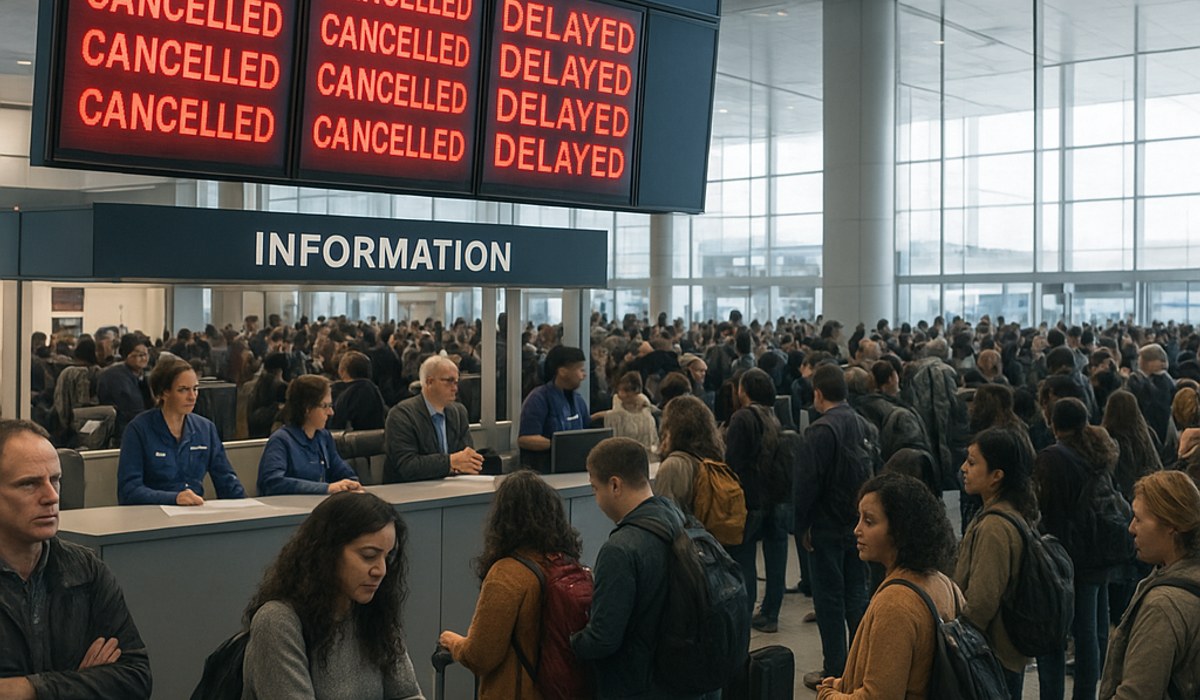
Image generated by AI
QUICK SUMMARY
- LaGuardia Airport collapse leaves thousands stranded as 158 flights cancelled
- Over 300 additional delays ripple across North American airports
- Republic Airlines hardest hit with 88 cancellations; Endeavor Air suspends 37 flights
- Major cities affected: New York, Chicago, Boston, Toronto, Raleigh-Durham, and 60+ destinations
LaGuardia Airport Meltdown Traps Thousands as Massive Flight Cancellations Unpick Travel Schedules
An unprecedented operational crisis at LaGuardia Airport has paralyzed travel across North America, stranding thousands of passengers as 158 flights face cancellation. The disruption has triggered a cascading network failure affecting major metropolitan centers from New York to Toronto, with over 300 additional flight delays compounding the chaos. What began as a localized airport crisis rapidly evolved into a regional travel catastrophe, demonstrating how modern aviation's connectivity creates vulnerability when individual hubs experience severe operational breakdowns.
Airlines including Republic, Endeavor Air, Southwest, United, and Jazz suspended scheduled operations while struggling to restore order. Airport terminals overflowed with confused travelers. Service desks became overwhelmed. Ground operations slowed dramatically. The ripple effects accelerated throughout interconnected routes, leaving passengers stranded across North America.
Understanding the Scale of the Disruption
The numbers reveal the magnitude of this operational failure. A total of 158 flights received cancellation notices, while an additional 300-plus flights experienced delays ranging from minutes to hours. These figures represent more than mere statistical abstractions—each cancellation means dozens of passengers missing connections, business meetings, family reunions, or critical travels.
LaGuardia Airport emerged as the epicenter, accounting for 75-83 cancelled flights depending on measurement intervals. This concentration at a single facility demonstrates how dependent the Eastern Seaboard remains on New York's capacity, and how vulnerable the system becomes when that capacity disappears due to operational failure.
Which Airlines Suspended Service?
Multiple carriers absorbed devastating cancellation impacts, though the burden distributed unevenly across different operators.
Republic Airlines experienced the worst cancellation rate with 88 flights cancelled against 115 delayed flights. The regional carrier, which feeds passengers into major hub operations, saw its entire operational model interrupted. Endeavor Air (Delta Connection) suspended 37 flights while managing 63 delays. Southwest Airlines cancelled 7 flights but reported 28 delays reflecting the carrier's high-frequency operational model. United Airlines suspended 6 flights while dealing with 36 additional delays. Jazz Air (operating for Air Canada on cross-border routes) cancelled 4 flights with 12 delays.
Airline-by-Airline Cancellation and Delay Summary:
| Airline | Cancelled | Delayed |
|---|---|---|
| Republic | 88 | 115 |
| Endeavor Air (DAL) | 37 | 63 |
| Southwest | 7 | 28 |
| United | 6 | 36 |
| Jazz (ACA) | 4 | 12 |
| Spirit | 4 | 16 |
| Delta Air Lines | 3 | 21 |
| Mesa (UAL) | 3 | 1 |
| Porter Airlines | 2 | 1 |
| JetBlue | 2 | 9 |
| Frontier | 1 | 11 |
| Air Canada | 1 | 7 |
The concentration of cancellations among regional operators suggests hub-and-spoke vulnerabilities, where localized disruptions at major connection points create system-wide failures affecting downstream markets.
Geographic Ripple Effects: Which Cities Were Impacted?
The disruption extended far beyond New York City, creating travel chaos across North America.
Major Cities Directly Affected: Chicago, Raleigh-Durham, Boston, Toronto, Norfolk, Cleveland, Atlanta, Columbus, Indianapolis, and Charleston experienced substantial flight disruptions. Secondary impacts reached Nashville, Washington, St. Louis, Buffalo, Richmond, and dozens of additional cities including Montreal, Birmingham, Kansas City, Denver, Dallas, and Florida destinations (Miami, Fort Lauderdale, Orlando, Tampa, Jacksonville, Key West).
Notably, Raleigh-Durham reported 6 cancellations but exhibited a 46% cancellation rate—indicating severe operational stress despite lower absolute numbers. Boston showed 10 cancellations in secondary data with a 45% rate. Asheville recorded a startling 100% cancellation rate, meaning every scheduled flight from that airport was suspended. Toronto, with 5 cancellations representing 20% of its schedule, highlighted cross-border impact affecting international travelers.
This geographic dispersion reveals how interconnected modern aviation has become. A localized LaGuardia crisis rapidly contaminated operations across an entire continental network. Passengers worldwide experienced consequences from a single airport's operational failure.
Why Did LaGuardia Become the Crisis Epicenter?
LaGuardia's status as a major connecting hub—particularly for Northeast travel and international routes—meant that operational disruption immediately cascaded outward. The airport's significant positioning in the network meant that aircraft, crews, and passengers could not be efficiently rerouted. Connection banks collapsed. Crew duty times violated regulations. Airports waiting for arriving aircraft experienced downstream delays.
The concentration of cancellations at LaGuardia also reflected real-time operational decisions by airlines. Rather than attempting recovery that might worsen conditions, carriers made the strategic choice to suspend service, reset aircraft positions, and restart operations systematically.
What Stranded Passengers Can Do Now
If your flight faces cancellation or significant delays, immediate action becomes critical for securing alternatives and protecting your rights.
Immediate Steps:
- Stay informed: Monitor airline communications via email, app notifications, and text alerts
- Contact the airline: Reach out through their customer service center, website chat, or mobile app rather than facing airport queue delays
- Know your options: Ask about rebooking on next available flights with the airline, competing carrier partnerships, or alternative flight routings
- Document everything: Screenshot cancellation notices and delay confirmations for potential compensation claims or insurance purposes
- Consider transportation alternatives: Trains, buses, or car rentals may provide faster alternatives than waiting for rescheduled flights
Rights and Compensation: Travelers in the EU have legal compensation rights under EU261 regulations. Domestic US passengers have fewer protections—check your airline's policy. Most carriers provide meal vouchers and hotel accommodations for delays exceeding specific thresholds, particularly when cancellations extend overnight.
Patterns Explaining the Crisis
The uneven distribution of cancellations across different airports reveals systemic scheduling fragility. LaGuardia's 75-83 cancellations demonstrate concentrated vulnerability. However, regional airports showing 40%+ cancellation rates despite lower absolute numbers signal broader network stress. When multiple airports simultaneously lose significant operational capacity, the entire system destabilizes.
The long tail of affected cities—including smaller markets like Asheville recording 100% cancellations—shows how modern networks depend on fragile scheduling where each aircraft serves multiple routes daily. When one route cancels, downstream cancellations cascade.
Recovery Timeline Expectations
Airlines typically require 18-36 hours to reposition aircraft, adjust crew scheduling, and restore normal operations after significant disruptions. Given the scale of this crisis, expect:
- Immediate (0-6 hours): Cascading delays as airlines process cancellations
- Short-term (6-24 hours): Continued service restrictions while network resets
- Medium-term (24-48 hours): Gradual capacity restoration with normal operations beginning at secondary airports
- Full recovery (48-72 hours): Return to normal scheduling though some delays may persist
FAQ: Critical Questions About LaGuardia Airport Disruptions
Q: Will my cancelled flight be automatically rebooked? A: Most airlines automatically rebook passengers on the next available flight. However, during major disruptions, rebooking queues become extremely long. Proactively contacting the airline through digital channels often secures faster rebooking than waiting at airport service desks.
Q: Am I entitled to compensation for flight cancellations? A: This depends on your location and circumstances. EU passengers have legal compensation rights under EU261 (€250-€600 depending on flight distance). US domestic passengers have no legal compensation requirements unless the airline breaches specific obligations. Check your airline's policy regarding disruptions.
Q: What if I miss a connecting flight due to the delay? A: If booked on a single ticket, the airline must rebook you on alternative flights to reach your destination. If booked separately, you lose the second flight and would need to purchase new tickets. Always check your booking confirmation to understand ticketing structure.
Q: Should I rebook on a competing airline instead of waiting for rebooking? A: If the disruption appears severe and multi-day recovery seems likely, booking your own alternative often provides faster travel. However, you'll pay full price—request reimbursement from your original airline afterward, though carriers often deny such claims for their operational failures. Insurance may help recover costs.
Q: How can I prevent future disruption impacts? A: Build connection time buffers (minimum 2+ hours for domestic connections), choose early-morning flights before delays cascade, and avoid tight international connection windows. Consider purchasing travel insurance covering disruption compensation, particularly for expensive or time-critical travels.
Moving Forward: What This Crisis Reveals About Modern Aviation
The LaGuardia disruption exposes uncomfortable truths about current aviation structures. Networks prioritize efficiency over resilience, creating systems vulnerable to single-point failures. When one major hub experiences operational breakdown, continental-scale travel chaos follows within hours.
For travelers, this reality demands proactive strategy: build schedule buffers, purchase protection insurance, monitor weather and airport conditions before travel, and maintain flexible booking approaches where practical. The modern aviation system moves passengers at scale, but that efficiency comes with concentrated vulnerability.
Travelers planning flights through LaGuardia or other major hubs should check real-time updates before heading to the airport and remain prepared for potential disruptions that may originate far from their home cities.
Disclaimer
This article is for informational and educational purposes only. It does not constitute legal, financial, or professional advice. While we strive to provide accurate and up-to-date information, travel policies, regulations, and conditions change rapidly. Always verify information with official sources before making travel decisions. Nomad Lawyer makes no representations about the accuracy, reliability, completeness, or suitability of the information provided. Readers should consult qualified professionals for advice specific to their circumstances. The views expressed in this article are those of the author and do not necessarily reflect the views of Nomad Lawyer.
Raushan Kumar
Founder & Lead Developer
Full-stack developer with 11+ years of experience and a passionate traveller. Raushan built Nomad Lawyer from the ground up with a vision to create the best travel and law experience on the web.
Learn more about our team →