
Travel Orleans Joins Multi-City Louisiana Tourism Push Launching Summer 2026
Six Louisiana cities unite for coordinated June tourism offensive targeting cruise passengers and regional visitors through 2026 summer programming and infrastructure expansion.

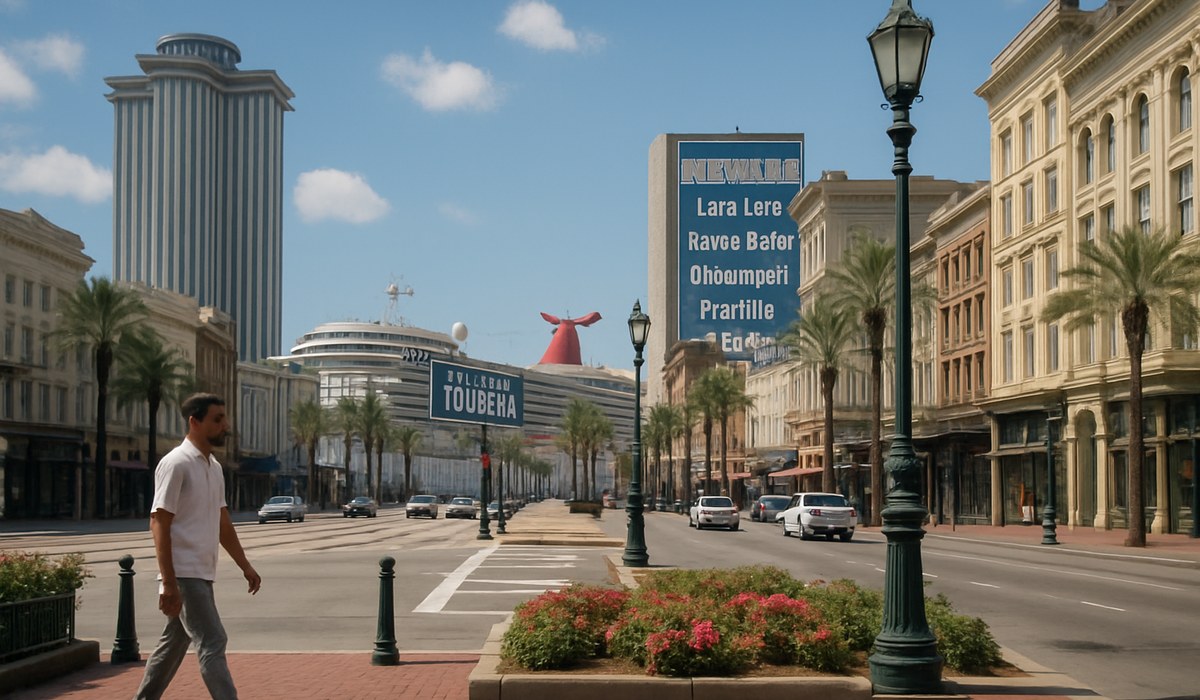
Image generated by AI
Quick Summary • Louisiana launches coordinated six-city tourism campaign in June 2026 featuring New Orleans, Lafayette, Baton Rouge, Shreveport, Franklin, and regional partners • Strategy centers on New Orleans cruise port as entry point for multi-city itineraries spanning culinary, cultural, and musical experiences • Summer programming includes synchronized festivals, infrastructure upgrades, and shared marketing campaigns targeting domestic and international travelers • Initiative positions Louisiana as unified Gulf Coast destination competing with Florida and Texas cruise markets
As summer 2026 approaches, Louisiana is orchestrating an unprecedented statewide tourism offensive—uniting New Orleans' cruise port with inland cities in a coordinated campaign that could redefine regional travel economics across the Gulf Coast. The multi-city collaboration, launching this June, marks the first time Louisiana municipalities have aligned marketing budgets, event calendars, and transportation infrastructure to capture the growing cruise passenger market seeking authentic Southern experiences beyond port cities.
Louisiana's Coordinated Tourism Offensive: Six Cities Unite
Louisiana's tourism leadership announced a strategic alliance involving New Orleans, Lafayette, Baton Rouge, Shreveport, Franklin, and smaller municipalities across the state's tourism corridors. The partnership represents a fundamental shift from competitive city-by-city marketing toward integrated regional positioning.
State tourism officials revealed the initiative during a March briefing, emphasizing that synchronized programming will allow visitors arriving via New Orleans cruise terminals to seamlessly access attractions across Louisiana's cultural landscape. The coordination extends beyond promotional materials—participating municipalities have aligned hotel booking systems, created shared transportation vouchers, and standardized visitor information services.
Franklin, a smaller community known for its antebellum architecture, will serve as a testing ground for rural tourism models that connect heritage sites with urban entertainment hubs. Baton Rouge contributes its capitol district attractions and riverfront developments, while Shreveport brings casino entertainment and historic downtown revitalization into the regional network.
Industry analysts note that this collaborative approach mirrors successful models in European river cruise markets, where shore excursions frequently span multiple jurisdictions under unified marketing umbrellas. According to data from the Cruise Lines International Association, North American cruise passengers increasingly seek multi-destination experiences within single regions, creating opportunities for coordinated tourism strategies that leverage diverse local assets.
New Orleans Port at the Center of Regional Strategy
New Orleans remains the gravitational center of Louisiana's tourism ecosystem, with its cruise terminals serving as the primary entry point for international visitors. The Port of New Orleans handled 1.2 million cruise passengers in 2025, positioning it among the top ten North American embarkation points.
The summer 2026 strategy explicitly targets cruise passengers disembarking in New Orleans for pre- or post-cruise stays. Marketing materials will promote three-day itineraries combining New Orleans' French Quarter with Lafayette's Cajun prairie experiences, or five-day programs linking the Crescent City with Shreveport's riverboat heritage.
Transportation infrastructure upgrades support these extended itineraries. Louisiana invested $18 million in charter bus terminals and regional airport shuttle networks connecting cruise terminals to inland destinations. Baton Rouge upgraded its interstate rest areas with Louisiana-branded visitor centers featuring booking kiosks for coordinated experiences.
The initiative directly responds to cruise industry innovations transforming travel patterns. Travelers increasingly book "cruisetours"—packages combining sea voyages with land-based exploration—creating demand for regional experiences that traditional port-city tourism couldn't satisfy alone.
Hotel occupancy projections suggest significant economic potential. Lafayette tourism planners forecast 22 percent increases in summer overnight stays if just five percent of New Orleans cruise passengers extend their Louisiana visits by two nights. Baton Rouge estimates similar gains, with riverfront properties already reporting elevated advance booking activity for June through August.
Summer 2026 Events Driving Cruise Tourism Growth
June's programming calendar features deliberately staggered events designed to distribute visitor traffic across participating cities while encouraging multi-stop itineraries. New Orleans launches the initiative with a Creole Heritage Festival during the first weekend, followed by Lafayette's Zydeco Music Festival the subsequent week, then Shreveport's Red River Arts Celebration mid-month.
Each municipality committed to at least three signature events between June and August, with coordination ensuring minimal overlap. Franklin showcases heritage home tours every Saturday, while Baton Rouge schedules weekly capitol building concerts featuring Louisiana musicians. The synchronized approach allows visitors to construct personalized itineraries spanning multiple cultural experiences within manageable travel distances.
This strategic event spacing draws from successful models analyzed in event tourism's economic multiplier effects studies, which demonstrate that dispersed programming maximizes regional spending and reduces infrastructure strain compared to concentrated mega-events.
Food tourism represents a unifying thread across the summer calendar. Every participating city developed culinary programming highlighting regional specialties—from New Orleans' seafood heritage to Shreveport's Tex-Mex fusion cuisine. A "Louisiana Flavor Pass" provides discounts at 200+ restaurants statewide, encouraging food-focused tourists to sample diverse regional cuisines.
Digital integration enhances visitor experiences through a unified mobile application launching May 2026. The platform aggregates event calendars, provides real-time transportation options, and offers AI-powered itinerary suggestions based on cruise ship arrival schedules and traveler preferences. This technological backbone addresses logistical challenges that previously hindered multi-city exploration.
Economic Impact: How Regional Collaboration Supercharges Revenue
Louisiana's coordinated approach directly addresses economic challenges facing Gulf Coast destinations competing with established Florida cruise hubs. Recent Seatrade Cruise industry analysis indicates that destinations offering diversified regional experiences capture higher per-passenger spending than single-city ports.
Preliminary economic modeling projects $340 million in incremental summer tourism revenue if the initiative achieves its target conversion rate—convincing 15 percent of cruise passengers to extend their Louisiana stays. This figure accounts for hotel accommodations, restaurant spending, attraction admissions, and retail purchases across all participating municipalities.
The revenue distribution model allocates economic benefits beyond New Orleans. Lafayette projects $42 million in direct tourism spending from the campaign, while Baton Rouge estimates $38 million. Even smaller communities like Franklin anticipate measurable impacts, with heritage tourism operators reporting advance bookings from tour operators packaging Louisiana itineraries.
Employment implications extend across hospitality sectors. Louisiana tourism officials estimate the initiative will support 2,800 seasonal positions across participating cities, from hotel staff to tour guides and transportation drivers. Many positions target underemployed communities in smaller municipalities where tourism infrastructure historically lagged behind urban centers.
The strategy also positions Louisiana to compete more effectively against established destinations examined in Miami Beach's cultural tourism blueprint, which demonstrates how coordinated cultural programming attracts higher-value visitors willing to extend stays and increase per-capita spending.
Infrastructure investments supporting the initiative create lasting economic foundations beyond summer 2026. Upgraded transportation networks facilitate year-round travel, while digital booking platforms reduce friction for independent travelers exploring Louisiana outside organized tours. These improvements compound over multiple tourism seasons, potentially generating returns that justify the initial $65 million public-private investment funding the coordination effort.
Banking and hospitality analysts monitoring Gulf Coast tourism trends note that Louisiana's collaborative model could establish precedents for regional cooperation in other multi-state tourism corridors. Success metrics will inform similar initiatives being considered by Mississippi River communities and Appalachian heritage regions exploring coordinated marketing strategies.
FAQ: Louisiana Summer Cruise Tourism 2026
When does Louisiana's coordinated tourism campaign officially launch? The initiative kicks off June 1, 2026, with opening weekend events in New Orleans. Programming continues through August 31, with staggered events across participating cities throughout the three-month period.
Which cities are participating beyond New Orleans? The core partnership includes Lafayette, Baton Rouge, Shreveport, and Franklin, with additional smaller communities contributing specialized programming. Over twenty municipalities participate at various levels, from major event hosting to supporting transportation infrastructure.
How can cruise passengers access multi-city itineraries? Visitors can book coordinated packages through cruise line shore excursion desks, use the Louisiana Tourism mobile app for self-guided planning, or contact the statewide visitor hotline for customized itinerary assistance. Pre-packaged "cruisetour" options combining New Orleans voyages with inland experiences launch in April.
What makes this campaign different from previous Louisiana tourism efforts? This represents the first time Louisiana cities have synchronized event calendars, shared marketing budgets, and integrated booking systems. Previous campaigns marketed individual destinations competitively; this initiative positions Louisiana as a unified regional experience.
Are there specific events targeting families versus adult travelers? Programming balances family-friendly daytime activities with adult-oriented evening entertainment. Each participating city designated family programming every weekend, while weekday events skew toward culinary experiences, live music venues, and heritage tours appealing to mature travelers.
Related Articles:
Disclaimer
This article is for informational and educational purposes only. It does not constitute legal, financial, or professional advice. While we strive to provide accurate and up-to-date information, travel policies, regulations, and conditions change rapidly. Always verify information with official sources before making travel decisions. Nomad Lawyer makes no representations about the accuracy, reliability, completeness, or suitability of the information provided. Readers should consult qualified professionals for advice specific to their circumstances. The views expressed in this article are those of the author and do not necessarily reflect the views of Nomad Lawyer.
Kunal K Choudhary
Co-Founder & Contributor
A passionate traveller and tech enthusiast. Kunal contributes to the vision and growth of Nomad Lawyer, bringing fresh perspectives and driving the community forward.
Learn more about our team →