
Beyond the Golden Pavilion: A Curated Guide to Kyoto’s Essential Temples, Gardens, and Culinary Landmarks
From sacred shrines and historic castles to vibrant markets and seasonal gardens, this streamlined itinerary highlights

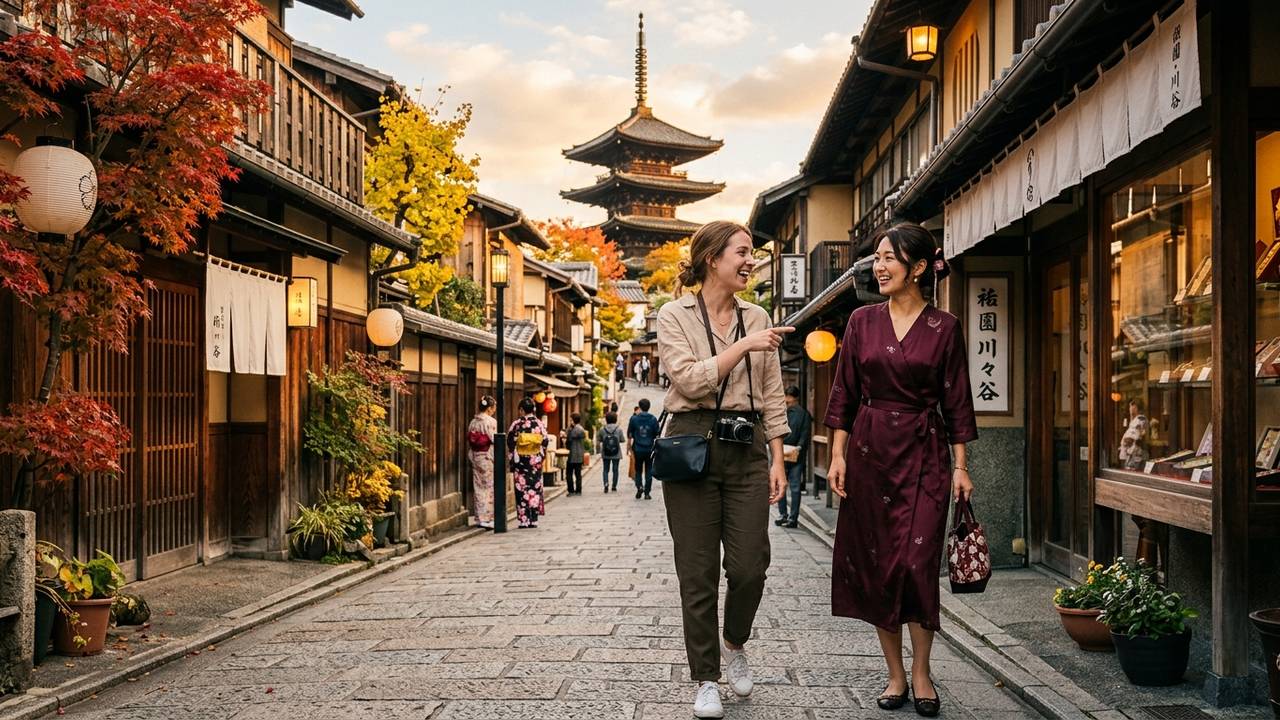
Image generated by AI
Kyoto’s reputation as Japan’s premier cultural destination rests on a foundation of over 2,000 temples and shrines, meticulously maintained gardens, and centuries-old teahouses. The former imperial capital’s relatively flat topography encourages exploration on foot, rewarding visitors who wander beyond main thoroughfares with hidden alleyways, quiet courtyards, and neighborhood parks. While spontaneous discovery remains one of the city’s greatest charms, strategic planning ensures a balanced itinerary that accommodates high-traffic landmarks and restricted-access sites.
Kinkaku-ji, the Golden Pavilion
Kinkaku-ji remains one of Japan’s most recognized architectural icons, distinguished by its upper two stories clad in pure gold leaf. The temple’s reflection in Kyōko-chi pond draws photographers year-round, though foot traffic typically concentrates near the viewing platform. Weekday visits significantly reduce congestion and improve photography conditions.
Fushimi Inari Taisha Shrine
Fushimi Inari-Taisha is defined by its network of approximately 10,000 vermilion torii gates ascending Inari Mountain. The gates were historically donated by merchants and artisans to give thanks for business prosperity, a practice that continues today. The shrine grounds feature numerous fox statues, considered messengers of Inari, the Shintō deity of rice, agriculture, and industry. Completing the full mountain loop requires two to three hours and moves visitors away from the heavily crowded lower trails. Early morning visits coincide with monastic routines and offer the quietest atmospheric conditions.
Kiyomizu-dera Temple
Kiyomizu-dera’s main hall extends 13 meters over the hillside, supported by 139 wooden stilts without a single nail. Historically, leaping from the platform was considered a test of devotion. Today, pilgrims visit the Otowa Waterfall, where three distinct streams offer blessings for longevity, academic achievement, and romantic luck. Temple etiquette dictates selecting only one stream per visit. The site provides elevated views of Kyoto’s urban grid, with peak visual appeal during spring cherry blossom season, autumn foliage, and late afternoon sunsets.
Nijō-jō Castle
Formerly the Kyoto residence of the Tokugawa shogunate, Nijō-jō showcases Edo-period opulence through its fortified walls, ornate garden layouts, and interior chambers. Visitors should note the famous painted lions and the corridor flooring known as uguisubari (nightingale floors). These engineered wooden planks were designed to emit a chirping sound underfoot, functioning as an acoustic intrusion detection system.
Saihō-ji (Koke-dera)
Saihō-ji, widely known as Koke-dera for its extensive moss garden, houses 120 distinct moss species that blanket the landscape in varying shades of green. The garden’s ethereal quality has drawn artistic inspiration for decades. Access requires advance registration, typically one to two months ahead, to manage visitor capacity and preserve the ecosystem. Guests are also expected to participate in a sutra-copying ritual before entering the grounds.
Kyoto’s Ramen Scene
Kyoto’s noodle culture traces its modern origins to a 1961 street stall and has since diversified into specialized culinary formats. Gogyo is recognized for high-temperature broth charring, served at counter seating where diners observe the cooking process. UZU Kyoto features a mushroom-based broth served in a dimly lit dining space illuminated by dynamic digital projection art. Engine Ramen specializes in fully vegan and gluten-free adaptations across its entire menu, though evening queues typically form shortly after the 4pm dinner service begins.
Matcha Culture and Tea Ceremonies
Matcha cultivation in southern Kyoto Prefecture spans roughly 800 years, originally introduced by Chinese Buddhist monks seeking a caffeinated aid for meditation. Traditional preparation is best experienced through formal tea ceremonies at venues like Camellia, which detail the historical and practical rationale behind each movement. Modern cafes such as Maccha House offer contemporary preparations including brown-sugar lattes and Uji Matcha Tiramisu. Specialty retailers including Ippōdō and Marukyu Koyamaen (located within Kyoto Isetan) provide retail options for travel-home beverages. Pairing matcha with wagashi, a refined red-bean and sugar confection, balances the tea’s natural astringency.
Nishiki Market
Spanning five blocks, Nishiki Market operates as a dense commercial corridor housing over 100 vendors. Commonly referred to as Kyoto’s Kitchen, the market emphasizes direct sampling, with numerous stalls offering complimentary tastings. Signature offerings include tako tamago (baby octopus topped with a quail egg), beef sushi, soy-milk donuts, and dashimaki served in tempura form. Standard operating hours run from 9am to 6pm, though individual vendor schedules may vary.
Ōkōchi Sansō
Located near the Arashiyama district, Ōkōchi Sansō served as the former estate of 1920s samurai film actor Denjirō Ōkōchi. The property features manicured hillside gardens that provide sweeping views of Kyoto, culminating at a traditional teahouse that distributes complimentary matcha and seasonal confections. The site’s relative proximity to major transit routes yet lower tourist volume makes it a strategic alternative to busier western districts.
Artisan Souvenirs and Vintage Textiles
Kyoto remains a primary hub for handmade goods, including washi paper, regional porcelain, and traditional bentō boxes. Major department stores such as Takashimaya and Daimaru Kyoto consolidate multiple artisan retailers under one roof. For historical textiles, Vintage Kimono AN Gion specializes in pre-owned kimonos, obi belts, and repairable silk garments, supporting sustainable textile reuse.
Traditional Ryokan Accommodations
Ryokans function as culturally immersive lodging, typically featuring tatami flooring, nightly futon setup, and highly structured hospitality protocols. The Tawaraya Ryokan, operating for 300 years under 12 consecutive generations of family management, maintains one of Japan’s most exclusive reservation systems.
Urban Onsen Facilities
Onsen systems utilize naturally heated mineral water for therapeutic bathing. Within Kyoto city limits, Fu-fu-no-yu provides rock-lined bathing pools adjacent to the Katsura River. Standard protocol requires thorough washing before entering shared hot-water basins, and facilities operate with mixed or gender-specific scheduling depending on the location.
Arashiyama Bamboo Grove
The Arashiyama district hosts a 140-meter bamboo corridor recognized for its acoustic resonance and ecological significance. High foot traffic typically diminishes early morning quietude, making sunrise visits optimal for photography and ambient experience. Travelers seeking alternative bamboo landscapes can visit Shōden-ji temple in northern Kyoto, which maintains an extensive grove with notably lower visitor density.
Ōsawa Pond and Daikaku-ji Temple
Positioned a 15-minute walk from JR Saga-Arashiyama Station, Ōsawa Pond contains Japan’s oldest surviving artificial garden. The site supports seasonal botanical displays including spring cherry blossoms, summer lotus, and autumn foliage. Daikaku-ji Temple, located immediately adjacent, operates as a Shingon Buddhist complex frequently utilized for historical film production. Admission tickets are available for the pond alone (9am–5pm) or as a combined entry for the temple grounds.
Gion District and Geiko Etiquette
The Gion neighborhood preserves Edo-era urban planning through narrow wooden storefronts, traditional tea houses, and lantern-lit alleys. Geiko (Kyoto’s term for geisha) and maiko perform as cultural entertainers at private dining establishments. Municipal regulations enforce substantial fines for unauthorized photography, physical contact, or obstruction of geiko movement. Visitors are expected to maintain public walkways and observe discreet behavior.
| Location / Activity | Key Operational Detail | Visitor Strategy |
|---|---|---|
| Kinkaku-ji | Unrestricted daily access | Visit on weekdays to reduce peak-hour congestion |
| Fushimi Inari-Taisha | 10,000 torii gates; full loop takes 2–3 hours | Complete the mountain circuit; prioritize sunrise visits |
| Kiyomizu-dera | Otowa Waterfall offers three blessing streams | Drink from only one stream to follow traditional etiquette |
| Saihō-ji (Koke-dera) | Limited daily capacity | Register 1–2 months in advance; complete sutra-copying ritual |
| Nishiki Market | 5 blocks, 100+ vendors | Arrive before 10am; verify individual stall hours (typically 9am–6pm) |
| Ōsawa Pond | Open 9am–5pm | Purchase combined ticket for adjacent Daikaku-ji Temple |
| Fu-fu-no-yu Onsen | Rock-lined pools near Katsura River | Follow standard washing protocol before entering hot-water basins |
| Gion District | Strict anti-photography and anti-contact fines | Maintain sidewalk clearance; observe from public streets only |
Key Takeaways
- Kyoto’s top landmarks operate on varying crowd cycles; weekday mornings and sunrise visits consistently yield lower congestion.
- High-demand cultural sites like Saihō-ji and Tawaraya Ryokan require advance registration or reservation windows extending up to two months.
- Traditional etiquette remains strictly enforced at religious sites, onsen facilities, and in the Gion geiko district; compliance avoids legal penalties and preserves cultural integrity.
- Culinary specialties range from historically rooted ramen formats to modern matcha adaptations, with several establishments offering fully vegan or gluten-free accommodations.
- Seasonal botanical displays at Ōsawa Pond and Kiyomizu-dera peak during spring sakura and autumn foliage periods, aligning with Kyoto’s highest tourism volume.
FAQ
Do I need to book Saihō-ji (Koke-dera) in advance?
Yes. Visitor capacity is strictly limited to protect the moss ecosystem. Registration typically opens one to two months ahead of the intended visit date.
What is the correct etiquette at the Otowa Waterfall in Kiyomizu-dera?
The waterfall features three separate streams. Traditional custom requires selecting only one blessing per visit. Drinking from multiple streams is considered impolite.
Can I photograph geisha in Gion?
Unauthorized photography is prohibited and carries municipal fines. Visitors should observe geiko and maiko from public walkways without approaching, blocking paths, or using telephoto lenses.
What are the standard operating hours for Nishiki Market?
Most vendor stalls operate between 9am and 6pm. Hours can vary by season and individual business, so early arrival ensures maximum vendor availability.
How do I reach Ōsawa Pond and Daikaku-ji Temple?
The pond and temple complex are located approximately a 15-minute walk from JR Saga-Arashiyama Station. Separate or combined admission tickets are available on-site.
Related Travel Guides
Disclaimer
This article is for informational and educational purposes only. It does not constitute legal, financial, or professional advice. While we strive to provide accurate and up-to-date information, travel policies, regulations, and conditions change rapidly. Always verify information with official sources before making travel decisions. Nomad Lawyer makes no representations about the accuracy, reliability, completeness, or suitability of the information provided. Readers should consult qualified professionals for advice specific to their circumstances. The views expressed in this article are those of the author and do not necessarily reflect the views of Nomad Lawyer.
Kunal K Choudhary
Co-Founder & Contributor
A passionate traveller and tech enthusiast. Kunal contributes to the vision and growth of Nomad Lawyer, bringing fresh perspectives and driving the community forward.
Learn more about our team →