
Beyond Standard Chains: Nine Unconventional Hotels and Lodges Across Tokyo
Tokyo’s lodging landscape extends far beyond conventional chains. From a dinosaur-robot front desk to floor-to-ceiling l

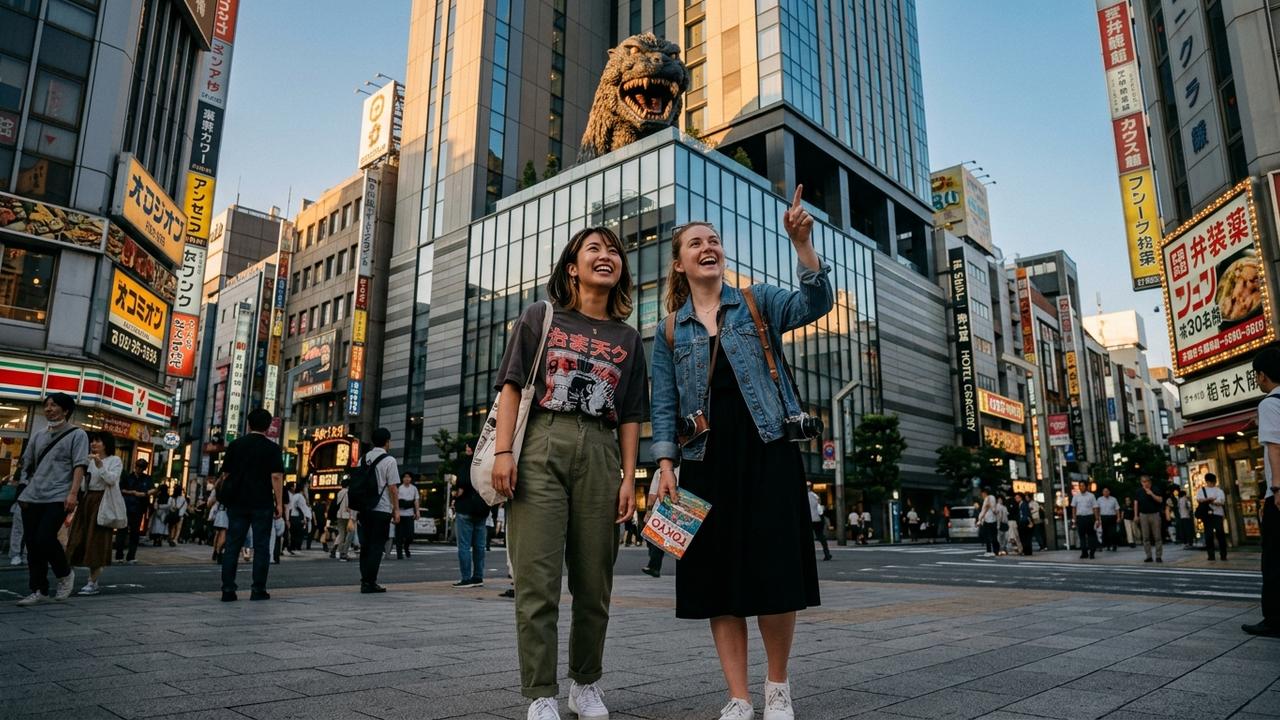
Image generated by AI
Tokyo’s hospitality sector offers far more than standard business hotels and international chains. Travelers seeking immersive cultural experiences, architectural novelty, or themed environments can find highly distinctive lodging options across multiple districts. From century-old wooden inns to fully automated resorts and sculptural apartment complexes, these nine properties redefine what it means to stay overnight in Japan’s capital.
Hotel Gracery Anchors Godzilla on Shinjuku Rooftop
Themed decor is commonplace across Tokyo, but Hotel Gracery elevates the concept with a massive statue mounted on its rooftop. Positioned on the upper floors of the Shinjuku Toho Building—named for the studio that originally produced the franchise—the figure occasionally activates, emitting sound effects and light. Guests can reserve rooms featuring themed merchandise or secure a direct sightline to the statue. Standard accommodations remain compact, though the property’s central Shinjuku location keeps visitors close to nightlife and entertainment venues.
Nearby highlights include Deathmatch in Hell, Bar Cinema Club, and Bar Plastic Model.
Ryokan Sawanoya Preserves Three-Generation Hospitality in Yanesen
Traditional Japanese inns, or ryokan, emphasize tatami matting, floor futons, and curated service. Ryokan Sawanoya has operated under continuous family management for three generations, building a long-standing reputation for welcoming international visitors. The property features private soaking tubs overlooking the garden, ideal for couples or families seeking quiet relaxation. Located in the Yanesen district, the inn sits within a neighborhood characterized by preserved early-20th-century wooden architecture and quiet streets.
Nearby highlights include the Tokyo National Museum, Ueno-kōen, and Yanaka Ginza.
9 Hours Redefines Capsule Accommodation in Central Shinjuku
Originating during Japan’s 1980s economic expansion, capsule hotels provide compact sleeping pods designed for short rest periods. Each unit typically offers enough headroom to sit upright, with a privacy curtain and three-sided partitioning. Modern iterations have shifted away from communal bathing toward private shower facilities. The Shinjuku North location of 9 Hours caters to first-time guests by providing English-language policy guides, futuristic pod styling, and gender-separated floors.
Nearby highlights include Golden Gai and Hanazono-jinja.
Reversible Destiny Lofts Offer Architectural Experimentation in Mitaka
Completed in 2005 by architects Arakawa Shūsaku and Madeleine Gins, this residential complex consists of nine units designed to disrupt conventional spatial perception. The interiors feature undulating floors, spherical reading nooks, and ceiling-mounted fixtures for hammocks and swings. The design prioritizes multi-sensory engagement over traditional comfort. Two units operate as short-term vacation rentals, accommodating two and four guests respectively. Both include full kitchens and washing machines, while the remaining units serve long-term residents.
Nearby highlights include the Ghibli Museum and Inokashira Park.
Book and Bed Integrates Library Spaces with Sleeping Cubbies
Rather than confining reading material to a single corner, this Shinjuku property places floor-to-ceiling plywood shelving units directly into the sleeping arrangement. Guests rest in cubbies surrounded by Japanese and English publications, including translated fiction, travel literature, and cultural history titles. The space operates as a public lounge during afternoon hours, charging a fee for non-residents who wish to read or rest.
Nearby highlights include the Tokyo Metropolitan Government Building and Shinjuku-gyoen.
Muji Hotel Embodies Minimalist Lifestyle Design in Ginza
Situated in Ginza, a district known for flagship retail, high-end dining, and architectural storefronts, this property extends the brand’s signature aesthetic into hospitality. Every furnishing, fixture, and guest amenity is sourced from the retailer’s catalog. The design philosophy emphasizes uncluttered spaces, functional textiles, and refined materials.
Nearby shopping includes Koju for incense, Ōnoya for textiles, and Kyukyudo for traditional paper.
Hotel Indigo Tokyo Shibuya Curates In-Room Vinyl Collections
Historically, Japanese listening bars prioritized high-fidelity sound systems and carefully selected records. This high-rise property in Dōgenzaka adapts that concept by offering handpicked vinyl collections available for in-room playback upon request. Rooms feature elevated sightlines across the city, positioning the property as a quiet retreat within a high-traffic district.
Nearby highlights include Shibuya Crossing, the Hachikō Statue, and Spain-zaka.
Henn na Hotel Automates Guest Services in Maihama
First launched in 2015, this hotel chain pioneered the use of automated systems for check-in, check-out, and guest assistance. While human staff remain on-site for troubleshooting, the primary interface relies on mechanical workers, including a dinosaur-shaped reception unit. The Maihama branch maintains this automated approach while situating guests near major entertainment infrastructure.
Nearby highlights include Tokyo Disney Resort.
Dormy Inn Premium Delivers Urban Onsen Access in Ginza
Hot spring bathing, or onsen, remains a cornerstone of Japanese relaxation culture. This Ginza property installs a genuine onsen facility within an urban high-rise, allowing guests to transition from city sightseeing to traditional soaking without leaving the district. The experience is complemented by complimentary post-bath ice cream service.
Nearby highlights include the Kabuki-za theatre, Shiseido Gallery, and Tsukiji Market.
| Property | District | Defining Feature | Nearby Attractions |
|---|---|---|---|
| Hotel Gracery | Shinjuku | Rooftop Godzilla statue with periodic activation | Deathmatch in Hell, Bar Cinema Club, Bar Plastic Model |
| Ryokan Sawanoya | Yanesen | Three-generation family-run traditional inn | Tokyo National Museum, Ueno-kōen, Yanaka Ginza |
| 9 Hours | Shinjuku | English-guided capsule pods with private showers | Golden Gai, Hanazono-jinja |
| Reversible Destiny Lofts | Mitaka | Architectural complex with undulating floors & suspended fixtures | Ghibli Museum, Inokashira Park |
| Book and Bed | Shinjuku | Sleeping cubbies integrated into floor-to-ceiling bookshelves | Tokyo Metropolitan Government Building, Shinjuku-gyoen |
| Muji Hotel | Ginza | Full brand furnishing & lifestyle product integration | Koju, Ōnoya, Kyukyudo |
| Hotel Indigo Tokyo Shibuya | Dōgenzaka | In-room vinyl record collections with city views | Shibuya Crossing, Hachikō Statue, Spain-zaka |
| Henn na Hotel | Maihama | Automated guest services with dinosaur receptionist | Tokyo Disney Resort |
| Dormy Inn Premium | Ginza | Urban onsen facility with complimentary post-soak ice cream | Kabuki-za, Shiseido Gallery, Tsukiji Market |
Key Takeaways
- Tokyo’s accommodation landscape includes highly themed properties, traditional inns, capsule hotels, and architecturally experimental rentals.
- Most listed properties are located in high-traffic districts like Shinjuku, Ginza, and Shibuya, providing easy access to transit, dining, and cultural sites.
- English-language support varies by property; capsule hotels and established ryokan typically offer clearer multilingual policies.
- Booking short-term architectural rentals like the Reversible Destiny Lofts requires advance planning, as only two of nine units are available for visitors.
- Urban onsen and automated hospitality concepts remain distinct offerings that blend traditional Japanese culture with modern technology.
FAQ
Are capsule hotels suitable for long-term stays?
Capsule hotels are designed primarily for short rest periods or single-night stays. The compact sleeping pods and shared amenities prioritize efficiency over long-term comfort.
Is it possible to book the Reversible Destiny Lofts as a tourist?
Yes, but availability is limited. Only two of the nine units operate as short-term rentals, accommodating two or four guests, and both include kitchen and laundry facilities.
Do robot-staffed hotels eliminate human customer service?
No. Human staff remain on-site to handle troubleshooting, special requests, and emergencies, though routine check-in and check-out processes are automated.
Can non-guests visit the Book and Bed lounge during the day?
Yes. The property operates as a public reading lounge in the afternoon for a fee of 700 Japanese yen per hour.
Are the onsen at Dormy Inn Premium natural hot springs?
The property features a genuine onsen facility installed within an urban building, allowing guests to experience traditional soaking without traveling outside the city.
Related Travel Guides
Disclaimer
This article is for informational and educational purposes only. It does not constitute legal, financial, or professional advice. While we strive to provide accurate and up-to-date information, travel policies, regulations, and conditions change rapidly. Always verify information with official sources before making travel decisions. Nomad Lawyer makes no representations about the accuracy, reliability, completeness, or suitability of the information provided. Readers should consult qualified professionals for advice specific to their circumstances. The views expressed in this article are those of the author and do not necessarily reflect the views of Nomad Lawyer.
Preeti Gunjan
Contributor & Community Manager
A passionate traveller and community builder. Preeti helps grow the Nomad Lawyer community, fostering engagement and bringing the reader experience to life.
Learn more about our team →