
Kroonstad Aerodrome FAKS Infrastructure Analysis: Assessing Regional Aviation Access in Free State 2026
An analysis of Kroonstad Aerodrome (FAKS) reveals significant general aviation infrastructure, though scheduled commercial passenger services remain unconfirmed for the Free State region.

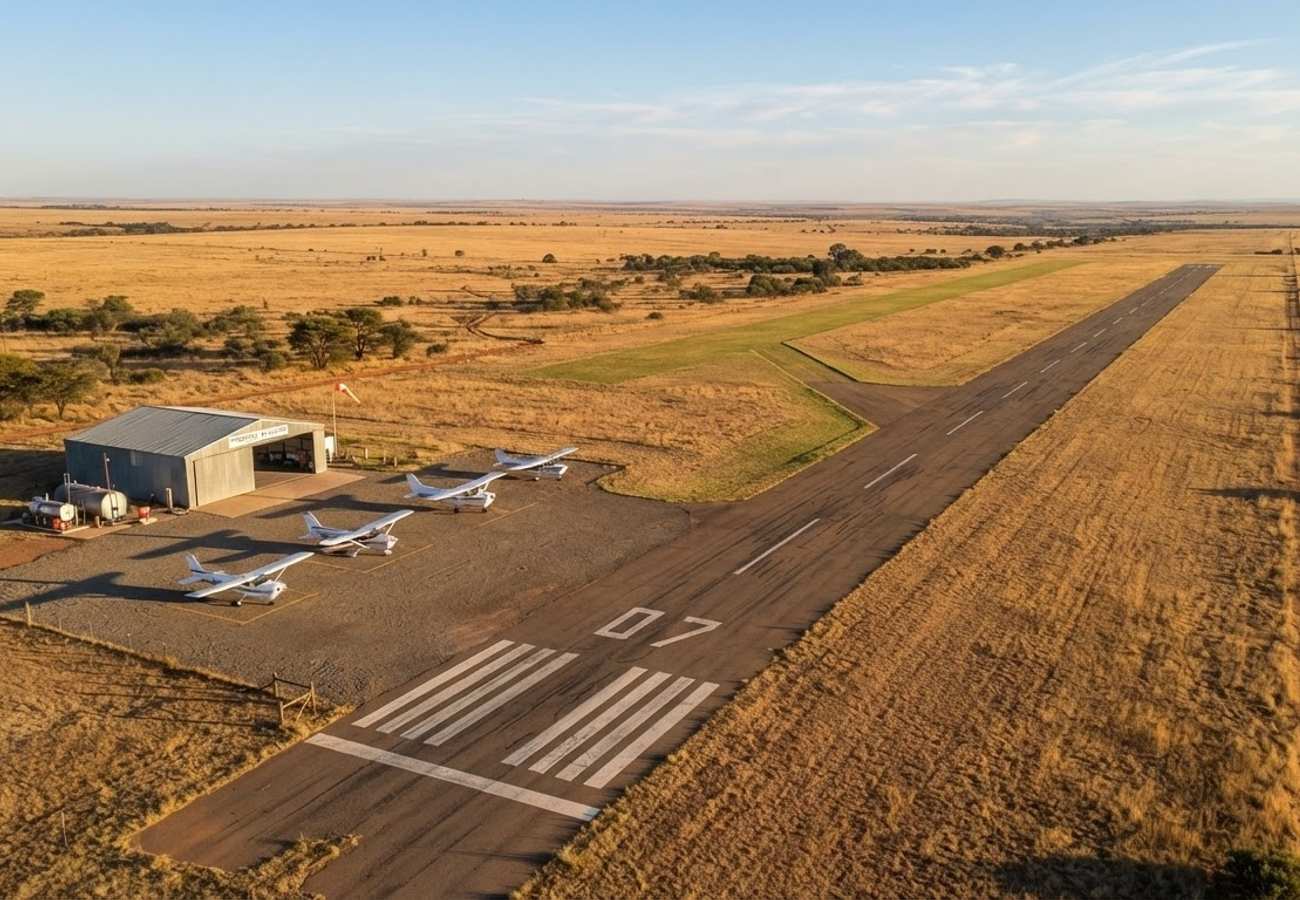
Image generated by AI
Regional aviation access in the northern Free State remains limited to general aviation, with no confirmed scheduled passenger services at Kroonstad Aerodrome as of September 2026.
Infrastructure and Operational Status of Kroonstad Aerodrome (FAKS)
Kroonstad Aerodrome, identified by the ICAO location indicator FAKS and aerodrome licence number six, currently functions as a general aviation facility. While the site presents opportunities for expanding aviation access in the Free State, it does not currently operate as a commercial passenger gateway.
Our analysis of the official aerodrome directory confirms the following physical specifications:
- Primary Runway (07/25): 1,775 metres, asphalt surface.
- Secondary Runways: 12/30 and 03/21.
- Available Facilities: Runway and taxiway lighting, fuel facilities, and provisions for both daytime and night-time operations.
Despite these assets, there is no verified public data regarding annual passenger counts, confirmed charter timetables, or an allocated public development budget for terminal expansion.
Operational Verification Matrix
For pilots and operators planning movements into FAKS, the following data points distinguish verified infrastructure from requirements still needing confirmation.
| Research Field | Verified Position | Confirmation Required |
|---|---|---|
| Airport Identity | Kroonstad Aerodrome | N/A |
| ICAO Indicator | FAKS | Current operational status |
| Licence Record | Licence number six | Amended conditions/limitations |
| Main Runway | 07/25 (1,775m, asphalt) | Pavement condition & declared distances |
| Other Runways | 12/30 and 03/21 | Surface condition & availability |
| Lighting | Listed in records | Current serviceability |
| Fuel | Facilities listed | Fuel type, quantity, and payment terms |
| Availability | Day and night listed | Local staffing & notice requirements |
| Scheduled Services | None confirmed | Commercial feasibility |
| Passenger Traffic | No public figures | Annual aircraft movements |
| Funding | No confirmed budget | Procurement and timeline |
Passenger Rights & Advisory: Navigating Regional Air Access
For passengers considering charter or private travel to Kroonstad, the absence of scheduled commercial flights changes the legal and operational framework of the journey.
For the affected passenger, this means:
- No Standard Airline Protections: Because there are no scheduled services, standard consumer protections associated with commercial airline tickets (such as those mirroring EU261 or similar national passenger bills of rights) do not apply to private charters unless specifically written into the charter contract.
- Customs and Immigration: FAKS is not an international entry point. Any international arrivals must clear customs and immigration at a designated Port of Entry before proceeding to Kroonstad.
- Ground Transport Logistics: Since the airport lacks a commercial terminal, passengers must arrange private ground transfers to reach the N1 corridor or the Kroonstad town centre.
- Rebooking Risks: In the event of a charter cancellation due to weather or technical failure, the passenger is dependent on the charter operator's specific terms and conditions rather than statutory airline mandates.
Our analysis suggests that travellers should verify the "serviceability" of listed facilities (such as fuel and lighting) directly with the operator, as static directory entries may not reflect real-time operational availability.
Industry Analyst View: The N1 Corridor vs. Air Connectivity
The viability of Kroonstad as a commercial hub is challenged by the efficiency of the N1 road corridor connecting Johannesburg and Bloemfontein. For a commercial air route to be sustainable, the time saved in flight must outweigh the "door-to-door" time lost during airport reporting, security screening, and ground transfers.
The most realistic growth trajectory for FAKS is not scheduled passenger flights, but rather a tiered expansion of specialist services:
- Emergency Aviation: Enhancing medical evacuation (Medevac) and public-service missions for faster regional response.
- Business and Agricultural Aviation: Serving technical teams, veterinary services, and infrastructure inspectors who require direct access to farming communities.
- On-Demand Charters: Group travel for sporting events or government visits.
Until a formal business case is established and terminal infrastructure is funded, Kroonstad will remain a supporting facility for general aviation rather than a primary transport hub.
Aviation access in the Free State depends more on proven demand than on the length of a runway.
Related Travel Guides
Disclaimer
This article is for informational and educational purposes only. It does not constitute legal, financial, or professional advice. While we strive to provide accurate and up-to-date information, travel policies, regulations, and conditions change rapidly. Always verify information with official sources before making travel decisions. Nomad Lawyer makes no representations about the accuracy, reliability, completeness, or suitability of the information provided. Readers should consult qualified professionals for advice specific to their circumstances. The views expressed in this article are those of the author and do not necessarily reflect the views of Nomad Lawyer.
Raushan Kumar
Founder & Lead Developer
Full-stack developer with 11+ years of experience and a passionate traveller. Raushan built Nomad Lawyer from the ground up with a vision to create the best travel and law experience on the web.
Learn more about our team →