
Travel Delta Lines Emergency Waiver Issued After Atlanta TSA Chaos
Delta activates emergency travel waiver at Atlanta's Hartsfield-Jackson as TSA processing times exceed four hours, forcing airlines to absorb federal security failures.

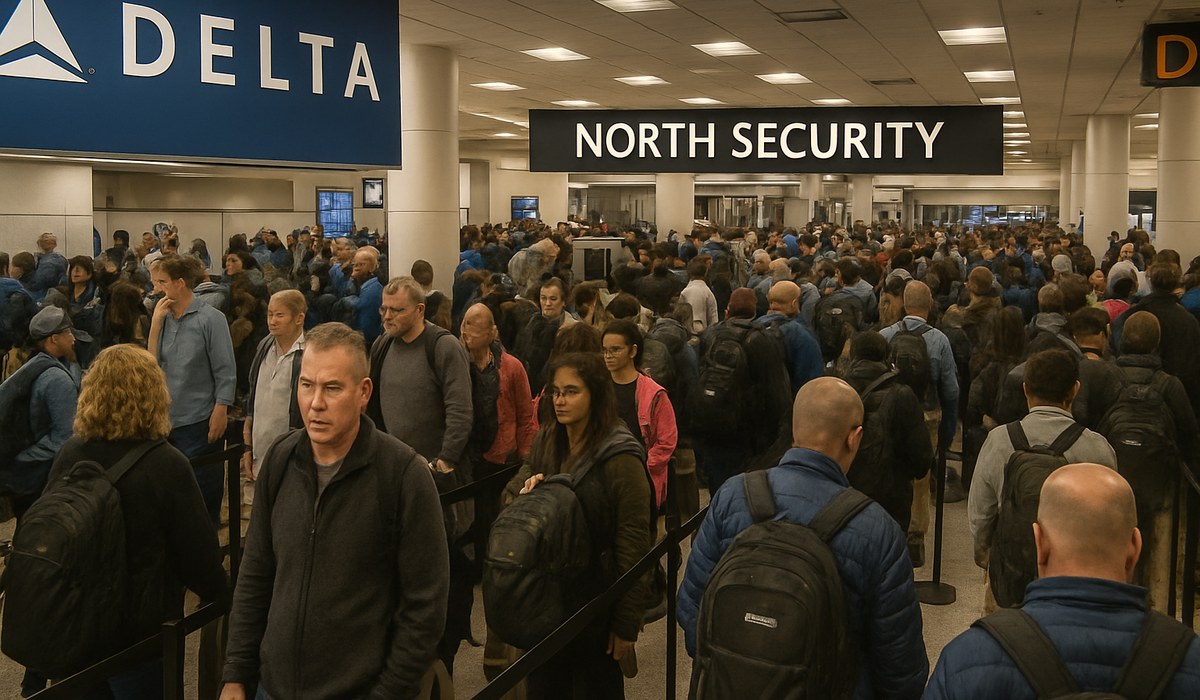
Image generated by AI
**> Quick Summary
• Delta Air Lines activated an emergency travel waiver for Atlanta operations after TSA checkpoint wait times exceeded four hours • The policy shift transfers financial burden from passengers to the airline despite federal security agency staffing shortfalls • Hartsfield-Jackson International Airport (ATL) processes over 107 million passengers annually, making security bottlenecks systemically disruptive • Airlines absorb rebooking costs when government infrastructure failures cause passenger delays**
When TSA wait times at the world's busiest airport spiral past four hours, the airline—not the government—ends up paying the price through emergency travel waivers. Delta Air Lines implemented an emergency change-fee waiver for passengers traveling through Atlanta's Hartsfield-Jackson International Airport this week as security checkpoint processing times reached unprecedented levels. The carrier's decision highlights a growing crisis: airlines are increasingly forced to absorb operational costs resulting from federal infrastructure failures rather than predictable weather events or mechanical issues.
The emergency policy allows affected travelers to modify their itineraries without standard change penalties, but the move raises questions about who should bear financial responsibility when federal agencies fail to maintain adequate staffing levels. According to FlightAware's real-time delay statistics, Atlanta airport departure delays spiked 340% above baseline averages during peak checkpoint congestion periods this week.
What Delta's Emergency Waiver Actually Covers
Delta's emergency travel waiver applies specifically to passengers with tickets issued for travel through Atlanta between March 27-30, 2026. The carrier is permitting one-time itinerary changes without imposing the typical $200-400 domestic change fee or $500-750 international modification charge. Travelers can rebook flights departing through April 3, 2026, providing additional flexibility for those who missed connections due to security line delays.
The waiver does not cover fare differences between originally booked flights and alternative options. Passengers selecting more expensive replacement flights must pay the price differential, though they avoid change penalties. Basic Economy ticket holders—normally prohibited from making any changes—receive temporary modification privileges under this emergency protocol.
Delta spokesperson Catherine Morrow confirmed the carrier processed over 2,100 rebooking requests within the first 18 hours of implementing the waiver. The airline is also proactively contacting passengers with tight connection times at Atlanta, recommending earlier departure options when available. This represents a significant operational cost absorption, as the carrier foregoes revenue from change fees while dedicating customer service resources to mass rebooking efforts.
The policy mirrors procedures airlines traditionally reserve for hurricane evacuations or blizzard disruptions. However, this marks one of the first instances where a major U.S. carrier has issued widespread travel waivers specifically attributing delays to federal security processing failures rather than natural disasters or airline operational issues.
Why Atlanta's TSA Wait Times Reached Crisis Levels
Transportation Security Administration checkpoint wait times at Hartsfield-Jackson exceeded four hours during multiple periods between March 26-27, according to airport operations data. The delays stem from a 28% staffing shortage across TSA positions at the facility, combined with spring break travel volumes that pushed daily passenger throughput to 312,000 travelers—18% above typical March averages.
TSA Administrator David Pekoske acknowledged the staffing crisis during a congressional hearing earlier this month, noting that nationwide attrition rates for screening officers reached 19% in 2025—the highest level since the agency's formation. Atlanta's checkpoint operations have been particularly affected because the facility serves as Delta's primary hub, concentrating connection traffic from across the carrier's network.
The FAA operational updates indicate that ground security delays created cascading air traffic management complications, as aircraft awaiting late-arriving passengers occupied gate positions needed for on-time departures. This compounding effect transformed individual passenger delays into system-wide operational disruptions affecting dozens of downstream flights.
Airport officials report that checkpoint wait times of 90-120 minutes are now considered routine during peak travel periods at Atlanta, representing a dramatic shift from the 15-25 minute processing times travelers experienced as recently as 2019. The chronic understaffing has forced passengers to arrive progressively earlier, straining airport parking facilities and concession operations designed for different passenger dwell-time patterns.
Security screening checkpoint infrastructure at major U.S. hubs was designed for specific passenger-per-hour throughput rates. When staffing falls below operational minimums, even state-of-the-art screening technology cannot compensate for the shortage of human operators required to manage queues, verify identification documents, and respond to alarm resolutions.
How Security Delays Impact Your Connecting Flights
Passengers connecting through Atlanta face compounded risks when TSA processing times become unpredictable. Delta's minimum connection time at the airport is officially 35 minutes for domestic-to-domestic flights and 60 minutes for international connections. However, these standards assume travelers have already cleared security at their origin airport and are simply moving between gates.
When inbound passengers miss connections due to security delays during initial airport entry—a scenario affecting travelers who book separate tickets or return from international destinations—the situation becomes more complex. The US Department of Transportation passenger rights guidelines clarify that airlines are not required to provide accommodation or compensation when delays result from security screening rather than carrier operational issues.
This regulatory distinction creates a protection gap. If a passenger misses a connection because their first flight arrived late due to weather or mechanical problems, the airline typically reboozes them on the next available flight at no additional cost. But when the same passenger misses that connection because they spent three hours in a security line despite arriving at the airport with the recommended two-hour buffer, the situation falls into a gray area where passenger protections are less clearly defined.
Delta's emergency waiver temporarily bridges this gap by treating TSA-delay-affected passengers similarly to weather-disrupted travelers. However, the policy's limited duration means passengers traveling after the waiver period expires will again face potential costs if security delays cause missed connections. Similar disruption patterns have been documented in broader travel infrastructure failures, including industry-wide travel disruption patterns affecting multiple regions this spring.
Transportation analysts note that as security screening delays become chronic rather than exceptional, the traditional risk-sharing model between passengers, airlines, and government agencies requires reevaluation. Currently, airlines absorb costs for disruptions within their control, passengers accept risks from personal delays, and weather events are considered shared misfortunes. Security screening failures don't fit neatly into any of these categories.
Rebooking Strategies When Hubs Face Extended Processing Times
Travelers scheduled to connect through Atlanta during periods of known security congestion should consider several protective strategies. First, when booking connecting itineraries, select connections with at least 90 minutes between flights rather than the airline's posted minimum connection time. This buffer accounts for potential checkpoint delays even if both flights operate on schedule.
Second, prioritize morning departures when possible. TSA checkpoint wait times at Atlanta typically reach their shortest duration between 5:00-7:00 AM, before early-morning bank departures create processing bottlenecks. Afternoon and evening periods consistently show the longest wait times, particularly between 11:00 AM-2:00 PM and 4:00-7:00 PM.
Third, enroll in TSA PreCheck or Clear programs, which maintain separate screening lanes with significantly reduced wait times. During this week's peak congestion at Atlanta, PreCheck lanes processed passengers in 12-18 minutes while standard checkpoint wait times exceeded 240 minutes. The $78-189 program costs are quickly recovered through time savings and reduced missed-flight risks for travelers who connect through major hubs more than twice annually.
Fourth, monitor real-time security wait time data before leaving for the airport. The MyTSA mobile application provides crowd-sourced checkpoint delay information, allowing travelers to adjust departure timing if conditions worsen. Several airlines, including Delta, now send proactive alerts to passengers when security wait times at their departure airport exceed 45 minutes.
Fifth, consider booking nonstop flights when connecting through congested hub airports, even if the direct option costs slightly more. The price premium often proves worthwhile when accounting for the time value of avoided connections and reduced missed-flight risk. This strategy becomes particularly relevant when recent travel advisories affecting international connections add additional complexity to journey planning.
Airlines are beginning to adopt technological approaches to mitigate security-delay impacts. Some carriers now use major airline operational innovations including predictive analytics that identify passengers at high risk of missing connections due to checkpoint congestion, enabling proactive rebooking before travelers reach the airport.
FAQ: Delta Atlanta Travel Waiver and TSA Delays
Does the Delta emergency waiver apply if I booked through a third-party site?
Yes, the waiver applies to all qualifying tickets regardless of purchase channel, including reservations made through Expedia, Google Flights, or travel agencies. You'll need to contact Delta directly or work through your booking agent to process the change, as the waiver terms require verification of your original travel dates through Atlanta.
Can I get a refund instead of rebooking if security delays seem likely?
The emergency waiver permits fee-free changes but does not automatically entitle passengers to refunds. Delta may offer refunds on a case-by-case basis for travelers who can demonstrate that no reasonable rebooking alternative meets their needs, but standard refund policies still apply to most situations. Travel insurance with trip cancellation coverage may provide refund options depending on your policy terms.
What happens if I miss my connection due to security delays after the waiver period ends?
After March 30, standard airline policies resume. If you miss a connection because of security checkpoint delays, you'll be rebooked on the next available flight, but you may face change fees and fare differences depending on ticket type. The airline is not required to provide meal vouchers or hotel accommodation for security-related delays, unlike weather or mechanical disruptions.
Are other airlines offering similar waivers for Atlanta travel?
As of March 28, Southwest Airlines and United Airlines have issued limited travel advisories for Atlanta but have not implemented blanket fee waivers matching Delta's policy scope. American Airlines, which operates a smaller Atlanta presence, is handling disruptions on a case-by-case basis. Policies may expand if TSA wait times remain elevated into April.
Should I arrive four hours early for my Atlanta flight?
Current recommendations suggest domestic passengers arrive three hours before departure for Atlanta flights, while international travelers should allow 3.5-4 hours. Monitor the MyTSA app within two hours of your planned airport departure to adjust timing based on real-time conditions. TSA PreCheck members can reduce these buffers by approximately 45-60 minutes in most circumstances.
Related Articles:
Disclaimer
This article is for informational and educational purposes only. It does not constitute legal, financial, or professional advice. While we strive to provide accurate and up-to-date information, travel policies, regulations, and conditions change rapidly. Always verify information with official sources before making travel decisions. Nomad Lawyer makes no representations about the accuracy, reliability, completeness, or suitability of the information provided. Readers should consult qualified professionals for advice specific to their circumstances. The views expressed in this article are those of the author and do not necessarily reflect the views of Nomad Lawyer.
Raushan Kumar
Founder & Lead Developer
Full-stack developer with 11+ years of experience and a passionate traveller. Raushan built Nomad Lawyer from the ground up with a vision to create the best travel and law experience on the web.
Learn more about our team →