
Korean Air Activates Emergency Cost Controls as Fuel Prices Double to $4.50 Per Gallon
Soaring geopolitical tensions in the Middle East have driven aviation fuel prices from $2.20 to $4.50 per gallon, forcing Korean Air to activate an emergency cost management system. Route cuts, investment freezes, and schedule restructuring are now in effect across South Korea, US, and international networks.

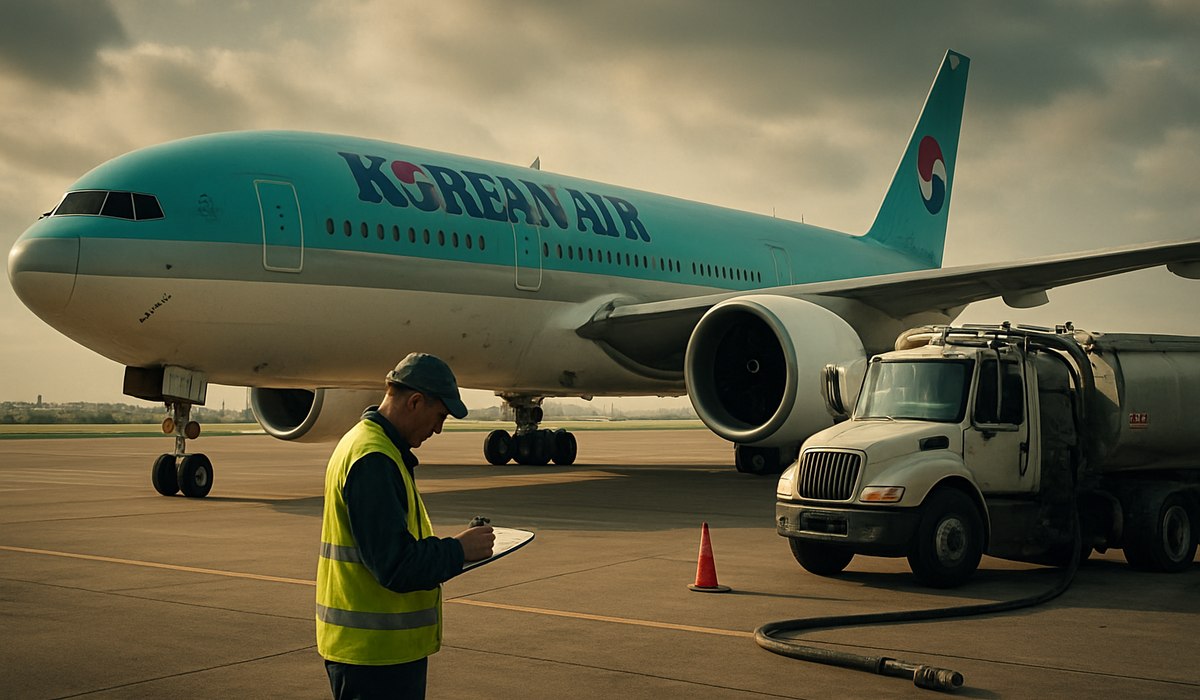
Image generated by AI
Korean Air Declares Financial Emergency as Jet Fuel Costs Explode
Korean Air, South Korea's flagship carrier and a cornerstone of the global aviation network, has activated an unprecedented emergency cost management system in direct response to a catastrophic doubling of aviation fuel prices. Beginning April 2026, the carrier is implementing sweeping operational restructuring across its domestic, United States, and international flight schedules to neutralize the financial hemorrhage caused by Middle Eastern geopolitical instability.
The scale of the fuel crisis is staggering. Korean Air's original 2026 budget projected aviation fuel at approximately $2.20 per gallon. That projection has been violently obliterated. The revised estimate now stands at an alarming $4.50 per gallon—a jaw-dropping 105% increase driven primarily by escalating military conflict in the Middle East disrupting crude oil supply chains. For an airline where fuel routinely constitutes nearly 30% of total operating costs, this isn't a minor budget adjustment; it's a structural financial emergency.
The Emergency Playbook: What Korean Air Is Cutting
Korean Air's emergency management framework is a multi-phase strategy designed to surgically reduce expenditure without catastrophically undermining its global network integrity. The core pillars include:
- Investment Freeze: All non-essential capital expenditures are being placed on immediate hold. Planned fleet expansion timelines and airport lounge renovation projects face indefinite delays as cash preservation takes absolute priority.
- Route Optimization: Underperforming and low-yield routes—particularly thin regional connections—are being aggressively evaluated for frequency reduction or outright suspension.
- Resource Redeployment: Aircraft are being strategically repositioned away from fuel-intensive long-haul sectors toward shorter, higher-margin domestic and regional corridors where fuel burn per revenue passenger kilometer is significantly lower.
- Operational Efficiency Mandates: Ground handling procedures, taxiing protocols, and in-flight weight reduction initiatives are being tightened to squeeze every possible efficiency margin from each flight.
The Domino Effect: South Korean Aviation in Crisis Mode
Korean Air is not suffering alone. The fuel price shock has triggered a sector-wide emergency across the South Korean aviation ecosystem:
- Asiana Airlines has independently activated its own emergency cost management framework
- T'way Air has implemented parallel austerity measures
- Jin Air, Air Busan, Air Seoul, and Air Premia have all commenced frequency reductions on less profitable routes starting April
The simultaneous adoption of emergency frameworks by virtually every South Korean carrier signals a systemic vulnerability. South Korean airlines are disproportionately exposed because the overwhelming majority of their route networks traverse fuel-intensive long-haul Pacific and intercontinental corridors.
The Currency Double-Whammy
Compounding the fuel crisis is a devastating currency headwind. The Korean won has weakened substantially against the US dollar, and since aircraft leasing contracts, maintenance agreements, and fuel purchases are overwhelmingly denominated in dollars, Korean Air faces a compounding financial squeeze from both directions simultaneously.
Korean Air's own financial modeling reveals the brutal arithmetic:
- Every $1 increase in oil prices adds roughly ₩46.5 billion ($34 million) to annual operating costs
- Every 10-won depreciation against the dollar impacts profits by approximately ₩55 billion ($40 million)
With both variables moving aggressively against the airline simultaneously, the compounding effect threatens to potentially wipe out annual profitability targets entirely.
What Guests Get
- Maintained safety and compliance standards — cost cuts explicitly exclude maintenance and crew training
- Potential fare adjustments as fuel surcharges are recalibrated to reflect actual operating costs
- Continued SkyTeam alliance access preserving global connectivity despite individual route adjustments
- Proactive schedule change notifications pushed via the Korean Air mobile application
- Flexible rebooking options on routes affected by frequency reductions
Korean Air Fuel Crisis: Financial Impact Snapshot
| Financial Parameter | Original 2026 Projection | Revised Post-Crisis | Impact Scale |
|---|---|---|---|
| Fuel Cost Per Gallon | $2.20 | $4.50 | +105% increase |
| Fuel as % of Operating Costs | ~28% | ~40% (projected) | Massive margin compression |
| Impact per $1 Oil Price Rise | — | ₩46.5 billion/year | ~$34M annual cost add |
| Impact per 10-won FX Shift | — | ₩55 billion/year | ~$40M profit impact |
| Investment Status | Active expansion | Frozen/Deferred | Capital preservation mode |
| Carrier-wide Response | Normal operations | Emergency management | Sector-wide crisis |
What This Means for Travelers
If you hold confirmed tickets on Korean Air for the mid-2026 period, particularly on long-haul transpacific or intercontinental routes, vigilantly monitor your booking for schedule changes. Frequency reductions on thinner routes could mean your specific flight gets consolidated into a different departure time or, in extreme cases, suspended entirely.
Fuel surcharges embedded within your ticket price are virtually certain to increase on new bookings. Travelers planning premium cabin purchases on Korean Air's flagship routes to the US (Los Angeles, New York, San Francisco) should lock in current pricing immediately before surcharge adjustments take full effect. Additionally, SkyTeam alliance partners may absorb displaced Korean Air passengers on codeshare routes, so maintain flexibility in your routing preferences to capitalize on availability across the partner network.
FAQ: Korean Air Emergency Cost Measures
Why are fuel prices so high in 2026? The primary driver is escalating military conflict in the Middle East, which has severely disrupted crude oil production and shipping corridors. Brent crude has surged past projections, and aviation-grade kerosene—which is refined from crude oil—has more than doubled from $2.20 to $4.50 per gallon compared to Korean Air's original budget.
Will Korean Air cancel my flight? Korean Air has not announced mass cancellations. Instead, the airline is strategically reducing frequencies on underperforming routes and consolidating passengers onto fewer, fuller aircraft. If your specific flight is affected, the airline will proactively notify you and offer rebooking alternatives.
Are other Asian airlines implementing similar emergency measures? Yes. Virtually the entire South Korean aviation sector—including Asiana, T'way Air, Jin Air, Air Busan, and Air Premia—has activated parallel austerity frameworks. Airlines across Southeast Asia and Japan are also implementing fuel-driven cost controls, though specifics vary by carrier.
Related Travel Guides
How Rising Fuel Prices Affect Your Airline Ticket in 2026
SkyTeam Alliance Benefits: Maximizing Connections When Routes Get Cut
Disclaimer
This article is for informational and educational purposes only. It does not constitute legal, financial, or professional advice. While we strive to provide accurate and up-to-date information, travel policies, regulations, and conditions change rapidly. Always verify information with official sources before making travel decisions. Nomad Lawyer makes no representations about the accuracy, reliability, completeness, or suitability of the information provided. Readers should consult qualified professionals for advice specific to their circumstances. The views expressed in this article are those of the author and do not necessarily reflect the views of Nomad Lawyer.
Raushan Kumar
Founder & Lead Developer
Full-stack developer with 11+ years of experience and a passionate traveller. Raushan built Nomad Lawyer from the ground up with a vision to create the best travel and law experience on the web.
Learn more about our team →