
Korean Air Launches Emergency Action Amid Skyrocketing Fuel Prices and Passenger Chaos

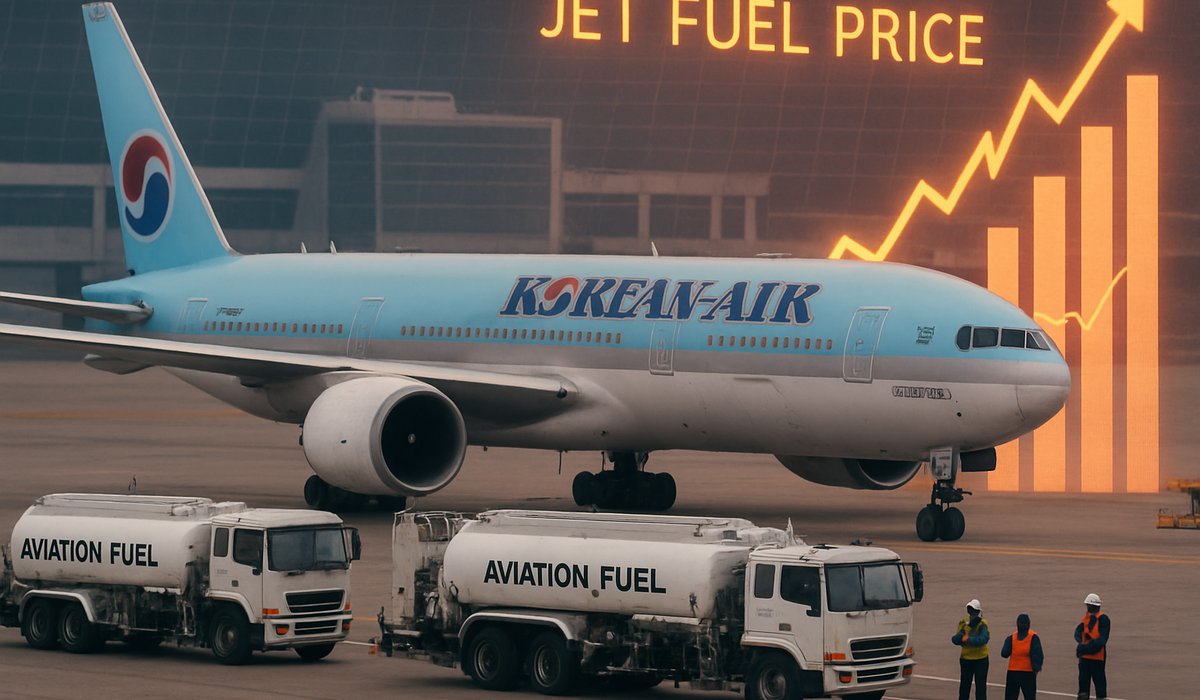
Image generated with AI
Quick Summary
- Korean Air activates "emergency management" protocols starting April 2026
- Jet fuel prices have skyrocketed over 50% since February 2026, currently hovering around 450 cents per gallon
- Middle East geopolitical instability, particularly the Iran conflict, is cited as the primary driver of surging crude oil
- Passengers face drastic fare hikes, with fuel surcharges climbing up to 250% on long-haul routes
- The airline will proactively reduce non-profitable routes, creating potential flight cancellations and schedule chaos
In a drastic move signaling deep distress within the global aviation sector, Korean Air has officially activated extraordinary "emergency management" measures beginning in April 2026.
South Korea’s flagship carrier is grappling with an explosive, unsustainable surge in the cost of jet fuel—which has more than doubled in recent weeks. For an airline globally renowned for its meticulous operational efficiency and premium passenger service, the pivot to emergency financial protocols underscores the severity of the current macroeconomic shock.
For the average traveler, the consequences are immediate: skyrocketing airfares, abrupt route reductions, and entirely overhauled travel schedules.
Why Fuel Prices Are Grounding Airline Budgets
In the aviation industry, fuel represents the heaviest ongoing financial burden, typically comprising 25% to 30% of total operating costs.
The current crisis traces its roots directly to severe geopolitical instability in the Middle East. Hostilities involving Iran and major global powers have severely disrupted international oil supply chains. This volatility has caused crude oil—and subsequently, refined jet fuel—to spike dramatically.
According to data cited from the International Air Transport Association (IATA) and South Korea’s Ministry of Land, Infrastructure and Transport (MOLIT), Korean Air is among the carriers hardest hit.
The figures paint a stark picture:
- Since February 2026, jet fuel prices have leaped by more than 50%.
- Prices for April 2026 are hovering at an agonizingly high 450 cents per gallon.
- This is a staggering deviation from Korean Air’s highly calculated budget projections of 220 cents per gallon made earlier this year.
The Immediate Impact on Passengers and Airfares
The activation of emergency measures means Korean Air is actively shifting its operational budget. The costs are being passed directly down the airline’s network, hitting the traveling public immediately.
250% Fuel Surcharges on Long-Haul Trips
Travelers booking international routes—specifically long-haul flights from Seoul to major global capitals like New York, Chicago, London, and Paris—are experiencing severe price shocks. Fuel surcharges have climbed as much as 250% in certain ticketing classes in a matter of weeks, adding hundreds of dollars to the base price of a standard international itinerary.
Flight Cancellations and Route Severing
To plug financial leaks, Korean Air is proactively altering its route map. The airline is actively reducing non-profitable secondary operations to prioritize highly lucrative long-haul and core regional routes. For passengers booked on marginal routes, this translates to abrupt cancellations and the headache of forced rebooking.
A Global Aviation Trend
Korean Air is not enduring this crisis in a vacuum. IATA has issued stark warnings that the broader global aviation industry faces significant, sustained financial losses if the current fuel trajectory holds.
Global peers including United Airlines, Cathay Pacific, and Singapore Airlines have implemented analogous strategies: aggressively hiking baseline airfares and trimming underperforming routes to mitigate their exposure to the crude oil shock.
In South Korea—a nation highly dependent on imported energy—the government is reportedly monitoring the aviation sector closely. Officials have indicated an openness to exploring temporary subsidies or tax relief measures to prevent a total collapse in travel affordability.
Korean Air’s 4-Point Emergency Survival Strategy
To navigate the immediate financial threat, Korean Air has adopted four core strategies under its emergency management directive:
- Slashing Non-Profitable Routes: Immediate schedule reductions on secondary markets to conserve fuel on underperforming sectors.
- Accelerating Fuel Efficiency: Optimizing current fleet deployments to prioritize the usage of the newest, most fuel-efficient aircraft on high-burn routes.
- Aggressive Fuel Hedging: Attempting to lock in massive forward pricing contracts to shield the carrier from further extreme market volatility in upcoming quarters.
- Tiered Pricing Execution: Pushing the thickest fuel surcharges onto business class and premium route passengers to insulate economy classes where possible, though all fares are inflating.
What Affected Passengers Need to Do Now
If you hold a ticket with Korean Air, or plan to book in the near future, the airline’s emergency pivot necessitates serious passenger vigilance:
- Monitor Your Booking Obsessively: Use the Korean Air mobile app daily, as routes are currently being actively trimmed or consolidated.
- Budget for Surcharges: Do not expect to find legacy pricing; fuel surcharges are mathematically baked into all new bookings.
- Prepare for Extended Transit Times: As direct, less-profitable routes are canceled, passengers may be forced onto connecting itineraries, increasing overall travel time.
While Korean Air has loudly pledged to prioritize customer service through the turbulence—offering alternate routing and flexible rebooking options—the reality of the 2026 fuel crisis means air travel this summer will be fundamentally more expensive and considerably more chaotic.
Source: Travel And Tour World
Related Travel Guides
Oneworld, SkyTeam, Star Alliance: Which Offers the Best Disruption Protection in 2026?
South Korea Transit Guide 2026: Navigating Seoul Incheon (ICN)
How to Save on Flights During the 2026 Fuel Surcharge Crisis
Disclaimer
This article is for informational and educational purposes only. It does not constitute legal, financial, or professional advice. While we strive to provide accurate and up-to-date information, travel policies, regulations, and conditions change rapidly. Always verify information with official sources before making travel decisions. Nomad Lawyer makes no representations about the accuracy, reliability, completeness, or suitability of the information provided. Readers should consult qualified professionals for advice specific to their circumstances. The views expressed in this article are those of the author and do not necessarily reflect the views of Nomad Lawyer.
Preeti Gunjan
Contributor & Community Manager
A passionate traveller and community builder. Preeti helps grow the Nomad Lawyer community, fostering engagement and bringing the reader experience to life.
Learn more about our team →