
Kolkata Railway Terminals Overhauled: Five Major Train Services Shift to Shalimar and Santragachi in 2026
South Eastern Railway is redistributing five key train services across Shalimar and Santragachi terminals to alleviate chronic congestion at Howrah station and modernize passenger flow.

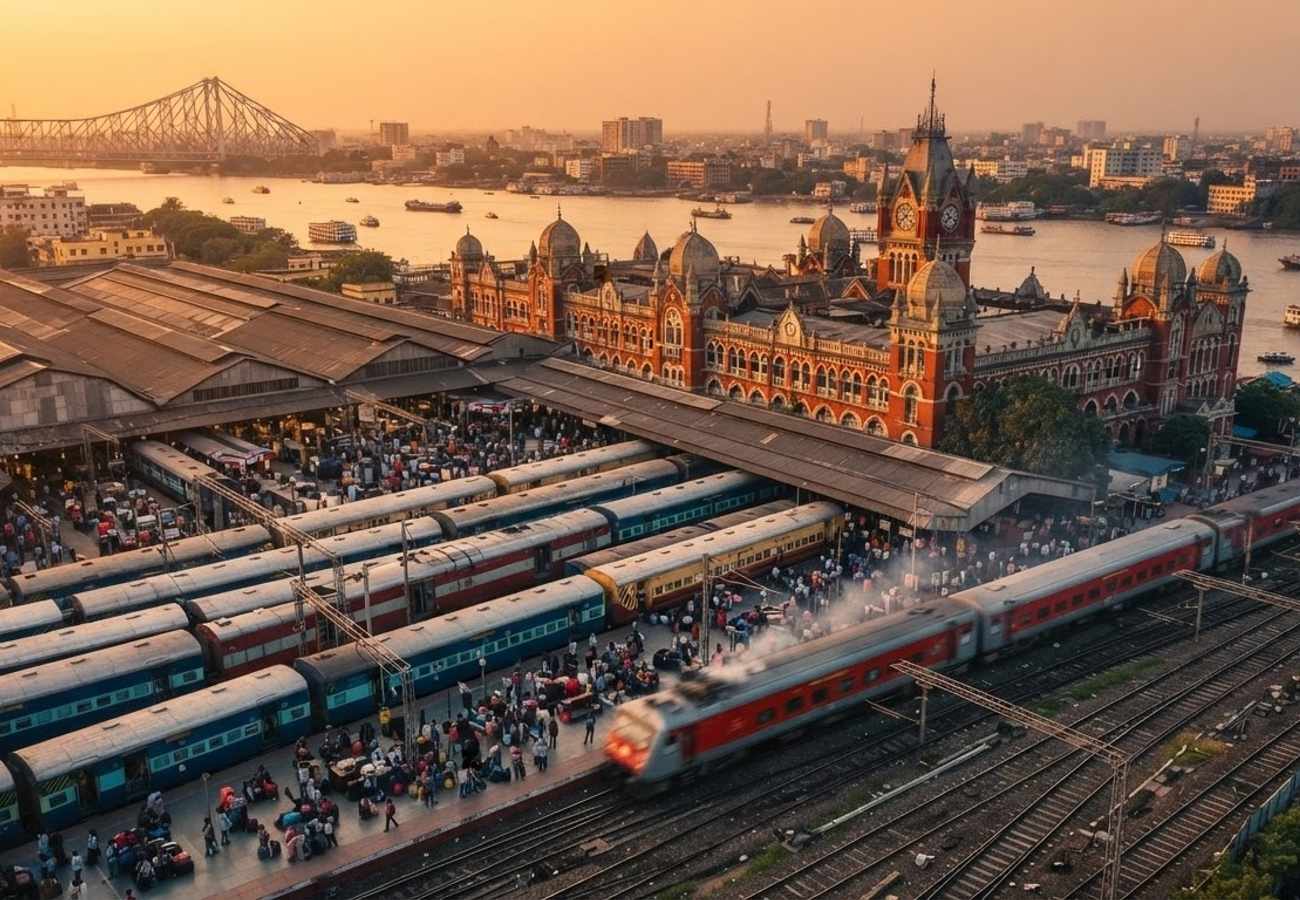
Image generated by AI
[Kolkata, August 16, 2026] — Five major train services in the Kolkata region are being relocated to alternative terminals as part of a strategic modernization drive to eliminate bottlenecks at the city's primary railway hubs. The South Eastern Railway zone is implementing these changes to balance traffic between Howrah, Santragachi, and Shalimar stations, ensuring more efficient train movement and reduced platform overcrowding.
The restructuring is designed to transition the region away from a centralized dependency on Howrah station, which remains one of the most heavily trafficked rail hubs in India. By redistributing long-distance and regional services, railway officials aim to improve maintenance schedules and increase the overall capacity for passenger handling.
Shalimar Station to Absorb Four Long-Distance Express Routes
To mitigate the intense pressure on Howrah and Santragachi, railway authorities have designated Shalimar railway station as the new originating point for four high-priority Mail/Express pairs. This shift is a calculated move to optimize platform availability and streamline the management of departing long-distance services.
The relocation allows for a more flexible scheduling environment, reducing the likelihood of delays caused by platform unavailability at the more congested terminals. The following services will now operate from Shalimar:
| Train Number | Service Name | Previous Originating Terminal | New Terminal |
|---|---|---|---|
| 22851/22852 | Santragachi–Mangaluru Central Vivek Express | Santragachi | Shalimar |
| 18009/18010 | Santragachi–Ajmer Express | Santragachi | Shalimar |
| 22817/22818 | Howrah–Mysuru Express | Howrah | Shalimar |
| 12867/12868 | Howrah–Puducherry Express | Howrah | Shalimar |
These changes will take effect following the completion of final operational preparations, requiring passengers to adjust their boarding logistics for these specific routes.
Santragachi Terminal to Host Rupasi Bangla Express
In addition to the shifts toward Shalimar, the South Eastern Railway is modifying the route for the Purulia–Howrah Rupasi Bangla Express (Train No. 12884). This service will be moved from the Howrah terminal to the Santragachi terminal.
Santragachi has evolved into a critical node for passenger traffic in the Kolkata metropolitan area. By shifting the Rupasi Bangla Express to this location, officials intend to further decrease the volume of trains entering the Howrah terminal, thereby creating a more distributed and resilient network. This operational pivot allows for better distribution of passenger loads across the available infrastructure, reducing the "choke point" effect often experienced at Howrah.
Infrastructure Expansion and Capacity Upgrades at Howrah
While several trains are moving away from Howrah, the station is simultaneously undergoing physical expansions to handle its remaining massive traffic volume. A key component of this upgrade is the introduction of Platform 24.
The addition of this new platform is expected to significantly enhance the station's ability to manage simultaneous arrivals and departures. By increasing the physical space available for passenger operations, the railway intends to reduce the chaos often associated with peak travel periods. This combination of "outward shifting" (moving trains to other stations) and "inward expansion" (adding platforms) represents a dual-track approach to solving urban rail congestion.
Strategic Shift Toward Distributed Rail Operations
The current reorganization reflects a broader shift in the Indian Railways' philosophy regarding urban transit. For decades, the system relied on a hub-and-spoke model that placed immense pressure on a single primary terminal. The move toward a distributed operational model—utilizing Shalimar and Santragachi as primary hubs rather than secondary supports—is intended to create a more balanced ecosystem.
This strategy provides several systemic advantages:
- Maintenance Efficiency: Spreading trains across three terminals allows for better access to pit lines and maintenance sheds.
- Staffing Optimization: Railway personnel can manage smaller, more focused volumes of traffic at individual stations.
- Passenger Flow: By diversifying departure points, the city's road traffic patterns around the stations are likely to be more evenly distributed.
Why This Matters: Impact on the Modern Traveler
For the frequent traveler or resident of Kolkata, these changes mean that the "default" destination for rail travel is no longer exclusively Howrah. From a logistical standpoint, this creates a necessity for heightened vigilance regarding ticket details.
The shift to Shalimar and Santragachi may actually benefit the passenger in the long run by reducing the time spent navigating overcrowded platforms and decreasing the likelihood of "last-minute" platform changes. However, in the short term, it introduces a risk of passengers arriving at the wrong terminal—a common issue during large-scale operational shifts. Travelers must now treat the Kolkata rail network as a multi-terminal system rather than a single-hub destination.
From a legal and consumer rights perspective, it is imperative that passengers verify their boarding locations via official digital channels, as the physical signage at stations may take time to catch up with operational changes.
Passengers are strongly urged to cross-reference their PNR status and official railway notifications to avoid boarding errors during this transition period.
Related Travel Guides
Disclaimer
This article is for informational and educational purposes only. It does not constitute legal, financial, or professional advice. While we strive to provide accurate and up-to-date information, travel policies, regulations, and conditions change rapidly. Always verify information with official sources before making travel decisions. Nomad Lawyer makes no representations about the accuracy, reliability, completeness, or suitability of the information provided. Readers should consult qualified professionals for advice specific to their circumstances. The views expressed in this article are those of the author and do not necessarily reflect the views of Nomad Lawyer.
Preeti Gunjan
Contributor & Community Manager
A passionate traveller and community builder. Preeti helps grow the Nomad Lawyer community, fostering engagement and bringing the reader experience to life.
Learn more about our team →