
Japan Shatters All-Time Tourism Records With 42.68 Million Visitors in 2025, Surpassing Pre-Pandemic Highs
Japan's tourism sector hits historic milestone with 42.68 million international visitors in 2025, exceeding 2019 records by wide margin and generating ¥9.5 trillion in visitor spending.

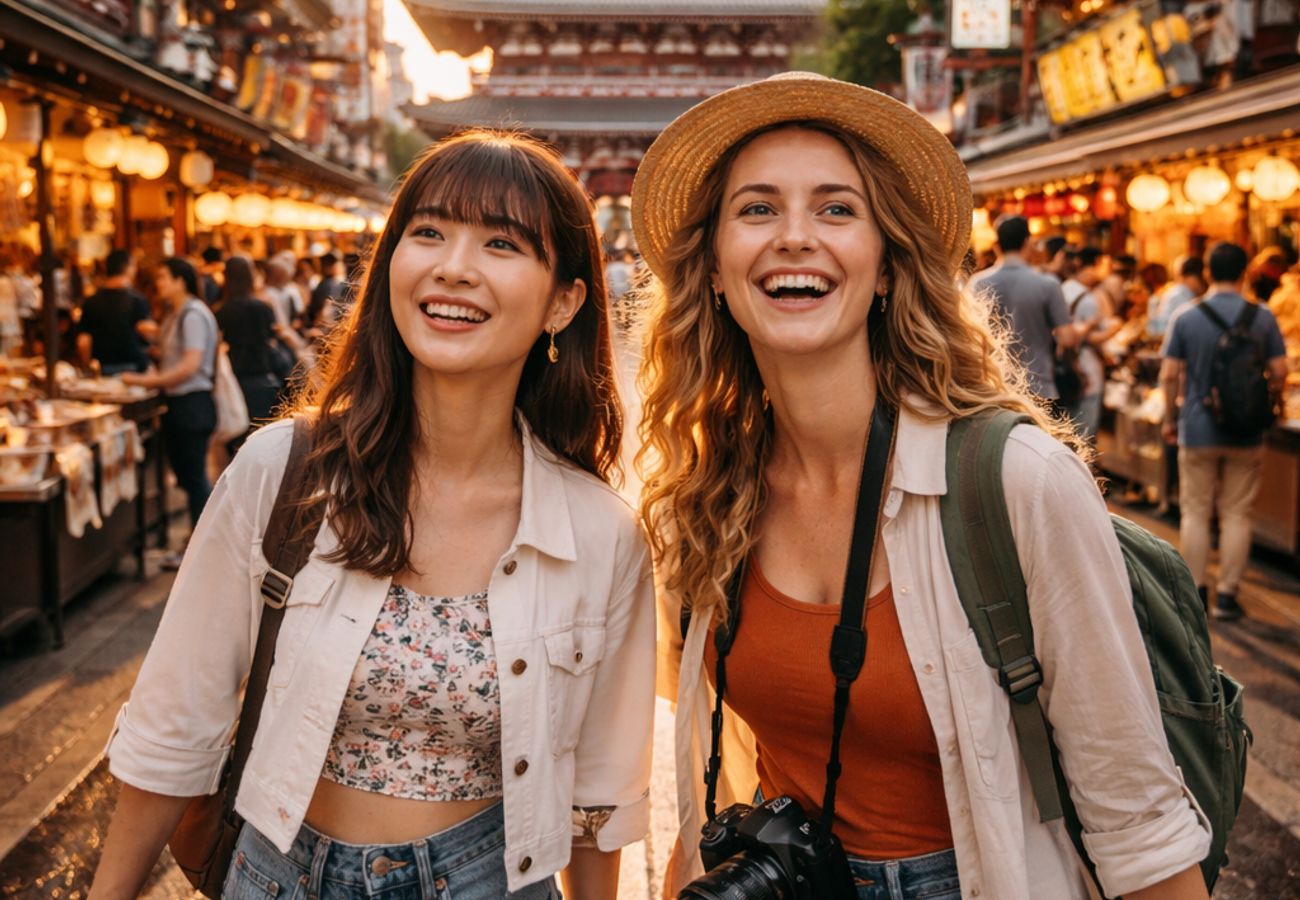
Image generated by AI
Japan's Tourism Boom Breaks Every Record on the Books
The numbers are staggering. Japan National Tourism Organization (JNTO) data released this week confirms what destination marketers have been whispering about all year: 42.68 million international visitors flooded Japan in 2025, shattering the previous all-time record from 2019. Not just matching it. Crushing it.
That's a 15% year-on-year surge despite geopolitical headwinds that would have derailed most destinations. This isn't a small uptick—this is a fundamental reshaping of Japan's position in global tourism hierarchy.
The Visitor Explosion That Defied Expectations
What's remarkable isn't just the raw numbers. It's the consistency. Travellers from South Korea, China, Taiwan, and the United States dominated inbound flows, creating a diversified visitor profile that buffers against single-market disruptions.
Reddit: "Japan's been my bucket-list destination forever, and seeing these numbers makes me think I need to book before it becomes impossible." — r/travel
The surge reflects a perfect storm of tailwinds: rebounding global travel appetite, expanded airline capacity, and Japan's renewed marketing push to reclaim its position as Asia's premier destination. Airlines have responded by adding new routes and increasing frequency on existing corridors, making Japan more accessible than ever.
Record-Breaking Spending: ¥9.5 Trillion in Visitor Revenue
Here's where the story gets even more compelling. Total visitor expenditure hit ¥9.5 trillion in 2025—a 16% year-on-year increase that outpaced even visitor growth itself. This matters because spending-per-visitor metrics reveal consumer confidence.
Accommodation, dining, transport, and retail all benefited equally. Longer stays and higher consumption per traveller paint a picture of satisfaction, not rushed tourism. Visitors weren't just arriving; they were staying, exploring, and spending.
According to the Japan Tourism Agency, this foreign visitor expenditure now ranks as one of Japan's top foreign income sources, positioning tourism alongside manufacturing and tech as an economic pillar.
Domestic Travel Mirrors International Boom
Japanese travellers aren't sitting idle either. Total travel consumption—domestic and outbound combined—reached ¥37.6 trillion in 2025, up nearly 10% from the prior year. Domestic night stays represented the largest category, proving that local travel appetite remains robust.
This dual momentum is the key insight: Japan isn't dependent solely on international arrivals. The domestic market provides ballast, sustaining hotels, restaurants, and attractions during seasonal dips.
March 2026 Confirms Momentum Continues Unbroken
Even as we head into mid-2026, the surge persists. March 2026 logged 3.6 million international visitors—a year-on-year increase that signals no slowdown in sight.
Seasonal patterns typically show softness in early spring, yet Japan maintained strong arrivals. This suggests the 2025 growth wasn't a statistical blip but a genuine recalibration of travel patterns toward Japan as a must-see destination.
The Geopolitical Wildcard: China Relations
Not everything has been smooth. Diplomatic tensions with China have created monthly volatility in visitor numbers. Yet the overall trend remains upward, thanks to diversified source markets absorbing individual country fluctuations.
This is crucial: Japan's recovery isn't fragile. It's built on a foundation of global appeal, not dependence on any single market.
Japan's Ambitious 2030 Target: 60 Million Visitors
The government isn't celebrating in place. Officials have set 60 million international visitors by 2030 as the next target—a 40% increase from 2025's record. That's aggressive, but not impossible given current trajectories.
To hit it, policy now emphasizes sustainable tourism distribution: moving visitors beyond overcrowded Tokyo and Kyoto into regional economies that desperately need injection. Rural prefectures like Nagano, Shimane, and Wakayama see tourism as economic salvation.
Enhanced entry procedures, regional infrastructure investment, and cultural preservation initiatives now anchor strategy. Quality experiences over sheer numbers is the mantra.
Why This Matters Beyond the Numbers
Japan's tourism resurgence reveals something critical about global travel recovery: it's not uniform, and it's not driven by price competition. Japan is expensive. Flights are long. Visas require paperwork.
Yet travellers are choosing Japan anyway—and spending lavishly—because of authenticity. Food culture. Architecture. History. Accessibility of traditional experiences merged with cutting-edge modernity.
According to JNTO forecasts, this positions Japan to weather economic uncertainty better than destinations dependent on budget tourism or cruise-ship quick stops.
The Ripple Effect: Jobs, Infrastructure, Cultural Preservation
Behind every statistic are jobs. Hotels across rural Japan are reopening. Regional airlines are adding flights. Small restaurants are hiring staff. Even as Japan grapples with demographic decline, tourism provides localized employment that doesn't require young people to relocate to Tokyo.
Cultural preservation also gains funding. Festival infrastructure, historical site maintenance, and artisan economy support—all now justified by visitor spending and tax revenue.
What Comes Next: The 2026-2030 Acceleration
Japan's tourism authority is already signaling next-phase initiatives. Infrastructure spending in secondary cities, enhanced transportation links, and digital payment systems designed for foreign visitors are in motion.
The question isn't whether Japan will hit 60 million visitors by 2030. The question is whether infrastructure, hospitality capacity, and cultural preservation can keep pace with demand without compromising the experiences that attracted visitors in the first place.
Japan proved the world still hungers for authentic experiences—and it's willing to spend big to get them.
Related Travel Guides
Disclaimer
This article is for informational and educational purposes only. It does not constitute legal, financial, or professional advice. While we strive to provide accurate and up-to-date information, travel policies, regulations, and conditions change rapidly. Always verify information with official sources before making travel decisions. Nomad Lawyer makes no representations about the accuracy, reliability, completeness, or suitability of the information provided. Readers should consult qualified professionals for advice specific to their circumstances. The views expressed in this article are those of the author and do not necessarily reflect the views of Nomad Lawyer.
Preeti Gunjan
Contributor & Community Manager
A passionate traveller and community builder. Preeti helps grow the Nomad Lawyer community, fostering engagement and bringing the reader experience to life.
Learn more about our team →