
Kīlauea Eruption 2026: Episode 46 Unleashes 650-Foot Lava Fountains and 20,000-Foot Ash Plume
Kīlauea Volcano has entered Episode 46 of its ongoing eruption series, showcasing massive 650-foot lava fountains and 20,000-foot ash plumes that are currently impacting travel on Hawai’i’s Big Island.

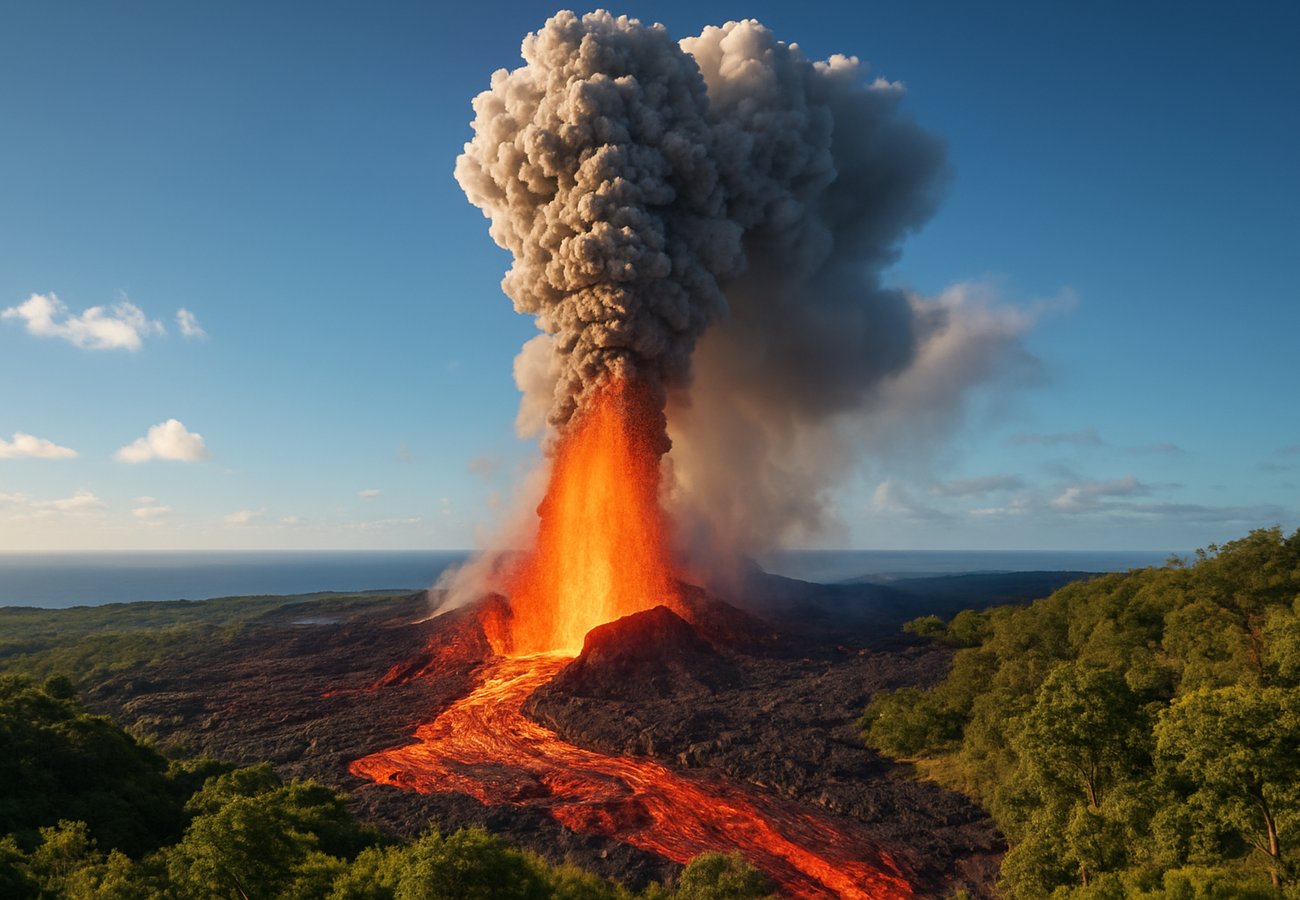
Image generated by AI
Quick Summary
- Episode 46 Commencement: The latest eruption phase began at 8:17 a.m. HST on May 5, 2026, within the Halemaʻumaʻu crater at Kīlauea’s summit.
- Intense Visuals: Molten lava fountains have reached heights of 650 feet (200 meters), while volcanic ash plumes have ascended to 20,000 feet above sea level.
- Travel Hazards: Falling Tephra (glassy fragments) and Pele’s hair are reported near the Uēkahuna overlook and along Highway 11.
- Air Quality Alert: Sulfur dioxide (SO2) emissions are creating widespread Vog (volcanic smog), prompting health warnings for individuals with respiratory conditions.
The Big Island of Hawai’i is currently witnessing one of its most powerful volcanic displays in years as Kīlauea enters Episode 46 of its ongoing 2024-2026 sequence. Starting in the early hours of May 5, the summit eruption has transformed the Halemaʻumaʻu crater into a cauldron of high-intensity lava fountains, attracting global attention and triggering emergency travel advisories within Hawai’i Volcanoes National Park. While the lava flows remain safely confined to the crater floor, the resulting 20,000-foot ash plume and high concentrations of volcanic gases are significantly impacting regional air quality. Travelers are being urged to exercise extreme caution, particularly near the park’s northern boundaries where tephra fallout is most concentrated. Despite these hazards, the park remains open to the public, with cruise traffic providing a safe, inter-island alternative for witnessing the spectacle without straining local hotel capacities in Hilo and Kona.
Kīlauea Eruption Episode 46: Key Metrics and Volcanic Hazards
The following table summarizes the technical data and safety risks associated with the May 2026 eruption phase.
| Metric / Hazard | Current Data / Status | Travel Impact |
|---|---|---|
| Lava Fountain Height | 650 Feet (200 Meters) | Visible from safe park overlooks |
| Ash Plume Altitude | 20,000 Feet ASL | Air quality alerts across Big Island |
| Primary Crater | Halemaʻumaʻu (Summit) | Immediate rim remains closed |
| Hazardous Materials | Tephra, Pele's Hair, Glass Scoria | Risk near Highway 11 & Uēkahuna |
| SO2 Emissions | High (Vog alerts active) | Health risk for asthma/COPD |
| Park Status | Open (with trail closures) | Check NPS alerts for real-time updates |
| Lava Flow Threat | Confined to Crater | No immediate threat to residences |
Episode 46: A High-Intensity Summit Eruption in Halemaʻumaʻu Crater
The latest phase of Kīlauea’s activity is characterized by its explosive verticality:
- Fountain Dynamics: Fountains from the north vent are creating a dramatic display of incandescent lava, which is accumulating in a growing lava lake within the crater.
- Monitoring Status: The Hawaiian Volcano Observatory (HVO) is providing real-time data to the Washington Volcanic Ash Advisory Center to track the movement of the 20,000-foot plume.
- Confined Activity: Geologists emphasize that while the visuals are intense, the lack of rift zone activity means residential communities remain safe from direct lava inundation.
Volcanic Hazards: Tephra Fall, Pele’s Hair, and Ash Plumes
For travelers on the ground, the primary risks are airborne:
- Tephra Fallout: "Fist-sized" glassy fragments have been reported falling in high-altitude areas of the park. These sharp materials can cause injury or damage to vehicle finishes.
- Pele’s Hair: Fine, needle-like volcanic glass fibers are being carried by trade winds. These can cause severe skin, eye, and respiratory irritation if handled or inhaled.
- Highway 11 Visibility: Motorists should be prepared for sudden visibility drops along Highway 11 as ash clouds move across the island’s southern belt.
Health Alert: Managing Vog and Sulfur Dioxide (SO2) Exposure
The eruption’s chemical output is a significant concern for public health:
- Vog Formation: Sulfur dioxide (SO2) reacting with sunlight and atmospheric moisture is creating "Vog," a thick smog that can reduce visibility and trigger respiratory distress.
- High-Risk Groups: Individuals with asthma, bronchitis, or heart disease are advised to stay indoors or use specialized filtration masks when vog concentrations are high.
- Daily Alerts: Visitors are encouraged to download the Hawaiʻi Interagency Terminology and air quality apps to track SO2 levels in Hilo, Kona, and Pāhala.
Travel Guide: Navigating Hawai’i Volcanoes National Park Safely
The National Park Service (NPS) has implemented specific protocols for Episode 46:
- Closed Areas: The immediate caldera rim and certain leeward trails remain closed to protect visitors from unpredictable gas bursts and cliff instability.
- Open Overlooks: Safe viewing remains possible from the Kīlauea Iki and Keanakākoʻi overlooks, provided visitors stay behind established barriers.
- Ranger Instructions: Visitors must adhere to all temporary road closures, which are frequently implemented when tephra falls heavily over thoroughfares.
Tourism Infrastructure: Cruise Traffic and Accommodation Updates
The Big Island is successfully managing the surge in "Eruption Chasers":
- Cruise Advantage: Year-round inter-island cruises allow tourists to witness the eruption from the ocean, bypassing the need for inland accommodations and reducing traffic on park roads.
- Hilo/Kona Status: While hotel occupancy is high, local infrastructure is operating normally. However, travelers should book car rentals and tours well in advance.
- Travel Insurance: Given the unpredictable nature of volcanic plumes, travelers are strongly advised to verify that their insurance covers "Natural Disaster" related trip interruptions.
FAQ: Kīlauea Eruption 2026
Is it safe to visit Hawai’i Volcanoes National Park right now? Yes, the park is open, but certain areas are restricted. Visitors must follow NPS guidelines and stay away from the closed Halemaʻumaʻu rim.
What should I do if I have asthma? Monitor daily air quality reports. If vog levels are high, avoid outdoor activities in the park and keep windows closed in your accommodation.
Can I see the lava from the road? Lava fountains may be visible from elevated overlooks like Uēkahuna, but ash plumes and gas concentrations may occasionally obscure views.
Related Travel Guides
Disclaimer
This article is for informational and educational purposes only. It does not constitute legal, financial, or professional advice. While we strive to provide accurate and up-to-date information, travel policies, regulations, and conditions change rapidly. Always verify information with official sources before making travel decisions. Nomad Lawyer makes no representations about the accuracy, reliability, completeness, or suitability of the information provided. Readers should consult qualified professionals for advice specific to their circumstances. The views expressed in this article are those of the author and do not necessarily reflect the views of Nomad Lawyer.
Kunal K Choudhary
Co-Founder & Contributor
A passionate traveller and tech enthusiast. Kunal contributes to the vision and growth of Nomad Lawyer, bringing fresh perspectives and driving the community forward.
Learn more about our team →