Kenya Government Issues Global Apology After Severe Operational Chaos at Jomo Kenyatta International Airport 2026

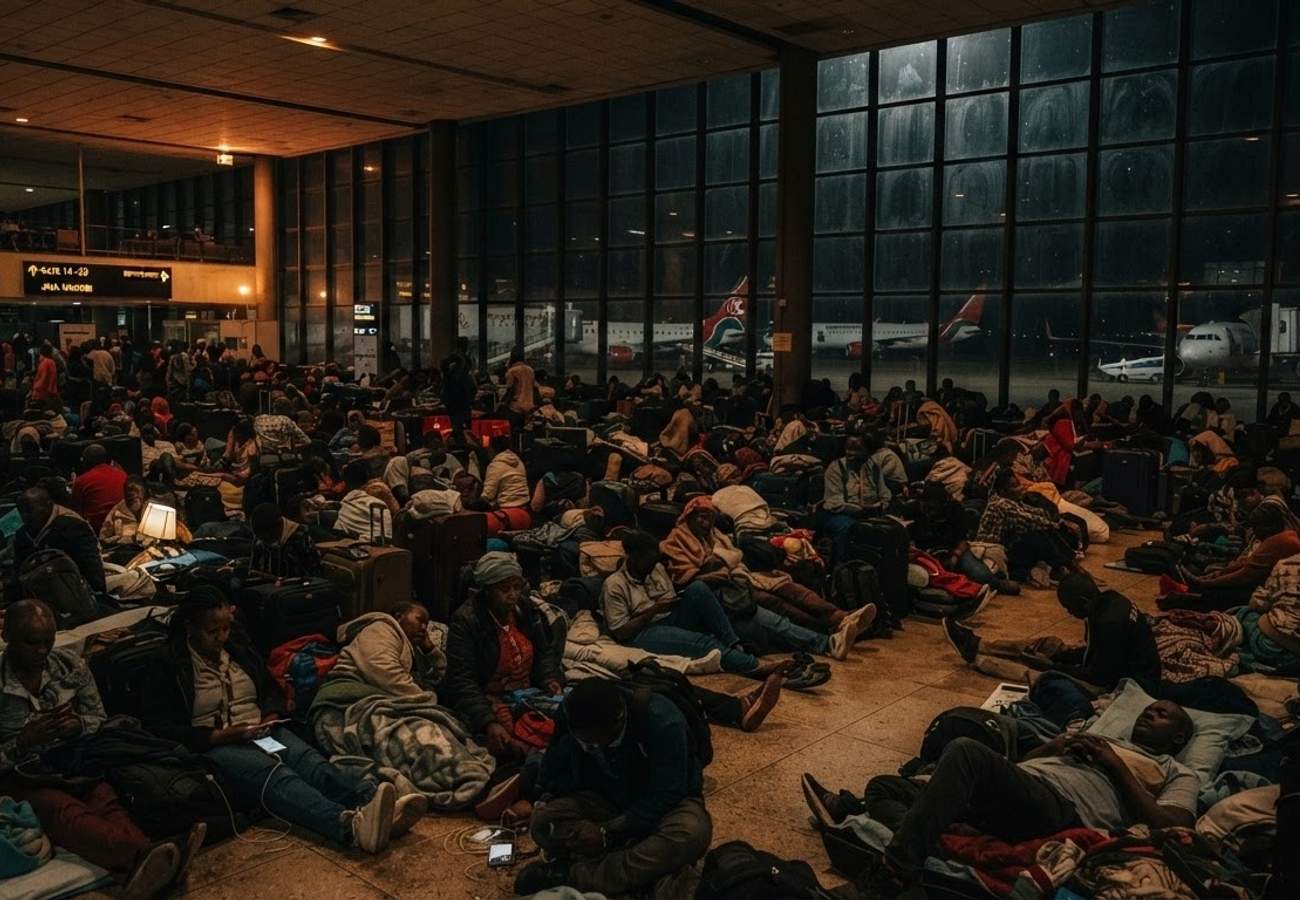
Image generated by AI
The Kenyan government has issued a formal global apology after a combination of industrial action and infrastructure failure paralyzed Jomo Kenyatta International Airport (JKIA). The disruption has reignited international concerns over systemic mismanagement and grid instability at East Africa's second-busiest aviation gateway.
Systemic Failures at Nairobi's Primary Hub
Operations at Jomo Kenyatta International Airport (JKIA) recently faced severe degradation as a dual crisis emerged: widespread industrial action by aviation workers coincided with technical failures stemming from a nationwide power outage. The resulting turmoil led to grounded flights, significant cargo delays, and thousands of stranded passengers.
Senior government officials have acknowledged that the disruption is not merely a local inconvenience but a systemic risk to Kenya's global reputation. The apology serves as a signal to international partners and airlines that the state is attempting to resolve the volatility affecting tourism, trade, and diplomacy.
The current crisis is part of a recurring pattern of infrastructure instability. In August 2023, a nationwide blackout forced passengers to use mobile phone flashlights to navigate the main terminal after a critical standby generator failed to activate. This was followed by a December 2023 failure affecting Terminals 1A and 1E, where the Kenya Airports Authority (KAA) confirmed that only two of four backup generators functioned.
Labor Disputes and Economic Fallout
Beyond technical failures, the Kenya Aviation Workers Union (KAWU) has spearheaded a series of strikes and "go-slows." These actions have targeted airport security, ground handling, and air traffic support services. The core of the dispute involves unresolved grievances regarding pay, working conditions, and government proposals to privatize or lease key airport assets.
The economic impact extends beyond passenger frustration. Kenya's export economy—specifically the shipment of fresh flowers, fruits, and vegetables to European and Middle Eastern markets—relies on the tight delivery windows provided by JKIA. Any operational stoppage creates a ripple effect that threatens the viability of these perishable exports.
Operational Status and Mitigation Efforts
The Kenyan government has promised a multi-pronged recovery strategy to reassure global investors and airlines. Following the 2023 failures, the state terminated the contract of the KAA managing director and reshuffled key management. Current efforts include the deployment of additional generators and the fast-tracking of negotiations with labor unions.
JKIA Operational Risk Profile
| Risk Factor | Impact Level | Primary Cause | Mitigation Status |
|---|---|---|---|
| Power Stability | High | Grid failure & generator malfunction | Upgrading standby power systems |
| Labor Relations | High | Pay disputes & privatization fears | Ongoing union negotiations |
| Cargo Throughput | Medium | Ground handling strikes | Reviewing operational redundancies |
| Passenger Flow | High | Terminal blackouts & flight cancellations | Terminal capacity expansion plans |
Traveler Logistics Guide: Navigating JKIA
From a ground-level perspective, the best way to navigate the current volatility at JKIA is to build significant buffers into your itinerary. The intersection of labor unrest and power instability means that "standard" layover times are currently insufficient.
Connection Strategies If you are booking a connection through Nairobi, avoid layovers shorter than 4 hours. If a disruption occurs, the airport's recovery time for core safety systems is typically fast (within hours), but passenger-facing services (check-in, baggage) take longer to stabilize.
Contingency Routing For high-stakes business travel or time-sensitive transit, consider alternative regional hubs. From an operational resilience standpoint, routing through Addis Ababa (Ethiopia), Kigali (Rwanda), or Dar es Salaam (Tanzania) provides a viable safety net should JKIA face a prolonged shutdown.
Digital and Documentation Tips Maintain direct communication channels with your carrier via mobile apps rather than relying on airport display screens, which are the first systems to fail during power outages. Ensure all travel documents are available in offline digital formats to avoid delays if airport kiosks lose connectivity.
Infrastructure Impact Assessment
The recurring failures at JKIA undermine Kenya's ambition to be the premier logistics hub for East and Central Africa. While the government has highlighted plans for runway enhancements and better connectivity with the Nairobi expressway, these are long-term goals. The immediate challenge is "operational predictability."
Airlines determining route expansions do not prioritize terminal aesthetics; they prioritize the resilience of the ground infrastructure. Until the KAA can demonstrate a 100% success rate for standby power activation and a stable labor agreement, JKIA remains a high-risk node in the global aviation network.
The measure of success for JKIA will not be found in government apologies, but in the silent, seamless departure of flights.
Related Travel Guides
This article is for informational purposes. Flight routes, passenger regulations, visa rules, and transit advisories are subject to change by airlines and aviation authorities. Readers are advised to verify schedules and travel documentation with relevant carriers and border agencies before departure.
Related Stories

United Airlines Launches Nonstop Newark to St. Croix Flights: US Virgin Islands Travel Guide and Crucian Heritage

South Korea Unveils Shinsegae Daegu Shopping Discounts and Luxury Beauty Gifts for International Tourists