
Kauaʻi Leaves Lānaʻi, Maui and More Islands Behind as Hurricane Lowell Creates the Biggest Tourism Recovery Challenge in Hawaii
Kauaʻi Leaves Lānaʻi, Maui and More Islands Behind as Hurricane Lowell Creates the Biggest Tourism Recovery Challenge in Hawaii

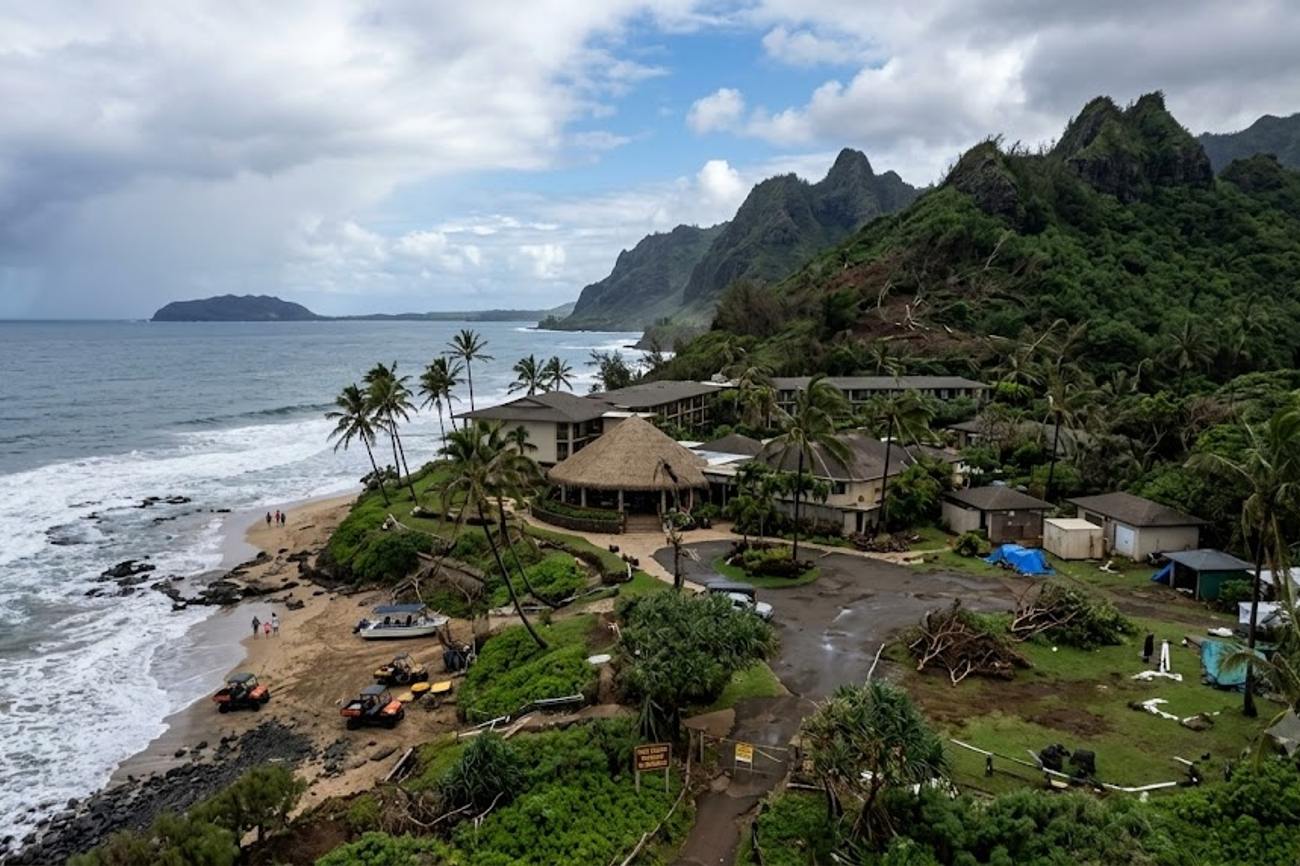
Image generated by AI
Analysis by: Travel Industry Trend Analyst Date: October 2024 Client: nomadlawyer.org
While typical post-storm tourism recoveries in the Pacific see a return to 80% capacity within 30 days, Kauaʻi is facing a more volatile trajectory as Hurricane Lowell triggered power outages for 90% of households and businesses. This disparity marks a shift from the generalized recovery patterns seen in Oʻahu or the Big Island, signaling a new era of "fragmented recovery" where specific island infrastructure—rather than state-wide trends—dictates market viability.
The Infrastructure Deficit in Numbers
The data from Hurricane Lowell reveals a stark divergence in how natural disasters impact the Hawaiian archipelago. The most critical metric is the energy failure rate on Kauaʻi, where 90% of the island's power grid failed initially. Even as emergency crews mobilized, a stubborn baseline of 3,000 households and businesses remained without electricity, creating a secondary wave of economic stagnation.
This is not merely a utility issue; it is a tourism capacity crisis. When 90% of a destination loses power, the "visitor economy"—which represents the primary share of Kauaʻi's GDP—stops functioning. Unlike Oʻahu, which maintained its status as a major visitor hub with stable airport connectivity, Kauaʻi's recovery is hampered by physical road damage and resort disruptions.
The data suggests a tiered recovery model. While Oʻahu and the Big Island remained largely operational, Kauaʻi entered a phase of "managed deterrence," where local authorities explicitly requested that travelers delay visits. This is a high-risk economic strategy: delaying tourism protects emergency resources but starves the local service sector of the liquidity needed for rebuilding. According to data patterns tracked by IATA, such disruptions in island territories often lead to a "vacuum effect" where travelers redirect bookings to neighboring islands, permanently shifting market share if the recovery window exceeds 60 days.
Comparative Recovery Benchmarks: The Lowell Impact
The impact of Hurricane Lowell was not uniform. To understand the current state of Hawaii's tourism, we must compare the specific failure points of each island. While Kauaʻi suffered a systemic grid and road collapse, Lānaʻi faced a targeted supply chain failure.
Lānaʻi’s crisis centered on its sole cargo harbor. For a population of 3,300 residents and a high-end tourism sector, the loss of a single point of entry for food, fuel, and essential goods creates an immediate operational ceiling. The projected two-week repair window for the harbor represents a total cessation of bulk supply, forcing resorts to rely on expensive air-freight alternatives or face service degradation.
Maui presents the most complex psychological data point. The island is not recovering from Lowell in a vacuum; it is doing so while still processing the trauma of the 2023 Lahaina wildfires. This "compounding disaster effect" means that even moderate storm impacts can trigger disproportionate drops in tourism confidence.
| Island | Primary Failure Point | Power/Infrastructure Impact | Tourism Status | Recovery Driver |
|---|---|---|---|---|
| Kauaʻi | Systemic Grid/Roads | 90% initial power loss; 3,000+ persistent outages | Managed Deterrence | Infrastructure Restoration |
| Lānaʻi | Single Cargo Harbor | Total loss of bulk supply chain | Supply-Constrained | Harbor Repair (14-day window) |
| Maui | Cumulative Trauma | Moderate storm impact | High Sensitivity | Long-term Wildfire Recovery |
| Oʻahu | Minimal | Negligible | Fully Operational | Hub Connectivity |
| Big Island | Minimal | Low disruption | Operational | Baseline Stability |
What This Means for Travelers
The data indicates that "Hawaii" is no longer a monolithic destination for booking purposes. The divergence in island stability means that a blanket booking strategy is now inefficient.
1. The Flexibility Mandate for Kauaʻi: If you are planning a trip to Kauaʻi in the immediate wake of this recovery period, you must treat your itinerary as provisional. The Hawaiʻi Tourism Authority has explicitly advised flexibility. Travelers should confirm accommodation availability 72 hours prior to arrival, as the 3,000+ persistent power outages may still affect specific resort zones.
2. The Lānaʻi Supply Lag: Travelers visiting Lānaʻi should anticipate potential shortages in luxury amenities and specific food imports. Because the cargo harbor is the sole artery for the island's 3,300 residents and visitors, the "two-week repair" window can often stretch due to logistics. Expect limited availability of non-essential goods.
3. Maui's Sensitivity Window: For those visiting Maui, be aware that the local community is in a state of "recovery fatigue." The intersection of the 2023 wildfires and Hurricane Lowell has made the island's tourism economy hypersensitive. Booking through local operators rather than global aggregators is recommended to ensure funds directly support community resilience.
For real-time capacity and occupancy data, travelers should monitor STR, which tracks hotel performance and can signal when an island has returned to sustainable occupancy levels.
Projecting the "Resilience Gap"
Based on current trajectories, we are seeing the emergence of a "Resilience Gap" within the Hawaiian market. Oʻahu and the Big Island are maintaining their market share, while Kauaʻi and Lānaʻi are experiencing volatility.
The critical path for Kauaʻi is the transition from "deterrence" to "responsible return." The data shows a dangerous tipping point: if the island discourages visitors for too long, the loss of employment in the tourism sector—which supports a major share of the local economy—will outweigh the benefits of reduced pressure on emergency services.
We project that Kauaʻi will see a surge in "voluntourism" and "conscious travel" patterns over the next two quarters. Travelers are increasingly seeking destinations where their spending has a direct impact on rebuilding. However, the speed of this recovery depends entirely on the restoration of the power grid and road networks. If the 3,000-household outage baseline does not drop significantly within the next 30 days, we expect a secondary dip in Q4 bookings as confidence wanes.
The Lānaʻi model proves that "single-point failure" infrastructure (one harbor) is the greatest risk to small-island tourism. This will likely prompt a shift in government investment toward diversifying transport links to prevent future total supply chain collapses.
FAQ: Hawaii Tourism Recovery 2024
Will hotel prices on Kauaʻi increase due to the damage? Initially, prices may drop as resorts offer incentives to attract visitors back. However, once the "responsible return" phase hits full capacity, limited room inventory due to damaged properties may drive prices higher than pre-hurricane levels.
Is it safe to book a trip to Lānaʻi right now? Yes, but with caveats. While the island is operational, the damage to the only cargo harbor affects the supply of luxury goods and food. Ensure your resort has confirmed its current supply chain status before arriving.
Which island is currently the most stable for travel? Oʻahu and the Big Island remain the most stable options. They experienced limited storm-related impacts and have maintained full airport and hotel connectivity throughout the Hurricane Lowell event.
How can I tell if Kauaʻi is ready for visitors? Monitor official updates from the Hawaiʻi Tourism Authority. A shift in messaging from "delay travel" to "return responsibly" is the primary data signal that infrastructure has reached a baseline of safety and functionality.
The data proves that in the modern era of climate volatility, the "destination" is no longer the state—it is the specific infrastructure of the island.
Tags: Kauaʻi-Infrastructure-Recovery-2024, Hawaii-Tourism-GDP-Shift, Hurricane-Lowell-Impact-Data, Lānaʻi-Supply-Chain-Volatility, Maui-Compounding-Disaster-Trend
Related Travel Guides
Disclaimer
This article is for informational and educational purposes only. It does not constitute legal, financial, or professional advice. While we strive to provide accurate and up-to-date information, travel policies, regulations, and conditions change rapidly. Always verify information with official sources before making travel decisions. Nomad Lawyer makes no representations about the accuracy, reliability, completeness, or suitability of the information provided. Readers should consult qualified professionals for advice specific to their circumstances. The views expressed in this article are those of the author and do not necessarily reflect the views of Nomad Lawyer.
Naina Thakur
Contributor & Travel Specialist
Travel enthusiast and legal writer covering visa regulations, responsible tourism, and cultural journeys across global destinations.
Learn more about our team →