
Ancient Olympia Roman Monument Restoration: €3.6 Million Investment in Greece Historical Tourism
Greece is investing €3.6 million to restore Roman monuments at Ancient Olympia, integrating AI and climate resilience to boost historical tourism growth at the UNESCO site.

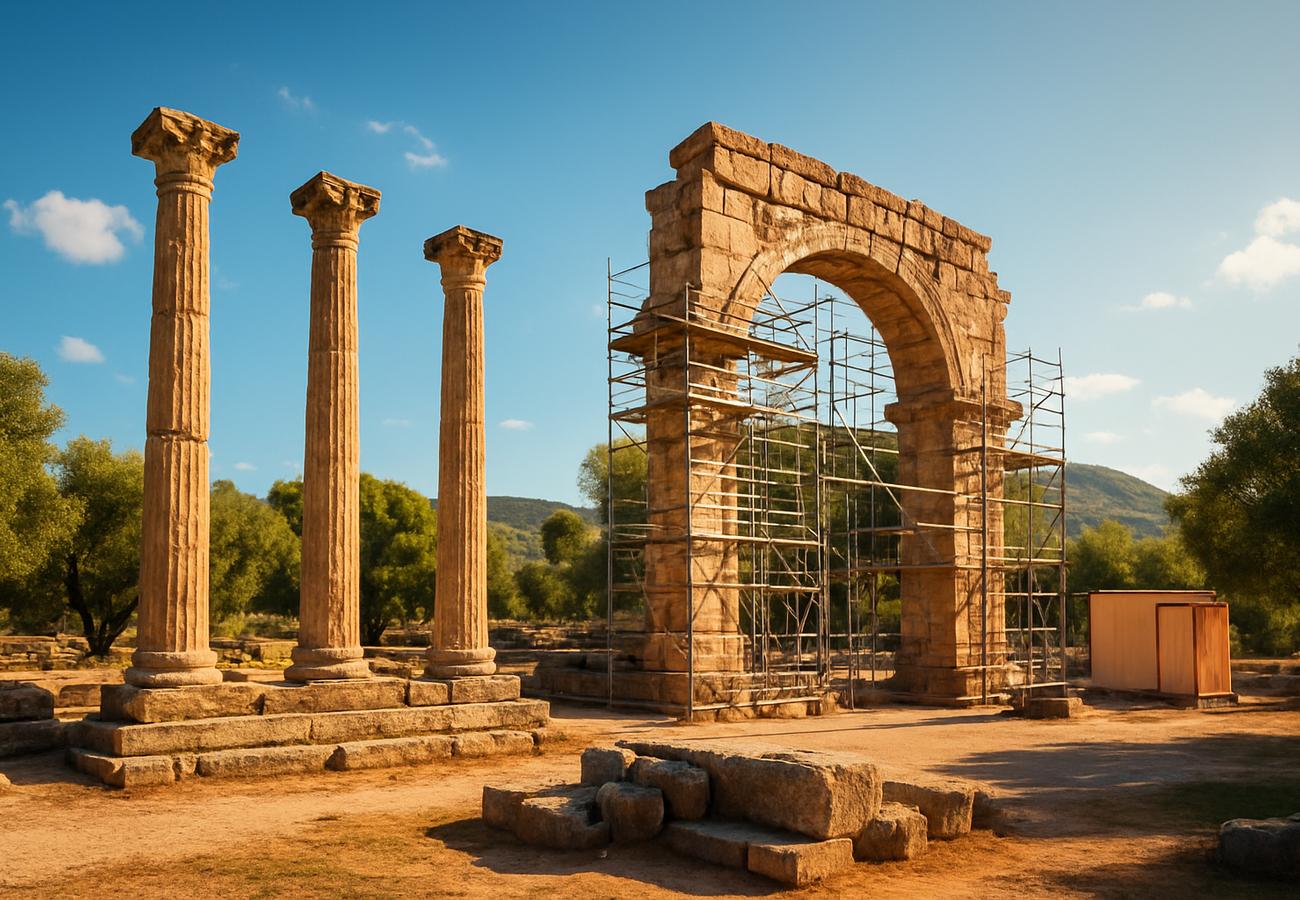
Image generated by AI
Quick Summary
- Total Investment: €3.6 million funded by the Recovery and Resilience Fund.
- Restoration Scope: Targeted restoration of the Paleo-Christian Basilica, Southern Therma, and Therma of Leonides.
- UNESCO Context: Enhancing the Roman-era heritage at the Ancient Olympia UNESCO World Heritage Site.
- Technology Integration: Use of Artificial Intelligence (AI), virtual tours, and digital storytelling to enhance visitor engagement.
- Sustainability Focus: Implementation of climate change resilience and eco-conscious heritage preservation technologies.
- Infrastructure Growth: Construction of interactive visitor centers, museum expansions, and the unification of the archaeological site.
- Strategic Goal: Position Olympia as a premier global destination for both Greek and Roman historical tourism.
- Source: Ministry of Culture, Greece, and Minister Lina Mendoni's briefing as of May 7, 2026.
Greece has officially launched a transformative €3.6 million restoration project at Ancient Olympia, specifically targeting the site’s significant Roman-era monuments. On May 7, 2026, Minister of Culture Lina Mendoni confirmed that the investment, funded by the Recovery and Resilience Fund, will preserve the Paleo-Christian Basilica, Southern Therma, and the Therma of Leonides. This strategic move aims to broaden the appeal of the UNESCO World Heritage Site by highlighting its diverse historical layers beyond the traditional focus on the ancient Olympic Games. By integrating cutting-edge Artificial Intelligence (AI) for virtual storytelling and prioritizing climate change resilience, Greece is setting a new global benchmark for sustainable historical tourism. These efforts, combined with infrastructure upgrades like the unification of the Octagon and Kronio Hill, ensure that Ancient Olympia remains a resilient and technologically advanced cultural leader for the international travel market.
Ancient Olympia Roman Monument Restoration: €3.6 Million Strategic Roadmap
The following table summarizes the restoration targets and the modern technologies being deployed at the UNESCO site.
| Project Component | Target Monument / Area | Technology / Strategy |
|---|---|---|
| Roman Restoration | Paleo-Christian Basilica | Authenticity & Structural Integrity |
| Thermal Heritage | Southern Therma & Therma of Leonides | Heritage Preservation |
| Visitor Experience | Digital Storytelling | Artificial Intelligence (AI) |
| Virtual Engagement | Interactive Exhibits | Virtual Reality (VR) Tours |
| Environmental | Site-wide Resilience | Climate Change Adaptation |
| Archaeological | Octagon & Kronio Hill | Site Unification & Restoration |
| Infrastructure | Museum & Visitor Centers | Cultural Engagement Spaces |
Roman Era Restoration: Diversifying the Ancient Olympia Heritage Site
Greece is repositioning Olympia to showcase its full historical scope:
- Overlooked Heritage: The Roman period structures had largely been secondary to previous Greek-focused restorations; this project elevates their status.
- Authenticity: Restorations are being conducted using materials and techniques that respect the original Roman architectural standards.
- Attractiveness: Highlighting the transition from the classical Greek era to the Roman period creates a more dynamic and immersive history lesson for visitors.
Recovery and Resilience Fund: €3.6 Million Investment Breakdown
The funding is part of a broader Greek strategy for post-pandemic cultural recovery:
- Monetary Allocation: The €3.6 million is dedicated exclusively to structural repairs, preservation, and high-tech visitor facilities.
- Urgency: Minister Mendoni emphasized that these steps are "crucial" for protecting the monuments from long-term decay.
- Strategic Value: The investment is viewed as a catalyst for local economic growth through increased long-stay historical tourism.
Digital Innovation: AI and Virtual Storytelling for Visitor Experience
Ancient Olympia is embracing digital transformation to reach a global audience:
- AI Management: Artificial Intelligence is being used to manage visitor flows and provide personalized tour experiences.
- Virtual Tours: Tech-savvy travelers can now experience virtual recreations of the Roman Therma in their original glory via AR/VR.
- Digital Storytelling: Interactive exhibits use digital platforms to narrate the universal values of the Olympic Games across different eras.
Climate Resilience: Sustainable Preservation and Eco-Conscious Tourism
Sustainability is at the core of the 2026 management plan:
- Climate-Conscious: Preservation technologies are being chosen specifically for their ability to withstand the extreme weather events associated with climate change.
- Biodiversity Initiatives: The restoration of Kronio Hill includes measures to protect local flora and fauna within the archaeological zone.
- Eco-Traveler Appeal: The site is being marketed to environmentally conscious travelers who prioritize destinations with proven sustainability credentials.
Infrastructure Expansion: Interactive Centers and Museum Upgrades
The physical footprint of the visitor experience is expanding:
- Interactive Centers: New facilities are being built to offer immersive cultural engagement beyond traditional museum displays.
- Museum Expansion: Existing facilities are being upgraded to house artifacts discovered during the recent Roman-era excavations.
- Comfort & Accessibility: Infrastructure upgrades ensure that the site can handle the surging demand for high-volume historical tourism.
Archaeological Unification: Integrating the Octagon and Kronio Hill
The project aims for a seamless, unified visitor experience:
- Site Unification: Efforts are underway to connect disparate sections of the archaeological site, such as the Octagon and Kronio Hill.
- Octagon Restoration: This Roman structure is being integrated into the main tourist path to provide a complete view of the Roman occupancy.
- Modern Amenities: Unification includes the addition of modern walkways, lighting, and informational signage that enhances the overall "flow" of the site.
Historical Tourism Growth: Attracting Tech-Savvy Global Travelers
The Ministry of Culture is targeting a younger, more technologically engaged demographic:
- Interactivity: Younger visitors are seeking active engagement rather than passive observation; AI and interactive exhibits meet this demand.
- Educational Travel: The site is becoming a primary destination for archaeology students and cultural travelers from around the world.
- Global Visibility: The integration of technology ensures that Ancient Olympia remains "visible" on digital platforms, driving international inbound traffic.
Conclusion: Future-Proofing Ancient Olympia as a Global Cultural Leader
The May 7, 2026, launch of the Roman monument restoration signals a new era for Ancient Olympia. By committing €3.6 million to the Paleo-Christian Basilica and Roman Therma, Greece is successfully diversifying its cultural heritage portfolio. The integration of AI, sustainable preservation, and modern infrastructure ensures that this UNESCO World Heritage Site remains at the forefront of the global historical tourism market. As Olympia evolves to meet modern environmental and digital challenges, it serves as a global model for how heritage sites can balance preservation with the demands of the 21st-century traveler. Through these strategic investments, the birthplace of the Olympic Games remains a vibrant, accessible, and resilient symbol of human achievement, continuing to captivate and educate visitors from every corner of the globe.
FAQ: Ancient Olympia Restoration 2026
Which monuments are being restored in Ancient Olympia? The current €3.6 million project focuses on the Paleo-Christian Basilica, Southern Therma, and the Therma of Leonides.
How is technology being used in the restoration? Ancient Olympia is integrating Artificial Intelligence (AI) for management, virtual storytelling, and interactive digital exhibits for visitors.
What is the goal of the €3.6 million investment? The goal is to restore Roman-era monuments, improve historical tourism sustainability, and ensure long-term global visibility for the UNESCO site.
Related Greek Heritage Reports
Disclaimer
This article is for informational and educational purposes only. It does not constitute legal, financial, or professional advice. While we strive to provide accurate and up-to-date information, travel policies, regulations, and conditions change rapidly. Always verify information with official sources before making travel decisions. Nomad Lawyer makes no representations about the accuracy, reliability, completeness, or suitability of the information provided. Readers should consult qualified professionals for advice specific to their circumstances. The views expressed in this article are those of the author and do not necessarily reflect the views of Nomad Lawyer.
Kunal K Choudhary
Co-Founder & Contributor
A passionate traveller and tech enthusiast. Kunal contributes to the vision and growth of Nomad Lawyer, bringing fresh perspectives and driving the community forward.
Learn more about our team →