
Kansas City Airport Flight Chaos: PSA and American Airlines Ground 6 Flights, Ripple Effects Hit 24+ US and Mexico Cities
PSA and American Airlines cancellations at Kansas City International Airport trigger cascading delays across Miami, Washington, Detroit, Chicago, and 20+ major hubs nationwide.

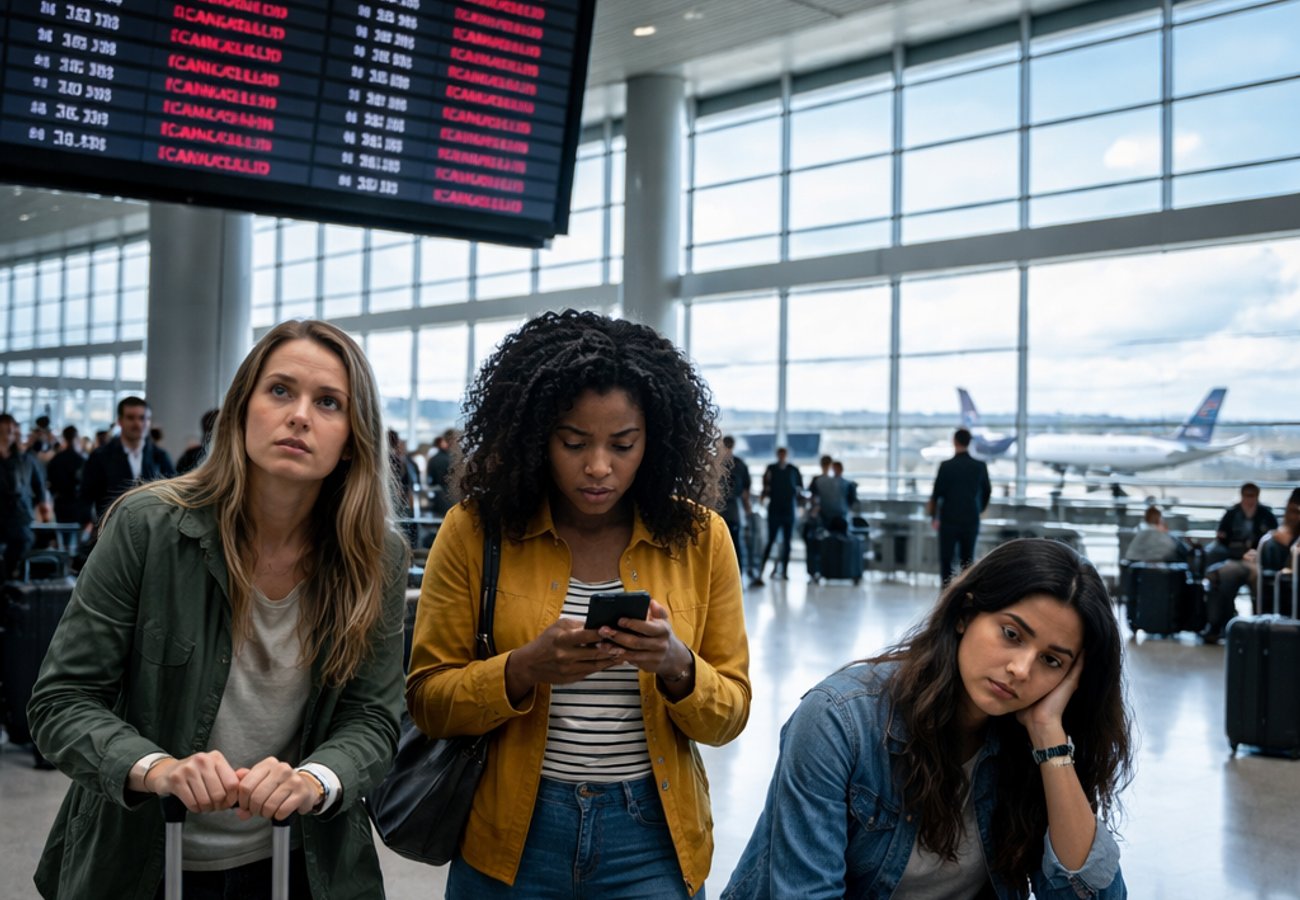
Image generated by AI
When a Single Airport's Problem Becomes Everyone's Headache
On June 8, 2026, operational chaos at Kansas City International Airport (MCI) sent shockwaves through the entire North American aviation network. PSA Airlines and American Airlines grounded six flights, but the real story wasn't the cancellations themselves—it was the domino effect that followed.
What started at one Midwestern airport spiraled into delays touching 24 major cities across the United States and Mexico. Miami. Washington. Detroit. San Francisco. Chicago. New York. Atlanta. The disruption wasn't isolated. It was systemic, and it exposed a hard truth about modern air travel: one airport's breakdown is the entire network's nightmare.
The Numbers Behind the Chaos
Here's what went down on the ground at MCI:
PSA Airlines cancelled 4 flights—accounting for 44% of all cancellations recorded that day. American Airlines grounded an additional 2 flights, representing a 7% disruption to their scheduled Kansas City operations.
Six flights might sound manageable in isolation. But these weren't just six isolated incidents. Each cancellation triggered a cascade of delays affecting crew rotations, aircraft scheduling, and passenger connections rippling across the continental system.
Reddit: "One cancelled flight at a hub airport means three more get delayed before lunch. It's how the system works." — r/airtravel
The Sprawl: How One Airport Infected 24 Cities
The operational failure at Kansas City didn't stop at the gate. The affected route network included:
Tier-1 Major Hubs: Dallas–Fort Worth, Chicago, Atlanta, Miami, New York City, Los Angeles connecting flights, Minneapolis–Saint Paul, Houston, Washington DC, Detroit, and Denver.
Secondary Markets: Austin, Nashville, Baltimore, Newark, Fort Lauderdale, Raleigh, San Diego, Seattle, San Francisco, Salt Lake City, Boston, St. Louis, Tampa, Myrtle Beach.
International: Cancun, Mexico.
The concentration of delays in mega-hubs like Chicago, Dallas, Atlanta, and New York amplified the problem exponentially. These aren't just destinations—they're connection points. A delayed arrival at Atlanta means downstream flights miss their scheduled departures. A missed connection in Chicago means rebooking nightmares for passengers trying to reach the coasts.
What Happened to the Passengers?
Travelers caught in the Kansas City disruption faced the familiar frustrations of modern air travel: rebooking delays, accommodation uncertainty, and the gnawing anxiety of missing connections.
According to FlightAware, which tracks real-time aviation data, the cancellations were accompanied by dozens of delays, indicating that the operational challenges extended well beyond the six grounded flights. Aircraft that were supposed to arrive at MCI for onward flights never made it. Crews scheduled for subsequent rotations were stranded. Passengers missed meetings, family events, and business deadlines.
The lesson? Always check your airline's cancellation policies before you fly. Under EU regulations, passengers are entitled to compensation for certain types of cancellations. In the United States, compensation is less standardized, but the airline's contract of carriage typically outlines your options.
What to Do If You're Stuck
If you find yourself caught in a situation like the Kansas City disruption:
Monitor Communications in Real Time. Check your email, text messages, and the airline's mobile app constantly. Airlines often post updates faster on their apps than through other channels.
Contact the Airline Immediately. Don't wait. Head to the customer service desk if you're at the airport, or call their support line. Use the airline's chat system if phone lines are jammed. Speed matters when seats are filling up on alternative flights.
Know Your Rights. Familiarize yourself with your airline's cancellation policy before you travel. Some carriers offer automatic rebooking. Others make you negotiate. Some provide meal vouchers and hotel accommodations. Others don't.
Consider Alternatives. If the airline can't get you to your destination on their own aircraft, ask about partner airlines. Check whether a train or bus could work. Sometimes driving to a different hub airport is faster than waiting for the next flight three hours away.
Document Everything. Keep records of the cancellation confirmation, rebooking offer, and any expenses you incur. You may need these for compensation claims.
The Ripple Effect: Why Network Resilience Matters
The Kansas City disruption is a textbook example of how fragile the aviation network actually is. Airlines operate on razor-thin margins—aircraft are scheduled to the minute, crews are assigned in tight rotation patterns, and there's minimal buffer capacity.
When one node fails, the entire system feels it. A grounded PSA regional flight at MCI means:
- The aircraft that was supposed to arrive at MCI stays somewhere else
- The crew scheduled to operate the next leg stands idle
- Passengers miss downstream connections
- Cascading delays extend across eight time zones
This is why the Federal Aviation Administration (FAA) and airlines invest heavily in contingency planning. But contingencies only work if they're funded and staffed properly—something the industry has struggled with since the post-pandemic recovery.
Bottom Line: Stay Flexible, Stay Informed
The June 8 disruptions at Kansas City International Airport affected nearly 25 cities across North America. Six grounded flights triggered dozens of delays. Passengers learned an old lesson the hard way: in modern air travel, one airport's crisis is your potential connection nightmare.
If you're flying through major hubs—especially Kansas City, Chicago, Dallas, or Atlanta—build extra time into connections. Monitor your flight status obsessively. Know your airline's rebooking policies. And don't assume a cancellation won't cascade through the system. Because in 2026, it almost always does.
Stay flexible, stay informed, and never trust a tight connection.
Related Travel Guides
Disclaimer
This article is for informational and educational purposes only. It does not constitute legal, financial, or professional advice. While we strive to provide accurate and up-to-date information, travel policies, regulations, and conditions change rapidly. Always verify information with official sources before making travel decisions. Nomad Lawyer makes no representations about the accuracy, reliability, completeness, or suitability of the information provided. Readers should consult qualified professionals for advice specific to their circumstances. The views expressed in this article are those of the author and do not necessarily reflect the views of Nomad Lawyer.
Preeti Gunjan
Contributor & Community Manager
A passionate traveller and community builder. Preeti helps grow the Nomad Lawyer community, fostering engagement and bringing the reader experience to life.
Learn more about our team →