Jetstar Elevates International Journeys as Qantas Points Unlock More Business Class Upgrade Opportunities

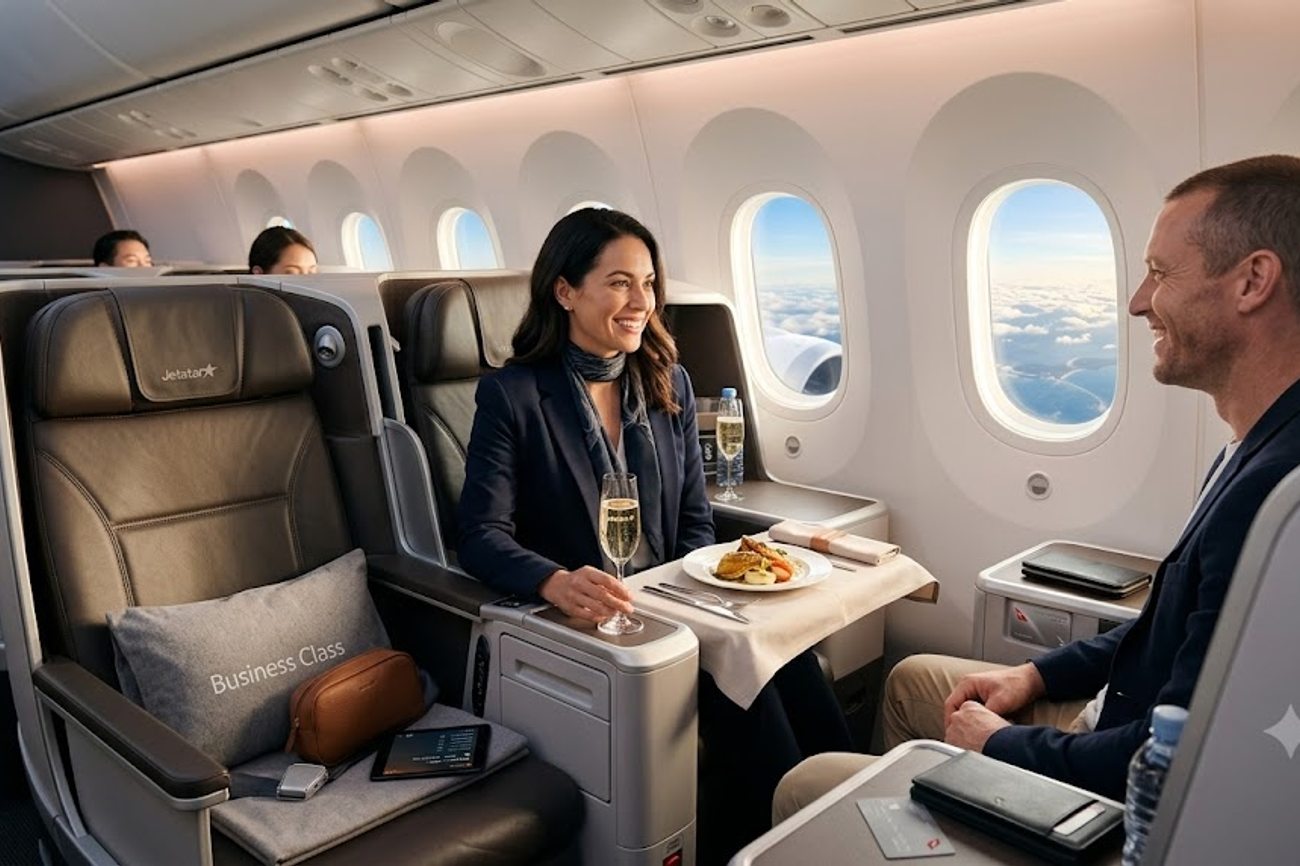
Image generated by AI
Jetstar is more than doubling its Business Class capacity on Boeing 787 Dreamliners, jumping from 21 to 44 seats per aircraft. This massive reconfiguration means tens of thousands of additional premium seats will enter the Asia Pacific market annually, fundamentally changing how budget-conscious travelers access long-haul luxury.
The Shift Toward Hybrid Premium Travel
For years, the divide between low-cost carriers and full-service airlines was absolute: you either paid for the bells and whistles or you endured the cramped quarters of economy. However, a significant shift is occurring in the Asia Pacific corridor. Jetstar is now bridging this gap by integrating with the Qantas Frequent Flyer ecosystem in a way that allows savvy travelers to "hack" their way into Business Class.
The introduction of Classic Upgrades marks the first time Qantas points can be used to move from Economy to Business on select Jetstar Boeing 787 Dreamliner services. This isn't just a minor perk; it is a strategic response to record-breaking reward redemption levels seen during FY26. Travelers are no longer satisfied with just getting from point A to point B; they are leveraging loyalty balances to secure comfort on grueling long-haul legs. By allowing a fixed number of points to trigger an upgrade, Jetstar is transforming itself from a strictly budget option into a hybrid carrier that caters to the "premium-economy" mindset.
What Makes the Dreamliner Experience Different
The Boeing 787 Dreamliner is the backbone of this expansion, and its technical advantages are what make the upgrade worthwhile. Unlike older aircraft, the Dreamliner operates at a lower cabin altitude and higher humidity levels, which significantly reduces the jet lag and dehydration typically associated with flights from Australia to Asia. When you upgrade to Business Class on these routes, you aren't just paying for a wider seat; you are investing in a physiological advantage for your arrival.
The routes benefiting from this capacity surge are specifically targeted at high-demand leisure and business hubs. Whether it is the trek to Seoul, the cultural immersion of Osaka, the tropical heat of Phuket, the urban density of Singapore, or the colonial charm of Colombo, the availability of 44 Business Class seats per plane makes these upgrades far more attainable than the restrictive allotments of the past. For those planning a trip to Japan, checking the official Japan National Tourism Organization guidelines is a great way to pair your upgraded flight with a seamless entry process.
Visitor Insider Tips
Navigating the transition from a budget fare to a premium experience requires a bit of local knowledge and strategic timing. To make the most of these new upgrade options, keep these insider tactics in mind:
The Points Strategy Not all upgrades are created equal in terms of value. For example, a Melbourne to Singapore leg requires 37,000 points, while Sydney to Osaka costs 45,300 points. The "sweet spot" for value is almost always the longest flight. The cost difference in points is relatively small compared to the hours of additional comfort gained on a flight to Japan versus a shorter hop to Southeast Asia.
Booking Windows Currently, these upgrade requests are only available for flights booked directly through the Jetstar website. If you book through a third-party agent or a corporate portal, you may find the option unavailable. Wait for the rollout to Qantas digital channels if you prefer managing everything via the Qantas app, but for now, the Jetstar site is your only gateway.
Maximizing the Perks A Classic Upgrade isn't just a seat; it unlocks a suite of benefits that change the logistics of your trip. You get a 30kg checked baggage allowance, which is a lifesaver when shopping in Osaka or Seoul. You also gain priority boarding, meaning you avoid the chaotic queues and secure your overhead locker space immediately.
Route Selection If you are choosing between destinations, consider the "stopover" potential. Using your points to upgrade a flight to Singapore allows you to use the city as a hub before heading further into Asia. For those heading to South Korea or Japan, remember that these are high-demand routes; request your upgrade as soon as your Economy ticket is confirmed to avoid missing out on the expanded 44-seat cabin.
Jetstar has announced an enhancement to its international journey experience, allowing Qantas Points to be used for more Business Class upgrade opportunities. This development is expected to benefit frequent travelers, who can now redeem their points for a more luxurious experience on select Jetstar flights. For more information on Qantas Points and redemption options, passengers can visit the Qantas website to explore the possibilities.
Cultural and Environmental Context
The expansion of premium seating on low-cost carriers reflects a broader trend in the Asia Pacific: the rise of the "aspirational traveler." In markets like Australia, there is a growing cultural desire to balance frugality with luxury. By allowing Qantas points to be used on Jetstar, the industry is acknowledging that travelers want the efficiency of a budget airline but the dignity of a premium cabin for the long haul.
However, this increase in capacity also brings environmental scrutiny. The Boeing 787 is significantly more fuel-efficient than the aircraft it replaces, but increasing the number of premium passengers often leads to higher onboard waste due to more elaborate meal services and amenity kits. Travelers are encouraged to balance their luxury with sustainability. When visiting UNESCO World Heritage sites—such as the historic temples of Kyoto or the ruins of Sigiriya in Sri Lanka—consider offsetting your flight carbon through verified programs. You can learn more about preserving these global treasures via the UNESCO World Heritage Centre.
Furthermore, the increased flow of "points-travelers" into cities like Phuket and Colombo puts additional pressure on local infrastructure. The shift toward premium travel often leads to a concentration of tourists in high-end districts, potentially bypassing the local artisans and small-scale vendors who sustain the authentic cultural fabric of these destinations. To counter this, use your Business Class energy to venture beyond the luxury hotels and explore the residential neighborhoods where the true local rhythms reside.
FAQ: Visiting Asia Pacific 2026
What is the best time to visit Japan or South Korea? Spring (March to May) for cherry blossoms and Autumn (September to November) for foliage are peak seasons. To avoid the heaviest crowds while still enjoying mild weather, aim for late October or early March.
How do I request a Jetstar Classic Upgrade? You must first book an eligible Economy Class ticket through the Jetstar website. Once booked, you can request the upgrade using your Qantas Frequent Flyer points, depending on the specific route's point requirements.
Is it safe for solo travelers to visit these regions? Yes, the Asia Pacific region—particularly Japan, South Korea, and Singapore—is renowned for being exceptionally safe for solo travelers. Always use official transport apps and keep a digital copy of your passport.
Do I need a visa for these destinations? Visa requirements vary by nationality. For example, Australian passport holders often have visa-free access to Japan and Singapore for tourism, but you should check the official embassy website of your destination before booking.
Trade your points for peace of mind and turn a budget flight into a boardroom in the sky.
Related Travel Guides
This article is for informational purposes. Flight routes, passenger regulations, visa rules, and transit advisories are subject to change by airlines and aviation authorities. Readers are advised to verify schedules and travel documentation with relevant carriers and border agencies before departure.
Related Stories
Western Sydney International Airport Opens 2026: 24-Hour Flights and Passenger Rights Guide

Jet Airways vs. Boeing NCLAT Battle: Why Manufacturer Litigation Offers No Quick Ticket Refunds for Indian Travel Agents