
JetBlue Flight B61874 Diverts to Washington Dulles During Los Angeles to New York Route in 2026
JetBlue Flight B61874, an Airbus A321 traveling from Los Angeles to New York, was diverted to Washington Dulles International Airport on July 27, highlighting the critical role of U.S. aviation infrastructure in maintaining passenger safety.

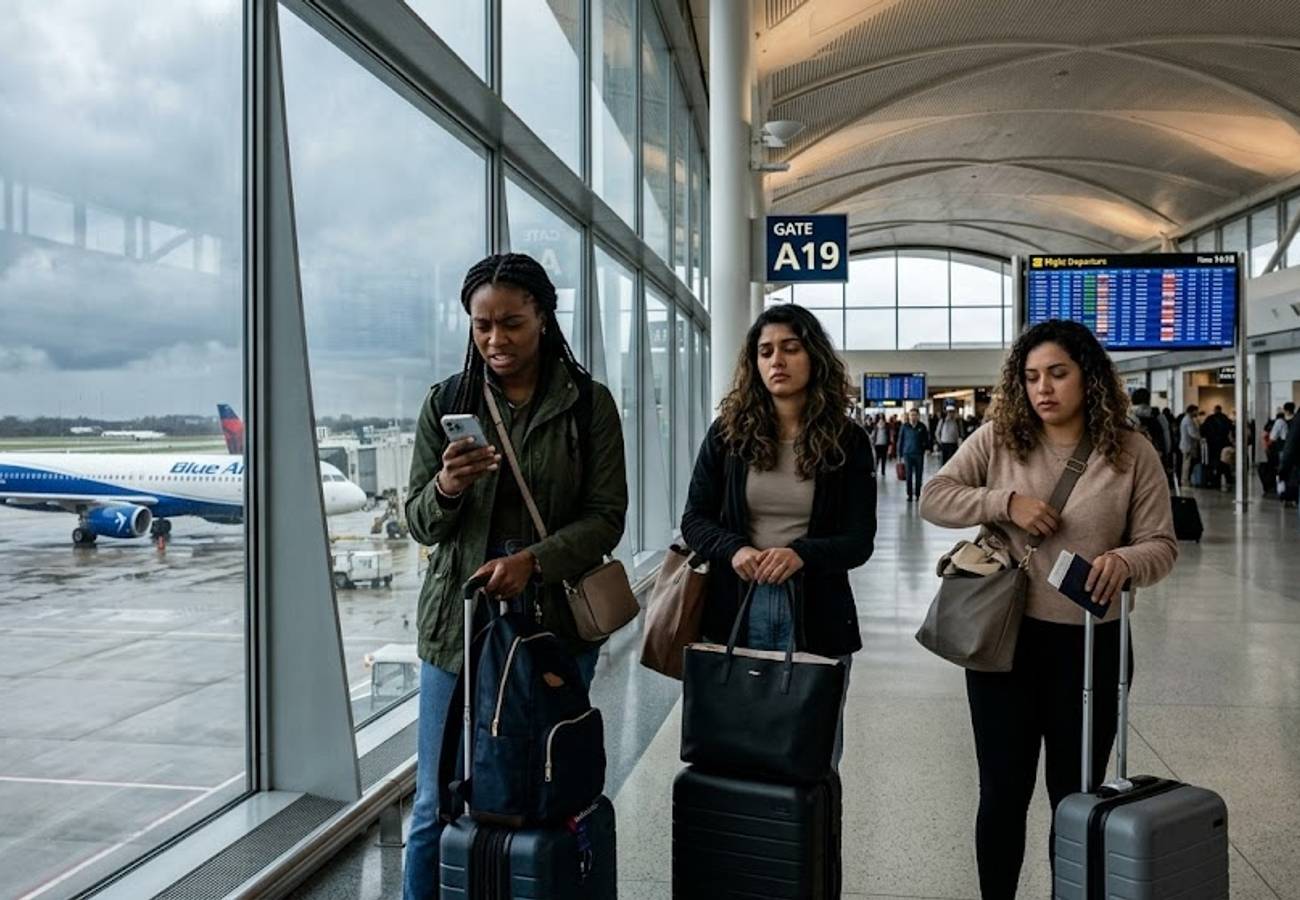
Image generated by AI
A scheduled transcontinental flight from Los Angeles to New York was forced to change course on July 27, landing unexpectedly at Washington Dulles International Airport. The diversion underscores the vital necessity of flexible aviation hubs in managing unforeseen operational challenges.
The incident involved JetBlue Flight B61874, operated by an Airbus A321 (registration N990JL). The aircraft departed Los Angeles International Airport (LAX) at 10:55 AM PDT, with a scheduled arrival at Newark Liberty International Airport (EWR) for 7:28 PM EDT.
While the aircraft was en route to New York, tracking data confirmed a redirection to Washington Dulles International Airport (IAD). Although JetBlue did not release a specific public statement regarding the cause of the diversion, such maneuvers are standard protocol when pilots or airline operations determine that landing at an alternative airport is the safest course of action.
Operational Logistics of the B61874 Diversion
Flight diversions are complex decisions that require immediate coordination between the cockpit, airline dispatch, and air traffic control. Several factors typically influence the choice of a diversion airport, including:
- Aircraft Capability: Ensuring the runway length and airport facilities can accommodate the specific aircraft model (in this case, the Airbus A321).
- Crew Availability: Managing flight and duty time limitations for the crew.
- Passenger Needs: Evaluating the airport's ability to handle a sudden influx of passengers, including ground transport and terminal access.
- Weather and Traffic: Assessing the current congestion and visibility at the nearest suitable airfields.
In this instance, the aircraft utilized Washington Dulles as an operational stop before eventually proceeding toward its final destination in New York.
The Strategic Role of Washington Dulles International Airport
The ability of Washington Dulles to absorb an unplanned arrival like Flight B61874 demonstrates why high-capacity hubs are essential to the U.S. aviation network. Large-scale airports provide the necessary infrastructure to minimize the ripple effect of disruptions.
Dulles serves as a primary gateway for the U.S. capital region, and its capacity to handle diverted traffic prevents wider network congestion. For passengers, this means that even when a flight is diverted, they are landed at a facility with extensive ground transportation and service options, rather than a smaller airfield with limited resources.
Flight Summary and Route Data
The following table outlines the specific flight details associated with the July 27 diversion.
| Flight Detail | Information |
|---|---|
| Flight Number | B61874 |
| Aircraft Model | Airbus A321 |
| Registration | N990JL |
| Departure Airport | Los Angeles International (LAX) |
| Scheduled Departure | 10:55 AM PDT |
| Intended Destination | Newark Liberty International (EWR) |
| Scheduled Arrival | 7:28 PM EDT |
| Diversion Airport | Washington Dulles International (IAD) |
| Event Date | July 27, 2026 |
Aviation Infrastructure and Tourism Resilience
This diversion occurred during a period of high summer travel demand, which typically puts maximum pressure on the domestic aviation system. When airlines can successfully redirect aircraft without canceling the flight entirely, it maintains traveler confidence and protects the tourism economy.
The Washington DC region remains a top-tier destination for history and culture. The efficiency with which Dulles handles irregular operations ensures that the region remains accessible, even when the broader network faces instability. For the passengers on B61874, the diversion functioned as a temporary route adjustment, ensuring that the journey was completed safely despite the deviation from the original flight plan.
The seamless coordination between JetBlue and Washington Dulles highlights the hidden safety nets that keep global travel moving.
Related Travel Guides
Disclaimer
This article is for informational and educational purposes only. It does not constitute legal, financial, or professional advice. While we strive to provide accurate and up-to-date information, travel policies, regulations, and conditions change rapidly. Always verify information with official sources before making travel decisions. Nomad Lawyer makes no representations about the accuracy, reliability, completeness, or suitability of the information provided. Readers should consult qualified professionals for advice specific to their circumstances. The views expressed in this article are those of the author and do not necessarily reflect the views of Nomad Lawyer.
Preeti Gunjan
Contributor & Community Manager
A passionate traveller and community builder. Preeti helps grow the Nomad Lawyer community, fostering engagement and bringing the reader experience to life.
Learn more about our team →