
Jeju Air Leads Asia Pacific Airlines in On-Time Punctuality Rankings Outperforming Mainline Legacy Carriers in July 2026
South Korea's Jeju Air claims the top spot in regional punctuality rankings. Review detailed operational metrics, carrier data, and transit guidance.

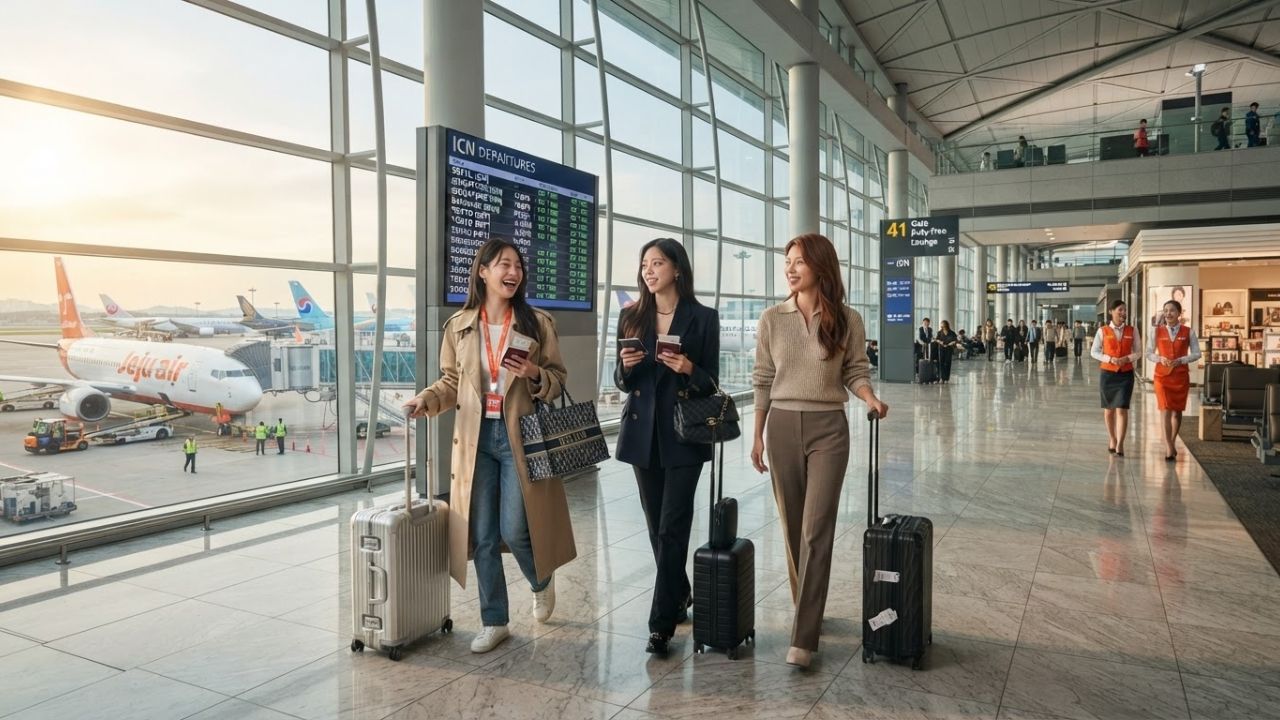
Image generated by AI
Jeju Air Leads Asia Pacific Airlines in On-Time Punctuality Rankings Outperforming Mainline Legacy Carriers in July 2026
Jeju Air has emerged as the most punctual carrier in the Asia Pacific region, recording an on-time arrival rate of 90.51% and a perfect flight completion factor. The regional operational telemetry highlights low-cost and full-service carriers balancing intense traffic demands to maintain schedule integrity.
The Core Transit Update
A comprehensive review of commercial aviation performance indicates rising standards of operational reliability across the Asia Pacific corridor. According to regional flight telemetry compiled for the mid-2026 reporting period, the ten leading carriers in the region, operating under the safety standards of the International Air Transport Association (IATA), achieved a combined on-time arrival rate of 86.40% while successfully tracking 98.92% of all departures. This performance was recorded across a total of 161,417 scheduled flights, demonstrating the capacity of regional operators to manage high traffic volumes.
South Korea’s Jeju Air claimed the top regional rank by delivering an on-time arrival rate of 90.51%. The low-cost carrier managed this ranking with a 100% completion factor across 6,259 scheduled operations, indicating that no scheduled service was canceled during the reporting period. Jeju Air also maintained a tracked flight index of 94.81%, outperforming larger, full-service network operators in schedule consistency.
Mainline legacy carriers also demonstrated strong performance. Korean Air secured the second position with an on-time arrival rate of 88.56%, supported by a 99.88% tracked flight index and a 99.83% completion factor across 10,722 operations. Singapore’s low-cost carrier, Scoot, followed in third place with an on-time arrival rate of 86.98% and a 99.94% completion factor across 6,264 operations.
Air India claimed the fourth position, recording an on-time arrival rate of 86.85% and a 99.70% completion factor across 15,135 flights, reflecting operational improvements under its fleet modernization strategy. Singapore Airlines rounded out the top five with an on-time arrival rate of 86.74% and a 99.95% tracked flight index across 10,418 operations.
The remaining top-ten positions highlight operational consistency across high-volume carriers. Philippine Airlines ranked sixth at 86.33% on-time arrival across 7,859 flights. IndiGo took seventh place, achieving an 85.88% on-time rate while managing a massive volume of 64,605 flights—the highest of any airline in the registry. AirAsia (including its regional subsidiaries) claimed the eighth spot with an on-time arrival rate of 84.88% across 26,250 flights, while Garuda Indonesia (ninth at 84.13% on-time across 6,211 flights) and Malaysia Airlines (tenth at 83.19% on-time across 7,694 flights) completed the ranking.
Transit Schedule & Route Specifications
The detailed operational metrics, flight volumes, and tracking indicators for the leading Asia Pacific carriers are structured in the table below:
Asia Pacific Carrier Punctuality and Operational Performance (July 2026)
| Rank | Operating Airline Brand | On-Time Arrival Rate | Tracked Flight Percentage | Flight Completion Factor | Total Flights Operated |
|---|---|---|---|---|---|
| 1 | Jeju Air | 90.51% | 94.81% | 100.00% | 6,259 |
| 2 | Korean Air | 88.56% | 99.88% | 99.83% | 10,722 |
| 3 | Scoot | 86.98% | 95.62% | 99.94% | 6,264 |
| 4 | Air India | 86.85% | 99.87% | 99.70% | 15,135 |
| 5 | Singapore Airlines | 86.74% | 99.95% | 99.86% | 10,418 |
| 6 | Philippine Airlines | 86.33% | 99.83% | 98.32% | 7,859 |
| 7 | IndiGo | 85.88% | 99.74% | 99.94% | 64,605 |
| 8 | AirAsia Group | 84.88% | 99.75% | 99.00% | 26,250 |
| 9 | Garuda Indonesia | 84.13% | 99.85% | 97.76% | 6,211 |
| 10 | Malaysia Airlines | 83.19% | 99.95% | 99.95% | 7,694 |
| - | Top 10 Combined | 86.40% | 98.92% | 99.53% | 161,417 |
Traveler Logistics Guide (Information Gain)
- Planning Flight Connections in Major Asian Hubs:
- Seoul Incheon (ICN) Connections: Passengers transiting from Jeju Air to long-haul international flights on Korean Air at Incheon must note terminal alignments. Jeju Air operates primarily out of Terminal 1 and the Concourse, whereas Korean Air and its SkyTeam partners occupy Terminal 2. Terminal-to-terminal transfer requires boarding the automated shuttle train (IAT), adding at least 25 to 30 minutes to connection transitions.
- Layover Buffers: For connections involving terminal changes or transitions from a low-cost carrier to a full-service carrier (which may require baggage re-check), maintain a layover buffer of at least 2 hours for domestic-to-international transfers and 3 hours for international-to-international transfers.
- Navigating Customs and Digital Entry Portals:
- Digi Yatra (India): Passengers flying via Indian hubs on carriers like Air India or IndiGo can bypass traditional ticketing and security queues by registering their digital ID on the Digi Yatra portal. The facial recognition technology reduces gate transition times, allowing passengers to navigate security gates in under 10 minutes.
- Schengen and European Connections: International passengers connecting from Asia to European destinations should ensure their digital transit clearances comply with the upcoming European Travel Information and Authorization System (ETIAS) mandates to avoid boarding delays at origin airports.
- Ticketing and Self-Service Rebooking Advice:
- Self-Service Baggage Drop: To bypass check-in counters at hubs like Singapore Changi (SIN) or Kuala Lumpur (KUL), utilize the automated self-service bag drop kiosks. Carriers like Singapore Airlines and Malaysia Airlines allow check-in and baggage tag printing up to 24 hours in advance via their mobile applications.
- Documenting Schedule Variances: In cases where delays occur, request a physical or digital "Proof of Delay" statement directly from airport station agents. This documentation is essential for travel insurance claims and passenger rights compensation packages.
Infrastructure Impact Assessment
The high operational efficiency demonstrated by Asia Pacific carriers reflects ongoing investments in regional aviation infrastructure. Modernizing fleet structures, optimizing runway utilization, and coordinating with national civil aviation authorities have enabled airlines to maintain schedule stability. This is particularly notable in countries with complex geography, such as the Indonesian archipelago and the Philippine islands, where changing weather patterns and limited airport capacities create operational challenges.
The data also shows a strong correlation between point-to-point regional service models and high punctuality. Jeju Air's top position demonstrates that low-cost carriers with optimized aircraft turnarounds and regional route structures can outperform legacy hub-and-spoke carriers. Legacy carriers face longer aircraft rotations, complex baggage transfers, and international air traffic control holds, making them more vulnerable to cascading delays.
For tourism and business connectivity, reliable air schedules directly support local economies. Improved on-time performance builds traveler confidence, increases hotel occupancy rates, and supports smooth supply chain logistics across the region.
FAQ: Asia Pacific Airline Punctuality 2026
Which airline was ranked the most punctual in the Asia Pacific region in July 2026?
Jeju Air secured the top rank, achieving an on-time arrival rate of 90.51% and a perfect 100% flight completion factor.
Which carrier managed the highest volume of flights while maintaining high punctuality?
India's IndiGo operated 64,605 flights during the reporting period, maintaining an on-time arrival rate of 85.88% to rank seventh regionally.
How do terminal transitions at Seoul Incheon Airport impact connection times?
Transferring between Terminal 1 (used by Jeju Air) and Terminal 2 (used by Korean Air) requires using the automated shuttle train, adding 25 to 30 minutes to transit times.
Related Travel Guides
- US Flight Disruption Index Rises with 141 Cancellations Across Chicago O'Hare, Southwest, and Delta Air Lines in July 2026
- Brazil Aviation Network Hit by 204 Delays and 45 Cancellations Across São Paulo and Rio de Janeiro Hubs Disrupting Major Carriers
- United Airlines Flight UA1507 From Houston to Phoenix Diverts to Las Vegas Harry Reid International Airport Following Unconfirmed Operational Disruption
Disclaimer
This article is for informational and educational purposes only. It does not constitute legal, financial, or professional advice. While we strive to provide accurate and up-to-date information, travel policies, regulations, and conditions change rapidly. Always verify information with official sources before making travel decisions. Nomad Lawyer makes no representations about the accuracy, reliability, completeness, or suitability of the information provided. Readers should consult qualified professionals for advice specific to their circumstances. The views expressed in this article are those of the author and do not necessarily reflect the views of Nomad Lawyer.
Kunal K Choudhary
Co-Founder & Contributor
A passionate traveller and tech enthusiast. Kunal contributes to the vision and growth of Nomad Lawyer, bringing fresh perspectives and driving the community forward.
Learn more about our team →