
Middle East Travel Chaos: Severe Flight Cancellations and Delays Paralyze King Abdulaziz Airport in Jeddah as Saudia and Flyadeal Networks Collapse
As unexpected operational friction heavily degrades the Middle Eastern aviation network, major carriers operating out of Jeddah are forced into a chaotic wave of sudden flight cancellations and devastating terminal delays.

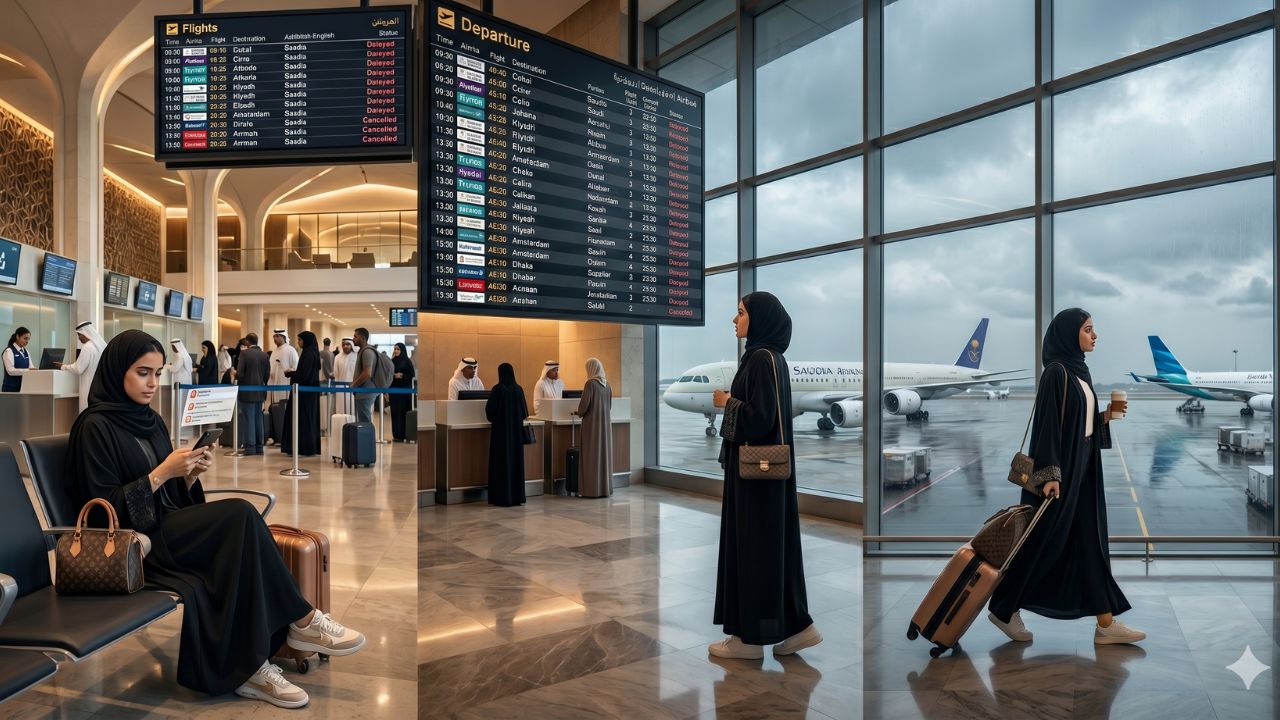
Image generated by AI
A Massive Operational Meltdown Plunges Jeddah into Gridlock
While massive sectors of the global passenger network frequently battle highly unpredictable extreme weather events, synchronized logistical bottlenecks, and horrific fleet constraints, sudden, unmanageable terminal friction remains the absolute most terrifying catalyst for cascading airport disruptions. Delivering highly urgent, breaking airline news, verified Middle Eastern aviation trackers confirm that a catastrophic operational breakdown has actively generated severe travel chaos across the massive Saudi Arabian aviation network. Today, June 3, 2026, severe travel distress forcefully emerged following a brutal wave of 78 massive flight delays and 9 outright flight cancellations that violently tore through King Abdulaziz International Airport in Jeddah.
While desperate travelers usually attempt to navigate sudden, terrifying airport disruptions caused by isolated technical failures, these exclusive aviation updates reveal a highly systemic, incredibly destructive capacity failure that has entirely destabilized the massive Middle Eastern transit corridor. Verified transit data confirms that this massive operational collapse has severely restricted ground handling and air traffic flow out of Jeddah, instantly triggering a massive ripple effect across Saudi Arabia, the UAE, Indonesia, Egypt, Pakistan, Bangladesh, Jordan, and Europe. This horrific logistical meltdown is actively destroying the travel itineraries of thousands of incredibly vulnerable passengers, violently stranding domestic commuters and international tourists flying with major legacy carriers like Saudia, Flyadeal, Flynas, Garuda Indonesia, and Egypt Air.
Expanded Overview: The Scale of the Transcontinental Crisis
The sudden, highly publicized execution of this massive regional operational lockdown serves as an undeniable example of how rapidly a heavily reliant transit network can completely disintegrate under unexpected pressure. The massive disruption has explicitly drawn international attention to the incredibly complex, highly fragile operational ecosystem that links Jeddah's major economic centers to the rest of the globe. For a massive hub heavily reliant on incredibly robust, high-frequency international flight schedules, even a brief period of ground handling friction requires incredibly precise management by airport authorities to prevent total collapse.
The terrifying reality of this crisis is found in the sheer volume of high-capacity aircraft abruptly knocked out of alignment. By instantly logging 87 combined disruptions across the Jeddah hub, airlines are forcing thousands of vulnerable passengers into a terrifying logistical puzzle. This catastrophic reduction instantly paralyzes both inbound and outbound traffic, actively destroying hundreds of incredibly vulnerable connecting itineraries heading to or from Riyadh, Dubai, Cairo, Jakarta, and major European cities. When a mega-hub like King Abdulaziz International simultaneously fails to process traffic, the localized ripple effects violently spiral into a massive, unmanageable wave of terminal congestion worldwide.
Section-Wise Breakdown of the Connectivity Crisis
The Saudia and Flyadeal Bottlenecks
A massive range of domestic and international carriers operating directly out of King Abdulaziz International Airport are facing severe operational challenges. The flag carrier, Saudia, completely dominated the delay boards, accounting for the highest absolute number of delayed flights, with 29 massive delays crippling its domestic network. Simultaneously, low-cost carrier Flyadeal reported a devastating 6 outright flight cancellations and 4 delays. Flynas also struggled with 1 cancelled and 3 delayed flights. These massive domestic failures violently illustrate the immense operational stress crushing the local Saudi aviation infrastructure.
The Asian and African Disruption Wave
The terrifying travel chaos rapidly infected the long-haul international corridors. Garuda Indonesia stood out prominently, logging 1 cancellation and 4 massive delayed flights, marking an incredibly high delay rate of 80 percent for its operations. Egypt Air, alongside other regional airlines including Bangladesh Biman, Daallo Airlines, Jazeera Airways, Nile Air, Pakistan International Airlines, and Royal Brunei, were violently swept up in the gridlock. Other Middle Eastern giants, including Etihad Airways, Oman Air, FlyDubai, and Emirates, were all affected to varying degrees as they attempted to navigate the compromised Jeddah airspace.
International Ripple Effects: Origin and Destination Chaos
The analysis of the flight matrix reveals that this breakdown was deeply systemic. Flights originating from Amsterdam Schiphol (AMS) and Brunei (BWN) showed a devastating 100% delay rate. Flights originating from Mogadishu (MGQ) were 66% delayed, while Jakarta (CGK) suffered a 40% delay rate, and Cairo (CAI) hit 23%. Domestically, Abha Regional (AHB) suffered 2 cancelled originating flights (18%).
Looking at destination airports impacted by the Jeddah failure, the statistics are equally grim. Jakarta recorded 1 cancellation and 2 inbound delays, while Cairo suffered 9 inbound delayed flights. European hubs including Amsterdam and Vienna experienced 100% delays on inbound single flights, while Asian destinations such as Shahjalal (DAC) and Quetta (UET) saw massive inbound delay percentages of 75% and 66% respectively.
Verified King Abdulaziz Disruption Data
To fully comprehend the massive operational scale and devastating delays dictating this highly volatile Middle Eastern crisis, the following tables explicitly detail the exact cancellation metrics officially recorded across the impacted airlines and global hubs:
Severe Airline Disruption Metrics at Jeddah
| Affected Airline | Total Cancellations | Total Delays | Delay Rate |
|---|---|---|---|
| Flyadeal | 6 Cancellations | 4 Delays | High Volatility |
| Saudia | Minimal Cancellations | 29 Delays | Highest Total Volume |
| Flynas | 1 Cancellation | 3 Delays | Moderate Volatility |
| Garuda Indonesia | 1 Cancellation | 4 Delays | Massive 80% Delay Rate |
| Egypt Air & Others | 0 Cancellations | Multiple Delays | Cascading Delays |
International Origin Airport Impact
| Origin Airport | Inbound Impact at Jeddah | Severity Percentage |
|---|---|---|
| Amsterdam Schiphol (AMS) | Massive Delays | 100% Delay Rate |
| Brunei (BWN) | Massive Delays | 100% Delay Rate |
| Mogadishu (MGQ) | Severe Delays | 66% Delay Rate |
| Jakarta (CGK) | Severe Delays | 40% Delay Rate |
| Cairo (CAI) | Moderate Delays | 23% Delay Rate |
| Abha Regional (AHB) | 2 Cancellations | 18% Cancellation Rate |
International Destination Airport Impact
| Destination Airport | Outbound Impact from Jeddah | Severity Percentage |
|---|---|---|
| Amsterdam / Vienna | Massive Delays | 100% Delay Rate |
| Shahjalal (DAC) | Severe Delays | 75% Delay Rate |
| Quetta (UET) | Severe Delays | 66% Delay Rate |
| Cairo Int’l (CAI) | 9 Delays | High Volume Impact |
| Jakarta (CGK) | 1 Cancel, 2 Delays | High Volatility |
Passenger Impact: Navigating the Regional Meltdown
For the modern commuter attempting to navigate this highly volatile Middle Eastern network, the passenger impact of this massive scheduling failure is completely exhausting. Reliable scheduling is the absolute backbone of multi-city itineraries frequently booked by high-yielding international visitors and religious pilgrims.
- Anticipate Overwhelming Terminal Congestion: Because massive amounts of seat capacity have been violently deleted from the Jeddah schedules, thousands of passengers are simultaneously dumped back into the terminal departure halls. Security screening and rebooking procedures will take exceptionally longer than usual.
- Prepare for Extended Layovers: Passengers connecting through King Abdulaziz International must aggressively prepare for overnight stays. For passengers stranded overnight, immediately contacting the airline for mandatory hotel support or exploring nearby accommodation is highly recommended before local hotels completely book out.
- Contact Carriers Promptly: Passengers must prepare for massive secondary disruptions. Do not wait in massive terminal queues. Immediately utilize official airline mobile apps to review available travel options, request digital rebooking, or secure mandatory emergency accommodation for overnight delays. Arrive at least 3 hours prior to any newly scheduled departure.
Conclusion: A Highly Volatile Transit Crisis
The massive, highly publicized operational breakdown at King Abdulaziz International Airport represents a severe, terrifying crisis for the global travel sector. By actively forcing passengers to endure 87 critical flight disruptions across the region's most vital corridors, this operational friction guarantees an incredibly stressful, highly exhausting travel experience. As operational teams frantically battle this sudden logistical puzzle and severe ground handling backlog, passengers are heavily urged to aggressively monitor their bookings, thoroughly understand their carrier’s rebooking policies, and fully expect massive, cascading flight disruptions amidst unprecedented Middle Eastern travel chaos.
Key Takeaways
- Massive Middle Eastern Meltdown: A severe wave of operational friction violently disrupted King Abdulaziz International Airport in Jeddah today, causing 78 massive delays and 9 total flight cancellations.
- Saudia and Flyadeal Heavily Compromised: The flag carrier suffered the absolute highest volume of delays (29), while Flyadeal executed the most outright cancellations (6).
- Global Ripple Effects: The massive schedule destabilization sent shockwaves across the globe, triggering 100% delay rates for flights connecting to or from Amsterdam, Vienna, and Brunei.
- Severe Ground Effects: The massive hub failure has completely paralyzed inbound and outbound traffic affecting Cairo, Jakarta, and Dubai, destroying hundreds of connecting itineraries.
- Passenger Survival Tactics: Travelers are aggressively urged to check their flight status in real-time via official airline apps, arrive at least 3 hours early, and aggressively secure overnight hotel accommodations through airline customer service portals to survive the terminal chaos.
Disclaimer: The specific cancellation metrics, delayed flight volumes, and airline operational failures presented in this report are based on verified transit data compiled from FlightAware regarding the Jeddah flight disruptions in June 2026. Official airline routing, terminal congestion levels, and local carrier compensation policies are highly volatile and subject to continuous, real-time update based on active airline directives, fluctuating ground handling capacity, and sudden air traffic control shifts. Prospective passengers are urgently advised to fiercely monitor their specific booking status and verify active flight schedules directly via the airline's official portal prior to airport arrival.
Disclaimer
This article is for informational and educational purposes only. It does not constitute legal, financial, or professional advice. While we strive to provide accurate and up-to-date information, travel policies, regulations, and conditions change rapidly. Always verify information with official sources before making travel decisions. Nomad Lawyer makes no representations about the accuracy, reliability, completeness, or suitability of the information provided. Readers should consult qualified professionals for advice specific to their circumstances. The views expressed in this article are those of the author and do not necessarily reflect the views of Nomad Lawyer.
Kunal K Choudhary
Co-Founder & Contributor
A passionate traveller and tech enthusiast. Kunal contributes to the vision and growth of Nomad Lawyer, bringing fresh perspectives and driving the community forward.
Learn more about our team →