Japan Winter Travel 2026–2027: Navigating China Flight Cuts, Tax-Free Changes, and Regional Crowds

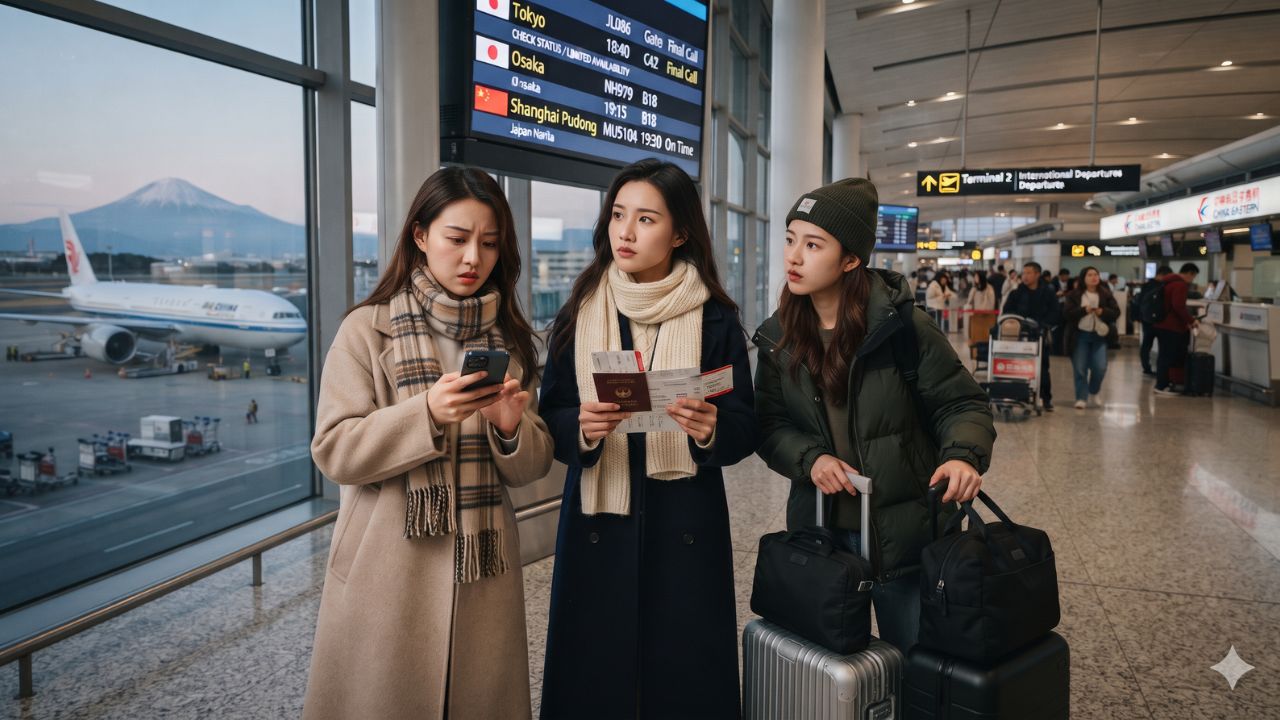
Even as scheduled passenger flights between China and Japan plunged by 49 percent for the opening week of the 2026–2027 winter season, Japan's international tourism economy expanded, with foreign traveler spending rising 3.2 percent to ¥2.2076 trillion and average spending per visitor hitting ¥234,000. According to official aviation records released on October 26, 2026, by Japan's Ministry of Land, Infrastructure, Transport and Tourism (MLIT), the winter schedule running from October 25, 2026, through March 27, 2027, marks a profound reshuffling of East Asian connectivity, opening up quieter winter streets in cultural capitals while introducing major tax-free airport procedures starting November 1.
The Winter Aviation Contraction: Slashed Routes and Compensating Markets
The bilateral flight reduction represents one of the sharpest capacity contractions in East Asian aviation. MLIT data recorded on October 23 for the opening week of October 25–31 revealed that scheduled passenger services between mainland China and Japan dropped nearly half compared to the equivalent 2025 opening schedule. This reduction coincides with a diplomatic cooling dating back to November 2025 over security remarks concerning Taiwan, reinforced by a Chinese Ministry of Foreign Affairs advisory on March 26, 2026, cautioning citizens regarding travel to Japan.
The cooling directly altered inbound visitor statistics. Official tourism briefings show that September 2026 Chinese arrivals fell 44.5 percent year-on-year to approximately 430,000 visitors. Concurrently, estimated quarterly spending by Chinese vacationers dropped 39.8 percent to ¥358.3 billion (comprising ¥143.8 billion on retail shopping and ¥101.6 billion on hotel accommodation), shrinking China's share of overall foreign visitor spending from 27.8 percent down to 16.2 percent—a drop of 11.6 percentage points.
Yet Japan's total international arrival volume dropped only 5 percent in September to 3,103,700 visitors, setting September arrival records across seven overseas source markets. Regional airlines redirected capacity into Japan from neighbouring hubs: opening winter schedules reveal an 18 percent surge in passenger services from South Korea and an 11 percent increase from Taiwan. Across all international routes, Japan's scheduled passenger operations contracted by just 3 percent to 5,524.5 weekly flights. Meanwhile, China maintains 16,654 weekly international passenger departures connecting 84 countries worldwide, showing that flight shifts reflect bilateral adjustments rather than a global shutdown.
| Market Metric & Regulatory Parameter | Official 2026 Verified Figure | Comparison with Previous Year | Traveler Significance |
|---|---|---|---|
| China–Japan Scheduled Flights | Down 49% (opening winter week) | Baseline: October 2025 opening timetable | Reduced non-stop seat choices between secondary Chinese cities and Japanese regional airports. |
| September Chinese Visitor Arrivals | Approximately 430,000 travelers | Down 44.5% year-on-year | Noticeable reduction in large tour buses around Tokyo, Kyoto, and Osaka tourist corridors. |
| Overall Foreign Visitor Arrivals | 3,103,700 visitors (September 2026) | Down 5.0% year-on-year | Total foreign arrivals remain near historic highs, backed by record numbers from seven nations. |
| Total International Travel Spending | ¥2.2076 trillion (July–September) | Up 3.2% year-on-year | Foreign tourist economic contribution continues to set records despite regional market drops. |
| Average Spend per International Visitor | ¥234,000 per person | Up 6.1% year-on-year | International travelers are staying longer, booking higher-end dining, and seeking premium lodgings. |
| South Korea & Taiwan Flight Additions | +18% (South Korea), +11% (Taiwan) | Winter opening schedule vs 2025 | Regional connectivity surges, bringing high winter skier volumes to Hokkaido and Tohoku. |
| Tourist Visa Costs for Chinese Nationals | CNY 715 (Single), CNY 1,430 (Multiple) | Unchanged since July 1, 2026 | Applications remain available via designated agencies with a standard 5-working-day review. |
| Airport Tax-Free Shopping Policy | Effective November 1, 2026 | Transition to post-export refund model | Goods purchased with consumption tax; refunds processed at final international airport before bag check. |
Major Shopping Overhaul: How the November 1 Tax-Free Refund System Works
For international shoppers, the most immediate logistical adjustment begins on November 1, 2026, when Japan transitions eligible duty-free retail purchases to an airport refund mechanism overseen by Japan Customs. Under the historic in-store exemption model, tourists presented passports at cash registers to pay tax-exclusive prices on the spot.
Under the new system, travelers pay the standard 10 percent tax-inclusive price at retail counters in department stores, electronics outlets, and boutique shops. To obtain the tax refund, visitors must present their purchased goods, sales receipts, and passports to customs inspection kiosks at their final international departure airport within 90 days of purchase. Crucially, this customs inspection must occur before passengers check their luggage with their airline. If a traveler books a domestic transfer flight from Sapporo Chitose (CTS) to Tokyo Haneda (HND) before flying onward to London or New York, the export verification procedure occurs at the final departure hub in Tokyo before checking bags onto the international sector.
What Makes Winter Travel in Japan Unique: Powder Snow, Thermal Springs, and Calmer Shrines
Winter in Japan presents extraordinary regional contrasts. In the northern island of Hokkaido and the high peaks of Nagano, Siberian weather systems dump meters of dry champagne powder snow, making destinations like Niseko, Hakuba, and Nozawa Onsen global capitals for winter sports.
In lowland cultural centers like Kyoto, Nara, and Kanazawa, winter brings crisp, sunny mornings and thin crowds. The historic temple gardens of Kyoto, frequently overwhelmed during autumn foliage peaks in late November, take on a meditative serenity in January and February. Stone pathways through Daitoku-ji and Tenryu-ji reveal moss beds dusted in morning frost, while cedar smoke from neighborhood sentō (communal bathhouses) drifts through traditional wooden machiya alleyways.
Culinary traditions shift toward warming seasonal specialties. Izakayas and street stalls serve hot nabemono (hot pot dishes), simmering oden (daikon radish, fish cakes, and boiled eggs steeped in dashi kelp broth), and charcoal-grilled winter crab (kanizuki) harvested along the Sea of Japan coast.
Visitor Insider Tips: Practical Winter Navigation Across Tokyo, Kyoto, and Hokkaido
Navigating Japan during the winter schedule requires practical adjustments to account for airport changes, transport bookings, and thermal etiquette:
- Arrive 45 Minutes Earlier for Airport Tax Refunds: Beginning November 1, allow an extra 45 minutes at Narita (NRT), Haneda (HND), or Kansai (KIX) to clear the customs tax-refund counters before queuing at airline check-in desks. Keep tax-free items accessible in your carry-on or unzipped suitcase so customs officials can verify exports before bags are tagged.
- Master the Shinkansen Luggage Reservation Rules: When traveling between Tokyo, Nagoya, Kyoto, and Osaka on the Tokaido Shinkansen, bags with total dimensions (length plus width plus height) between 161 cm and 250 cm require a pre-reserved oversized baggage seat. Book these seats through the official SmartEX mobile app to avoid a ¥1,000 conductor surcharge.
- Beat Crowds at Fushimi Inari and Arashiyama: In Kyoto, visit the torii gates of Fushimi Inari Taisha between 6:30 AM and 8:00 AM. In winter, dawn light filters through the vermilion arches without tour groups. For the Arashiyama bamboo grove, visit at 7:00 AM before taking the scenic Sagano Romantic Train or wandering through the peaceful gardens of Giō-ji.
- Onsen Bathing Etiquette: When visiting traditional hot spring towns like Kinosaki Onsen, Hakone, or Kurokawa, always wash thoroughly at individual shower stations before entering the communal pool. Never let your modest hand towel touch the bathwater, and check ahead if you have tattoos, as many traditional establishments require private bath (kashikiri) bookings.
- Winter Footwear Essentials in Hokkaido: Streets in Sapporo and Otaru develop slick ice layers during December and January. Purchase slip-on rubber ice spikes (suberidome) for ¥1,000 at convenience stores near train stations to attach over walking shoes.
Cultural and Environmental Context: Sustainable Tourism and Market Diversification
The structural reduction in group-tour flights from mainland China accelerates Japan's long-term tourism policy shift. For over a decade, national authorities grappled with severe overtourism concentrated in the golden triangle of Tokyo, Kyoto, and Mount Fuji. The current expansion of independent travelers from South Korea, Taiwan, Europe, and North America aligns with initiatives promoted by the Japan National Tourism Organization (JNTO), encouraging travelers to disperse into rural prefectures, ski villages, and coastal communities.
This diversification protects cultural heritage and community living standards. In Kyoto, municipal authorities have redirected bus routes and promoted morning temple visits to safeguard historic residential precincts like Gion and Miyagawacho from excessive congestion. Across ancient landscapes like the UNESCO World Heritage Sacred Sites and Pilgrimage Routes in the Kii Mountain Range, sustainable trail maintenance programs ensure that winter hiking along the Kumano Kodo supports family-owned ryokans (traditional inns) while preserving sacred mountain paths for future generations.
As upcoming government arrival reports on November 18 (covering October estimates) and December 16 (covering November data) clarify seasonal booking trajectories, Japan's winter tourism landscape demonstrates that resilience lies in cultural depth, balanced regional dispersal, and high-quality visitor experiences.
FAQ: Traveling in Japan During Winter 2026–2027
How do China–Japan flight reductions affect travelers departing from North America or Europe?
Long-haul transpacific and European flights into Tokyo and Osaka operate normally. The reductions primarily affect non-stop connections between secondary Chinese cities and Japanese regional hubs.
How does the new November 1 tax-free refund policy work?
You pay the standard 10 percent consumption tax in stores. Before checking your luggage at your final departure airport, present your passport, store receipts, and purchased goods at customs kiosks to receive your refund.
What is the best time to see snow in Kyoto?
Snowfall in Kyoto is rare and fleeting, typically occurring between mid-January and mid-February. When dustings occur, visit Kinkaku-ji (Golden Pavilion) early in the morning before the snow melts.
Are trains and buses reliable during heavy Japanese winter snowfalls?
Shinkansen bullet trains operate with exceptional reliability even through snowstorms by deploying warm-water track sprinklers. In mountainous ski regions, local highway buses may experience weather delays during blizzards.
Winter in Japan reveals a peaceful elegance—where quiet temple courtyards, rising thermal steam, and pristine mountain snowfields welcome travelers who plan with purpose.
Related Travel Guides
New Orleans November 2026 Travel Guide: Festivals, Bayou Classic, and Neighborhood Food Culture
Jin Air Data Security Concerns: What Happens to Passenger Information After Your South Korea Holiday
The Best Quiet Onsen Towns and Mountain Ryokans in Central Japan, According To Reddit (Coming Soon)
This article is for informational purposes. Flight routes, passenger regulations, visa rules, and transit advisories are subject to change by airlines and aviation authorities. Readers are advised to verify schedules and travel documentation with relevant carriers and border agencies before departure.
Related Stories

American Cruise Travel 2027: Record 22.4M Passengers Reshape Caribbean, Alaska, and European Sailings

Durham North Carolina Tourism Guide: Food Culture, Black Wall Street Heritage, and Slower Travel