
Japan Weather Crisis 2026: Record Rainfall Shuts Down Narita Airport and Strands 7,000 Travelers
Extreme rainfall in Chiba has paralyzed Narita Airport, leaving 7,000 passengers stranded during the Bon holiday period as Japan faces historic flooding.

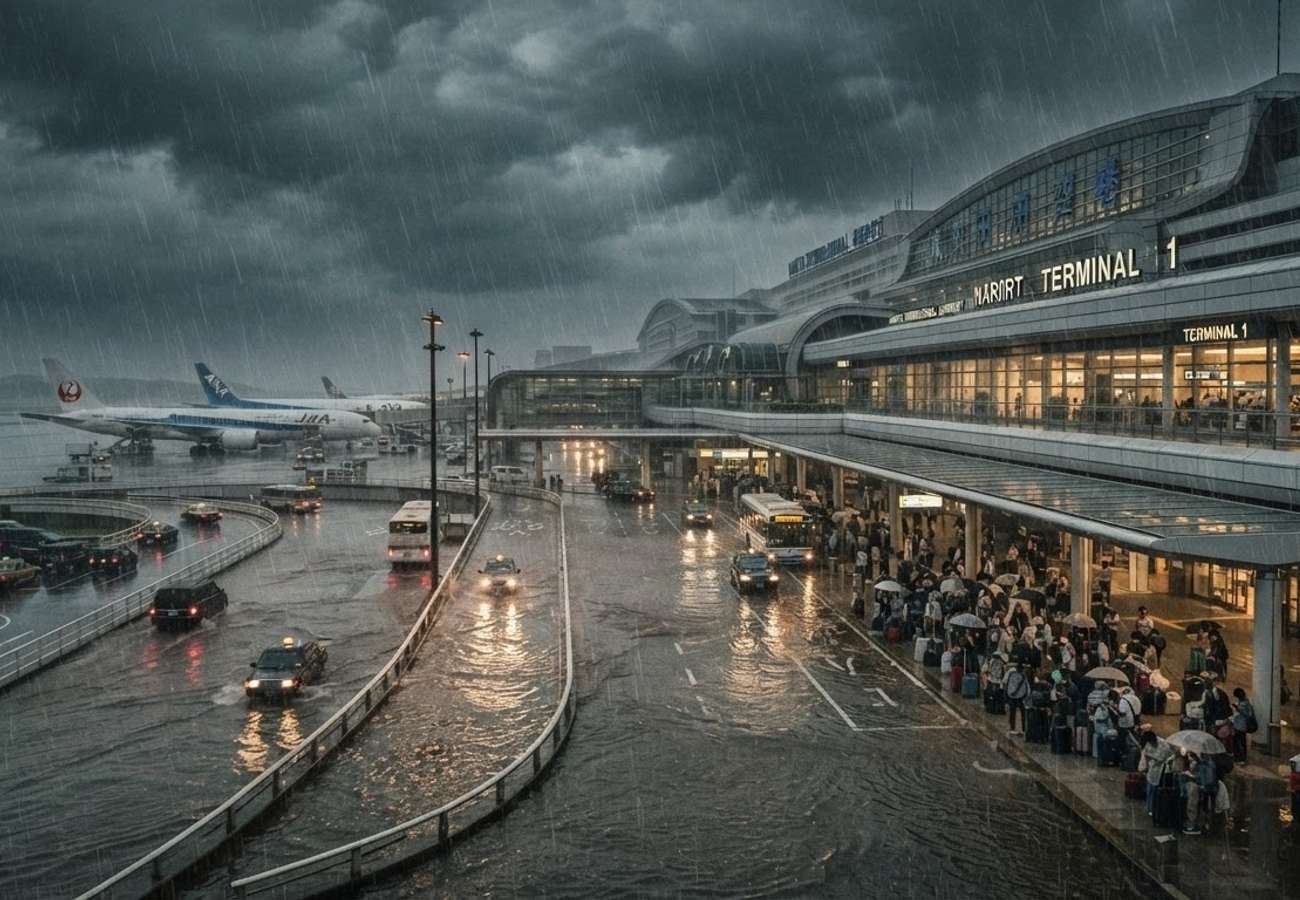
Image generated by AI
Over 360 millimetres of rain fell within 24 hours in the Chiba region, resulting in the death of at least eight people and the total paralysis of Narita Airport's transport links.
The August 2026 Weather Collapse
In mid-August 2026, eastern Japan experienced a meteorological event of historic proportions. The timing coincided with the Bon holiday, one of the most significant travel windows in the Japanese calendar, turning a period of family reunions into a logistical crisis. The Japan Meteorological Agency confirmed that the volume of precipitation in Chiba shattered previous records, overwhelming drainage systems and critical infrastructure.
The system manifested on Thursday, August 13, and intensified through August 14, 2026. The resulting deluge caused widespread power failures, with over 20,000 households losing electricity after a power substation was submerged. Additionally, gas supplies to nearly 13,000 homes were interrupted, prompting a massive state response. The Japanese government escalated rescue efforts rapidly, deploying military personnel to assist in evacuations for over 100,000 residents across the affected zones.
Narita Airport: From Gateway to Emergency Shelter
The most acute impact for international visitors occurred at Narita Airport. As flooding inundated major highways and suspended railway services to central Tokyo, the airport became a bottleneck. Approximately 7,000 travellers were stranded overnight, unable to reach their hotels or connecting transport.
With the terminal effectively transitioning into an emergency shelter, airport personnel shifted operations to crisis management. To support the displaced passengers, staff distributed water, snacks, and sleeping bags. For the visitor, the real impact was a total loss of predictability; the highly efficient Japanese transit network, usually a point of pride, was rendered useless by the scale of the flooding.
Resilience and the Climate Shift
This event underscores a growing vulnerability in global aviation and tourism hubs. The shift from structural engineering—the primary focus during previous disasters like the October 2013 rains—to integrated, multi-agency coordination is now evident. The 2026 crisis showed a more evolved approach to disaster management, characterized by the immediate deployment of military units and formalized support protocols within transport hubs.
For the tourism sector, the lesson is clear: operational resilience must now account for "black swan" weather events that can occur even in the most technologically advanced destinations. The ability to manage sudden surges in the need for emergency shelter is no longer a niche requirement but a vital component of airport management.
Visitor Insider Tips
Navigating Japan during the typhoon or monsoon seasons requires more than just an umbrella. To avoid being caught in a similar stranding crisis, travelers should adopt these local strategies:
- Digital Lifelines: Download the "Safety Tips" app managed by the Japan Tourism Agency. It provides multilingual, real-time alerts that often precede general news broadcasts.
- The Cash Contingency: During power outages, electronic payment systems and ATMs often fail. Always carry a reserve of Japanese Yen in cash for emergency transport or supplies.
- Avoid the "Push" Mentality: In extreme weather, there is a temptation to try and "push through" to a destination. Local etiquette and safety protocols dictate that you should remain stationary in a safe building until official transport links are restored.
- Official Monitoring: Rely exclusively on the Japan Meteorological Agency (JMA) website for risk levels rather than third-party travel blogs.
- Embassy Registration: Register your itinerary with your home embassy or consulate to ensure you are included in emergency communication chains.
Tourism Outlook
The long-term impact of the 2026 floods will likely lead to a redesign of "last-mile" connectivity between Narita and Tokyo. Expect to see increased investment in elevated rail corridors and flood-resistant road infrastructure. Furthermore, the industry is likely to implement more robust, flexible communication systems to maintain traveler trust when physical infrastructure fails. As climate patterns become more volatile, the definition of a "world-class" destination will shift from luxury and efficiency to safety and adaptive resilience.
The intersection of climate volatility and global mobility is the new frontier of travel risk management.
Related Travel Guides
Disclaimer
This article is for informational and educational purposes only. It does not constitute legal, financial, or professional advice. While we strive to provide accurate and up-to-date information, travel policies, regulations, and conditions change rapidly. Always verify information with official sources before making travel decisions. Nomad Lawyer makes no representations about the accuracy, reliability, completeness, or suitability of the information provided. Readers should consult qualified professionals for advice specific to their circumstances. The views expressed in this article are those of the author and do not necessarily reflect the views of Nomad Lawyer.
Raushan Kumar
Founder & Lead Developer
Full-stack developer with 11+ years of experience and a passionate traveller. Raushan built Nomad Lawyer from the ground up with a vision to create the best travel and law experience on the web.
Learn more about our team →