
The American Safety Divide: Massachusetts Crushes Minnesota to Dominate the 2026 US Cycling Rankings
Exposing a massive, widening safety divide across the United States, Massachusetts has aggressively overtaken New Hampshire and Minnesota to dominate the elite 2026 domestic cycling safety rankings.

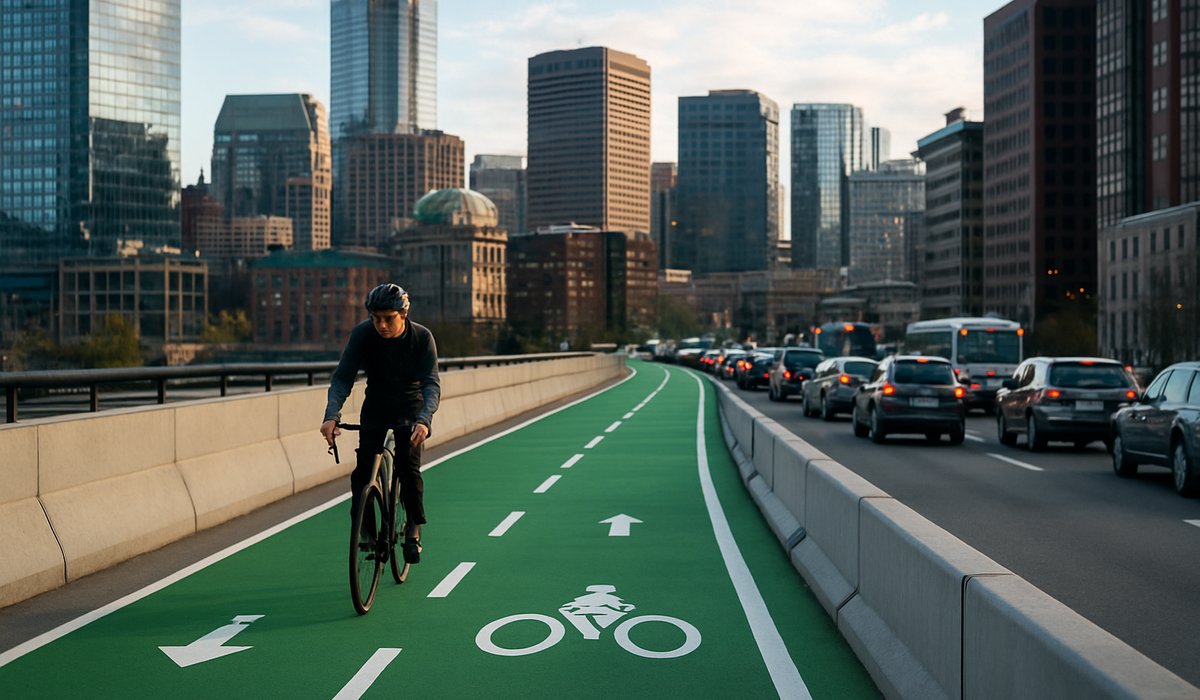
Image generated by AI
The Economics of Protected Infrastructure Reshapes Travel Routing
Generating a massive spotlight on the increasingly ferocious infrastructure divide fracturing American cities, Massachusetts has officially surged to the absolute top of the 2026 US Cycling Rankings, brutally dethroning heavyweights like New Hampshire, Minnesota, and Rhode Island. By aggressively deploying hundreds of millions of dollars into highly protected, physically separated bike lanes and comprehensive systemic policy overhauls, Massachusetts is effectively proving that elite urban cycling safety is not a geographical accident, but a heavily engineered political choice.
This rapidly tracking tourism data is horrifying for states falling behind. The modern "Active Tourism" sector (travelers visiting a city explicitly to explore it via bicycle) is experiencing explosive post-pandemic growth. Cities that fundamentally fail to protect cyclists—like deeply car-dependent sprawls in Texas or heavy industrial corridors in West Virginia—are physically watching massive tourist capitals bleed out. International and domestic tourists simply refuse to rent a bicycle in a city where they are mathematically forced to share a 45-mph asphalt lane with a commercial logging truck.
The Mechanics of the Safety Divide
The widening American cycling divide is not based merely on drawn paint on a road; it is based on concrete.
Massachusetts, specifically its hyper-dense capital of Boston, has aggressively moved away from "sharrows" (shared road markings that offer zero physical protection). Instead, they are heavily installing "Dutch-style" infrastructure: raising the bike lanes above street level or deploying massive concrete planters to physically barricade cyclists from vehicular traffic. Minnesota maintains an incredibly strong ranking due to Minneapolis' legendary interconnected greenway networks, but Massachusetts overtook the top slot because it successfully enforced statewide legislation aggressively punishing aggressive drivers and demanding severe setbacks at major municipal intersections to protect cyclists from the lethal "right-hook" blindspot.
Anatomy of the 2026 US Cycling Leaders
| State Ranking | Primary Infrastructure Weapon | Resulting Tourism Impact |
|---|---|---|
| 1. Massachusetts | Massive rollout of physically separated concrete barriers | Explosive growth in European tourist cycling rentals |
| 2. New Hampshire | Aggressive rural trail networking (rail-to-trail) | Deeply lucrative off-road and gravel cycling tourism |
| 3. Minnesota | The legendary Minneapolis Greenway network | Unrivaled urban connectivity, even through extreme winters |
What Guests Get
- The difference between paint and protection — realizing that a white line painted on a highway does absolutely nothing to protect a cyclist, and true cycling cities only use concrete.
- The tourism economic engine — grasping that when a city builds a highly safe bike network, tourists stay outside longer, organically stopping at independent cafes and bookstores rather than driving straight past them.
- Urban evolution reality — accepting that deeply congested American cities cannot physically widen their highways anymore; highly regulated, massive bicycle infrastructure is the only functional fix for municipal gridlock.
What This Means for Travelers
If you plan to cycle in a top-tier city (like Boston or Minneapolis): You absolutely must understand local etiquette. In cities possessing highly mature cycling infrastructure, the bike lane effectively operates as a high-speed commuter highway. Do not casually wander into the green-painted lane to take a selfie or gaze at a monument. You will be aggressively screamed at (or physically hit) by a local commuter traveling at 20 mph on an electric bicycle. Always explicitly look both ways incredibly intensely before physically crossing a designated cycle track.
Traveling in low-ranking states: If you visit a state deeply lagging in the national safety rankings (like Alaska or West Virginia), do absolutely not rely on a rented urban bicycle for your daily transportation. These regions possess incredibly hostile, high-speed arterial roads that were designed exclusively for large pickup trucks and semi-trucks. If you wish to cycle in these states, you must heavily restrict your activity exclusively to highly specialized, isolated mountain bike parks or federally protected dedicated woodland trail systems.
FAQ: Understanding American Urban Cycling
Why is cycling safety suddenly considered a major tourism metric? Because the demographics have shifted heavily. The incredibly massive explosion of e-bikes allows typical, non-athletic tourists to effortlessly cover 20 miles of a city in a single afternoon. If a city is safe, e-bike rentals skyrocket, deeply increasing localized retail spending.
Are electric bicycles (e-bikes) allowed in these protected lanes? Generally, yes. However, Massachusetts and Minnesota strictly regulate e-bike classes. "Class 1" and "Class 2" e-bikes (which cap out around 20 mph) are heavily welcomed inside the separated tracks. Heavier, modified e-bikes that operate essentially like motorcycles are strictly banned.
Isn't it too cold to cycle in Minnesota or Massachusetts? The data proves the exact opposite. Minneapolis famously plows its massive cycling tracks violently faster than it plows its vehicular roads after a severe blizzard. If the infrastructure is safe and free of ice, commuters and tourists will ride happily in 15°F weather.
Related Travel Guides
- UAE Expands Visa-on-Arrival to Six New Countries, Easing Entry for Millions of Travelers
- American Airlines Flight AA2333 Airbus A320 Diverts to Los Angeles Airport from Palm Springs to Phoenix July 20 2026
- European Flight Chaos 2026: 184 Cancellations and 1,663 Delays Hit Keflavik, Heathrow, and Schiphol
Disclaimer
This article is for informational and educational purposes only. It does not constitute legal, financial, or professional advice. While we strive to provide accurate and up-to-date information, travel policies, regulations, and conditions change rapidly. Always verify information with official sources before making travel decisions. Nomad Lawyer makes no representations about the accuracy, reliability, completeness, or suitability of the information provided. Readers should consult qualified professionals for advice specific to their circumstances. The views expressed in this article are those of the author and do not necessarily reflect the views of Nomad Lawyer.
Raushan Kumar
Founder & Lead Developer
Full-stack developer with 11+ years of experience and a passionate traveller. Raushan built Nomad Lawyer from the ground up with a vision to create the best travel and law experience on the web.
Learn more about our team →