
Japan Braces for Record Typhoon Season 2026: 28 Storms Threaten Millions of Travelers from South Korea, USA, China & Taiwan
Japan meteorologists warn of unprecedented typhoon activity in 2026 with 28 tropical systems and 14 landfalls expected. Travelers from South Korea, Taiwan, USA, and China face severe flight disruptions and hotel cancellations during peak season.

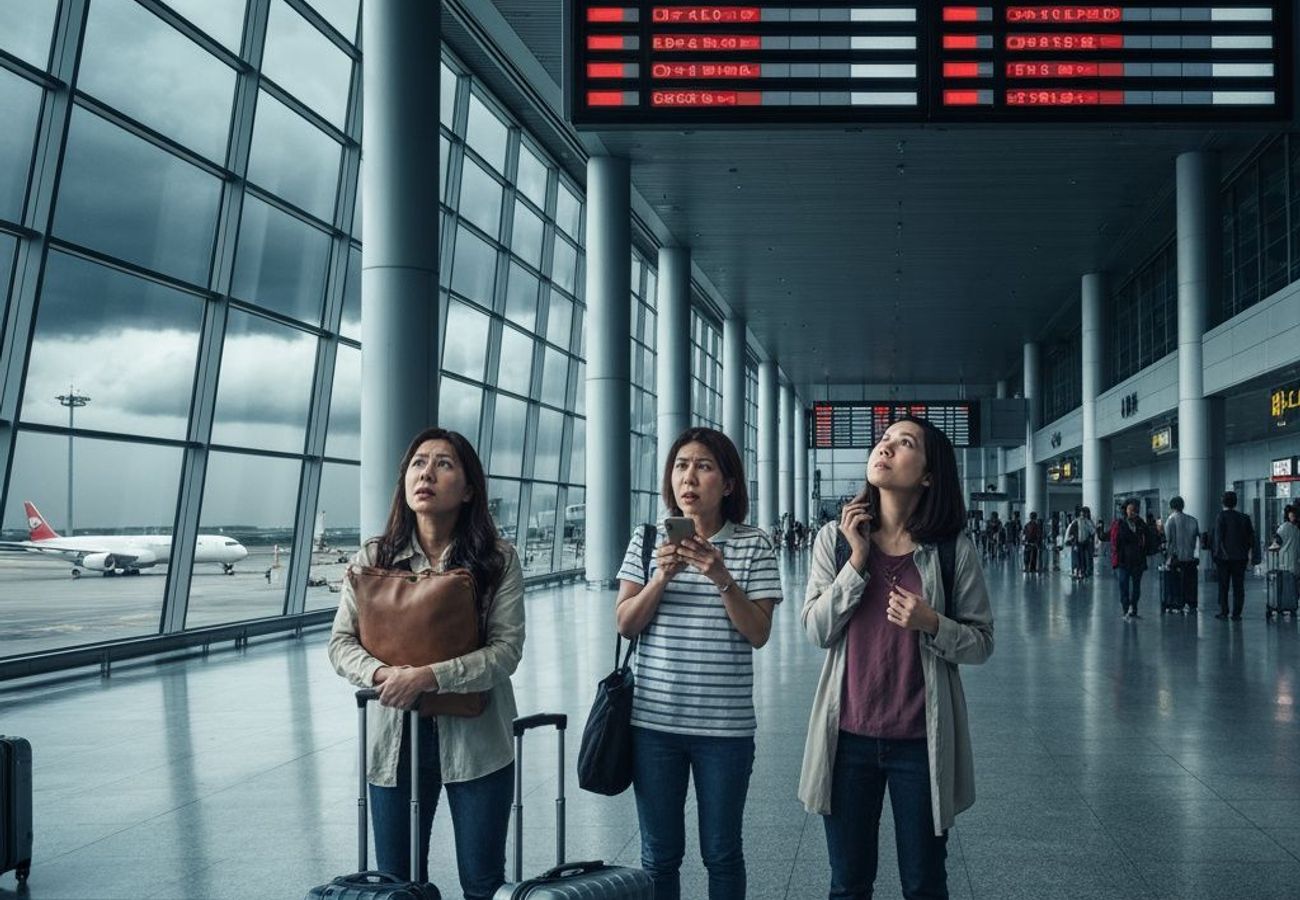
Image generated by AI
Japan's Worst Typhoon Season in Years: What's Coming in 2026
Japan is staring down what meteorologists are calling one of the most active typhoon seasons in modern history. The numbers alone are staggering: 28 tropical cyclones are forecast for 2026, with 14 making direct landfall on the Japanese islands. To put that in perspective, the historical average hovers around 3 systems annually. We're looking at roughly 5 times the normal activity.
The timing couldn't be worse. Peak typhoon season—August and September—overlaps almost perfectly with Japan's busiest tourism window. Millions of travelers from South Korea, Taiwan, USA, and China plan their trips during these months, oblivious to the weather chaos brewing in the Western Pacific.
Reddit: "I'm supposed to fly to Tokyo in late August. Should I cancel? This is terrifying." — r/travel
The Science Behind the Surge
Japan Meteorological Agency data points to two culprits: warming ocean waters and shifting atmospheric patterns. Warmer seas fuel storm intensity and duration. What once might have been a moderate tropical depression now has the fuel to intensify into a major typhoon within 24 hours.
The forecast models show no signs of slowing down. If anything, the frequency and ferocity of these systems will exceed anything Japan's infrastructure has weathered in the past decade.
Which Travelers Face the Biggest Risk?
The impact won't be evenly distributed. Let's look at the major source markets and their exposure:
South Korea & Taiwan: The Vulnerable Short-Haul Markets
South Korea sends approximately 795,000+ projected visitors in 2026, while Taiwan contributes 650,000+. These travelers rely on short-haul flights—meaning they're highly exposed to sudden weather disruptions. When a typhoon forms, Korean and Taiwanese travelers often cancel within hours of the warning. This creates cascading hotel cancellations and stranded passengers.
The primary gateways—Tokyo Haneda, Osaka Kansai, and Fukuoka—will bear the brunt of these disruptions.
USA & China: The Long-Haul Problem
American travelers (~375,000+) and Chinese visitors (~290,000+) face a different challenge. They're more likely to commit fully to their trips despite weather warnings, then experience multi-day delays or complete cancellations mid-journey. Long-haul disruptions mean lost hotel deposits, missed tour connections, and stranded baggage.
All Nippon Airways (ANA) and Japan Airlines (JAL) have already issued preliminary statements about flexible rebooking policies for the season.
ASEAN Nations: Somewhat Prepared
Travelers from Thailand (~160,000+) and Vietnam (~90,000+) tend to be more weather-resilient, having grown up navigating seasonal storms. They're less likely to panic-cancel but still face real operational disruptions.
Here's What's Actually Going to Happen
Airport Shutdowns and Flight Cancellations
When a major typhoon approaches, Japanese airports don't mess around. Haneda, Narita, and regional facilities will reduce or suspend operations entirely. We're not talking about a few delayed flights—we're talking about complete operational halts lasting 12-48 hours.
Japan Airlines and All Nippon Airways have already begun adjusting their September and October schedules to account for expected disruptions. International carriers are monitoring closely and implementing weather waivers that allow free rebooking without penalty fees.
The Japan Meteorological Agency updates typhoon forecasts every 6 hours during active seasons. Travelers need to be glued to these updates.
Train Delays and Shinkansen Suspensions
Japan's famous Shinkansen bullet trains are incredibly reliable—but not in typhoons. Wind speeds exceeding certain thresholds force complete service suspensions for safety reasons. Regional trains in Kyushu, Shikoku, and Okinawa will see extended delays or cancellations.
Anyone booking ground transportation during late August should build in 2-3 day buffers for potential delays.
Hotels and Hospitality Under Pressure
The hospitality sector is bracing for impact. Coastal resort hotels in Okinawa, Izu Islands, and parts of Kyushu are already reporting higher cancellation inquiries.
What's particularly damaging is the timing: travelers cancel within the 3-7 day warning window, leaving hotels scrambling to pivot their operations. Hotels can't simply relocate a typhoon. Unlike European storms, these systems are severe enough to require complete facility shutdowns in some regions.
What Travelers Must Do Right Now
1. Buy Flexible Tickets Immediately
Non-refundable tickets are disasters waiting to happen. Pay the premium for fully flexible, changeable fares. The cost difference is trivial compared to losing your entire trip.
2. Purchase Comprehensive Travel Insurance
Standard travel insurance often excludes weather delays. You need a policy that specifically covers typhoon-related cancellations, delays exceeding 24 hours, and accommodation disruptions. Companies like World Nomads and Allianz explicitly cover weather events in Asia.
3. Monitor the Japan Meteorological Agency Daily
Bookmark the official JMA typhoon tracking page. Serious travelers check this every morning during August-October.
4. Accept That Your Itinerary Will Change
Building rigid, day-by-day plans during typhoon season is setting yourself up for stress. Add buffer days. Keep activities flexible. Book refundable hotel rooms and transportation where possible.
5. Communicate with Airlines in Real-Time
Once a typhoon is named and tracked, contact your airline directly. Don't wait for notification. Ask about their specific policies, available waivers, and rebooking options. Document everything in writing.
The Bottom Line
Japan in 2026 will remain an incredible destination, but travelers need to approach typhoon season with military-grade planning. The 28 forecasted storms and 14 landfalls aren't hypothetical—they're meteorological consensus.
Travelers from South Korea, Taiwan, the USA, and China should expect flight delays, hotel cancellations, and transportation disruptions as baseline scenarios. The difference between a ruined trip and a managed inconvenience is preparation.
Check the forecasts. Buy flexible tickets. Get proper insurance. Accept weather delays as part of the experience. Japan is worth it—but only if you're ready.
Navigate the storm—literally and figuratively.
Related Travel Guides
Disclaimer
This article is for informational and educational purposes only. It does not constitute legal, financial, or professional advice. While we strive to provide accurate and up-to-date information, travel policies, regulations, and conditions change rapidly. Always verify information with official sources before making travel decisions. Nomad Lawyer makes no representations about the accuracy, reliability, completeness, or suitability of the information provided. Readers should consult qualified professionals for advice specific to their circumstances. The views expressed in this article are those of the author and do not necessarily reflect the views of Nomad Lawyer.
Raushan Kumar
Founder & Lead Developer
Full-stack developer with 11+ years of experience and a passionate traveller. Raushan built Nomad Lawyer from the ground up with a vision to create the best travel and law experience on the web.
Learn more about our team →