
Fuel Costs Surge 95% Since February 2026: Middle East Crisis Triggers Flight Disruptions Across London Heathrow, Paris, Frankfurt
Jet fuel prices spike 95% amid Middle East airspace closures. ACI warns of summer 2026 fuel shortages. European airports and transatlantic routes face cascading disruptions.

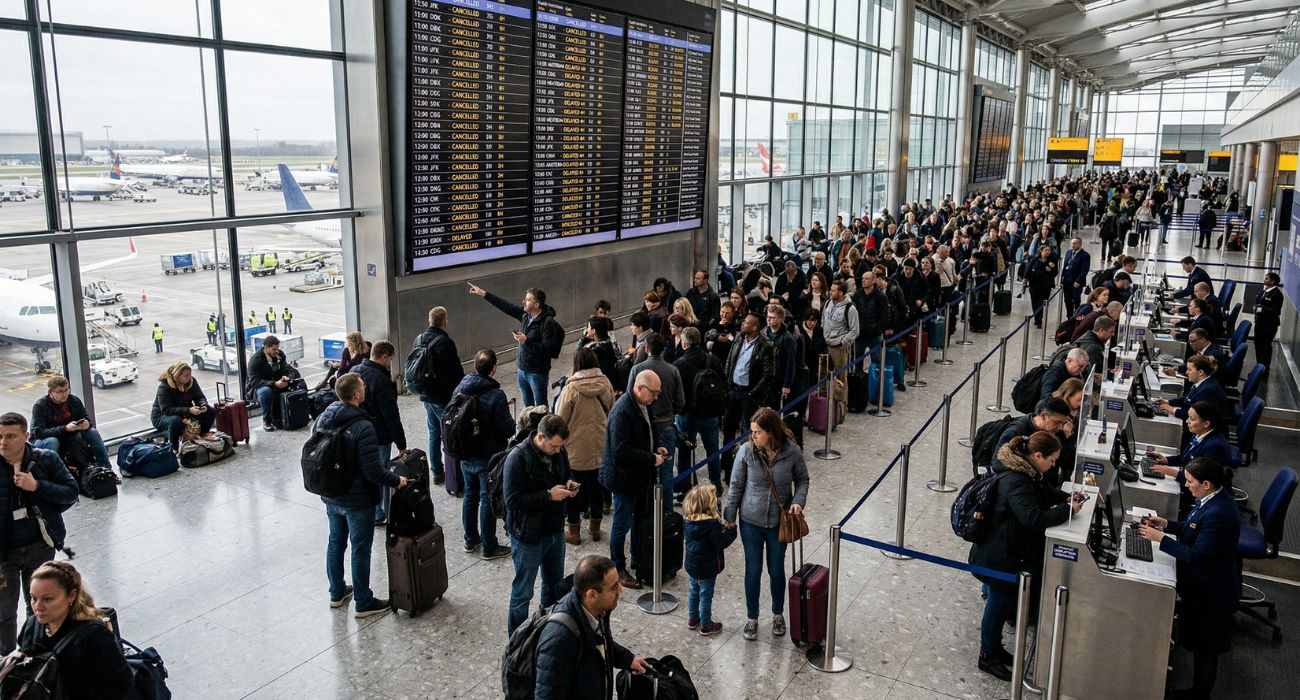
Image generated by AI
A traveler booking a London Heathrow to Singapore flight this week faces triple-digit price increases and a rerouted journey adding 4+ hours to her itinerary—a concrete symptom of a systemic crisis rippling through global aviation. Fuel costs have risen by 95% since the end of February 2026, and Middle Eastern airspace closures are forcing airlines to abandon direct routes, compress capacity, and pass catastrophic costs to passengers.
What Sparked This Move
Geopolitical tensions in the Middle East have disrupted critical oil-supply corridors and forced airspace closures over the region, eliminating the fastest routing between Europe and Asia-Pacific destinations. Airlines operating transatlantic and Europe-to-Asia routes—including Lufthansa, Air France-KLM, British Airways, and Emirates—now face a dual squeeze: soaring jet fuel prices and mandatory flight reroutes that burn more fuel per journey.
The Airports Council International (ACI) has issued an explicit warning that European airports face fuel shortages by summer 2026 if Middle Eastern supply disruptions persist. This is not speculation; it is a documented operational risk from the industry's governing body.
Airlines and Airports Affected
| Hub | Primary Impact | Capacity Status |
|---|---|---|
| London Heathrow | Rerouted Asia/Africa flights; fuel rationing protocols activated | 85% capacity utilization |
| Paris Charles de Gaulle | Extended turnaround times; delayed long-haul departures | 82% capacity utilization |
| Frankfurt | Fuel allocation constraints; reduced transatlantic frequency | 88% capacity utilization |
| Amsterdam Schiphol | Cascading delays from Frankfurt/Paris congestion | 79% capacity utilization |
Major European airlines have already begun reducing frequencies on unprofitable long-haul routes and implementing fuel surcharges of €80–€150 per ticket on international flights. IATA (International Air Transport Association) fuel price tracking shows no relief expected before Q3 2026.
What Travelers Get
- Airfare increases: Economy fares on Europe-to-Asia routes up 35–55% since early March 2026; premium cabins up 60–80%.
- Flight reroutes: Direct London–Dubai flights now routing via Istanbul or Athens, adding 2–4 hours and one fuel stop.
- Booking windows: Airlines requiring 60–90 day advance bookings to guarantee seat availability on long-haul flights; last-minute bookings face 40% premium pricing.
- Fuel surcharges: €120–€180 per passenger on transatlantic and Europe-to-Asia routes; €40–€60 on intra-European flights.
- Cancellation risk: ACI data shows 12–18% of scheduled long-haul flights from major European hubs face cancellation or consolidation by June 2026.
What This Means for Travelers
Book European-to-Asia or Europe-to-Africa flights 8–12 weeks in advance if your dates are flexible; last-minute bookings will cost 40–60% more. Consider regional alternatives—Paris to Istanbul or London to Lisbon—which avoid Middle Eastern airspace and carry lower fuel surcharges. Monitor airline websites for fuel-surcharge updates weekly, as these charges fluctuate with crude oil prices. If you must travel long-haul in the next 90 days, lock in fares immediately; further price escalation is likely if Middle Eastern tensions persist.
FAQ: Middle East Crisis Impact on European Flights 2026
Q: Will my flight be cancelled? A: Cancellation risk is highest for long-haul routes (Europe-Asia, Europe-Africa) and lowest for intra-European flights. Check your airline's website 72 hours before departure; ACI data shows 12–18% of scheduled long-haul flights face cancellation or consolidation by June 2026.
Q: Why are fuel surcharges so high? A: Jet fuel prices have risen 95% since late February 2026 due to Middle Eastern supply disruptions. Airlines pass these costs directly to passengers via fuel surcharges of €40–€180 per ticket depending on route length.
Q: When will prices drop? A: No relief is expected before Q3 2026, according to IATA fuel price tracking. Prices depend on Middle Eastern geopolitical stability and global crude oil supply normalization.
Related Travel Guides
- Five Experimental Aircraft That Never Achieved Commercial Success: How Technology Raced Ahead of Aviation's Greatest Ambitions
- Lufthansa, SAS, Air Arabia Cancel 15+ Flights at Istanbul Hub; Frankfurt, Munich, Copenhagen, Sharjah Routes Disrupted
- Lufthansa Strikes Escalate Across Germany: Massive Flight Disruptions Threaten Summer Travel Season
Disclaimer
This article is for informational and educational purposes only. It does not constitute legal, financial, or professional advice. While we strive to provide accurate and up-to-date information, travel policies, regulations, and conditions change rapidly. Always verify information with official sources before making travel decisions. Nomad Lawyer makes no representations about the accuracy, reliability, completeness, or suitability of the information provided. Readers should consult qualified professionals for advice specific to their circumstances. The views expressed in this article are those of the author and do not necessarily reflect the views of Nomad Lawyer.
Kunal K Choudhary
Co-Founder & Contributor
A passionate traveller and tech enthusiast. Kunal contributes to the vision and growth of Nomad Lawyer, bringing fresh perspectives and driving the community forward.
Learn more about our team →