
Japan Aviation Crisis: Japan Airlines and Skymark Face Emergency Landings After Shocking Tire Failures
A Japan Airlines Boeing 767 makes an emergency landing at Narita after a tire failure out of Haneda, marking the second major tire rupture this week following a Skymark Airlines incident.

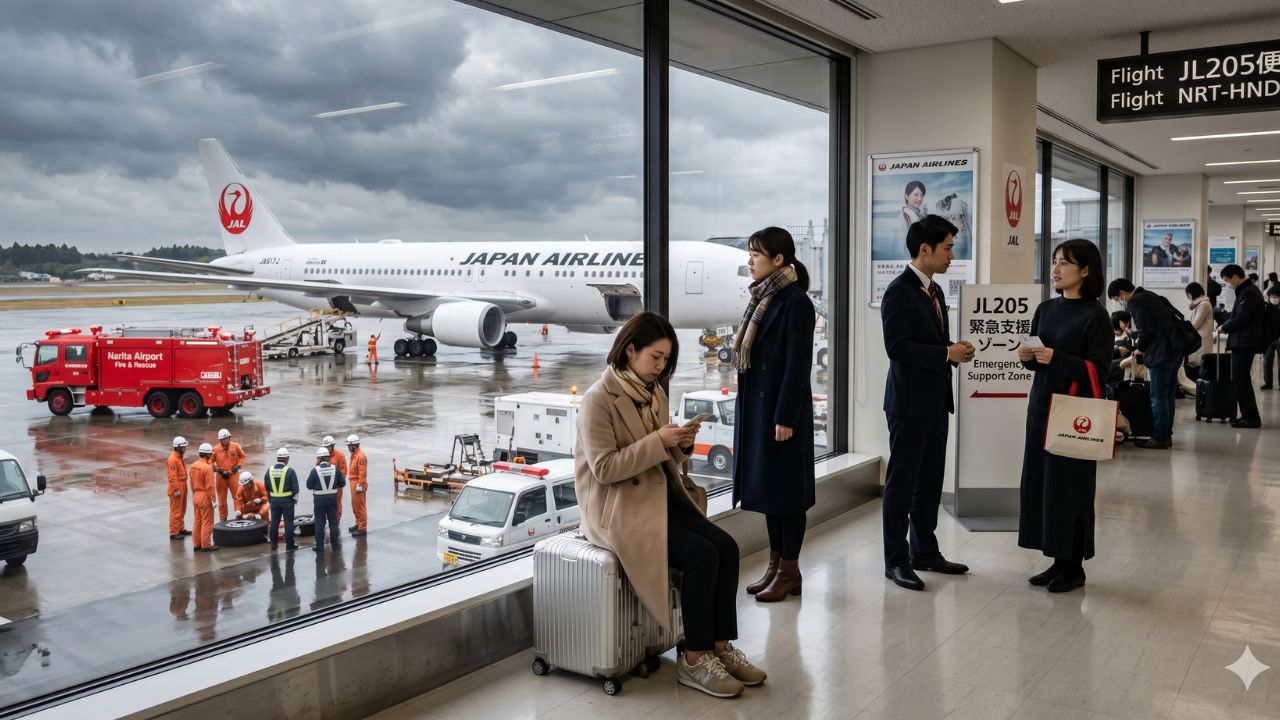
Image generated by AI
Japan Aviation Crisis: Japan Airlines and Skymark Face Emergency Landings After Shocking Tire Failures
Japanese transport authorities are aggressively investigating a highly concerning trend of severe mechanical failures after a Japan Airlines Boeing 767 declared a critical in-flight emergency. Shortly after departing from Tokyo Haneda Airport, the Kagoshima-bound flight suffered a massive, suspected tire burst during the intensely stressful takeoff phase. The terrifying incident forced the flight crew to execute a rapid diversion to Narita International Airport.
The Scope of the Aviation Disruption
While the Japan Airlines crew managed to land the crippled Boeing 767 safely—ensuring the absolute survival of all 218 passengers and eight crew members—the incident caused massive operational headaches across Tokyo's two primary aviation hubs. Debris scattered across Haneda forced immediate runway closures, while Narita scrambled its emergency response teams to intercept the diverted aircraft.
What makes this disruption incredibly alarming is that it is not an isolated event. Earlier this week, a Skymark Airlines Boeing 737 experienced an almost identical tire rupture departing from Haneda, raising severe questions regarding localized runway conditions, ongoing aircraft maintenance practices, and the overall safety of Japan's domestic flight corridors.
Breakdown of the Airport Operations Impact
The immediate fallout from the Japan Airlines emergency landing heavily choked operations at both Haneda and Narita, forcing air traffic control to hold other arriving and departing flights while investigators secured the massive concrete runways.
Tokyo Haneda Airport: Debris Forces Massive Shutdown
The crisis originated at Tokyo Haneda Airport, where transport authorities discovered dangerous, scattered debris on Runway D, the exact runway utilized by the Japan Airlines aircraft during takeoff. Fearing a severe hazard to other jets, officials decisively closed Runway D at approximately 10:30 AM. It took investigators over three hours of meticulous examination to clear the tarmac before the runway finally reopened at 1:45 PM.
Narita International Airport: Emergency Interception
After the flight crew diverted the aircraft away from Kagoshima, Narita International Airport mobilized heavily to accept the emergency landing. Following the successful 11:55 AM touchdown, Narita authorities immediately closed Runway A to conduct strict safety inspections. The critical runway remained shut down for nearly two hours to guarantee that no secondary debris compromised subsequent airport operations.
Flight Disruptions and Incident Data Overview
To fully contextualize the severity of this week's mechanical breakdowns, the following official data matrix details the specific metrics regarding both the Japan Airlines diversion and the earlier Skymark Airlines incident:
| Incident Metric | Data and Details |
|---|---|
| Airline Involved (Incident 1) | Japan Airlines |
| Aircraft Type | Boeing 767 |
| Original Route | Tokyo Haneda → Kagoshima Airport |
| Diversion Airport | Narita International Airport |
| Total Occupants | 218 Passengers, 8 Crew Members |
| Landing Time | 11:55 AM |
| Haneda Disruption | Runway D closed (10:30 AM – 1:45 PM) |
| Narita Disruption | Runway A closed (Nearly 2 hours) |
| Airline Involved (Incident 2) | Skymark Airlines (Occurred Monday) |
| Aircraft Type | Boeing 737 |
| Incident Details | Tire rupture departing Haneda, Emergency Landing |
| Total Injuries (Both Incidents) | 0 |
Passenger Impact: Relief Mixed With Extreme Delays
For the 226 occupants aboard the Japan Airlines flight, the mid-air mechanical failure was undeniably terrifying. However, thanks to the textbook execution of established safety protocols, the aircraft landed without a single injury. Despite this relief, the passengers faced severe travel chaos upon arriving at Narita, left completely stranded miles away from their intended destination of Kagoshima.
Furthermore, the cascading effect of the three-hour runway closure at Haneda and the two-hour hold at Narita triggered minor but widespread operational disruptions, delaying thousands of other domestic travelers throughout the day as airlines scrambled to adjust flight schedules.
Industry Analysis: A Troubling Pattern of Tire Failures
Japanese aviation authorities are now facing intense pressure to solve this alarming cluster of tire blowouts. Investigators are meticulously analyzing the debris found on Haneda's Runway D to definitively link it to the Japan Airlines Boeing 767.
Crucially, regulators must determine if the Monday incident involving the Skymark Airlines Boeing 737 and today’s Japan Airlines emergency share a common root cause. Investigators will heavily scrutinize the physical wear-and-tear of Haneda's runways, evaluate airline maintenance schedules regarding tire durability, and assess whether intense operational stress during high-density domestic turnarounds is compromising aircraft safety.
What Guests Get
- Zero Casualties: Both the Japan Airlines and Skymark Airlines flight crews flawlessly executed their emergency procedures, ensuring zero injuries across both terrifying incidents.
- Aggressive Airport Safety: Haneda and Narita authorities actively prioritized passenger safety over schedule integrity by aggressively shutting down major runways (Runway D and Runway A) to inspect for hazardous debris.
- Intense Regulatory Scrutiny: Japanese transport authorities have launched a massive, coordinated investigation to drastically improve tire technology and preventive maintenance standards across all domestic fleets.
What This Means for Travelers
If you are scheduled to fly out of Tokyo Haneda Airport in the immediate future, you must remain vigilant. Because transport authorities are actively investigating two major tire ruptures originating from this specific hub, airlines may aggressively increase their pre-flight mechanical inspections. While these rigorous safety checks are essential for maintaining Japan's world-class safety record, they could result in minor, unannounced departure delays. Ensure you are monitoring your flight status continuously via airline apps or real-time platforms like FlightAware, and remain patient as ground crews prioritize equipment safety.
FAQ: Japan Aviation Tire Failures 2026
What happened to the Japan Airlines flight today? A Japan Airlines Boeing 767 carrying 218 passengers and eight crew members suffered a suspected tire failure during takeoff from Tokyo Haneda, forcing an emergency diversion to Narita Airport.
Were there any injuries during the emergency landing? No. The aircraft safely touched down at Narita at approximately 11:55 AM with absolutely zero injuries reported.
Is this the only tire incident this week? No. Earlier on Monday, a Skymark Airlines Boeing 737 experienced an identical tire rupture departing from Haneda, which also required an emergency landing.
Conclusion and Recovery Outlook
The terrifying emergency landing of a Japan Airlines Boeing 767 highlights the immense complexity of maintaining flawless aviation safety. While the rapid diversion to Narita—and the aggressive, subsequent runway closures at both Narita and Haneda—temporarily disrupted domestic operations, the flawless execution by the flight crew ensured that all 226 occupants survived unharmed. However, with Skymark Airlines suffering a nearly identical tire rupture just days prior, Japanese transport authorities are facing a critical safety crisis. Until investigators determine the exact mechanical or infrastructural root cause of these blowouts, airlines across Asia must remain on extreme high alert to protect the lives of their passengers.
Key Takeaways
- Safe Diversion: A Japan Airlines Boeing 767 made an emergency landing at Narita Airport at 11:55 AM following a tire failure.
- No Injuries: All 218 passengers and 8 crew members safely disembarked the aircraft.
- Massive Runway Closures: Haneda’s Runway D was shut down for over three hours, while Narita’s Runway A was closed for nearly two hours.
- Alarming Trend: This marks the second major tire rupture this week, following a similar emergency involving a Skymark Airlines Boeing 737 on Monday.
Related Travel Guides
Disclaimer
This article is for informational and educational purposes only. It does not constitute legal, financial, or professional advice. While we strive to provide accurate and up-to-date information, travel policies, regulations, and conditions change rapidly. Always verify information with official sources before making travel decisions. Nomad Lawyer makes no representations about the accuracy, reliability, completeness, or suitability of the information provided. Readers should consult qualified professionals for advice specific to their circumstances. The views expressed in this article are those of the author and do not necessarily reflect the views of Nomad Lawyer.
Kunal K Choudhary
Co-Founder & Contributor
A passionate traveller and tech enthusiast. Kunal contributes to the vision and growth of Nomad Lawyer, bringing fresh perspectives and driving the community forward.
Learn more about our team →