
British Airways Emergency Diversion Strands Passengers in St. John's, Canada for Two Days
A British Airways Boeing 787-9 Dreamliner was forced to make an emergency landing in Newfoundland, leaving hundreds of travelers grounded in St. John's for over 48 hours.

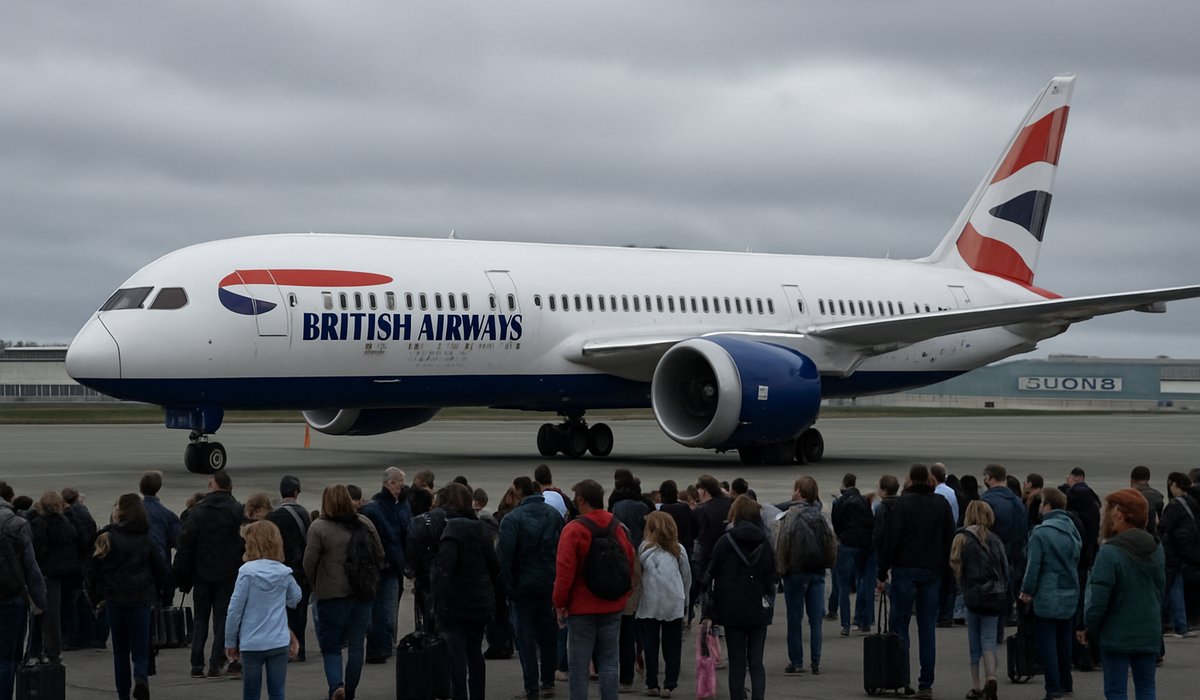
Image generated by AI
A Trans-Atlantic Nightmare in The Maritimes
Demonstrating the absolute fragility of the long-haul aviation grid, British Airways has suffered a massive operational failure after a London-bound Boeing 787-9 Dreamliner was forced into a high-priority emergency diversion, physically stranding hundreds of passengers in St. John's, Canada for two full days. The diversion—triggered by an undisclosed technical malfunction in the mid-Atlantic—forced the aircraft to urgently reverse course and land at the easternmost point of North America, where the lack of regional infrastructure has effectively trapped the travelers in a 48-hour logistical limbo.
For the international traveler, a trans-Atlantic diversion is a terrifying event. St. John's International (YYT), while a highly professional facility, does not possess the massive wide-body fleet or spare parts required to repair a sophisticated British Airways Dreamliner overnight. Because the airline does not maintain a resident maintenance hub in Newfoundland, a specialized rescue team and replacement components had to be physically flown in from London, effectively guaranteeing a multi-day delay that has completely vaporized the vacation and business itineraries of everyone on board.
The Reality of the Remote Stranding
When a massive aircraft carrying nearly 300 passengers lands in a relatively small city like St. John's, the local hospitality infrastructure is instantly overwhelmed.
British Airways passengers have reported a "High-Stress Environment" at the airport, as the carrier scrambled to find sufficient hotel rooms in a city that was already operating at high seasonal occupancy. Without a direct "Rescue Flight" being immediately dispatched from Heathrow, passengers were forced to remain in Canada for two days, many without their checked luggage and with limited information from ground staff. The resulting backlash has been intense, as travelers have aggressively publicized their frustration on social media, claiming a total breakdown in communication from the airline.
British Airways St. John's (YYT) Diversion Data
| Metric | Diversion Status (April 2026) | Operational Rationale |
|---|---|---|
| Hub of Diversion | St. John's, NL (YYT) | Closest trans-Atlantic "Safety Valve" |
| Duration of Delay | +48 Hours | Technical repair and crew timeout |
| Aircraft Type | Boeing 787-9 Dreamliner | Specialized parts required from London |
What Guests Get
- Understanding the "Safety Valve" — realizing that while diversions are incredibly frustrating, they are the absolute mathematical preference for pilots when an aircraft encounters a mechanical failure over the Atlantic.
- Micro-metropolitan logistics — grasping that when a massive jet lands in a smaller city, the local resources (hotels and bus transfers) will be instantly depleted.
- The importance of carry-on essentials — recognizing that your checked bag may be trapped in the airplane's cargo hold for days during a diversion, making yours "Essential Carry-On Kit" the most important luggage you own.
What This Means for Travelers
If you are flying trans-Atlantic in 2026: You must maintain a "Survival Carry-On" immediately. Never fly across the ocean without a full change of clothing, basic toiletries, and all critical medications stored physically in your cabin baggage. As the British Airways stranding in St. John's proves, you might be separated from your primary suitcase for over 48 hours in a foreign country without a single warning.
Understanding Your Compensation Rights (UK261): Because British Airways is a UK-registered carrier, this diversion legally falls under UK261 (the UK version of the EU’s passenger rights legislation). If the technical delay is categorized as "Within the Airline's Control," every passenger is legally entitled to £520 in cash compensation plus full reimbursement for meals and hotels. You should proactively begin documenting your "Duty of Care" expenses immediately (keeping every single receipt) before you even leave Canada.
FAQ: Emergency Aviation Diversions
Where is St. John's, Canada? St. John's is the capital of Newfoundland and Labrador, located on the extreme eastern edge of North America. It is the definitive primary "divert field" for flights crossing the Atlantic that encounter mechanical or medical emergencies.
Why haven't they flown a second plane in yet? Airlines are extremely resistant to dispatching "Empty Rescue Flights" (ferry flights) due to the astronomical cost of fuel and crew. Generally, they will attempt to repair the original aircraft first, frequently extending a delay from 6 hours to 48 hours as parts are shipped internationally.
Does my travel insurance cover this? Generally, yes. Most premium travel insurance policies offer a "Travel Delay" benefit that pays a fixed amount of cash for every 6 to 12 hours you are stranded, providing essential funds for better meals or a private hotel room if the airline fails to provide one.
Related Travel Guides
- The U.S. Department of Homeland Security (DHS) Eases Travel Rules for Iranian National Team Ahead of Monumental Seattle World Cup Clash Against Egypt — Critical B2B Logistics Blueprint
- UK and US Markets Drive 57.5% of Spain International Hotel Demand in July 2026
- Allegiant Air Cuts Nearly 30 Routes, Temporarily Exits Three Cities
Disclaimer
This article is for informational and educational purposes only. It does not constitute legal, financial, or professional advice. While we strive to provide accurate and up-to-date information, travel policies, regulations, and conditions change rapidly. Always verify information with official sources before making travel decisions. Nomad Lawyer makes no representations about the accuracy, reliability, completeness, or suitability of the information provided. Readers should consult qualified professionals for advice specific to their circumstances. The views expressed in this article are those of the author and do not necessarily reflect the views of Nomad Lawyer.
Raushan Kumar
Founder & Lead Developer
Full-stack developer with 11+ years of experience and a passionate traveller. Raushan built Nomad Lawyer from the ground up with a vision to create the best travel and law experience on the web.
Learn more about our team →