
Japan Airlines Deploys Aerowash AW3 Cleaning Robots at Narita Airport to Automate Aircraft Maintenance in 2026
Japan Airlines is transforming ground operations at Narita Airport by introducing the Aerowash AW3 remote-controlled robot to automate aircraft exterior cleaning and improve worker safety.
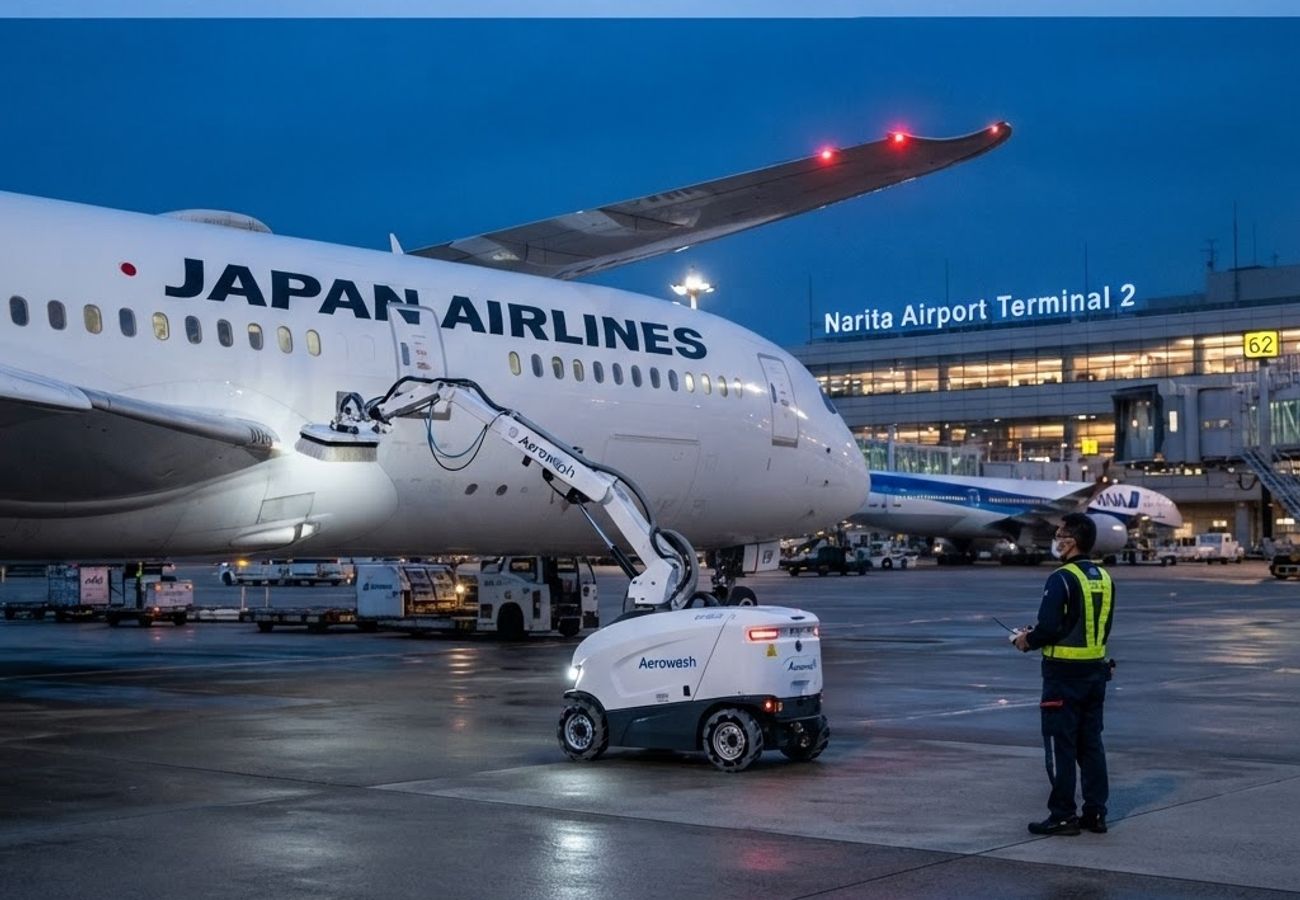
Image generated by AI
Japan Airlines (JAL) has officially integrated the Aerowash Remote-Controlled Aircraft Washing Robot AW3 into its operations at Narita Airport, marking a first for any Japanese domestic carrier. This strategic move aims to replace labor-intensive manual scrubbing with a controlled, automated process for aircraft exteriors, specifically targeting domestic flight fleets.
The deployment is a cornerstone of a broader digital transformation strategy designed to modernize airport ground handling. Following an initial training phase, the airline plans to move to full-scale implementation across Narita Airport throughout 2026. The AW3 system is engineered for versatility, capable of servicing both narrow-body and wide-body aircraft, which is expected to drastically lower the physical toll on ground crews.
This initiative represents a significant technological leap for the carrier. Reports indicate that JAL attempted a similar automation project approximately 30 years ago, but the effort was abandoned due to the technological limitations of that era. The current resurgence in automation reflects the maturity of robotics and the urgent need for operational efficiency in modern aviation.
Modernizing Ground Handling at Narita Airport
Exterior aircraft maintenance is a non-negotiable requirement for airline safety and operational standards. While often viewed as an aesthetic necessity, regular washing is essential for maintaining the integrity of the aircraft surface and ensuring optimal aerodynamic performance.
Historically, this task has been one of the most grueling roles in airport operations. Ground crews typically perform these duties overnight, utilizing long-handled brushes and specialized chemical agents. The process is physically exhausting, requiring workers to navigate massive airframes and often operate at dangerous heights to reach the tail and upper fuselage.
The introduction of the AW3 system shifts this paradigm by moving the human element from the brush to the controller. The primary operational advantages include:
- Physical Risk Mitigation: A sharp decrease in the need for personnel to work at elevated heights.
- Chemical Safety: Reduced direct exposure to organic solvents and harsh cleaning agents.
- Standardization: Greater consistency in cleaning quality across the entire fleet.
- Resource Optimization: More efficient allocation of ground handling staff during tight turnaround windows.
Technical Specifications of the Aerowash AW3 System
The Aerowash AW3 is not a fully autonomous "black box" but rather a collaborative human-machine system. It utilizes a combination of programmed coordinates and real-time human oversight to ensure precision.
The robotic arm is guided by pre-set coordinates that allow it to approach specific sections of the aircraft with millimeter precision. This is particularly effective for hard-to-reach areas like the wing roots and the vertical stabilizer. To ensure safety and accuracy, operators use handheld controls to make fine adjustments, ensuring the robot does not make improper contact with the fuselage.
Movement is facilitated by an omnidirectional four-wheel steering system. This allows the robot to glide fluidly around the curved contours of the aircraft, eliminating the clunky maneuvering associated with traditional machinery. By combining automated positioning with human decision-making, JAL is implementing a "cobot" (collaborative robot) model rather than a total replacement of the workforce.
Quantifying Efficiency and Labor Gains
The shift toward robotics is driven by hard data regarding labor productivity. According to specifications provided by the manufacturer, the AW3 system can slash the time required to wash a single aircraft by up to 40% compared to traditional manual methods.
For a major carrier like Japan Airlines, a 40% reduction in cleaning time per hull translates to massive cumulative gains. These efficiencies allow for:
- Optimized Overnight Schedules: Faster cleaning means aircraft are ready for morning departures with greater reliability.
- Increased Turnaround Capacity: Ground crews can manage more aircraft in the same window of time.
- Reduced Staff Fatigue: By removing the most repetitive and strenuous tasks, the airline can improve overall employee retention and well-being.
Environmental Impact and Sustainability Goals
Beyond labor and speed, the AW3 robot serves JAL's environmental mandates. Traditional aircraft washing can be resource-heavy, often resulting in significant water runoff and carbon emissions from gas-powered support equipment.
The AW3 is a fully electric, battery-powered unit, which eliminates direct CO2 emissions at the point of use. Furthermore, the precision of the robotic application leads to significant resource savings. Based on Aerowash catalogue figures, the system can reduce water consumption by up to 50% per aircraft. This makes the transition not only a financial and operational win but a critical step toward greener aviation maintenance.
The Broader Shift Toward Automated Airports
The deployment at Narita Airport is a signal that the "invisible" side of aviation—the ground operations—is finally catching up to the digital transformation seen in passenger terminals. While travelers are accustomed to biometric boarding and digital kiosks, the backend of the industry has remained stubbornly manual.
JAL's adoption of the AW3 suggests that robotics will soon expand into other high-strain areas, including:
- Cargo Logistics: Automated loading and unloading of freight.
- Maintenance Support: Robotic inspection of turbine blades and fuselage skins.
- Baggage Handling: AI-driven sorting and routing systems.
For the average traveler, these changes are largely invisible, but the ripple effects are tangible. Increased efficiency in ground handling reduces the likelihood of delays caused by maintenance bottlenecks and ensures that aircraft are maintained to the highest possible safety standards.
Summary of Implementation Details
| Feature | Detail |
|---|---|
| Technology | Aerowash Remote-Controlled Robot AW3 |
| Primary Location | Narita Airport, Japan |
| Deployment Year | Full-scale in 2026 |
| Compatible Aircraft | Narrow-body and Wide-body |
| Time Efficiency | Up to 40% reduction in washing time |
| Water Efficiency | Up to 50% reduction in water use |
| Power Source | Fully Electric / Battery |
The integration of the AW3 marks the beginning of a new era where robotic precision replaces manual strain on the tarmac.
Related Travel Guides
Disclaimer
This article is for informational and educational purposes only. It does not constitute legal, financial, or professional advice. While we strive to provide accurate and up-to-date information, travel policies, regulations, and conditions change rapidly. Always verify information with official sources before making travel decisions. Nomad Lawyer makes no representations about the accuracy, reliability, completeness, or suitability of the information provided. Readers should consult qualified professionals for advice specific to their circumstances. The views expressed in this article are those of the author and do not necessarily reflect the views of Nomad Lawyer.