
San Francisco Airport Faces Travel Chaos: 86 Flights Disrupted as United Airlines Bears Brunt
San Francisco International Airport experienced severe operational disruptions with 81 delays and 5 cancellations impacting United Airlines, Delta, Virgin Atlantic, and dozens of other carriers. Multiple US and international hubs felt the ripple effects.

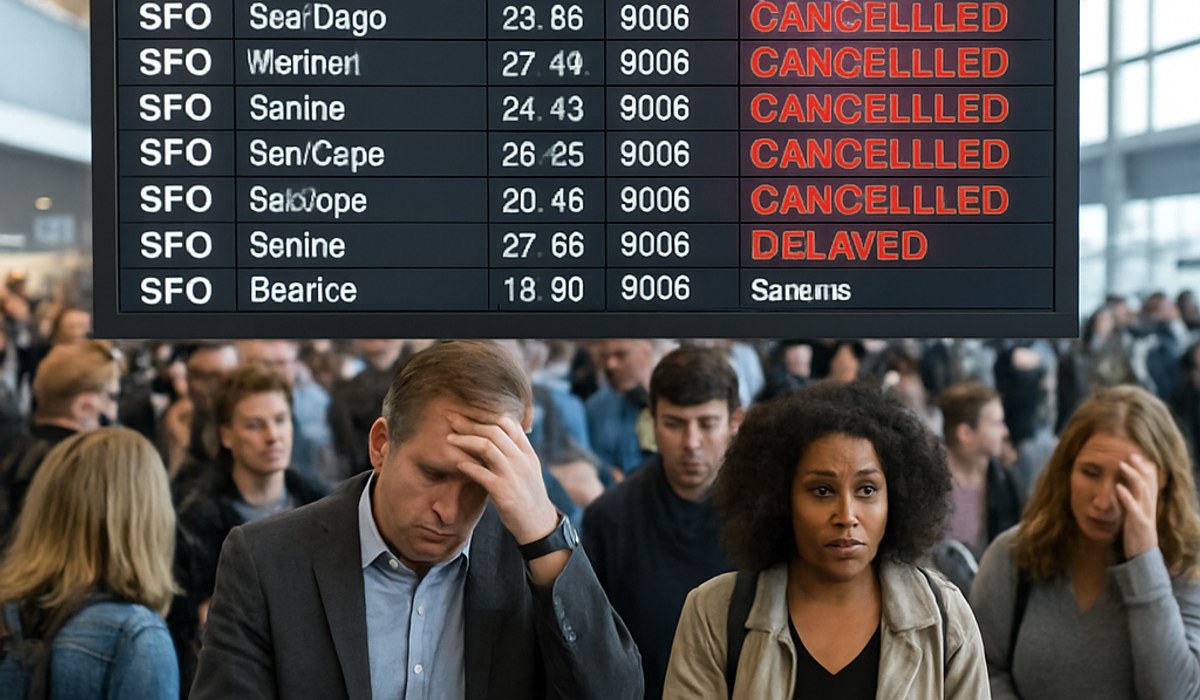
Image generated by AI
San Francisco Airport Grinds to a Halt: 86 Flight Disruptions Paralyze Major West Coast Hub
Quick Summary:
- 81 delayed flights and 5 cancellations recorded at San Francisco International Airport
- United Airlines alone accounted for 1 cancellation and 36 delays (highest impact)
- Delta Air Lines and Virgin Atlantic each reported 2 cancellations
- Disruptions cascaded to Los Angeles, New York JFK, London Heathrow, and Asia-Pacific routes
Travel chaos erupted at San Francisco International Airport today as operational disruptions snarled one of America's busiest West Coast gateways. The perfect storm of 86 total flight disruptions—comprising 81 delays and 5 outright cancellations—rippled through airline networks, stranding thousands of passengers and compromising connectivity across North America, Europe, and Asia.
The Scale of Disruption at SFO
San Francisco International Airport experienced a severe operational crisis that tested passenger patience and stretched airline resources to the breaking point. The numbers paint a stark picture: 81 flights experienced delays ranging from minor schedule slips to multi-hour holds, while 5 flights were cancelled entirely, removing those flights from operation for the day.
The implications were immediate and far-reaching. With SFO serving as a critical connection hub for trans-Pacific travel, domestic distribution, and international gateway operations, disruptions at this facility cascaded across multiple airline networks simultaneously. Passengers holding connecting tickets through San Francisco faced a domino effect—missing initial connections, scrambling for rebooking, and watching their carefully planned itineraries collapse.
Airlines Hardest Hit by San Francisco Disruptions
The operational burden fell disproportionately on a handful of major carriers, with varying intensity across the network.
United Airlines bore the heaviest load, reporting 1 cancellation and 36 delayed flights—by far the highest single-airline impact. As a primary hub operator at SFO, United's extensive flight schedule meant greater exposure to whatever operational constraint triggered the cascade of disruptions.
Delta Air Lines recorded 2 cancellations and 1 delay, reflecting a more balanced disruption profile compared to United's delay-heavy situation. Virgin Atlantic also reported 2 cancellations with no associated delays, suggesting their affected flights were removed from service entirely rather than experiencing scheduling postponements.
Alaska Airlines and JetBlue each reported 7 delayed flights, indicating moderate but meaningful network strain across their respective SFO operations. SkyWest Airlines followed with 6 delays, while American Airlines contributed 4 delays and Southwest Airlines 3 delays to the overall disruption tally.
International carriers including Air India, Lufthansa, and Singapore Airlines reported scattered delays on their SFO operations, though specific counts remained limited compared to domestic carriers.
Geographic Ripple Effects Across North America and Beyond
San Francisco doesn't operate in isolation. Disruptions at SFO automatically propagate through connected hubs across the United States and international network.
Los Angeles International Airport experienced secondary disruptions as connecting flights and downstream operations felt the SFO effect. New York's John F. Kennedy International Airport similarly reported operational complications as transcontinental routing became congested with diverted or delayed aircraft.
The impact extended across the Atlantic, with London Heathrow Airport recording related delays on European-US routes. International Asia-Pacific gateways including strategic cities in Japan, Singapore, and India saw delays materializing on long-haul Pacific services, underscoring how a single major hub's operational crisis spreads across global networks.
What This Means for Affected Passengers
If your ticket includes San Francisco as your origin, destination, or connection point, here's the reality you face:
Real-Time Flight Status Monitoring is Essential Don't rely on outdated information. Schedule changes at major hubs like SFO occur continuously throughout disruption events. Check your airline's official website or mobile app every 30-60 minutes for updated departure times, gate assignments, and operational status.
Direct Communication with Airline Customer Service Saves Time Waiting for automatic notifications often means missing rebooking windows. Call your airline directly or visit the airport counter early to understand your options. Standby availability, alternate flights, and routing changes happen fastest for proactive passengers who engage customer service immediately.
Arrive at the Airport with Extra Time Buffer Add 90 minutes to your standard arrival time on disruption days. Processing delays, longer security lines, gate changes, and last-minute schedule adjustments create cascading bottlenecks. Early arrival prevents the panic of rushing to a gate that changed 15 minutes before departure.
Pack Strategically in Your Carry-On Medications, chargers, change of clothes, and critical documents belong in your carry-on bag. If your flight gets cancelled and you're rebooked on a flight tomorrow, checked luggage becomes unreachable for hours or days.
Stay Alert to Airport and Airline Announcements Gate information, boarding changes, and operational updates often appear on airport display boards or via airline PA systems before they populate online systems. Active awareness prevents confusion during final boarding calls.
Passenger Action Plan During Disruptions
Immediate Steps:
- Check flight status immediately upon hearing about disruptions
- Contact your airline via phone or app before visiting the airport
- Confirm rebooking options, standby possibilities, or alternate routing availability
- Understand the disruption cause (weather, mechanical, operational) to anticipate recovery timeline
At the Airport:
- Visit the airline customer service desk early, before queues become overwhelming
- Read airport signage carefully; gate changes and terminal updates happen frequently
- Keep your boarding pass and ID highly accessible
- Maintain phone battery charge and monitor your airline's communication channels
If Facing Overnight Disruption:
- Request hotel accommodations immediately—availability runs out quickly during major disruptions
- Ask for meal vouchers and ground transportation support
- Secure rebooking for the next available flight on your airline or partner carriers
- Document all communication and receipts for potential compensation claims
Why Did This Happen?
While specific trigger mechanisms weren't immediately disclosed, operational disruptions of this scale typically stem from multiple contributing factors: staff availability, weather complexity, air traffic control constraints, mechanical issues, or cascading delays from earlier in the day. SFO's position as a major West Coast hub amplifies the impact—when operations struggle at this facility, the entire US-Pacific network feels the effects.
Looking Ahead: Travel Resilience at Major Hubs
San Francisco International's disruption serves as a reminder that major airline hubs remain vulnerable to operational surprises. Passengers flying through SFO or any major hub should build resilience into their itineraries:
- Add connection time buffers. Don't book tight connections through major hubs; they're exactly where delays propagate fastest.
- Consider earlier flights. First flights of the day face fewer downstream impacts than afternoon or evening departures.
- Monitor your airline's operational trends. If specific carriers show poor performance on specific routes, book alternatives when possible.
- Maintain flexibility. If your travel dates have any elasticity, use it. Traveling a day earlier or later often avoids major disruptions.
FAQ: San Francisco Airport Disruptions
Q: Will there be more disruptions at SFO soon? A: Single-day disruption events of this magnitude typically don't repeat immediately. However, recurring seasonal drivers (weather, staff transitions) may create future disruptions. Monitor your airline's operational status regularly.
Q: Do I automatically get compensation for delays? A: Not in most US cases. Compensation eligibility depends on disruption cause (airline-versus-weather) and duration. Cancellations may entitle you to rebooking on alternate airlines. Check your airline's specific policy.
Q: Should I rebook my future SFO flights? A: Not necessarily. One disruption event doesn't indicate systemic failure. However, if you have flexibility, consider booking slightly earlier in the day or using alternate airports (Oakland, San Jose).
Q: How long do major hub disruptions typically last? A: Most resolve within 24 hours once the triggering condition clears. Some operational issues require longer recovery if staff repositioning or equipment changes are needed.
Q: What's the best time to call the airline for rebooking? A: Call immediately when disruption is announced, before customer service lines become overwhelmed. Early callers secure better rebooking options than those waiting hours.
Last updated: March 30, 2026. Disruption information sourced from FlightAware, airport operational data, and airline reports. For real-time updates, consult official San Francisco International Airport and airline websites.
Disclaimer
This article is for informational and educational purposes only. It does not constitute legal, financial, or professional advice. While we strive to provide accurate and up-to-date information, travel policies, regulations, and conditions change rapidly. Always verify information with official sources before making travel decisions. Nomad Lawyer makes no representations about the accuracy, reliability, completeness, or suitability of the information provided. Readers should consult qualified professionals for advice specific to their circumstances. The views expressed in this article are those of the author and do not necessarily reflect the views of Nomad Lawyer.
Raushan Kumar
Founder & Lead Developer
Full-stack developer with 11+ years of experience and a passionate traveller. Raushan built Nomad Lawyer from the ground up with a vision to create the best travel and law experience on the web.
Learn more about our team →