
Jacksonville, Miami, Palm Beach and 12 More US Beaches Hit by Sargassum Seaweed Surge Disrupting Summer 2026 Coastal Tourism
Florida's Atlantic coastline from Jacksonville to Miami faces widespread Sargassum seaweed invasions through late July 2026, challenging beach tourism operations and prompting daily clean-ups.

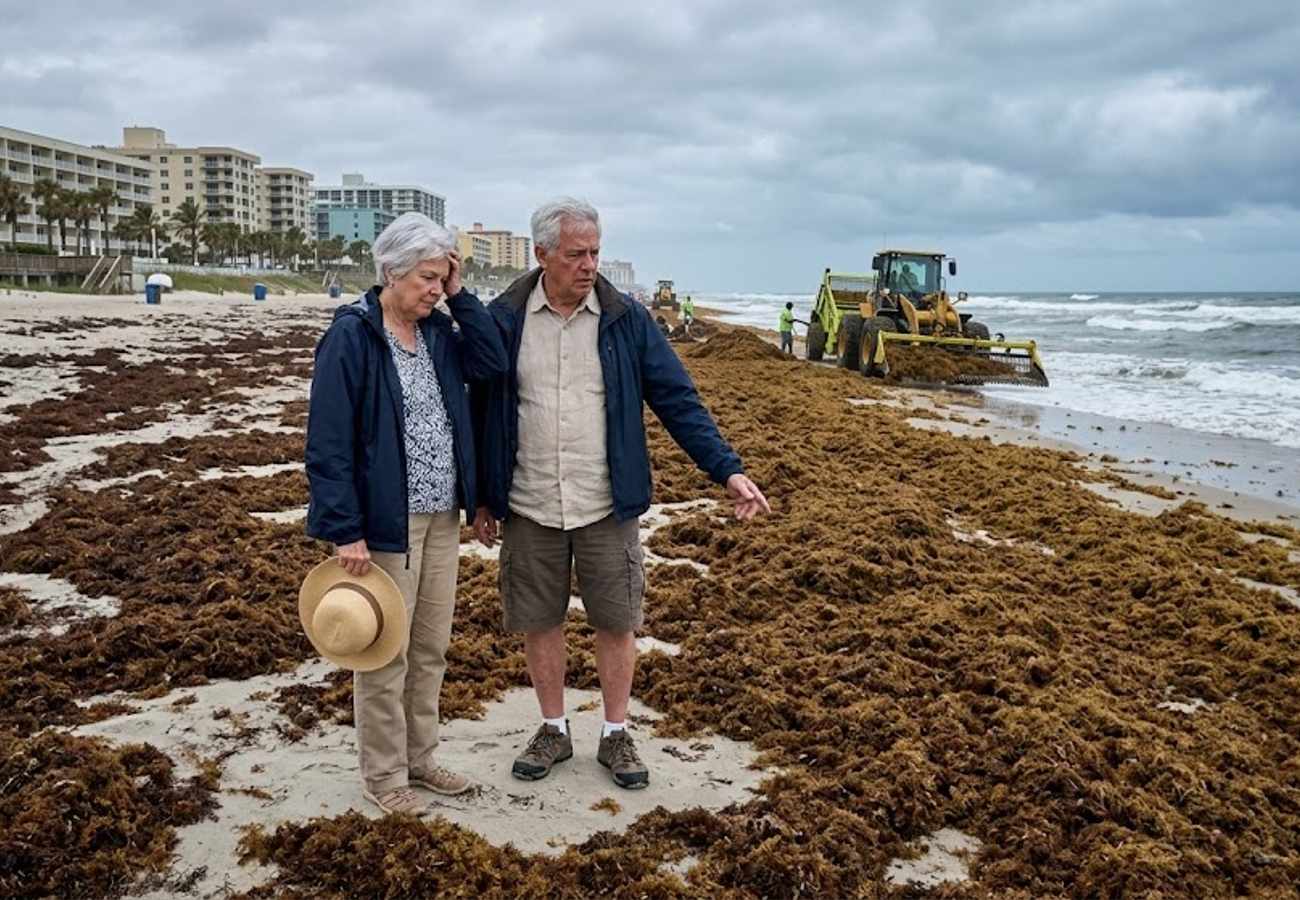
Image generated by AI
A massive belt of Sargassum seaweed has been washing ashore across Florida's Atlantic coastline since late July 2026, turning postcard-perfect beaches into brown-carpeted shorelines. From Jacksonville to Miami, at least 14 popular US beach destinations are grappling with one of the strongest seaweed seasons in recent memory — yet beaches remain open and tourism operators are adapting in real time.
The Great Atlantic Sargassum Belt continues to reshape how Americans and international visitors experience summer coastal travel. While the brown seaweed plays a vital ecological role in the open ocean — providing habitat for marine life and contributing nutrients to coastal ecosystems — its large-scale arrival onshore creates an entirely different set of problems for tourism-dependent communities. Decomposing Sargassum produces noticeable odours, alters beach aesthetics, and complicates sunbathing, swimming, and surfing conditions. Local authorities across Florida and Texas are now balancing visitor satisfaction with environmental protection, making seaweed management one of the defining travel challenges of the 2026 summer season.
Northeast Florida Bears the Brunt
Jacksonville Beach has emerged as one of the most heavily affected coastal destinations this summer. Large mats of Sargassum have repeatedly washed ashore, covering sections of sand and creating noticeable odours as the seaweed decomposes. Despite the accumulation, the beach has remained open, with local authorities deploying regular clean-up crews to maintain public access. Swimming and surfing have continued, though beachgoers have encountered varying seaweed levels depending on tides and wind conditions. Hotels, restaurants, and beachfront businesses have remained operational, but travellers have been advised to expect fluctuating shoreline conditions throughout the season.
Neighbouring Neptune Beach has experienced similar conditions, with thick bands of Sargassum appearing along the shoreline throughout July. Municipal maintenance teams have worked to remove excess seaweed where practical, although complete removal is often impossible because fresh seaweed continues arriving with changing currents. Visitors have still been able to enjoy the beach, but many have reported altered scenery compared with previous summers. Tourism officials continue to stress that the seaweed itself is a naturally occurring marine plant rather than pollution.
Atlantic Beach has also recorded substantial Sargassum deposits during the current season. Large accumulations have gathered along the high-tide line, particularly following periods of strong easterly winds. The presence of seaweed has occasionally affected sunbathing areas, while marine experts continue monitoring ecological impacts. Local tourism operators have adapted by providing visitors with updated beach condition reports and encouraging travellers to explore nearby attractions during heavier seaweed periods.
Ponte Vedra Beach has witnessed repeated Sargassum arrivals throughout the summer, reflecting the wider conditions affecting northeast Florida. Beachfront resorts have continued welcoming guests, while maintenance crews have focused on keeping public access points clear. Although the seaweed has altered the visual appearance of the shoreline, the destination continues attracting golfers, luxury travellers, and beach visitors who often combine coastal holidays with nearby resort experiences.
Palm Beach County Sees Visible Accumulations
Juno Beach in Palm Beach County has experienced one of the more visible seaweed accumulations along South Florida's coastline. Large brown mats have periodically covered sections of the beach, affecting both visitors and local wildlife management operations. Environmental experts note that while Sargassum provides valuable habitat for marine life when floating offshore, excessive beach accumulation requires careful management to protect nesting sea turtles and maintain visitor safety.
Palm Beach has experienced recurring Sargassum landings throughout the summer, prompting routine clean-up operations by municipal authorities. Luxury hotels and beachfront resorts have continued normal operations, although many have increased communication with guests regarding daily beach conditions. Travellers have been encouraged to enjoy alternative outdoor activities when seaweed concentrations become particularly noticeable following rough weather.
Riviera Beach has recorded moderate to heavy seaweed arrivals during recent weeks. Local authorities have continued monitoring beach conditions while coordinating mechanical and manual removal where appropriate. Tourism businesses have largely adapted to the seasonal phenomenon, with many emphasising that seaweed levels can change dramatically within a single day depending on ocean currents and weather patterns.
Singer Island has experienced intermittent Sargassum arrivals rather than continuous heavy accumulation. Many visitors have still enjoyed swimming, boating, and watersports, although shoreline conditions have fluctuated throughout the season. Local officials continue providing beach condition updates to help visitors plan their trips more effectively.
South Florida Tourism Adapts
Fort Lauderdale Beach has recorded moderate Sargassum arrivals during summer 2026, adding to seasonal maintenance demands. The city's beach management programme has continued regular cleaning schedules to preserve one of Florida's busiest tourism destinations. Hotels, cruise passengers, and international visitors have continued using the beach despite periodic seaweed accumulations.
Hollywood Beach has experienced intermittent seaweed deposits, with accumulation varying considerably from week to week. Beach maintenance teams have responded quickly following larger wash-up events, helping maintain the destination's popular Broadwalk and surrounding recreational areas. Visitor numbers have remained strong despite changing shoreline conditions.
Miami Beach has continued experiencing periodic Sargassum arrivals throughout the summer. The city's extensive beach maintenance operations have removed significant quantities of seaweed while balancing environmental regulations that protect coastal ecosystems. South Beach, one of Miami's best-known tourism districts, has remained open throughout the season, although beach appearance has varied depending on daily ocean conditions.
Sunny Isles Beach and Key Biscayne have both experienced moderate Sargassum accumulation during the 2026 season. Although seaweed has periodically reached the shoreline, both destinations have maintained normal tourism operations. Local authorities continue monitoring conditions alongside weather forecasts and ocean current models, allowing visitors to receive timely information before heading to the beach.
Texas Takes a Different Approach
Unlike Florida's Atlantic beaches, Padre Island National Seashore in Texas experiences seasonal Sargassum as part of its natural coastal ecosystem. Seaweed wash-ups are common along this stretch of the Gulf Coast and support important ecological processes, including providing habitat for marine organisms and contributing nutrients to coastal environments. Park managers generally allow much of the seaweed to remain unless it affects visitor access or public safety.
Why This Season Stands Apart
The expanding Great Atlantic Sargassum Belt has transformed seasonal travel planning across parts of the Caribbean, Gulf of Mexico, and the southeastern United States. What makes 2026 notable is not simply the volume of seaweed but the consistency of arrivals across such a wide geographic stretch — from northeast Florida through the Palm Beaches and down to Miami-Dade. Forecasting tools are improving, and local authorities are strengthening beach management strategies, but travellers are increasingly factoring real-time beach conditions into their itineraries rather than assuming pristine sand upon arrival.
For tourism-dependent economies, the challenge is twofold: maintaining the visitor experience that drives revenue while respecting the ecological processes that make these coastlines healthy in the first place. The destinations succeeding this summer are those communicating proactively — updating beach condition reports, directing visitors to alternative attractions during heavy accumulation periods, and deploying clean-up crews at a pace that matches the relentless tide of incoming seaweed.
Affected Beaches and Sargassum Conditions: Late July 2026
| Beach Destination | State | Sargassum Severity | Beach Status | Key Management Response |
|---|---|---|---|---|
| Jacksonville Beach | Florida | Heavy | Open | Regular clean-up crews deployed |
| Neptune Beach | Florida | Heavy | Open | Municipal maintenance removal where practical |
| Atlantic Beach | Florida | Substantial | Open | Beach condition reports provided to visitors |
| Ponte Vedra Beach | Florida | Repeated arrivals | Open | Public access points kept clear |
| Juno Beach | Florida | Heavy (visible accumulation) | Open | Sea turtle nesting protection prioritised |
| Palm Beach | Florida | Recurring landings | Open | Routine clean-up by municipal authorities |
| Riviera Beach | Florida | Moderate to heavy | Open | Mechanical and manual removal coordinated |
| Singer Island | Florida | Intermittent | Open | Beach condition updates provided |
| Fort Lauderdale Beach | Florida | Moderate | Open | Regular cleaning schedules maintained |
| Hollywood Beach | Florida | Intermittent | Open | Quick response after larger wash-up events |
| Miami Beach (South Beach) | Florida | Periodic | Open | Extensive maintenance balancing environmental regulations |
| Sunny Isles Beach | Florida | Moderate | Open | Monitoring with weather and current forecasts |
| Key Biscayne | Florida | Moderate | Open | Monitoring with weather and current forecasts |
| Padre Island National Seashore | Texas | Seasonal (natural ecosystem) | Open | Seaweed largely left in place unless access affected |
Key Takeaways
- At least 14 US beach destinations are experiencing Sargassum seaweed accumulation through late July 2026, with Florida's Atlantic coastline most heavily impacted.
- All affected beaches remain open to visitors; no destination has closed due to seaweed.
- Jacksonville Beach and Juno Beach are among the most severely affected locations.
- Padre Island National Seashore in Texas takes a fundamentally different approach, allowing seaweed to remain as part of the natural coastal ecosystem.
- Travellers are advised to check real-time local beach conditions before visiting, as seaweed levels can change dramatically within a single day.
- Hotels, resorts, cruise operations, and beachfront businesses continue normal operations across all affected destinations.
Frequently Asked Questions
Are Florida beaches closed because of Sargassum seaweed in 2026? No. All affected beaches — from Jacksonville Beach to Miami Beach — remain open to visitors. Local authorities are deploying clean-up crews and providing updated condition reports, but no closures have been reported.
Is Sargassum seaweed harmful to humans? The seaweed itself is a naturally occurring marine plant, not pollution. However, decomposing Sargassum can produce noticeable odours and may affect the comfort of sunbathing and swimming areas. Visitors with respiratory sensitivities may want to check local conditions before travelling.
Which Florida beach is most affected by Sargassum in summer 2026? Jacksonville Beach has emerged as one of the most heavily affected destinations, with large mats repeatedly washing ashore. Juno Beach in Palm Beach County has also experienced highly visible accumulation.
How is Padre Island National Seashore different from Florida beaches? Padre Island in Texas treats Sargassum as part of its natural coastal ecosystem. Park managers generally allow the seaweed to remain unless it blocks visitor access or creates public safety concerns, unlike Florida destinations that prioritise active removal.
Should travellers cancel beach trips due to seaweed? Tourism officials across affected destinations advise against cancelling. Beaches remain open, conditions fluctuate daily, and many destinations offer alternative attractions during heavier accumulation periods. Checking local beach condition reports before departure is the recommended approach.
Sargassum is no longer a fringe inconvenience — it is a permanent variable in coastal travel planning, and 2026 is proving that adaptation, not avoidance, is the strategy that works.
Related Travel Guides
Disclaimer
This article is for informational and educational purposes only. It does not constitute legal, financial, or professional advice. While we strive to provide accurate and up-to-date information, travel policies, regulations, and conditions change rapidly. Always verify information with official sources before making travel decisions. Nomad Lawyer makes no representations about the accuracy, reliability, completeness, or suitability of the information provided. Readers should consult qualified professionals for advice specific to their circumstances. The views expressed in this article are those of the author and do not necessarily reflect the views of Nomad Lawyer.
Kunal K Choudhary
Co-Founder & Contributor
A passionate traveller and tech enthusiast. Kunal contributes to the vision and growth of Nomad Lawyer, bringing fresh perspectives and driving the community forward.
Learn more about our team →