
Ixmiquilpan Geothermal River Pools: Hñähñu Community-Led Hydrotherapy in Hidalgo Mexico 2026
Explore the geothermal thermal springs of Ixmiquilpan, Hidalgo, where Hñähñu indigenous cooperatives manage world-class hydrotherapy pools and eco-adventures in the Valle del Mezquital.

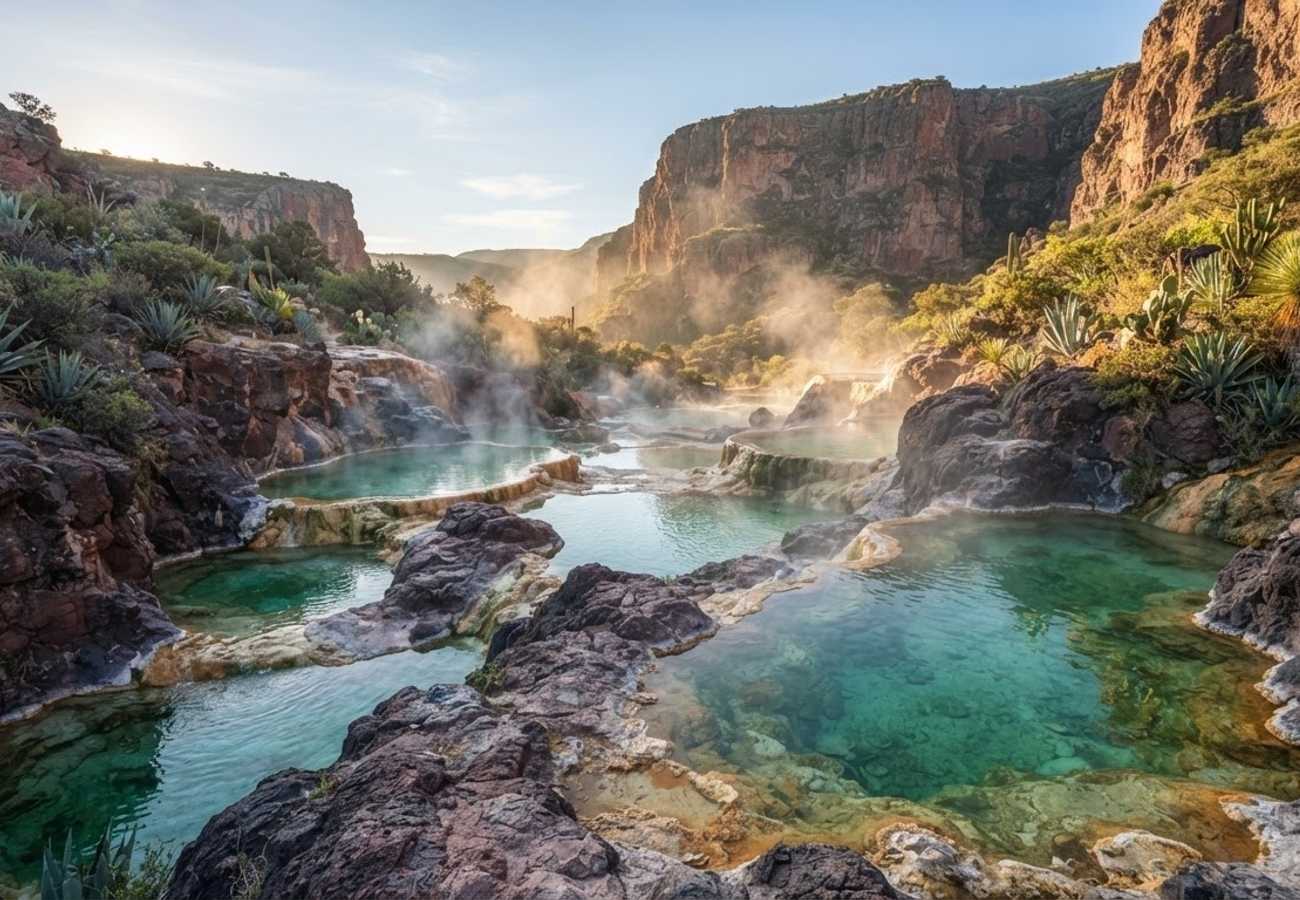
Image generated by AI
The geothermal sanctuaries of Ixmiquilpan, Hidalgo, offer a rare intersection of volcanic geology and indigenous sovereignty, providing therapeutic hydrotherapy managed entirely by the Hñähñu people.
Geothermal Mechanics of the Valle del Mezquital
The hydrothermal systems in Ixmiquilpan are among the most significant in North America. The process begins as rainwater percolates through the mountainous terrain of Hidalgo, descending thousands of meters until it reaches high-heat zones created by the Trans-Mexican Volcanic Belt.
Under extreme pressure and thermal energy, this water is heated and forced back to the surface through tectonic fissures within the Valle del Mezquital basin. This volcanic cycle ensures consistent water temperatures year-round.
As the water passes through deep sedimentary stone, it absorbs a dense concentration of minerals, specifically:
- Sulfate
- Calcium
- Bicarbonate
- Magnesium
Our analysis of the mineral composition indicates these waters provide systemic cardiovascular stimulation via blood vessel dilation, musculoskeletal joint relief, and dermatological pore purification.
Indigenous Governance and the Ejido Model
Unlike many global wellness destinations owned by private corporations, the thermal assets of Ixmiquilpan are governed by Hñähñu communal cooperatives. These communities utilize ejidos—a system of communal land tenure—to retain legal ownership of ancestral lands and water rights.
This management structure ensures that tourism revenue is reinvested directly into the community. Financial gains fund:
- Educational scholarships and healthcare facilities.
- Public infrastructure and regional road maintenance.
- Modern water recycling systems and sanitation projects.
- Agricultural development to reduce rural youth migration.
For the traveler, this means that entry fees function as a direct contribution to social equality and the preservation of Otomí culture.
Primary Thermal Parks and Facilities
Ixmiquilpan hosts a diverse array of water complexes catering to different traveler profiles, from high-adrenaline families to wellness seekers.
Large-Scale Aquatic Resorts
- Parque Acuático El Tephé: One of Hidalgo's largest destinations, featuring thermal wave pools, high-speed toboggans, and full camping grounds.
- Parque Acuático Dios Padre: Located on the main highway, this site offers an Olympic-sized pool, zip-lines, and high-temperature thermal baths.
- Parque Acuático Maguey Blanco: Combines extreme velocity water slides with private wooden cabins and foliage-surrounded thermal pools.
Boutique and Eco-Experience Sites
- Las Cuevitas: A secluded escape featuring thermal baths built directly into natural rock formations and stone caverns.
- Balneario Pueblo Nuevo: A family-centric complex known for interactive water castles and themed swimming areas.
- Valle Paraíso: A specialized resort pairing dinosaur-themed installations with luxury thermal jacuzzis.
- Parque EcoAlberto: Managed by the Hñähñu community, this park integrates thermal river pools with kayaking, rappelling, and hiking in the Gran Cañón del Río Tula.
Passenger and Visitor Advisory
For those planning a visit to the Valle del Mezquital, logistics are streamlined via major regional hubs.
Transport Logistics:
- From Mexico City: Travel via the main highway toward Pachuca and Actopan.
- From Querétaro: Travel east through Huichapan following marked highway signage.
Visitor Rights and Ethics: When visiting community-managed sites, travelers should be aware that they are entering indigenous-governed territories. Our analysis suggests that adhering to local guidelines regarding water usage and environmental protection is not only a courtesy but a requirement for maintaining the ecological balance of the aquifers.
Unlike corporate resorts, these sites prioritize long-term conservation over short-term profit. Visitors are encouraged to support local gastronomy and transport providers to maximize the socio-economic benefit to the Hñähñu professionals.
The Ixmiquilpan model represents a shift toward "decolonized tourism." By integrating high-standard leisure infrastructure with communal ownership, the Hñähñu have avoided the common pitfall of "leakage," where tourism profits leave the local economy to benefit foreign investors.
The integration of adventure tourism (kayaking and rappelling) with traditional hydrotherapy expands the region's market appeal, moving it from a weekend domestic getaway to a viable international eco-tourism destination. The success of the ejido system here serves as a global benchmark for how indigenous groups can leverage natural resources for socio-economic independence without sacrificing cultural integrity.
A masterclass in balancing volcanic power with ancestral preservation.
Related Travel Guides
Disclaimer
This article is for informational and educational purposes only. It does not constitute legal, financial, or professional advice. While we strive to provide accurate and up-to-date information, travel policies, regulations, and conditions change rapidly. Always verify information with official sources before making travel decisions. Nomad Lawyer makes no representations about the accuracy, reliability, completeness, or suitability of the information provided. Readers should consult qualified professionals for advice specific to their circumstances. The views expressed in this article are those of the author and do not necessarily reflect the views of Nomad Lawyer.
Preeti Gunjan
Contributor & Community Manager
A passionate traveller and community builder. Preeti helps grow the Nomad Lawyer community, fostering engagement and bringing the reader experience to life.
Learn more about our team →