
Italy's Tangenziale di Napoli Becomes First Smart Highway With AI Traffic Control and V2I Networks
Naples' 22-kilometre orbital motorway officially designated as Italy's first Smart Road, featuring AI-powered traffic management, 200+ sensors, and vehicle-to-infrastructure communication.

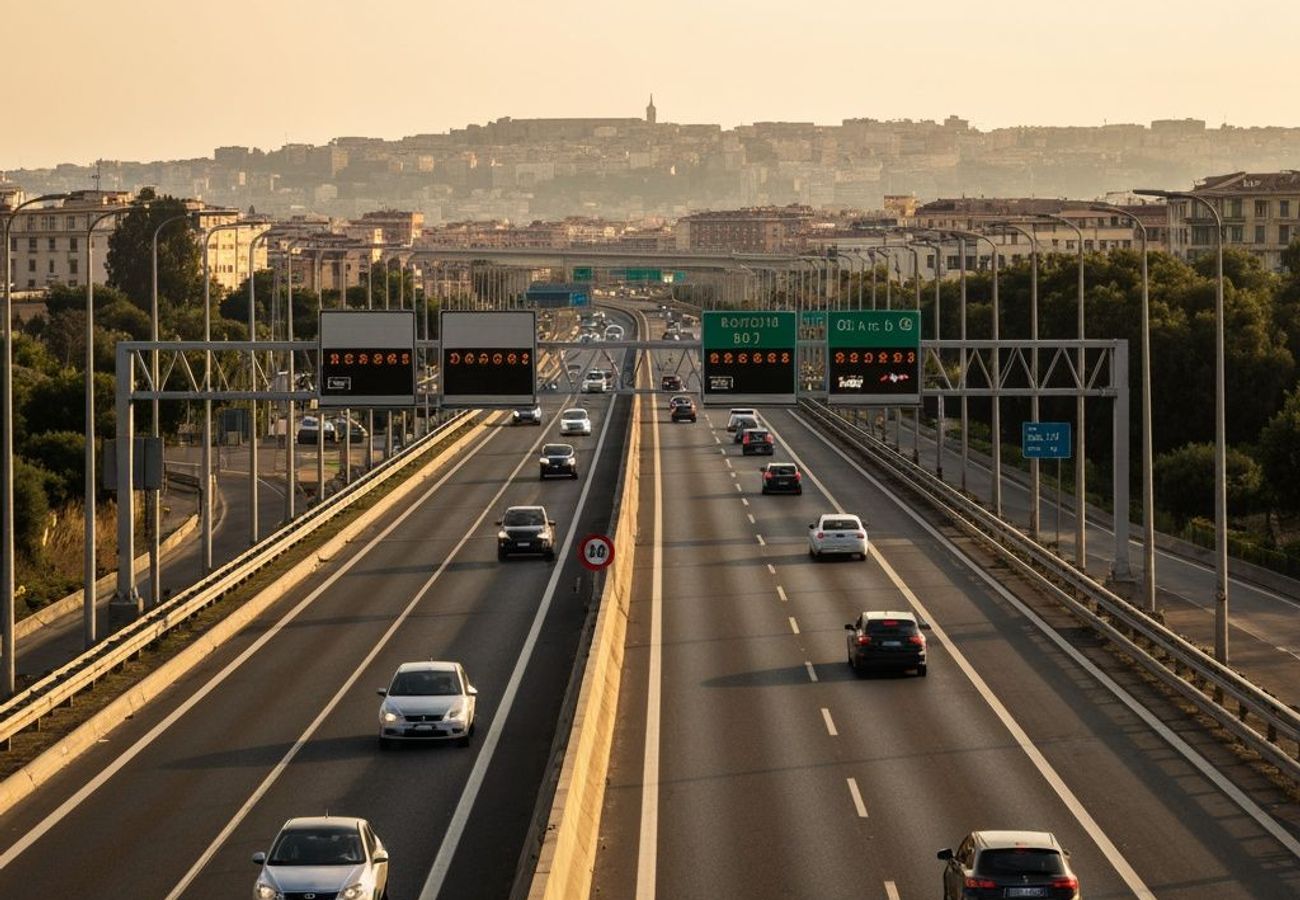
Image generated by AI
Italy's First Smart Highway Goes Live in Naples
The Tangenziale di Napoli has officially become Italy's first Smart Road, transforming the country's approach to motorway management. The 22-kilometre orbital motorway circling Naples was recently certified by the Italian Ministry of Infrastructure and Transport as a fully integrated digital transport system. This isn't just another road upgrade—it's a complete reimagining of how traffic, safety, and urban mobility can work together.
What makes this breakthrough significant is the scale and sophistication of the technology deployment. We're talking about a comprehensive digital framework that combines data analytics, sensor networks, and real-time vehicle communication. For nomadic professionals and frequent travellers navigating southern Italy, this changes everything about how congestion, delays, and road predictability work.
The Digital Backbone: 200+ Sensors and AI Control Centers
The Smart Road infrastructure relies on a densely distributed network of monitoring equipment. More than 200 surveillance cameras, multiple traffic detection gantries, weather monitoring stations, and communication antennas form the technological spine of the system.
All these devices feed into a unified digital platform that processes live data streams continuously. The system doesn't just watch traffic—it predicts congestion patterns before they happen. This shift from reactive management to predictive, data-driven operations represents a fundamental change in how European motorways can be managed.
Reddit: "Finally, Italian highways getting the tech they need. Naples traffic was absolute chaos—this could actually be a game-changer for regional travel." — r/travel
Real-Time Traffic Management That Actually Works
The core operational advantage is straightforward: continuous monitoring allows authorities to adjust traffic flow dynamically across the entire corridor. When congestion develops at a specific point, the system identifies it immediately and can implement countermeasures before delays cascade across the route.
Incident detection is automated. Accidents or disruptions trigger immediate identification and facilitate rapid emergency responses. For travellers, this means fewer unexpected delays and better journey predictability—critical factors when you're timing connections to airports or ferry terminals.
Environmental Safety Intelligence Built Into the Road
The Tangenziale di Napoli doesn't just manage vehicles; it monitors the environment itself. Roadside stations continuously track rainfall intensity, surface conditions, and terrain-based hazards like flooding or landslides.
In the Campania region, where weather variability can create unpredictable hazards, this environmental intelligence is integrated directly into traffic management operations. The system becomes more resilient—it understands not just where cars are, but what conditions they're facing. This is particularly important during peak tourism seasons when the motorway handles heavy visitor traffic to destinations like Pompeii and the Amalfi Coast.
Vehicle-to-Infrastructure: The Two-Way Communication Revolution
The most innovative feature is Vehicle-to-Infrastructure (V2I) communication, a technology that creates direct interaction between connected vehicles and roadside infrastructure. Drivers and automated systems receive real-time notifications about road conditions, traffic incidents, construction zones, and speed recommendations.
Simultaneously, vehicles transmit data back to the infrastructure, improving the accuracy of traffic models and enhancing overall situational awareness. This two-way exchange represents a major step toward integrated mobility ecosystems where infrastructure and vehicles operate as a coordinated digital network rather than independent entities.
A Testing Ground for Autonomous and Connected Vehicles
Beyond immediate traffic management, the Tangenziale di Napoli functions as a controlled experimental site for emerging mobility technologies. Trial operations have already demonstrated that connected and autonomous vehicles can adjust speed and behaviour based on real-time infrastructure signals.
These tests show how deeply integrated digital road networks can support future mobility solutions. For anyone tracking the evolution of autonomous vehicle technology, this corridor provides real-world validation that the infrastructure-vehicle integration model actually works in practice.
Travel Implications for the Campania Region
From a tourism and mobility perspective, the upgrade has immediate practical benefits. The motorway serves as the primary access route for travellers entering Naples and connecting to major regional destinations. During peak tourism periods when congestion typically peaks, the Smart Road's predictive management systems are expected to enhance travel reliability significantly.
Smoother traffic flow translates directly to better accessibility for visitors heading to cultural heritage sites and coastal destinations. Journey times become more predictable, which matters enormously for coordinating ground transportation with flight schedules or ferry departures.
A National Model for Future Infrastructure
The certification of the Tangenziale di Napoli as Italy's first Smart Road aligns with broader European efforts to modernise transport infrastructure through digital transformation. What's particularly valuable about this project is that it demonstrates how existing infrastructure can be upgraded with advanced digital technologies without requiring complete physical reconstruction.
This positions the Naples Smart Road as a prototype for scaling similar systems across other high-traffic corridors throughout Italy. The model offers a replicable framework that other nations can adapt for their own motorway networks.
The Competitive Infrastructure Edge
Italy's move here isn't just about fixing traffic. It's about positioning the country as a leader in intelligent transport development. As smart mobility systems continue to evolve globally, early adoption and real-world testing create advantages for both infrastructure operators and technology developers.
The Tangenziale di Napoli demonstrates that connected infrastructure improves safety, efficiency, and travel experience simultaneously. For policy makers across Europe watching this deployment, the success of this system will likely influence infrastructure investment priorities for the next decade.
The future of European motorways just arrived in Naples—and it's talking to your car.
Related Travel Guides
Disclaimer
This article is for informational and educational purposes only. It does not constitute legal, financial, or professional advice. While we strive to provide accurate and up-to-date information, travel policies, regulations, and conditions change rapidly. Always verify information with official sources before making travel decisions. Nomad Lawyer makes no representations about the accuracy, reliability, completeness, or suitability of the information provided. Readers should consult qualified professionals for advice specific to their circumstances. The views expressed in this article are those of the author and do not necessarily reflect the views of Nomad Lawyer.
Raushan Kumar
Founder & Lead Developer
Full-stack developer with 11+ years of experience and a passionate traveller. Raushan built Nomad Lawyer from the ground up with a vision to create the best travel and law experience on the web.
Learn more about our team →