
Italy, Japan, and Thailand Lead Global Shift Toward Rural Slow Food Tourism Trends 2026
Global travel patterns are shifting as Italy, Japan, Thailand, and India redefine rural tourism through slow food trails and community-led experiences to combat urban overcrowding.

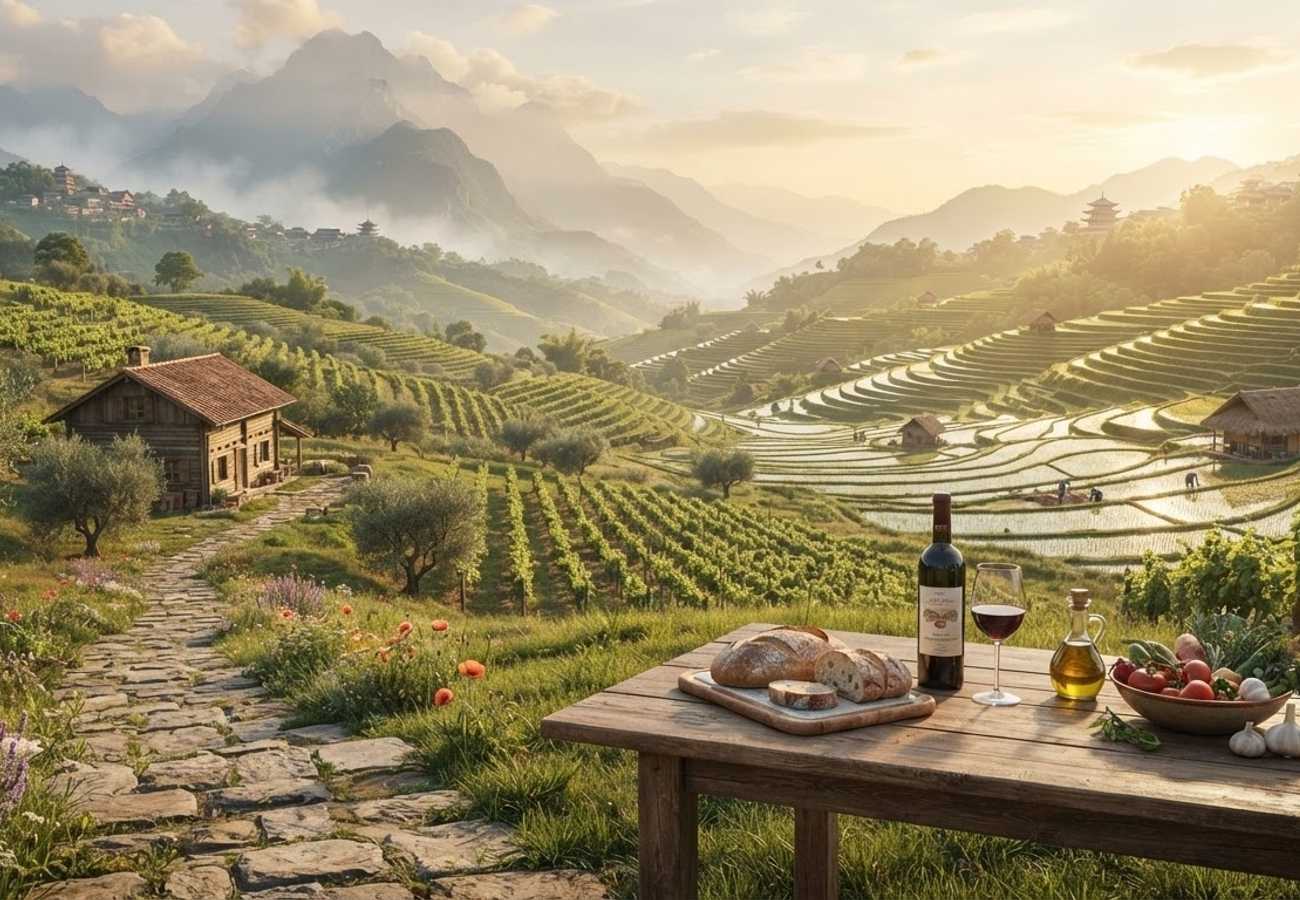
Image generated by AI
Global tourism is pivoting away from saturated urban centers toward "Slow Food" corridors and rural hubs. This shift is redistributing economic gains to agrarian communities while offering travelers deeper cultural immersion through farm-to-table logistics.
The global travel landscape is undergoing a structural realignment. Visitors are increasingly bypassing traditional urban landmarks in favor of nature-centric, culturally immersive destinations. This movement, defined by "slow travel," prioritizes extended stays in a single location to foster genuine connections with local communities and heritage.
Central to this evolution is the rise of Slow Food Travel. These initiatives connect travelers directly with farmers, artisans, and regional storytellers, transforming the act of eating into a primary transit motivator. By following regional food routes, travelers are supporting small-scale hospitality businesses and preserving agricultural legacies that were previously overshadowed by mass tourism.
Global Rural Tourism Framework
The transition toward rural destinations is categorized by specific traveler motivations and the corresponding experience types:
| Rural Travel Trend | Primary Driver | Core Experience |
|---|---|---|
| Slow Food Trails | Culinary Authenticity | Farm-to-table routes and producer visits |
| Village Tourism | Cultural Exchange | Community interaction and heritage learning |
| Farm Experiences | Agrarian Connection | Hands-on agricultural participation |
| Eco Tourism | Sustainability | Responsible, low-impact travel |
| Countryside Stays | Wellness/Quietude | Peaceful alternatives to metropolitan hubs |
Regional Implementation and Route Specifications
Italy: The Blueprint for Agrarian Tourism
Italy remains the global benchmark for integrating food culture with rural transit. Beyond the "big three" (Rome, Venice, Florence), the regions of Tuscany, Emilia-Romagna, and Marche have developed sophisticated rural networks.
| Italian Rural Experience | Primary Attraction |
|---|---|
| Vineyard Visits | Regional wine discovery and viticulture |
| Farm Stays (Agriturismo) | Traditional countryside lifestyle |
| Olive Oil Routes | Agricultural heritage and pressing tours |
| Local Markets | Regional food traditions and seasonal produce |
| Cooking Classes | Hands-on cultural immersion |
Japan: Decentralizing the Tourist Flow
Japan is aggressively expanding rural travel to reduce the burden on Tokyo and Kyoto. This strategy leverages the country's diverse geography to draw visitors into mountain and coastal regions.
| Destination Type | Key Experience |
|---|---|
| Mountain Villages | Traditional architecture and remote lifestyles |
| Rice Farming Regions | Agricultural cycles and harvest experiences |
| Fishing Communities | Seafood culture and maritime traditions |
| Hot Spring Towns (Onsen) | Wellness, relaxation, and regional baths |
| Rural Markets | Local crafts and hyper-regional cuisine |
Thailand and India: Emerging Cultural Corridors
Thailand is diversifying its image beyond beach resorts, promoting the northern provinces and organic farming communities. Similarly, India is utilizing government-backed thematic tourism circuits to showcase tribal culture and traditional farming.
- Thailand Highlights: Chiang Mai countryside farming, village-based homestays, and sustainable organic farm tours.
- India Highlights: Village tourism in Rajasthan, Kerala, and Uttarakhand; farm experiences in Punjab and Maharashtra; and tribal heritage tours in Northeast India.
Southern Europe: The Iberian Slow Travel Axis
Portugal and Spain are leveraging their landscapes to attract "slow" travelers. Portugal’s Douro Valley has become a primary hub for wine-centric transit, while Spain focuses on historic villages and walking routes.
| Country | Rural Tourism Strength |
|---|---|
| Portugal | Vineyards, curated food routes, and river landscapes |
| Spain | Gastronomy, historic villages, and cultural heritage |
| France | Regional cuisine and specialized countryside stays |
Traveler Logistics Guide: Navigating Rural Transit
From a ground-level perspective, transitioning from urban hubs to rural "slow" zones requires a different logistical approach than standard city hopping.
1. Booking and Connectivity Rural destinations often lack high-frequency public transit. To navigate these regions effectively:
- Local Transport: In Italy and Spain, prioritize regional rail over high-speed lines for shorter hops, but budget for local car rentals or "shuttle-to-farm" services for the final mile.
- Stay Duration: Avoid "one-night stands." Slow travel logistics suggest a minimum of 3-4 days per village to align with the pace of local food production and community events.
2. Digital Transit and Entry Policies When moving into rural zones, ensure your digital documentation is updated. For those entering the EU (Italy, Spain, Portugal), monitor the implementation of ETIAS requirements to avoid delays at primary ports of entry before heading inland.
3. Navigating Local Markets To maximize the "Slow Food" experience, synchronize your visit with local market calendars. These are often the primary logistics hubs for rural communities and provide the best access to authentic producers.
Infrastructure and Economic Impact Assessment
The shift toward rural tourism is not merely a trend but a strategic economic redistribution. By diverting traffic from overcrowded cities, national tourism boards are achieving two goals: reducing "overtourism" in urban centers and injecting capital into stagnant rural economies.
For the local stakeholder, this means new revenue streams for farmers and artisans who can now monetize their traditional knowledge. For the traveler, it represents a move toward "emotional connectivity"—where the value of the trip is measured by the depth of the interaction rather than the number of landmarks visited.
The future of global transit is moving away from the checklist and toward the experience.
Related Travel Guides
Disclaimer
This article is for informational and educational purposes only. It does not constitute legal, financial, or professional advice. While we strive to provide accurate and up-to-date information, travel policies, regulations, and conditions change rapidly. Always verify information with official sources before making travel decisions. Nomad Lawyer makes no representations about the accuracy, reliability, completeness, or suitability of the information provided. Readers should consult qualified professionals for advice specific to their circumstances. The views expressed in this article are those of the author and do not necessarily reflect the views of Nomad Lawyer.
Kunal K Choudhary
Co-Founder & Contributor
A passionate traveller and tech enthusiast. Kunal contributes to the vision and growth of Nomad Lawyer, bringing fresh perspectives and driving the community forward.
Learn more about our team →