Boeing's 777X Composite Wing Development: Has It Really Outlasted the Entire 787 Program?

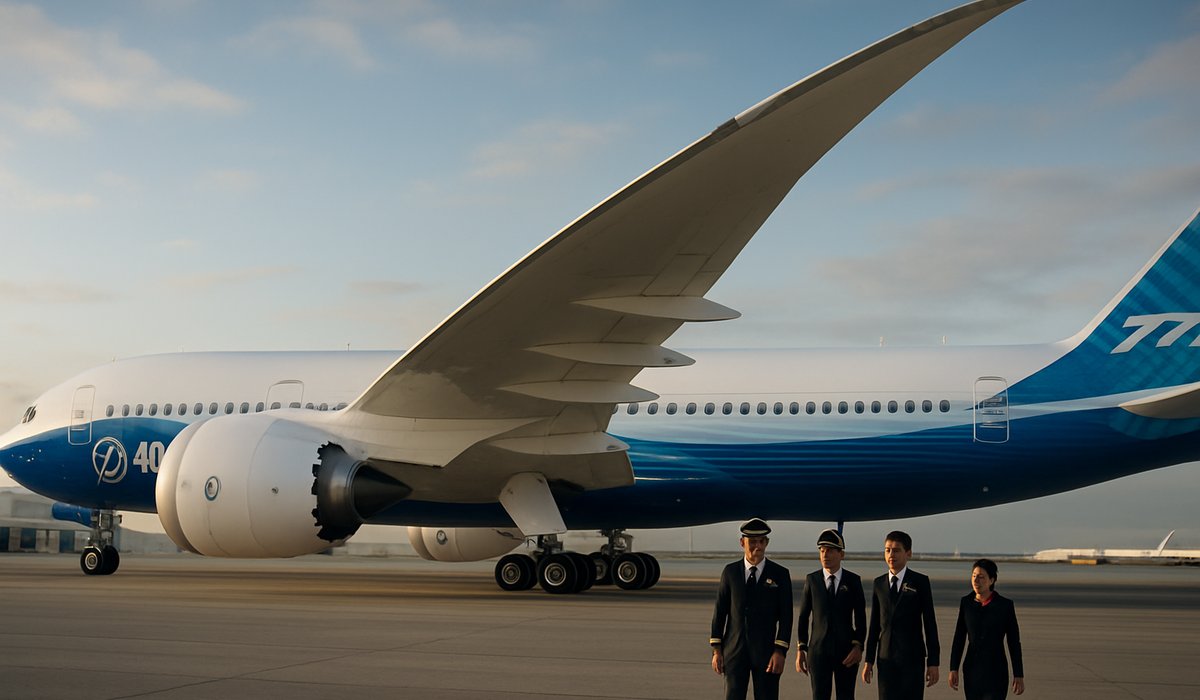
Image generated by AI
The aerospace manufacturer faces mounting scrutiny over extended timelines for its flagship widebody jet's revolutionary wing design
The Timeline Question: Separating Fact From Oversimplification
Boeing's ambitious 777X program has become a case study in modern aviation's technical and regulatory complexities. While it is substantially accurate that the development of the aircraft's advanced composite wing—complete with its distinctive folding wingtip technology—has consumed more calendar time than the entire creation of the Boeing 787 Dreamliner, the reality behind this comparison reveals a more layered story than headlines suggest.
The core issue extends beyond the physical engineering and manufacturing of the wing structure itself. Rather, the primary culprit lies in the intricate certification process required to validate this cutting-edge design for commercial flight operations. The folding wingtip mechanism, a novel feature designed to enhance airport gate compatibility and fuel efficiency, represents uncharted regulatory territory that has demanded extensive testing and documentation.
Certification Bottlenecks Trump Design Challenges
Boeing's certification pathway for the 777X composite wing has proved considerably more demanding than anticipated. Regulatory authorities, including the Federal Aviation Administration (FAA), have required comprehensive validation protocols for the innovative folding mechanism and composite materials integration—protocols that simply did not exist when the 787 entered development two decades ago.
The certification work encompasses structural integrity assessments, fatigue analysis, and operational procedures that demand meticulous documentation and real-world validation. This represents a fundamentally different category of delay than manufacturing inefficiencies or design flaws.
A Perfect Storm of Compounding Factors
However, attributing delays solely to wingtip certification would overlook the broader context. The 777X program has encountered multiple headwinds that have collectively extended its timeline. The COVID-19 pandemic disrupted production schedules and testing facilities globally. Additionally, the fallout from the Boeing 737 MAX crashes reverberated throughout the manufacturer's operations, prompting heightened regulatory scrutiny across all new programs and consuming significant engineering resources.
Supply chain disruptions, material sourcing challenges, and the broader aviation industry's recovery trajectory have further contributed to extended development cycles across the 777X initiative.
Industry Context and Competitive Pressure
The 777X remains critical to Boeing's competitive positioning against Airbus's A350 widebody family. Any further delays risk market share erosion and customer confidence, making the certification process both technically rigorous and commercially consequential.
Frequently Asked Questions
Q: How much longer has the 777X wing taken compared to the 787 program? A: The composite wing development has consumed more calendar time than the entire 787 design-and-development cycle, though exact timelines vary by measurement methodology.
Q: What makes the 777X folding wingtips so difficult to certify? A: The technology is novel in commercial aviation, requiring regulators to develop entirely new certification frameworks for the folding mechanism, composite materials, and operational procedures.
Q: Has the Boeing 737 MAX crisis directly impacted 777X delays? A: Yes. The MAX crashes prompted heightened FAA oversight and diverted Boeing engineering resources, compounding 777X development timelines.
Q: When will the 777X achieve certification? A: Boeing continues targeting certification in 2025, though this timeline has shifted multiple times since initial projections.
Q: How will 777X delays affect airlines and aircraft orders? A: Extended delays increase pressure on carriers awaiting deliveries and provide competitive advantages to Airbus A350 operators in the widebody market segment.
Related Travel Guides
External Resources
This article is for informational purposes. Flight routes, passenger regulations, visa rules, and transit advisories are subject to change by airlines and aviation authorities. Readers are advised to verify schedules and travel documentation with relevant carriers and border agencies before departure.
Related Stories
Brazil Nears 100 Million Air Passengers in 2026 Amid Divergent Global Aviation Growth