
Ireland Steps Up With Greece And Other European Countries To Combat Canada Visa Fraud Risks Through Stronger Public Awareness
Ireland Steps Up With Greece And Other European Countries To Combat Canada Visa Fraud Risks Through Stronger Public Awareness

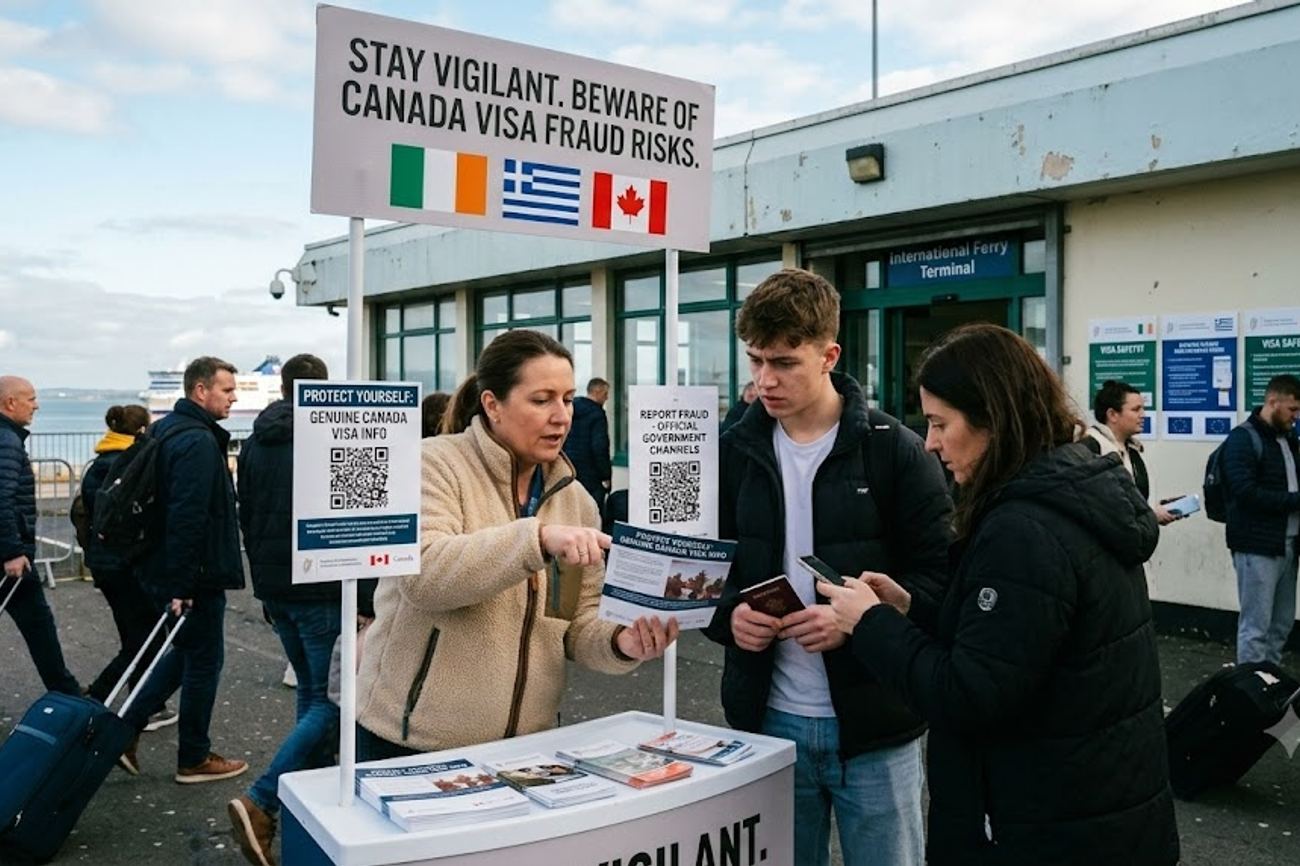
Image generated by AI
Zero individuals, agents, or organizations possess the legal authority to guarantee a Canadian visa approval, yet a surge in sophisticated fraud networks across Europe is currently exploiting this misconception to defraud thousands of hopeful migrants. This systemic wave of deception has forced a coordinated response from governments in Ireland, Greece, Germany, and the United Kingdom, as scammers leverage the high demand for Canadian work permits, student visas, and permanent residency to siphon funds and steal sensitive personal data.
The Architecture of Migration Deception
The current crisis is not a result of random scams but a calculated exploitation of Canada's status as a premier destination for skilled labor and international education. Fraud networks have shifted from crude emails to high-fidelity deception, utilizing social media platforms, mirrored websites, and professional-looking messaging applications to mimic official government portals.
The operational model of these syndicates relies on the creation of artificial urgency. By claiming that "secret immigration programs" are closing or that "special government connections" are available for a limited time, fraudsters bypass the critical thinking of applicants. This is particularly prevalent in Ireland, where a high concentration of international students and transient workers creates a fertile environment for those seeking further overseas opportunities.
The danger extends beyond financial loss. When applicants submit fraudulent documents—often drafted by these same "consultants"—they risk permanent bans from entering Canada. The Government of Canada maintains strict protocols regarding misrepresentation, meaning a victim of a scam can inadvertently become a perpetrator of visa fraud in the eyes of immigration officers.
European Response Patterns and National Strategies
Different European nations are deploying varied tactics to shield their residents from these predatory networks. The response is characterized by a shift toward "preventative education" rather than just reactive enforcement.
| Country | Primary Fraud Target | Strategic Focus | Key Warning Sign |
|---|---|---|---|
| Ireland | Students & Workers | Education-based awareness | Pressure for immediate payment |
| Greece | Job Seekers | Verification of sources | Fake employment offers |
| United Kingdom | International Residents | Advisor verification | Jobs offered without interviews |
| Germany | Skilled Professionals | Recruitment agency audits | Advance fees for documents |
| Italy | Labor Migrants | Contract authentication | Unauthorized company name use |
| France | General Applicants | Digital literacy/Website audits | Requests for passport data early |
| Spain | Visa Candidates | Eligibility education | Promises of bypassed checks |
In Germany, the focus has shifted toward the "front end" of the recruitment process. Authorities are urging applicants to verify the legitimacy of recruitment agencies before any one-on-one interaction occurs, as many scams now involve fabricated high-salary employment contracts that promise immediate work permits.
Meanwhile, in Italy, the threat has evolved into the creation of professional-looking corporate contracts. Scammers are stealing the identities of real Canadian companies to issue fake job offers, making the fraud nearly undetectable without direct verification through official corporate channels or the International Organization for Migration (IOM).
Expert Analysis: The High Cost of "Fast-Track" Illusions
For travelers and professionals booking a move to North America, the direct consequence of this fraud wave is a heightened scrutiny of all third-party applications. The pricing pressure created by these scams is paradoxical: as fraudsters charge exorbitant "expediting fees," legitimate immigration consultants are forced to spend more time educating clients on why such fees are non-existent in official channels.
The core of the issue is the "guarantee" fallacy. In the business of immigration, there is no such thing as a guaranteed outcome because the decision-making power rests solely with authorized government officers. When a consultant claims they can "influence" a decision, they are admitting to either a lie or an attempt at bribery—both of which are red flags that trigger immediate visa denials.
Furthermore, the shift toward digital-first applications has created a "verification gap." Many applicants trust a professional-looking website over a slow government portal. This psychological gap is where the most damage occurs. The loss of a passport scan or financial record to a fraudulent site doesn't just end the dream of moving to Canada; it opens the door to systemic identity theft across the European Union.
Travelers planning trips to Canada should verify all entry requirements and apply for necessary permits exclusively through the Government of Canada official portal to avoid fraudulent intermediaries. Ensuring your documentation is processed via authorized channels is critical to preventing visa delays or entry denials at the border.
For those navigating this process, the only safe path is a linear one: official government portals, verified legal representatives, and a total refusal to pay for "secret" access. Any deviation from this path is not a shortcut, but a detour toward financial and legal jeopardy.
Key Takeaways
- No Guarantee Exists: No agent, regardless of their claimed connections, can guarantee the approval of a Canadian visa or work permit.
- Verify Before Paying: Always cross-reference immigration advisers against official regulatory lists before transferring any funds.
- Red Flag Indicators: Be immediately suspicious of job offers that do not require a formal interview process or claims of "secret" government programs.
- Data Sovereignty: Never share passport details or financial records with unofficial consultants via messaging apps or non-secure websites.
- Official Channels Only: Use only verified government portals for application submissions to avoid the risk of "misrepresentation" bans.
FAQ: Canada Visa Fraud 2024
How can I tell if a Canadian job offer is fake? If the employer offers a job without a rigorous interview process, asks for an "administrative fee" to process your work permit, or uses a generic email address (like Gmail or Yahoo) instead of a corporate domain, it is likely a scam.
Can an agent actually speed up my visa processing time? No. Processing times are determined by the Canadian immigration authorities based on volume and eligibility. No unofficial payment or "fast-track" service can legally bypass the standard government queue.
What should I do if I have already paid a fraudulent agent? Immediately stop all communication, secure your financial accounts, and report the incident to your local police and the Canadian embassy or consulate in your country.
Are there authorized representatives I can trust? Yes. You should only use lawyers or consultants who are registered with the College of Immigration and Citizenship Consultants (CICC) or the relevant provincial law society in Canada.
The dream of migration is a powerful motivator, but in the current regulatory climate, skepticism is the only effective shield against systemic fraud.
Related Travel Guides
- Switzerland Aligns With Germany And More European Countries In New Saudi Arabia Travel Advisory As Security Alerts Rise And Embassies Protect Travellers
- Cayman Islands Travel Update: New Senior Hub Reflects Wellness and Authentic Island Experiences
- Wisconsin Moves With Michigan as US Flooding Forecast Raises Flash-Flood Risks Across Key Travel Regions
Disclaimer
This article is for informational and educational purposes only. It does not constitute legal, financial, or professional advice. While we strive to provide accurate and up-to-date information, travel policies, regulations, and conditions change rapidly. Always verify information with official sources before making travel decisions. Nomad Lawyer makes no representations about the accuracy, reliability, completeness, or suitability of the information provided. Readers should consult qualified professionals for advice specific to their circumstances. The views expressed in this article are those of the author and do not necessarily reflect the views of Nomad Lawyer.
Raushan Kumar
Founder & Lead Developer
Full-stack developer with 11+ years of experience and a passionate traveller. Raushan built Nomad Lawyer from the ground up with a vision to create the best travel and law experience on the web.
Learn more about our team →