
IRCTC Targets 20% Tourism Growth With 200 Vande Bharat Trains Launching Across India by 2030
Indian Railways transforms luxury travel with 200 advanced trains, premium Maharajas' Express demand soaring, and 30% EBITDA margins targeting FY27 expansion.

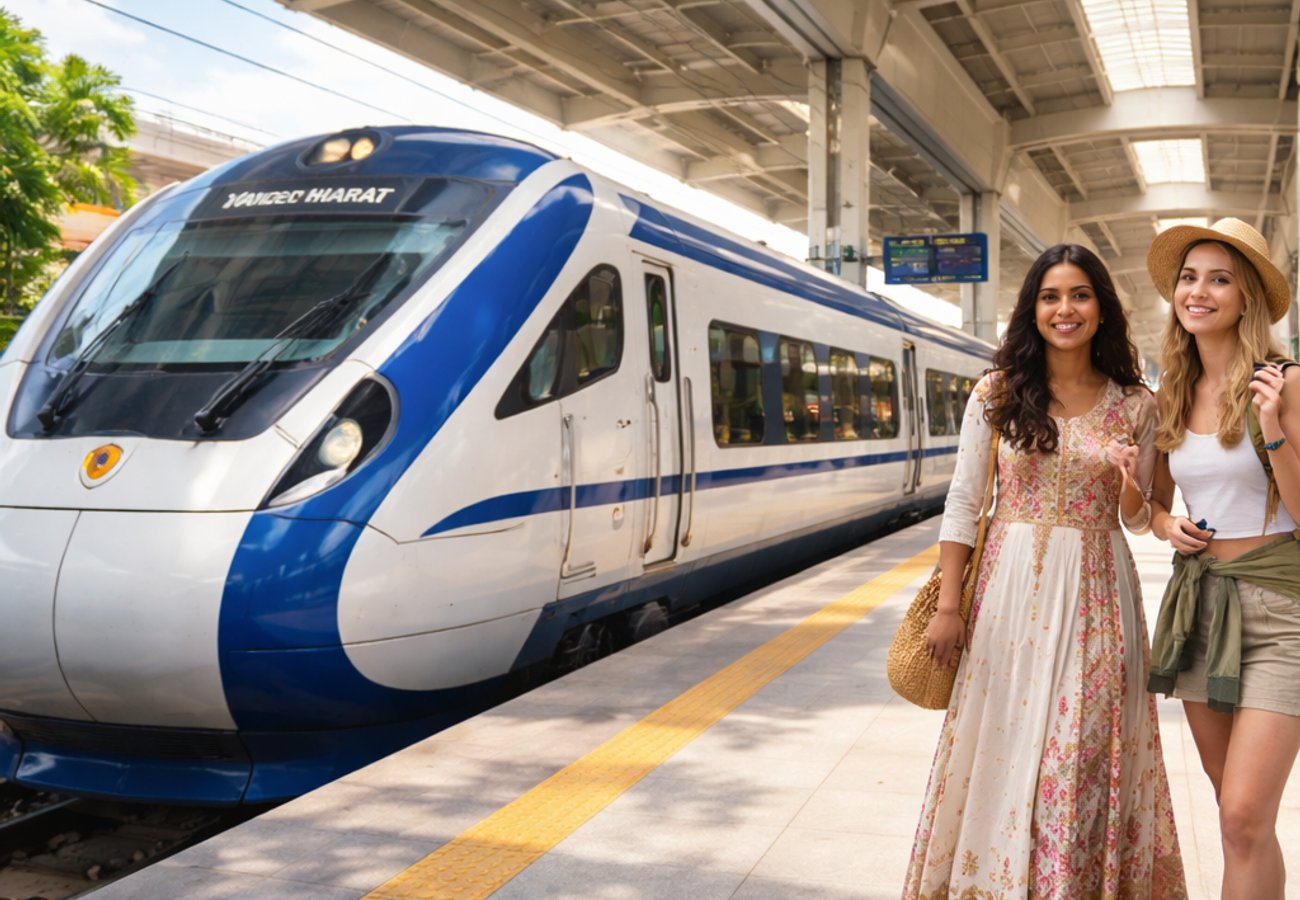
Image generated by AI
India's Railway Tourism Gamble: 200 New Trains and a $2.5 Billion Hospitality Bet
Indian Railways Catering and Tourism Corporation (IRCTC) is placing an audacious wager on the future of premium leisure travel. The state-owned enterprise has announced an aggressive modernization blueprint that will inject over 200 advanced passenger trains into India's network within the next three to five years—a strategic pivot that could fundamentally reshape how millions travel domestically.
The scale is staggering. By 2030, the combination of Vande Bharat Sleeper and Amrit Bharat configurations will create capacity for an estimated 20 percent growth in the tourism segment during FY27 alone, according to statements from IRCTC Chairman and Managing Director Sanjay Kumar Jain and reports from CNBC-TV18.
This isn't just about moving bodies from point A to point B. This is about converting rail transportation into a luxury hospitality ecosystem.
The Maharajas' Express Effect: International Demand Validates Premium Strategy
What caught my attention while researching this story wasn't the infrastructure numbers—it was the demand signal.
The Maharajas' Express, IRCTC's flagship luxury train offering, has experienced exceptional international visitor demand. This isn't a hypothetical market opportunity. Wealthy travelers from abroad are actively choosing premium Indian rail experiences over competing modalities. The data validates what the corporation's leadership already suspected: there's an untapped global market for high-end rail tourism in South Asia.
Reddit: "The Maharajas' Express is the most beautiful way to see India. Worth every rupee if you're serious about luxury travel," — r/IndiaTravel
This validation has emboldened the organization's C-suite to pursue what would have been considered aggressive five years ago. A consolidated EBITDA margin target of approximately 30 percent by FY27 signals confidence that premium positioning will stick.
The Revenue Explosion: Four Distinct Growth Engines Firing Simultaneously
Here's where the strategy becomes interesting. IRCTC isn't banking on a single revenue source.
The organization has operationalized what management calls "coordinated expansion across multiple core segments":
Tourism Services: 20 percent projected growth, driven by Maharajas' Express scaling and Vande Bharat Sleeper deployments.
Train Catering and Hospitality: 15 percent revenue increase anticipated for FY27, powered by modernized pantry infrastructure and higher passenger volumes. The corporation currently serves nearly 18 lakh (1.8 million) meals daily across its network—a volume that increased despite recent supply chain complications.
Internet Ticketing: 9 to 10 percent growth forecast, leveraging a unified digital platform and recent strategic partnerships with platforms like Cleartrip for ticket distribution and ancillary service bundling.
Rail Neer (Packaged Drinking Water): A steady 5 percent growth rate projected as production capacity expands across regional plants.
The diversification strategy is textbook modern transport conglomerate thinking: don't rely exclusively on passengers; build ecosystem value.
The Infrastructure Backbone: Overnight Comfort Meets International Standards
The Vande Bharat Sleeper represents a genuine technological leap. Unlike earlier generations of Indian long-distance sleeper cars, these configurations are engineered to meet international comfort standards. Overnight journeys on routes like Mumbai-Delhi or Bengaluru-Chennai will now offer amenities that mid-to-high-income travelers have historically reserved for premium airlines.
This matters because it creates modal substitution opportunity. A business traveler or affluent leisure passenger might rationally choose an overnight train journey that delivers rest plus destination arrival, rather than paying for both a flight and hotel accommodation.
The Amrit Bharat services tackle the volume play differently—enhanced comfort across high-density routes that serve broader demographics, ensuring that modernization benefits extend beyond premium segments.
Combined deployment of both configurations across 200+ trains over three to five years isn't just incremental improvement. It's a capacity multiplier that directly feeds catering volume, digital ticketing transactions, and hospitality revenue.
Supply Chain Resilience: From Gas Crisis to Induction Innovation
Recent geopolitical turbulence in West Asia created genuine supply chain vulnerability for the organization. Volatile energy costs threatened operational stability.
The response illustrates institutional problem-solving capacity: IRCTC pivoted the majority of food preparation in train pantry cars from traditional gas-based heating mechanisms to advanced induction-based systems. This technological transition achieved dual objectives—minimized dependency on volatile gas supplies while simultaneously enhancing safety parameters across the rolling stock.
Daily meal production continued uninterrupted at 18 lakh meals, even as the organization executed this systemic adaptation. That operational continuity during modernization attempts is rare in large public sector enterprises.
The Digital Transformation: From Ticketing to Lifestyle Facilitator
The corporation's leadership recognizes that passenger ticketing will become commoditized. The margin compression is inevitable as competition increases.
The answer: leverage the data footprint generated by millions of daily users to construct high-margin digital services. Personalized marketing solutions for corporate partners, structured consumer loyalty programs, and integrated travel ecosystem services are being woven into the primary purchase journey.
When you buy a train ticket on the IRCTC platform, you'll increasingly see hotel booking options, local sightseeing packages, and travel insurance bundled into the same transaction. This transforms the corporation from a railway operator into a comprehensive multi-modal holiday facilitator.
The Cleartrip partnership exemplifies this strategy—extending market penetration by embedding IRCTC services into third-party travel platforms where customers already shop.
The Structural Realignment: Tourism as Primary Revenue Driver
Here's the most significant shift: within the next decade, IRCTC's revenue composition will fundamentally rebalance.
Currently, basic ticketing processing dominates the revenue mix. The new blueprint envisions tourism and digital ecosystem revenue as the primary income generators, with traditional ticketing relegated to a supporting role. This evolution depends critically on central government capital expenditure across major terminals and corridors—infrastructure spending that's already underway.
As new industrial corridors and cultural tourism circuits are connected by premium tracks, custom-tailored holiday packages will be engineered to match geographical expansions. High-speed networks combined with modernized hospitality infrastructure and diversified digital platforms create what the organization calls a "resilient commercial framework" capable of satisfying evolving traveler demands.
The Indian railway renaissance isn't about moving more people—it's about moving wealthier people, more comfortably, and more profitably.
Related Travel Guides
Disclaimer
This article is for informational and educational purposes only. It does not constitute legal, financial, or professional advice. While we strive to provide accurate and up-to-date information, travel policies, regulations, and conditions change rapidly. Always verify information with official sources before making travel decisions. Nomad Lawyer makes no representations about the accuracy, reliability, completeness, or suitability of the information provided. Readers should consult qualified professionals for advice specific to their circumstances. The views expressed in this article are those of the author and do not necessarily reflect the views of Nomad Lawyer.
Preeti Gunjan
Contributor & Community Manager
A passionate traveller and community builder. Preeti helps grow the Nomad Lawyer community, fostering engagement and bringing the reader experience to life.
Learn more about our team →