
Iran's 14-Point Ultimatum Shatters Global Energy and Travel Networks
Iran's 14-point counterproposal to the US is disrupting the Strait of Hormuz — through which 40%+ of global LNG flows — triggering emergency responses from UAE, Saudi Arabia, Qatar, India, Japan, China, and Thailand.

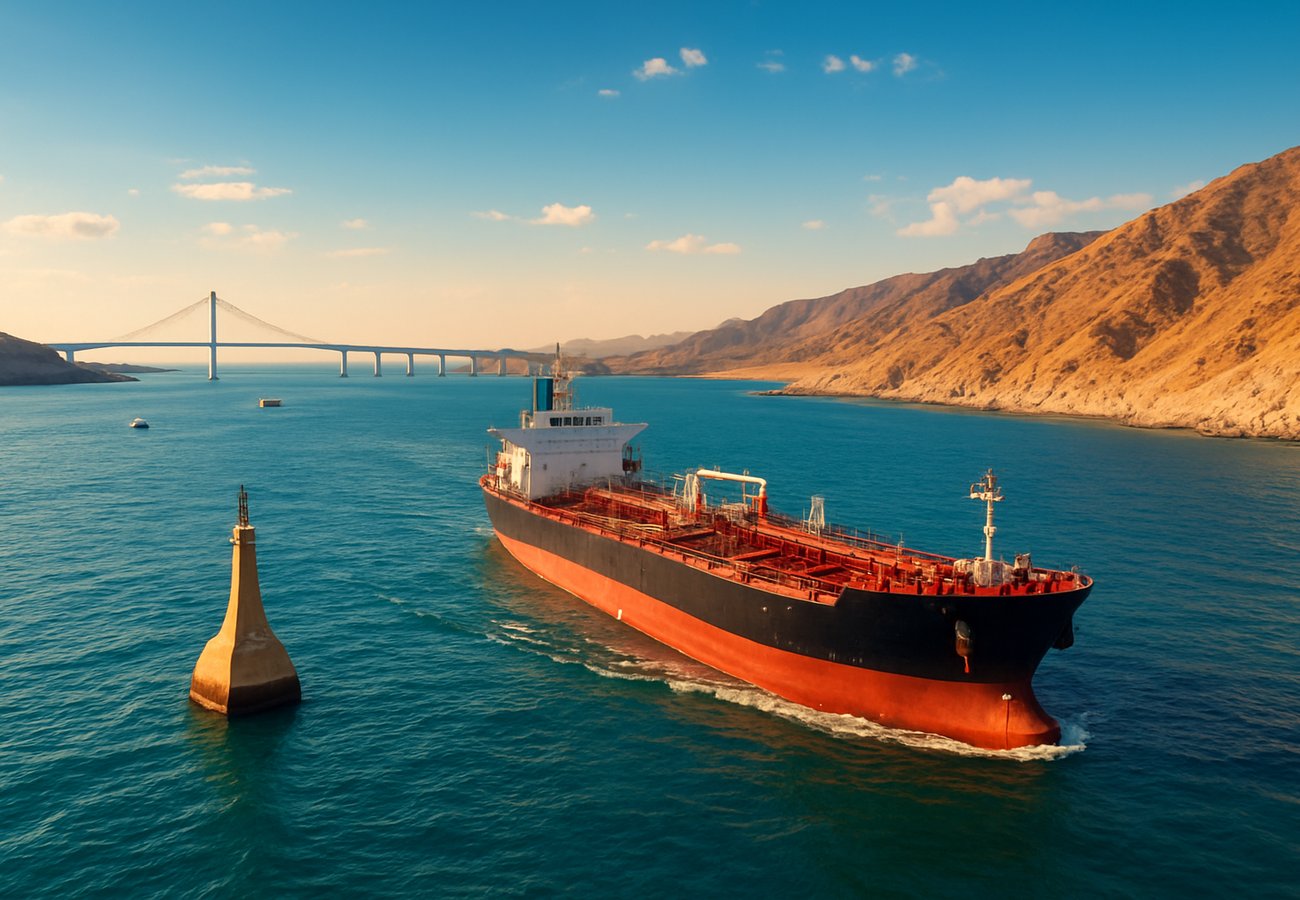
Image generated by AI
Quick Summary
- Iran has issued a formal 14-point counterproposal to the United States — demanding full US troop withdrawal from its periphery, the release of frozen assets, and a new governance framework for the Strait of Hormuz — triggering immediate geopolitical escalation across West Asia.
- The Strait of Hormuz is the transit corridor for more than 40% of the world's LNG supply — any sustained disruption directly threatens energy security for UAE, Saudi Arabia, Qatar, India, Japan, China, and Thailand.
- Nations are activating emergency responses: the UAE is expanding its Fujairah-Oman bypass pipeline; Saudi Arabia is accelerating its Red Sea pipeline and boosting military spending; Qatar is rerouting LNG trade and deploying air defense systems.
- India has expanded its strategic petroleum reserves (SPR); Japan is sourcing alternative energy while diversifying into renewables; China is pursuing multilateral de-escalation and alternative oil trade agreements.
Iran's formal 14-point counterproposal to the United States has shattered the fragile diplomatic framework underpinning the Middle East peace process, sending immediate shockwaves through global energy markets, maritime shipping networks, and international travel systems. The counterproposal — which escalates demands far beyond a ceasefire to include a complete redefinition of US military presence in the region and sovereign control over the Strait of Hormuz — has placed the UAE, Saudi Arabia, Qatar, India, Japan, China, Thailand, and a broader coalition of energy-dependent nations into a state of urgent emergency response.
Iran's 14-Point Counterproposal: The Core Demands
Iran's formal response to ongoing US-Iran negotiations has reshaped the conflict's diplomatic landscape with a set of non-negotiable demands:
- Guaranteed non-aggression: Formal US commitment against any future military action targeting Iran
- Full withdrawal of US forces from Iran's strategic periphery within a defined timeframe
- Release of frozen Iranian assets held under international sanctions
- New governance framework for the Strait of Hormuz — transferring or sharing control authority over the world's most critical oil and gas transit corridor
- Complete resolution of the conflict within a fixed, defined timeline — not an open-ended ceasefire
The demand for a new Hormuz governance framework is the most consequential for global markets. The strait is the only maritime route connecting the Persian Gulf to the open ocean — it handles more than 40% of the world's LNG supply and a significant share of global crude oil and LPG flows daily. Any structural change to its operational governance creates immediate uncertainty for every nation that depends on it.
Country-by-Country Emergency Response
| Country | Primary Vulnerability | Emergency Action Taken |
|---|---|---|
| UAE | Oil/gas exports via Hormuz; Dubai aviation hub | Expanded Fujairah-Oman bypass pipeline; increased coastal military presence; economy diversification acceleration |
| Saudi Arabia | World's largest oil exporter; Red Sea routes | Red Sea pipeline expansion; increased domestic energy reserves; higher military spending; Gulf defensive alliances reinforced |
| Qatar | 40%+ of global LNG passes through Hormuz | Emergency LNG rerouting; diplomatic talks with Gulf allies; air defense system deployment |
| India | Largest Gulf energy importer in South Asia | Strategic petroleum reserves (SPR) expanded; non-Gulf supplier diversification |
| Japan | Heavily reliant on Gulf energy imports | Alternative sourcing agreements; accelerated renewable energy portfolio diversification |
| China | Second-largest economy; major Gulf trade investor | Multilateral de-escalation diplomacy; alternative oil trade agreements outside Gulf; shipping cost inflation response |
| Thailand | Southeast Asia energy importer; tourism-dependent | Domestic natural gas reliance increased; ASEAN energy partnership strengthening |
UAE: The First Domino
The United Arab Emirates — a cornerstone of the Gulf Cooperation Council (GCC) and one of the world's most important energy and aviation hubs — is on the front line of the Hormuz disruption.
The UAE has immediately activated its primary bypass contingency: expanding operational capacity of the Fujairah-Oman pipeline, which routes oil from Abu Dhabi's inland fields directly to the Port of Fujairah on the Gulf of Oman coast — entirely bypassing the Strait of Hormuz. This pipeline provides a critical alternative export corridor, but its capacity is finite and cannot fully replace Hormuz-dependent volumes at scale.
The broader economic consequences are cascading into Dubai International Airport — one of the world's busiest aviation hubs. Rising jet fuel costs are driving up ticket prices and reducing flight frequencies on routes that depend on Middle Eastern connectivity, directly affecting the millions of travelers who use Dubai as a transit hub annually.
Saudi Arabia: Oil Giant Under Pressure
Saudi Arabia — the world's largest crude oil exporter — is absorbing the sharpest direct economic blow from Hormuz instability. With oil prices reaching historic highs due to shipping disruption uncertainty, the Kingdom is simultaneously managing both an energy market crisis and an elevated regional security threat.
Emergency measures activated:
- Red Sea pipeline expansion to create additional non-Hormuz export capacity
- Domestic energy reserve buildup to buffer against further supply chain shocks
- Increased military spending and reinforcement of Gulf defensive alliances to counteract Iranian regional influence
Global shipping companies are already recalibrating routes to reduce exposure to Iran-controlled waters, creating logistical bottlenecks in oil shipment networks that are compounding the price pressures Saudi Arabia is attempting to manage.
Qatar: LNG Exporter in the Eye of the Storm
Qatar faces a structurally acute version of the Hormuz crisis. As the world's leading LNG exporter, and with more than 40% of global LNG supply transiting the Strait, any sustained closure or governance disruption is an existential threat to Qatar's primary revenue stream.
Qatar has launched a multi-track emergency response:
- Emergency diplomatic engagement with Gulf allies to identify and negotiate alternative LNG export routing
- Air defense system deployment to protect critical LNG processing and export infrastructure
- Parallel diplomatic navigation of its complex relationship with both Iran and the United States — a delicate balancing act that has become significantly more fraught under the 14-point counterproposal framework
India and Japan: Asia's Energy Vulnerability Exposed
India, as the largest South Asian importer of Gulf energy, has moved swiftly to expand its strategic petroleum reserves (SPR) — building additional buffer capacity to cushion the impact of potential supply interruptions and oil price spikes. India is simultaneously diversifying its import portfolio toward non-Gulf producers to reduce structural dependence on Hormuz-transit shipments.
Japan — equally dependent on Gulf energy imports — is pursuing a two-track strategy: securing alternative supply agreements from producers outside the immediate conflict zone, while accelerating its longer-term renewable energy portfolio to reduce fossil fuel import dependency. Japan's aviation sector is also absorbing higher jet fuel costs, with airfare pressures building on regional routes across Asia.
China: Economic Giant, Diplomatic Mediator
China, as the world's second-largest economy and a major investor in Middle Eastern energy infrastructure, has a dual stake in the crisis — as an energy consumer and as a trade partner with significant capital at risk in the region.
China's response combines diplomacy with market repositioning:
- Formal calls for multilateral de-escalation through international negotiation frameworks
- Active development of alternative oil trade agreements with producers outside the Hormuz corridor
- Domestic economic management of inflated shipping costs and supply chain delays affecting Chinese exports and manufactured goods imports
Thailand and Southeast Asia: Tourism and Energy Under Simultaneous Pressure
Thailand and the broader Southeast Asian region — while geographically removed from the conflict — are absorbing compounding energy price and tourism demand pressures simultaneously.
Thailand has increased domestic reliance on natural gas and is strengthening ASEAN regional energy partnerships to reduce exposure to Middle East supply volatility. Its tourism sector — a critical economic pillar — is experiencing declining international arrivals as rising travel costs deter visitors and airfare inflation erodes budget traveler confidence.
What This Means for Travelers
The geopolitical cascade triggered by Iran's 14-point counterproposal is generating direct, measurable consequences for international travel:
- Higher airfares globally: Jet fuel price spikes are flowing into airline ticket prices across all major international routes, particularly those transiting Middle Eastern hubs including Dubai (DXB), Doha (DOH), and Abu Dhabi (AUH)
- Route rerouting delays: Airlines avoiding Iranian airspace are operating longer-duration flights on some routes, increasing both fuel costs and journey times
- LNG and energy cost inflation: Higher heating, cooling, and transportation energy costs across Asia and Europe are reducing household disposable income available for discretionary travel spending
- Shipping delays: Rerouted maritime freight is increasing delivery timelines and costs for consumer goods globally — a secondary economic pressure on travel demand
Travelers with upcoming itineraries routed through Middle Eastern hub airports should monitor airline schedule advisories closely and ensure travel insurance covers geopolitical disruption scenarios.
FAQ: Iran's 14-Point Counterproposal and Global Travel Impact
What is Iran's 14-point counterproposal? Iran's formal response to US-Iran negotiations includes 14 demands, most critically: full US troop withdrawal from its periphery, release of frozen Iranian assets, and a new governance framework transferring or sharing control of the Strait of Hormuz within a defined resolution timeline.
Why does the Strait of Hormuz matter so much to global energy? The Strait of Hormuz is the only maritime route from the Persian Gulf to the open ocean. More than 40% of the world's LNG supply and a significant proportion of global crude oil and LPG transits through it daily — any disruption directly affects energy prices worldwide.
Which countries are most affected by the Hormuz disruption? The UAE, Saudi Arabia, and Qatar face the most direct energy export threats. India and Japan are the most exposed major importers. China faces combined energy supply and trade disruption risks. Thailand is experiencing secondary tourism and energy cost pressures.
Related Travel Guides
Disclaimer
This article is for informational and educational purposes only. It does not constitute legal, financial, or professional advice. While we strive to provide accurate and up-to-date information, travel policies, regulations, and conditions change rapidly. Always verify information with official sources before making travel decisions. Nomad Lawyer makes no representations about the accuracy, reliability, completeness, or suitability of the information provided. Readers should consult qualified professionals for advice specific to their circumstances. The views expressed in this article are those of the author and do not necessarily reflect the views of Nomad Lawyer.
Kunal K Choudhary
Co-Founder & Contributor
A passionate traveller and tech enthusiast. Kunal contributes to the vision and growth of Nomad Lawyer, bringing fresh perspectives and driving the community forward.
Learn more about our team →