
China Drives KLIA's Record 17 Million Passenger Surge, Cementing Malaysia as Aviation Hub
Kuala Lumpur International Airport recorded nearly 17 million passengers in early 2026, a 14.4% surge driven primarily by China, which surpassed Thailand, Singapore, and India in aviation traffic growth.

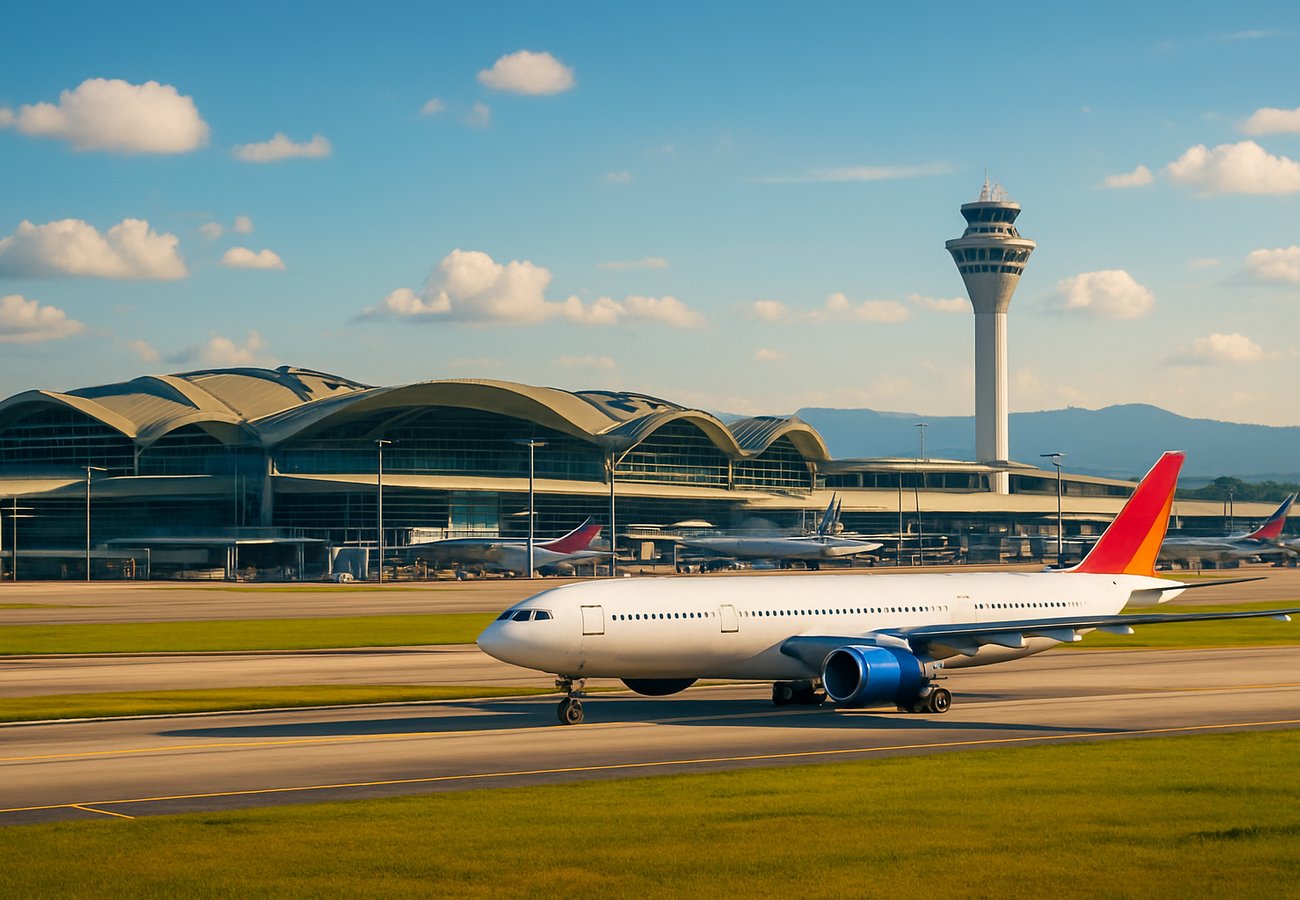
Image generated by AI
Quick Summary
- Kuala Lumpur International Airport (KLIA) handled nearly 17 million passengers in the first four months of 2026, marking a massive 14.4% year-on-year increase compared to the same period in 2025.
- China has emerged as the dominant growth driver, surpassing traditional strongholds like Thailand, Singapore, Japan, Sri Lanka, India, and Indonesia, fueled by new routes to second-tier Chinese cities and the Visit Malaysia 2026 campaign.
- Q1 2026 saw the launch of direct connections from Nanjing, Wuxi, Yangzhou, and Guiyang to Kuala Lumpur, operated by key players like China Southern Airlines and AirAsia X.
- Supported by infrastructure investments like Terminal 2 and expanded cargo facilities, KLIA is currently outpacing regional competitors like Singapore's Changi Airport and Bangkok's Suvarnabhumi Airport in raw traffic growth rate.
As 2026 unfolds, Southeast Asia's aviation landscape is undergoing a significant realignment, with Kuala Lumpur International Airport (KLIA) solidifying its status as the region's fastest-growing aviation titan.
In a staggering operational milestone, KLIA processed nearly 17 million passengers in the first four months of the year, representing a robust 14.4% year-on-year increase from 2025. While the airport has historically relied on a balanced mix of ASEAN and South Asian traffic, 2026 is unequivocally defined by the explosive surge in travelers from China, which has aggressively outpaced legacy markets like Thailand, Singapore, and India.
China: The Engine of KLIA’s 2026 Surge
China’s role as the central pillar of KLIA’s success in 2026 is driven by an expanding middle class, robust trade relations, and the launch of the Visit Malaysia 2026 tourism campaign.
The most notable shift has been the expansion beyond primary mega-cities (Beijing, Shanghai, Guangzhou) into lucrative second-tier Chinese markets. In the first quarter of 2026 alone, KLIA welcomed new direct routes from:
- Nanjing
- Wuxi
- Yangzhou
- Guiyang
Operated heavily by carriers like China Southern Airlines and AirAsia X, these routes provide affordable, direct access for both leisure tourists and professionals involved in Malaysia’s booming technology and education sectors.
The Legacy Markets: Thailand, Singapore, and India
While China is driving the highest growth margins, KLIA’s foundation remains anchored by its traditional regional partners, all of which posted strong numbers in early 2026.
Thailand: The Bangkok Power Corridor
The route connecting Bangkok’s Suvarnabhumi Airport (BKK) and KLIA remains one of the busiest corridors in all of Southeast Asia. Driven by deep economic integration in manufacturing and finance, as well as massive tourist spikes during the Thai New Year (Songkran) and reciprocal student exchange programs, Thai traffic continues to form a critical baseline for KLIA.
Singapore: A Complementary Neighbor
While Changi Airport retains its crown as a global premium transit hub, KLIA's proximity allows for a highly synergistic relationship. The Singapore–Kuala Lumpur corridor is served by dozens of daily flights from Singapore Airlines, Malaysia Airlines, and various low-cost carriers, catering to heavy business, leisure, and cross-border shopping demographics.
India: A High-Volume Constant
India remains a top-tier contributor, with flights connecting New Delhi, Mumbai, and Chennai to Kuala Lumpur operating at near-full capacity. The traffic is sustained by Malaysia's large Indian expatriate community, robust bilateral trade, and seasonal tourism spikes during Diwali and Holi.
Emerging and Resilient Markets: Indonesia and Sri Lanka
Indonesia continues to fuel KLIA's rise as the quintessential ASEAN powerhouse. In 2026, the introduction of the new Batam–Kuala Lumpur route, alongside strengthened connections to Medan, Surabaya, Jakarta, and Bali, resulted in a sharp rise in Indonesian passengers utilizing KLIA for both direct tourism and international transit.
Similarly, Sri Lanka has emerged as an unexpectedly strong growth market. Bolstered by increased direct flights from Colombo, the route is heavily utilized by Sri Lankans traveling to Malaysia for medical tourism, corporate trade, and to attend Malaysian higher education institutions.
Malaysia's Strategic Aviation Ascendancy
The massive influx of nearly 17 million passengers in just four months is a direct validation of Malaysia Airports’ strategic infrastructure investments.
By continuously upgrading Terminal 2, expanding cargo handling facilities, and integrating cutting-edge aviation technology to streamline passenger processing, KLIA has ensured it has the physical capacity to absorb this sudden surge. Consequently, KLIA is currently outpacing regional giants like Singapore Changi and Bangkok Suvarnabhumi in terms of year-on-year percentage growth.
With China acting as the primary accelerant and a robust network of ASEAN and South Asian flights providing structural stability, Kuala Lumpur International Airport has definitively cemented Malaysia's position as a premier global aviation powerhouse for 2026 and beyond.
FAQ: Kuala Lumpur International Airport Growth 2026
How many passengers did KLIA handle in early 2026? Kuala Lumpur International Airport (KLIA) processed nearly 17 million passengers in the first four months of 2026, representing a 14.4% increase compared to the same period in 2025.
Which country is driving the most growth at KLIA? China has surpassed all other nations, including Thailand, Singapore, and India, to become the primary driver of passenger growth at KLIA in 2026, largely due to new direct flight routes to second-tier Chinese cities.
What is the Visit Malaysia 2026 campaign? Visit Malaysia 2026 is a major national tourism initiative designed to attract international visitors. It has been highly successful in the Chinese and Indian markets, significantly boosting passenger traffic through KLIA.
Related Travel Guides
Disclaimer
This article is for informational and educational purposes only. It does not constitute legal, financial, or professional advice. While we strive to provide accurate and up-to-date information, travel policies, regulations, and conditions change rapidly. Always verify information with official sources before making travel decisions. Nomad Lawyer makes no representations about the accuracy, reliability, completeness, or suitability of the information provided. Readers should consult qualified professionals for advice specific to their circumstances. The views expressed in this article are those of the author and do not necessarily reflect the views of Nomad Lawyer.
Kunal K Choudhary
Co-Founder & Contributor
A passionate traveller and tech enthusiast. Kunal contributes to the vision and growth of Nomad Lawyer, bringing fresh perspectives and driving the community forward.
Learn more about our team →