
IndiGo Dubai to Mumbai Flight Makes Emergency Landing in Rajkot
IndiGo flight 6E 1452 from Dubai to Mumbai diverted to Rajkot International Airport following a cargo smoke alert with 194 passengers onboard.

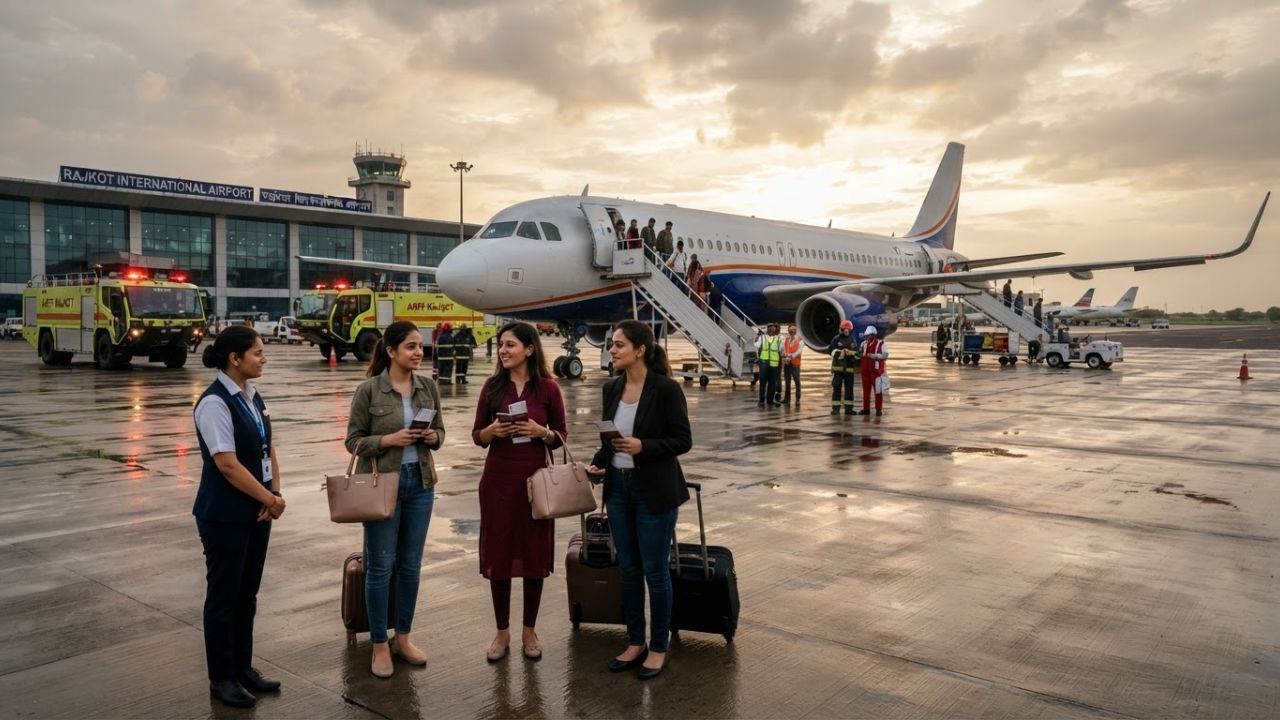
Image generated by AI
IndiGo Dubai to Mumbai Flight Makes Emergency Landing in Rajkot
SEO Title: IndiGo Dubai to Mumbai Flight Diverts to Rajkot Over Cargo Smoke 2026
Meta Description: IndiGo flight 6E 1452 from Dubai to Mumbai makes emergency landing in Rajkot due to a cargo smoke warning. All 194 passengers and crew safe.
Slug: indigo-dubai-mumbai-flight-emergency-landing-rajkot-2026
Standfirst: An IndiGo international service from Dubai to Mumbai was forced to make an emergency landing at Rajkot International Airport in Gujarat following a cargo smoke warning.
Three Headlines
Factual / News Headline
- IndiGo flight 6E 1452 from Dubai to Mumbai makes emergency landing in Rajkot following cargo smoke warning with 194 onboard.
Curiosity-Gap (Discover) Headline
- The cargo bay alert that forced an international IndiGo flight to divert to a regional Indian airport mid-route.
Problem-Solving (Search) Headline
- How IndiGo's emergency safety protocols protected 194 passengers during a cargo smoke diversion to Rajkot.
Article
A mid-air technical alert has disrupted regional air traffic, with an IndiGo Dubai Mumbai flight emergency landing taking place in Gujarat on July 28, 2026. Flight 6E 1452, carrying 194 passengers and crew members, diverted to Rajkot International Airport after pilots received a cargo smoke warning. Airport emergency teams were placed on standby, and the aircraft landed safely without injuries.
Detailing the Mid-Air Cargo Smoke Alert
The flight was operating its standard scheduled service from Dubai International Airport (DXB) in the United Arab Emirates to Ch Chrapati Shivaji Maharaj International Airport (BOM) in Mumbai. While cruising over the Arabian Sea, the flight crew detected a smoke warning indicating a potential fire in the cargo hold area.
Following international safety protocols, the pilots declared an emergency and requested immediate clearance to land at the nearest suitable airfield. Air traffic controllers routed the aircraft to Rajkot International Airport, where airport fire services and medical teams prepared for a precautionary landing.
The aircraft completed a safe landing, taxiing to a designated parking bay where ground crews evacuated all 194 occupants. Technical teams have initiated an inspection of the cargo hold to identify the cause of the alarm, which can sometimes be triggered by sensitive sensors or electrical faults.
The Role of Secondary Gateways in Aviation Safety
This emergency landing highlights the strategic value of regional airports like Rajkot in supporting international air routes. The Dubai-Mumbai corridor is one of the busiest international networks connecting India with the Gulf, serving business travelers, tourists, and overseas workers.
Having modern secondary airports along high-volume routes ensures that flight crews have reliable options when emergencies arise. The facilities at Rajkot allowed the widebody-compatible aircraft to land and deplane passengers safely, minimizing potential risks associated with long-distance diversions.
Data Table
The table below summarizes the key flight parameters and operational details of the emergency diversion:
IndiGo Flight 6E 1452 Diversion Specifications
| Operational Parameter | Flight Specification / Metric | Managing Airport / Hub | Safety & Evacuation Outcome |
|---|---|---|---|
| Operating Carrier | IndiGo Airlines | Dubai International (DXB) | 194 passengers & crew safe |
| Flight Number | 6E 1452 | Mumbai Chrapati Shivaji (BOM) | Zero injuries reported |
| Planned Routing | Dubai (UAE) to Mumbai (India) | Rajkot International (HSR) | Evacuation via mobile stairs |
| Emergency Reason | Cargo hold smoke detector alert | Air Traffic Control Gujarat | Precautionary ground inspection |
| Event Date | July 28, 2026 | Rajkot emergency services | Ongoing technical investigation |
Why This Matters
From a logistical perspective, this shift highlights the growth of experiential travel, where visitors seek a deeper connection to local heritage, art, and gastronomy rather than just beach holidays. For travelers planning their summer trips, this means that selecting a destination with diverse activities reduces the risk of weather-related disruptions. If rain or extreme heat makes outdoor sightseeing uncomfortable, visitors can easily pivot to indoor museums, wellness retreats, or culinary tours.
For the travel industry, this trend demonstrates that marketing a country requires highlighting its cultural and conservation assets alongside its natural scenery. Destinations that invest in preserving their historic architecture, supporting local artists, and promoting regional food systems are better positioned to attract high-value, long-stay travelers who contribute more to the local economy than day-trippers.
Industry Outlook
Market trends suggest that the demand for multi-dimensional travel will continue to grow as travelers seek to maximize their holiday budgets. As travel costs remain high, consumers are looking for destinations that offer a variety of experiences within a single geographic area. This pattern favors countries that can offer a blend of outdoor recreation, cultural education, and premium dining.
In response to these trends, local tourism boards are focusing on off-season campaigns to attract visitors during the autumn and winter months, when cultural attractions and historic tours remain fully operational. This strategy helps stabilize the local hospitality sector, ensuring year-round employment and reducing the environmental pressure associated with summer overcrowding.
Related: Philippine Airlines Adds Special Tokyo Narita to Cebu Flights
Related: Copa Airlines Expands Panama to Mendoza Flights to 10 Weekly
Related: Air China Launches First Beijing to Iceland Route
Disclaimer
This article is for informational and educational purposes only. It does not constitute legal, financial, or professional advice. While we strive to provide accurate and up-to-date information, travel policies, regulations, and conditions change rapidly. Always verify information with official sources before making travel decisions. Nomad Lawyer makes no representations about the accuracy, reliability, completeness, or suitability of the information provided. Readers should consult qualified professionals for advice specific to their circumstances. The views expressed in this article are those of the author and do not necessarily reflect the views of Nomad Lawyer.
Kunal K Choudhary
Co-Founder & Contributor
A passionate traveller and tech enthusiast. Kunal contributes to the vision and growth of Nomad Lawyer, bringing fresh perspectives and driving the community forward.
Learn more about our team →