
Indian Railways Records Massive August 2026 Surge: 67.27 Crore Passengers, Amrit Bharat Expansion, and Freight Growth

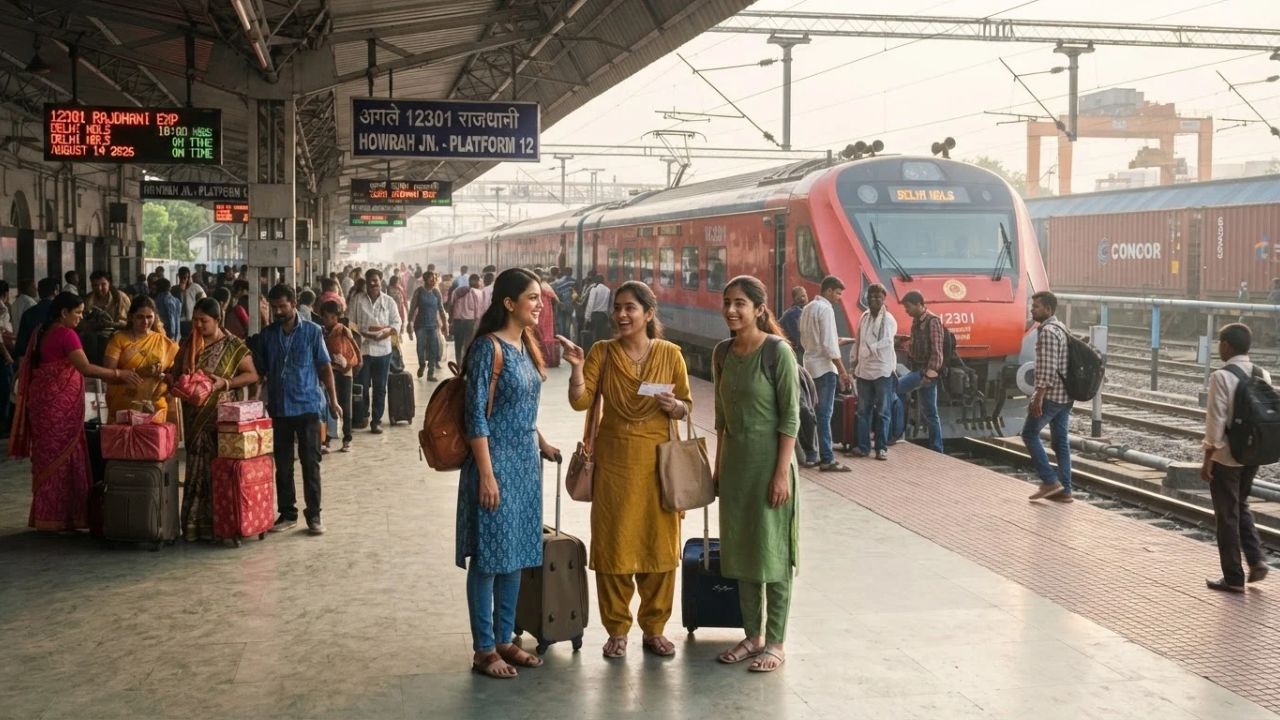
Indian Railways transported 67.27 crore passengers across its national network in August 2026—a decisive leap from 64.43 crore riders recorded during the same period in 2025—powered by suburban rail expansion, 144 Rakshabandhan special festival services, and the regularisation of seven high-capacity Amrit Bharat routes. Complementing this passenger influx, rail freight operations moved 137.9 million tonnes of essential cargo—up 5.4% year-on-year—demonstrating how synchronized track upgrades, modern push-pull rolling stock, and 149 operational Gati Shakti Cargo Terminals are driving sustainable mobility across the subcontinent.
The record monthly ridership reflects the operational vitality of the world’s fourth-largest rail network. From suburban transit arteries moving millions of daily office commuters in Mumbai, Chennai, and Kolkata to long-distance intercity corridors linking industrial manufacturing centers with regional agricultural heartlands, Indian Railways continues to modernize. By integrating affordable, non-air-conditioned Amrit Bharat superfast services alongside festival relief trains, rail planners have created a resilient transportation backbone that balances economic access with heavy festive travel surges.
The Local Trend Revealed: Suburban Vitality, Festival Relief, and Regularized Amrit Bharat Corridors
The passenger surge recorded in August 2026 illustrates how Indian Railways manages intense seasonal demand while simultaneously elevating everyday travel standards across three distinct operational layers:
1. Suburban Commuter Networks (38.01 Crore Riders)
Suburban commuter operations formed the largest single component of August’s passenger volume, carrying 38.01 crore passengers compared with 34.89 crore in August 2025. In mega-metropolises like Mumbai (Central and Western Railways), Kolkata (Eastern and South Eastern Railways), and Chennai (Southern Railway), local suburban electric multiple unit (EMU) services function as indispensable urban lifelines. The addition of extra 12-car and 15-car rakes, upgraded signaling, and modernized passenger amenities helped metropolitan transit withstand heavy monsoonal weather while keeping city workforces moving.
2. Triple-Volume Festival Management (144 Rakshabandhan Trips)
Festival seasons in India trigger unprecedented mass migrations as citizens journey to ancestral hometowns for family reunions. To manage the acute travel rush surrounding Rakshabandhan, Indian Railways operated 144 dedicated special train trips between August 25 and 31, 2026. This deployment represented a threefold increase over the 48 festival special trips operated during the corresponding holiday window in 2025. Operating on high-density trunk routes across Northern, Eastern, and Western zones, these special services eliminated platform bottlenecks, curbed ticket black-marketing, and provided safe passage for hundreds of thousands of festive travelers.
3. Institutionalizing Amrit Bharat Superfast Services
Recognizing that middle- and lower-income passengers require dignified, fast, and affordable long-distance connectivity, Indian Railways transitioned seven high-demand special train services into permanent, regularized Amrit Bharat operations in August 2026:
- Subedarganj (Prayagraj) – Lokmanya Tilak Terminus (Mumbai): Linking eastern Uttar Pradesh directly with Maharashtra's financial capital.
- Gorakhpur – Bandra Terminus (Mumbai): Providing high-speed transit between Purvanchal and western India.
- Gorakhpur – Delhi Junction: Enhancing daily intercity access to the national capital.
- Ahmedabad – Bhagalpur: Spanning Gujarat, northern India, and eastern Bihar.
- Lokmanya Tilak Terminus – Prayagraj Junction: Providing essential return capacity between Mumbai and northern pilgrimage hubs.
- Prayagraj Junction – Udhna Junction (Surat): Connecting holy sangam cities with Gujarat’s bustling textile and diamond hub.
- Dhanbad – Coimbatore: A vital 2,300-kilometer cross-country artery connecting Jharkhand’s coal basin directly with Tamil Nadu’s textile manufacturing heartland.
Manufactured at the Integral Coach Factory (ICF) in Chennai, Amrit Bharat trainsets utilize an innovative push-pull configuration featuring twin WAP-5 electric locomotives at either end. With aerodynamic cab fronts, sealed gangways that keep coaches free from dust, cushioned ergonomic berths in sleeper and second-class unreserved coaches, fold-away bottle holders, mobile charging points at every bay, and zero-discharge bio-vacuum toilets, these trains deliver high-speed long-distance comfort at accessible standard fares.
Cultural & Environmental Value: Slow Travel, Energy Transition, and Freight Decarbonization
Beyond massive passenger numbers, the expansion of Indian Railways anchors India's national environmental transition toward net-zero carbon emissions:
Electrification and Green Mobility
Indian Railways is approaching near-total route electrification under Mission 100% Electrification. Replacing diesel traction with electric locomotives powered by an increasingly renewable-fed national grid significantly reduces per-passenger carbon emissions compared to long-distance highway bus transit or commercial domestic aviation.
Shifting Freight from Highways to Rails
Simultaneously, the railway’s freight sector achieved significant milestones in August 2026:
- 137.9 Million Tonnes of Freight: Freight loadings grew 5.4% year-on-year from 130.9 million tonnes in August 2025, driving a 6.27% increase in monthly freight earnings.
- Gati Shakti Multimodal Expansion: Five brand-new Gati Shakti Cargo Terminals were commissioned during August 2026, pushing the nationwide operational total to 149 terminals by August 31, 2026. The five new facilities are strategically situated at:
- Shivlakha, Gujarat (western industrial and port logistics)
- Nalli, Tamil Nadu (southern manufacturing and engineering goods)
- Shaktinagar, Uttar Pradesh (energy and thermal mineral transit)
- Deoragram, Madhya Pradesh (central mineral and cement corridors)
- Brajrajnagar, Odisha (eastern mineral belt and heavy steel logistics) By shifting heavy industrial commodities—coal, iron ore, finished steel, cement, and chemical fertilizers—from diesel highway trucks onto electric freight rakes, Indian Railways removes tens of thousands of heavy vehicles from national highways daily, curbing highway accidents, road congestion, and atmospheric emissions.
Visitor Insider Tips: Mastering Long-Distance Train Travel Across India
For international explorers, cultural tourists, and domestic slow-travel enthusiasts, navigating Indian Railways offers an unforgettable travel experience. Applying key local guidelines ensures a smooth, authentic journey:
Digital Booking and Live Tracking Protocols
- Book Early via Official IRCTC Portals: The advance reservation period opens 120 days prior to the journey date on the official IRCTC website (irctc.co.in) or IRCTC Rail Connect mobile application. For last-minute travel, utilize the Tatkal booking quota, which opens at 10:00 AM (for AC classes) and 11:00 AM (for non-AC sleeper classes) one day prior to departure.
- Use Live Train Running Systems: Do not rely on static paper timetables. Use the official National Train Enquiry System (NTES) mobile app or popular verified platforms like Where Is My Train to monitor exact live locomotive GPS coordinates, upcoming platform assignments, and anticipated delay minutes.
Onboard Etiquette and Sleep Customs
- The Unwritten Lower Berth Rule: In Indian sleeper and AC coaches, the lower berth serves as shared seating for all three passengers assigned to that vertical tier during daytime hours. Daytime seating hours run from 06:00 AM to 10:00 PM. By 10:00 PM, passengers pull up the middle berth and fold out their bedding, respecting nighttime quiet hours until 06:00 AM.
- Securing Luggage: In unreserved and sleeper compartments, experienced travelers carry a lightweight brass luggage chain and padlock, threading it through the heavy iron rings anchored beneath the lower seats before sleeping.
Station Culture and Local Rail Gastronomy
- The Sacred Kulhad Chai: When a train slows to a stop at major junctions, listen for the melodic call of the chaiwallah wandering along coach aisles. Savor sweet, ginger- and cardamom-infused milk tea served piping hot in disposable unglazed terracotta cups (kulhads). Discarded terracotta cups are completely biodegradable and return naturally to the earth.
- Regional Culinary Stops Along the Amrit Bharat Routes:
- Prayagraj / Subedarganj: Crisp samosas served with tangy tamarind chutney, and seasonal sweet pink Allahabadi Surkha guavas.
- Gorakhpur Junction: Traditional Litti Chokha—roasted whole wheat dough balls stuffed with spiced roasted gram flour (sattu), dipped in melted desi ghee and paired with charred roasted eggplant-tomato mash (baingan bharta).
- Ahmedabad Junction: Fresh Khaman Dhokla—steamed savory chickpea sponge cakes tempered with mustard seeds, curry leaves, and green chilies, accompanied by crisp fried salted chilies.
- Dhanbad Junction: Jharkhand's beloved Dhuska—golden, deep-fried savory rice and lentil cakes served with a spicy potato and black gram curry (ghugni).
- Coimbatore Junction: Fragrant South Indian filter coffee (kaapi) frothed in brass dabara sets, served alongside steaming fermented rice-lentil idlis and freshly ground coconut chutney.
Tourism Outlook: Transforming Indian Rail into a Global Benchmark for Slow Travel
The remarkable performance of Indian Railways in August 2026 proves that mass transit can successfully harmonize staggering scale with technological innovation. As the railway continues modernizing passenger stations under the Amrit Bharat Station Scheme—transforming hundreds of historic terminals into airport-like transit hubs featuring multi-modal transit concourses, executive lounges, and barrier-free access for passengers with disabilities—train travel is regaining its status as the most romantic, culturally immersive way to explore India.
By blending the accessible economics of Amrit Bharat trains with the high-speed luxury of Vande Bharat expresses and scenic heritage hill railways, Indian Railways connects remote pilgrimage towns, vibrant cultural festivals, and quiet rural hamlets into a unified national itinerary. For travelers who understand that the journey is just as meaningful as the destination, India's rails offer an authentic window into the heartbeat of the world's most dynamic nation.
Related Travel Guides
- Air India AI1886 Diversion Technical Alert: How Delhi Air Traffic and Bhopal Technical Diverts Affect Flights
- Thailand and Uzbekistan Lead Asian Tourism Realignment: Visa Liberalization, Transit Corridors, and Silk Road Connectivity
- Asia Flight Disruptions: Delhi, Tokyo, and Shenzhen Weather Delays Test Passenger Rights
Disclaimer
This article is for informational and educational purposes only. It does not constitute legal, financial, or professional advice. While we strive to provide accurate and up-to-date information, travel policies, regulations, and conditions change rapidly. Always verify information with official sources before making travel decisions. Nomad Lawyer makes no representations about the accuracy, reliability, completeness, or suitability of the information provided. Readers should consult qualified professionals for advice specific to their circumstances. The views expressed in this article are those of the author and do not necessarily reflect the views of Nomad Lawyer.
Raushan Kumar
Founder & Lead Developer
Full-stack developer with 11+ years of experience and a passionate traveller. Raushan built Nomad Lawyer from the ground up with a vision to create the best travel and law experience on the web.
Learn more about our team →