
Pilots Face Split-Second Life-or-Death Decision at V1: The Two-Second Window That Separates Safe Aborts From Runway Disasters
Breaking airline news and aviation industry updates for 2026.

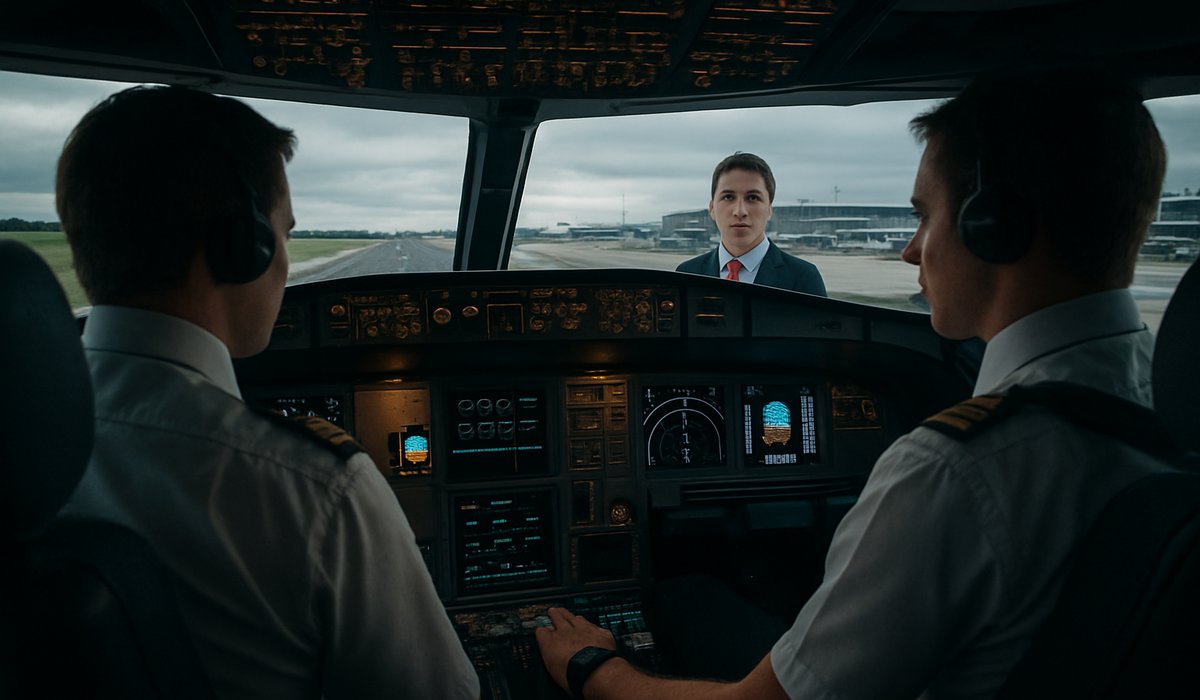
Image generated by AI
Pilots Face Split-Second Life-or-Death Decision at V1: The Two-Second Window That Separates Safe Aborts From Runway Disasters
The aviation industry's most critical safety threshold demands instantaneous judgment as aircraft accelerate toward takeoff
The Razor-Thin Margin of Aviation's Most Critical Decision
Every commercial flight departure hinges on a moment so brief, so consequential, that it defines the entire risk calculus of modern air travel. At a precisely calculated speed known as V1—the decision velocity—pilots must make an irrevocable choice: commit to flight or abort to safety. The window for this determination is devastatingly narrow: just two seconds separate a successful emergency stop from a catastrophic runway excursion that could result in loss of life.
This critical juncture represents the aviation industry's most heavily scrutinized safety threshold, one that has been refined through decades of accident investigations, engineering innovation, and international regulatory oversight. Understanding V1 and the physics governing takeoff operations reveals why commercial aviation maintains its status as the safest form of long-distance transportation, despite the enormous forces at play during each departure.
How V1 Works: Physics Meets Protocol
During the takeoff roll, aircraft accelerate along the runway while pilots monitor multiple instruments and engine parameters simultaneously. V1 is not an arbitrary speed—it is calculated with mathematical precision for every single flight, taking into account aircraft weight, runway length, atmospheric conditions, and runway surface characteristics.
Once an aircraft reaches V1, the physics become unforgiving. At this velocity, the aircraft possesses sufficient momentum and aerodynamic lift that attempting to stop within the remaining runway distance becomes impossible. Simultaneously, the aircraft has achieved enough airspeed that continuing to climb becomes the safer option, even with degraded engine performance or other mechanical failures.
The two-second decision window emerges from the human reaction time required for pilots to recognize a problem, assess it, and execute the appropriate response. A pilot hesitation of merely two seconds—a delay that seems trivial in normal circumstances—can extend stopping distance beyond runway boundaries, transforming what might have been a manageable emergency into a disaster.
The Operational Reality: Precision Under Pressure
Modern commercial aircraft operate under strict protocols governing V1 calculations. Airlines and regulatory bodies including the Federal Aviation Administration (FAA) and European Union Aviation Safety Agency (EASA) mandate that crews conduct thorough pre-flight planning to establish these critical velocities before every departure.
Flight crews train extensively in simulator environments to practice engine failure scenarios during takeoff, reinforcing the muscle memory and decision-making frameworks necessary to respond within that compressed timeframe. Despite the pressure of commercial operations, the aviation safety record demonstrates that this system works: fatal takeoff accidents remain extraordinarily rare in developed aviation markets.
The V1 decision represents not merely a technical specification, but a fundamental principle underlying commercial aviation safety—the recognition that some decisions cannot be delayed, and that preparedness through training and rigorous procedure is the only reliable defense against the unforgiving laws of physics.
FAQ: Common Questions About Takeoff Safety and V1 Decision Speed
What exactly is V1 speed in aviation? V1 is the maximum speed at which a pilot can safely abort a takeoff and bring the aircraft to a complete stop within the remaining runway length. Beyond V1, continuing to flight becomes the only safe option, even if an engine fails.
Why is the two-second window so critical for pilot decision-making? Aircraft require precise distances to stop once traveling at high speed during takeoff. A two-second delay in recognizing and responding to an emergency can extend stopping distance beyond available runway, creating runway excursion risks that jeopardize crew and passenger safety.
How do airlines calculate V1 for each flight? V1 is calculated individually for every departure based on aircraft weight, runway length, atmospheric temperature, runway surface condition, and aircraft configuration. Pilots receive this data during pre-flight planning and brief it before takeoff.
How often do pilots practice V1 decision scenarios? Commercial pilots train regularly in full-flight simulators on engine failure procedures during takeoff. These recurrent training sessions ensure crews maintain proficiency in recognizing problems and executing abort procedures within the critical decision window.
Is takeoff the most dangerous phase of flight? Takeoff and landing are the most operationally complex phases, but modern safety procedures, aircraft design, and crew training have made commercial aviation extraordinarily safe. Fatal accidents during takeoff remain statistically rare in developed aviation markets.
Related Travel Guides
Disclaimer
This article is for informational and educational purposes only. It does not constitute legal, financial, or professional advice. While we strive to provide accurate and up-to-date information, travel policies, regulations, and conditions change rapidly. Always verify information with official sources before making travel decisions. Nomad Lawyer makes no representations about the accuracy, reliability, completeness, or suitability of the information provided. Readers should consult qualified professionals for advice specific to their circumstances. The views expressed in this article are those of the author and do not necessarily reflect the views of Nomad Lawyer.
Preeti Gunjan
Contributor & Community Manager
A passionate traveller and community builder. Preeti helps grow the Nomad Lawyer community, fostering engagement and bringing the reader experience to life.
Learn more about our team →