
Images Reveal Daily Life Aboard Quarantined MV Hondius Off Cape Verde
Aerial and interior photographs document life aboard the MV Hondius, now quarantined off Cape Verde following a deadly hantavirus outbreak in 2026. Nearly 150 passengers and crew remain stranded as evacuations continue.

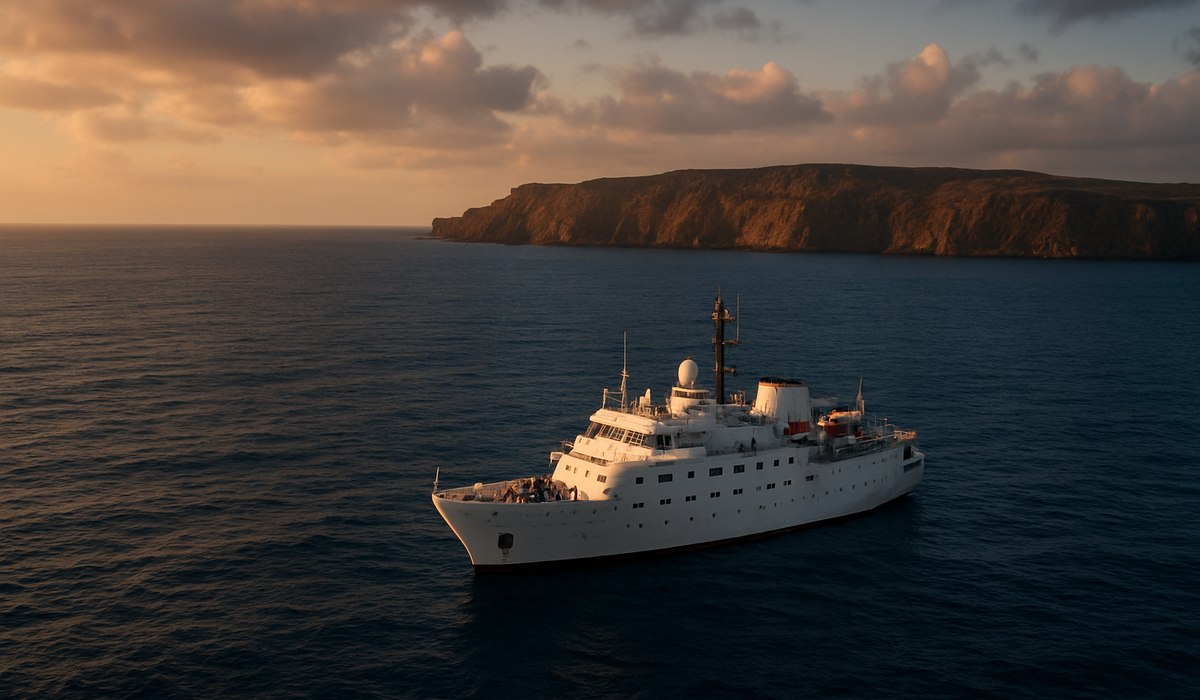
Image generated by AI
New Images Reveal Daily Life Aboard Stranded MV Hondius
Images reveal daily conditions aboard the Dutch-flagged MV Hondius, now anchored off Cape Verde following a rare hantavirus outbreak that has claimed three lives. The expedition cruise vessel, initially bound for the Canary Islands after departing South America in early April, remains locked in quarantine as health authorities investigate a deadly cluster of infections. Photographs emerging from international media outlets show the stark reality of life aboard this floating quarantine ward, where nearly 150 passengers and crew navigate an unprecedented health crisis at sea.
A Quiet Ship at Anchor After Sudden Health Crisis
Aerial photographs capture the MV Hondius as a solitary white vessel suspended in blue Atlantic waters near Praia, Cape Verde's capital. The ship lies motionless, awaiting clearance to proceed toward Tenerife in Spain's Canary Islands, where disembarkation is scheduled following completion of health protocols. The wildlife-focused expedition cruise, designed to showcase Atlantic and Antarctic ecosystems, has transformed into an involuntary detention marked by restricted movement and constant health monitoring.
Images reveal daily maritime operations have ground to a near halt. No visible passenger transfers occur in the photographs, reflecting initial refusals to grant port access. News organizations have documented the vessel's journey from its initial South American departure through this unexpected detour, with coverage emphasizing the exceptional nature of hantavirus complications aboard commercial vessels. The contrast between the ship's intended adventure itinerary and its current isolation underscores the severity of the outbreak response.
Inside the Corridors: Masks, Closed Spaces and Waiting
Interior photographs portray the MV Hondius transformed into a floating quarantine facility. Passengers navigate carpeted corridors wearing surgical and N95-style masks, maintaining distance from one another. Public gathering spaces—lounges, observation decks, and lecture halls—appear nearly vacant, with chairs either removed or positioned far apart to enforce physical separation.
The visual documentation shows passengers seated alone or in small isolated clusters, gazing seaward through windows or monitoring mobile devices for health updates. Cabin imagery reveals half-packed suitcases and abandoned outdoor clothing, physical evidence of an adventure derailed by unexpected crisis. Some travelers employ binoculars to observe Cape Verdean shorelines and seabirds, seeking minimal engagement with their surroundings while awaiting evacuation instructions.
Onboard activity has been severely restricted. Health authorities have encouraged passengers to remain in cabins except for essential needs—meal collection and brief fresh air breaks. The ship's original character as an expedition vessel remains visible through posted Antarctic maps and wildlife brochures, now serving as poignant reminders of the voyage that never materialized.
Medical Response Captured in Stark Detail
Striking photographic evidence documents the urgent medical intervention underway. Health workers in complete protective equipment board the MV Hondius from small vessels, executing careful patient transfers under tropical sunlight. Images show crews in high-visibility vests assisting masked medical personnel as they guide patients toward waiting ambulances in Praia.
Shipboard medical teams assembled near the gangway wear full hazmat protocols—coveralls, gloves, masks, and face shields. Several critically ill passengers and crew members, including at least two crew staff, have been evacuated to shore-based intensive care facilities. The visual record of this response reflects the serious nature of hantavirus complications and the cautious approach health authorities employ when managing this rare pathogen at sea.
Health briefings emphasize that public risk remains low, as hantavirus typically spreads through infected rodent contact rather than casual human interaction. However, identification of the Andes strain—known for occasional human-to-human transmission in close-contact environments—justified the precautionary response. Cruise vessels, with their confined spaces and high-density populations, present ideal conditions for such transmission concerns.
Timeline of the Outbreak and Response
| Event | Date | Details |
|---|---|---|
| Voyage Departure | Early April 2026 | MV Hondius departs South America on wildlife expedition |
| Initial Cases Identified | Mid-April 2026 | First hantavirus infections confirmed among passengers |
| Cape Verde Approach | Late April 2026 | Ship diverted to Cape Verde; initial port access denied |
| Confirmed Deaths | Early May 2026 | Three passengers deceased; two crew evacuated to hospitals |
| Quarantine Status | May 9, 2026 | Nearly 150 passengers and crew remain aboard under isolation |
| Canary Islands Routing | Current | Disembarkation planned for Tenerife following health clearance |
| Andes Strain Identified | Investigation Ongoing | Rodent-borne pathogen confirmed as outbreak source |
| Expected Resolution | Late May 2026 | Full evacuation and disembarkation targeted for completion |
What This Means for Travelers
Images reveal daily challenges facing expedition cruise passengers worldwide, raising critical considerations for adventure travel planning:
-
Verify Real-Time Health Conditions: Before booking expedition cruises to remote regions, consult official health authority websites for current disease surveillance reports specific to your intended route.
-
Understand Outbreak Protocols: Expedition vessels in isolated waters may face significant evacuation delays. Comprehensive travel insurance covering extended quarantine and evacuation costs is essential.
-
Review Crew Health Standards: Request documentation regarding onboard medical facilities, isolation protocols, and partnership hospitals at intended ports of call.
-
Monitor Wildlife-Adjacent Routes: Hantavirus and similar zoonotic pathogens emerge through human-wildlife contact. Understand which regions carry documented disease risks along your itinerary.
-
Purchase Evacuation Insurance: The MV Hondius situation demonstrates that standard cruise insurance may not cover extended quarantine or emergency medical evacuation to distant international hospitals.
-
Maintain Communication Options: Ensure your mobile device and international plans permit consistent contact with family and your embassy during crisis situations at sea.
Frequently Asked Questions
What is hantavirus and how does it spread aboard cruise ships?
Hantavirus is a rodent-borne virus typically transmitted through contact with infected animal droppings or urine. The Andes strain, identified in the MV Hondius outbreak, can occasionally spread between humans in close-contact environments like cruise cabins. Standard voyage activities present minimal transmission risk if proper hygiene protocols are maintained.
Will my expedition cruise be cancelled if hantavirus is detected?
Each outbreak receives individual assessment based on transmission patterns, severity, and specific vessel circumstances. Cruise operators work with health authorities to determine whether isolation and monitoring suffice or whether full cancellation becomes necessary. Comprehensive travel insurance protects passengers against financial losses from outbreak-related cancellations.
How long can cruise ship quarantines typically last?
Quarantine duration depends on incubation period (usually 1-2 weeks for hantavirus), confirmatory testing, and epidemiological investigation requirements. The MV Hondius has been under observation for several weeks, with disembarkation expected once health authorities grant clearance. Passengers should prepare for extended quarantine periods when booking expedition voyages to remote regions.
What should I pack if travelling on an expedition cruise to high-risk disease regions?
Pack N95-style masks, hand sanitizer, disinfectant wipes, prescribed medications with duplicates, comprehensive travel insurance documents, and copies of medical records. Maintain vitamin supplementation and ensure your vaccinations (influenza, pneumococcal, hepatitis A) are current before departure.
Related Travel Guides
Disclaimer
This article is for informational and educational purposes only. It does not constitute legal, financial, or professional advice. While we strive to provide accurate and up-to-date information, travel policies, regulations, and conditions change rapidly. Always verify information with official sources before making travel decisions. Nomad Lawyer makes no representations about the accuracy, reliability, completeness, or suitability of the information provided. Readers should consult qualified professionals for advice specific to their circumstances. The views expressed in this article are those of the author and do not necessarily reflect the views of Nomad Lawyer.
Kunal K Choudhary
Co-Founder & Contributor
A passionate traveller and tech enthusiast. Kunal contributes to the vision and growth of Nomad Lawyer, bringing fresh perspectives and driving the community forward.
Learn more about our team →