
Icelandair Shifts Strategy to Brand Authenticity as AI Transforms Travel Search and Discovery 2026
Icelandair is pivoting toward high-authenticity branding and emotional storytelling to maintain visibility as AI-driven search engines reshape how travelers discover flights and destinations in 2026.

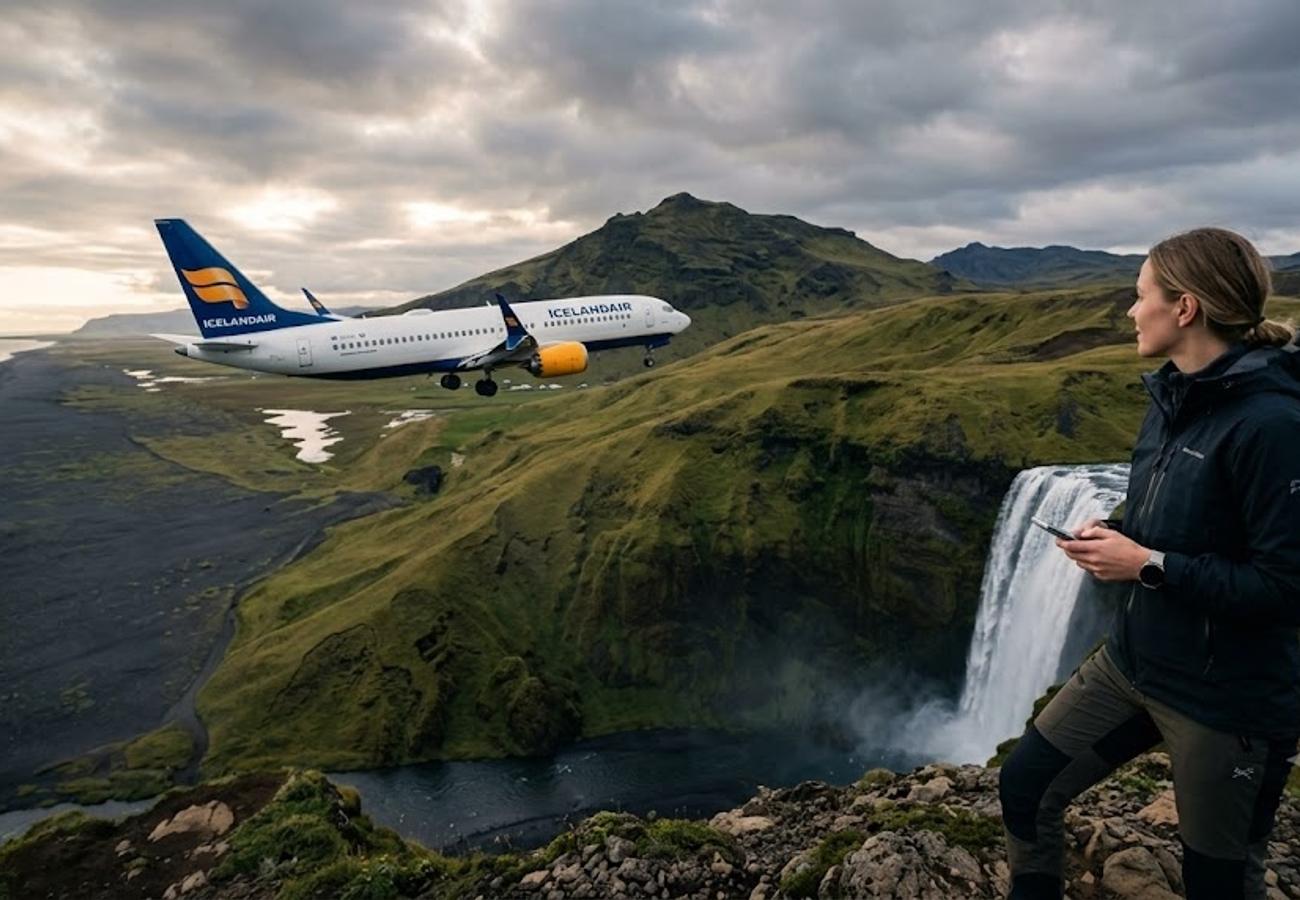
Image generated by AI
While traditional search engine optimization (SEO) focused on keywords for a decade, the rise of Large Language Models (LLMs) has shifted the goalpost toward "Brand Authority," where the ability to be cited by an AI agent depends on pre-existing consumer trust. Icelandair is now positioning its entire marketing apparatus to win the battle for AI recommendations not at the moment of the prompt, but long before the traveler ever opens an AI interface.
The AI Discovery Gap in Numbers
The current shift in travel discovery is defined by a move from "search" (where a user browses a list of links) to "answer" (where an AI provides a single, synthesized recommendation). According to Gísli Brynjolfsson, Director of Global Marketing at Icelandair, the competition for attention has expanded beyond other airlines. Carriers are now competing for mental real estate against social media creators, user-generated content (UGC), and an infinite stream of AI-generated digital media.
Icelandair's strategic pivot is based on the premise that AI systems prioritize entities with strong, consistent, and trusted digital signals. By focusing on authenticity, the airline aims to create a "brand moat" that AI cannot easily replicate. This is particularly evident in their response to the saturation of "perfect" imagery. The airline noted a specific spike in consumer skepticism following a viral image of a volcanic eruption paired with the Northern Lights, which sparked widespread debate over whether the scene was genuine or AI-generated.
Comparative Context: Polished Marketing vs. Radical Authenticity
Historically, airline marketing relied on high-production, aspirational imagery—the "perfect" sunset or the "perfect" cabin experience. However, as IATA and other industry bodies track the digital transformation of the passenger journey, a pattern of "AI fatigue" is emerging. Travelers are increasingly questioning the validity of polished digital content.
Icelandair has countered this by launching the "Really Bad Photographer" campaign. Rather than showcasing professional-grade landscapes, the airline invited individuals who consider themselves poor photographers to capture Iceland. This is a calculated move to contrast with the hyper-realistic, often sterile output of generative AI.
The following table illustrates the shift in marketing philosophy as the industry moves toward AI-integrated discovery:
| Metric/Strategy | Traditional Digital Marketing (2015-2023) | AI-Era Brand Strategy (2024-2026+) |
|---|---|---|
| Primary Goal | High Click-Through Rate (CTR) | Brand Recall & Trust Authority |
| Visual Style | Polished, Aspirational, Retouched | Raw, Authentic, Imperfect |
| Discovery Path | Keyword $\rightarrow$ Search Result $\rightarrow$ Booking | Brand Awareness $\rightarrow$ AI Prompt $\rightarrow$ Recommendation |
| Competitive Set | Other Airlines / OTAs | Content Creators / AI Agents / Entertainment |
| Success Metric | Page Views / Impressions | Sentiment Analysis / AI Citation Frequency |
What This Means for Travelers
For the modern traveler, the "AI-ification" of travel planning means that the recommendations you receive from tools like ChatGPT, Gemini, or specialized travel AI are not neutral; they are reflections of the strongest digital footprints.
If you are planning a trip to Northern Europe or the North Atlantic in 2026, be aware that the "best" options presented by AI may be those with the most distinct brand identity rather than the lowest price. To make smarter decisions, travelers should:
- Verify "Perfect" Imagery: As Icelandair's campaigns suggest, if a destination looks too perfect to be real, it likely is AI-generated. Cross-reference AI suggestions with raw user-generated content on platforms like Reddit or specialized travel forums.
- Look for "Human" Markers: Prioritize airlines and operators that emphasize real-world experiences and transparency over those using generic, AI-driven promotional materials.
- Diversify Discovery: While AI can synthesize options quickly, it often misses the "emotional context" that Icelandair is currently leveraging. Combine AI itineraries with direct brand research to ensure the experience matches the expectation.
Projecting the Future of Travel Discovery
The trajectory of travel marketing is moving toward a hybrid model where data-driven precision meets human-centric storytelling. Icelandair is not abandoning technology; instead, they are using search behavior, social listening, and brand tracking to identify where their "authentic" stories will have the most impact.
Based on current movements in the industry, we can expect a "flight to quality" in travel content. As the volume of AI-generated travel blogs and guides increases, the market value of verified, human-led experiences will rise. This will likely lead to a surge in "anti-AI" marketing campaigns across the sector, where brands compete on their "humanness."
The upcoming World Aviation Festival Marketing Summit in Lisbon (October 13-15, 2026) is expected to be a bellwether for this trend. If other major carriers adopt Icelandair's model of "radical imperfection," we will see a systemic shift in how the World Tourism Organization (UNWTO) and individual nations market their destinations to a skeptical, AI-saturated global audience.
FAQ: Icelandair AI Strategy 2026
Will AI make flight prices higher? AI primarily affects discovery and distribution, not necessarily the base cost of fuel or labor. However, brands with higher "AI Authority" may maintain more pricing power due to increased demand driven by AI recommendations.
Is it still a good time to book flights using AI tools? Yes, for efficiency and itinerary building. However, the "authenticity gap" means you should verify AI-suggested hotels and activities via real user reviews to avoid "AI-hallucinated" or overly curated experiences.
Which airlines are leading the shift toward AI-resistant branding? Icelandair is currently a primary example, focusing on emotional connection and authenticity to ensure they remain memorable when travelers prompt AI for travel advice.
How can I tell if a travel photo is AI-generated? Look for "too perfect" lighting, symmetrical anomalies in landscapes, or a lack of realistic imperfections. Icelandair's own campaigns highlight that real-world beauty often exists in the imperfect.
The battle for the traveler's mind is no longer fought in the search results, but in the memory before the search even begins.
Related Travel Guides
Disclaimer
This article is for informational and educational purposes only. It does not constitute legal, financial, or professional advice. While we strive to provide accurate and up-to-date information, travel policies, regulations, and conditions change rapidly. Always verify information with official sources before making travel decisions. Nomad Lawyer makes no representations about the accuracy, reliability, completeness, or suitability of the information provided. Readers should consult qualified professionals for advice specific to their circumstances. The views expressed in this article are those of the author and do not necessarily reflect the views of Nomad Lawyer.
Preeti Gunjan
Contributor & Community Manager
A passionate traveller and community builder. Preeti helps grow the Nomad Lawyer community, fostering engagement and bringing the reader experience to life.
Learn more about our team →